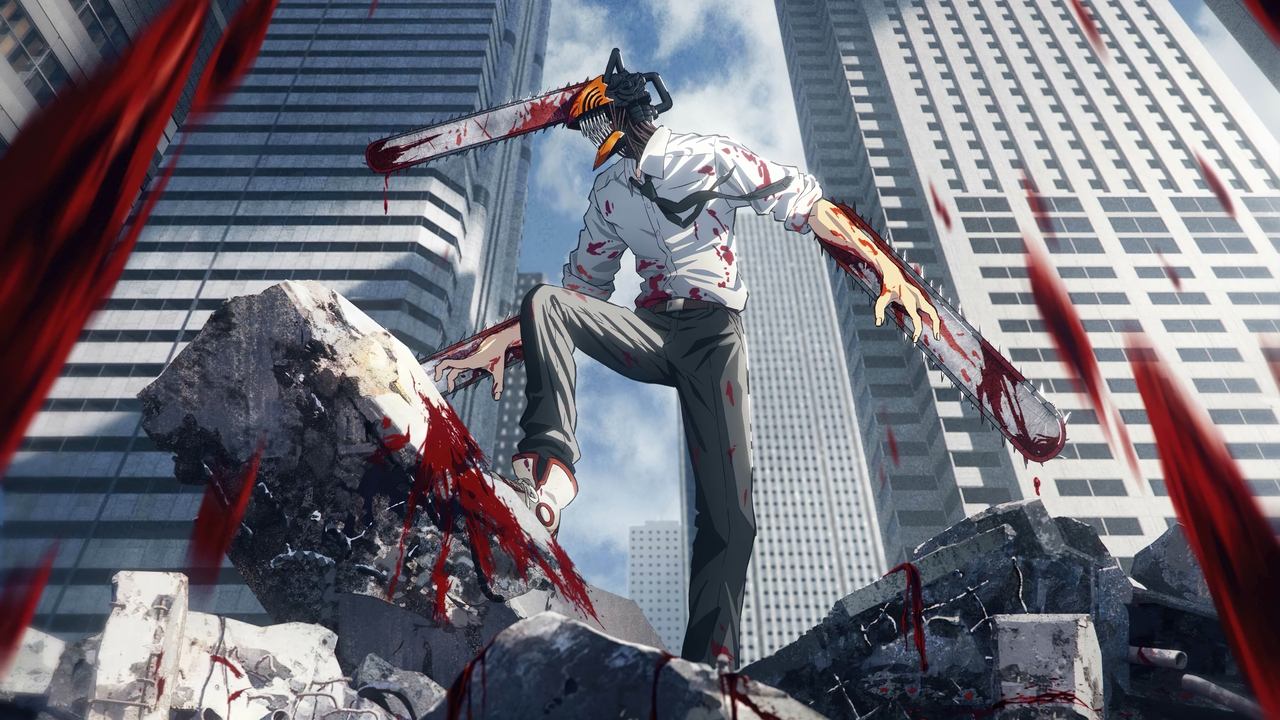

Chainsaw Man
Explore the MBTI personality types of Chainsaw Man characters from Tatsuki Fujimoto's acclaimed dark action series. From Denji's pure ESFP survival instinct to Makima's terrifying INTJ manipulation, the show presents one of anime's most psychologically complex casts. Each Devil Hunter and Devil in Chainsaw Man reflects a distinct cognitive function stack, making the series a goldmine for personality type analysis.
Analysts
Yoshida
AnalystYoshida leads with dominant introverted intuition (Ni), maintaining an air of complete informational asymmetry that makes him one of Chainsaw Man’s most enigmatic figures. He always suggests he knows far more than he reveals, and his calm demeanor during crises indicates Ni’s characteristic sense that the future is already understood even when others are panicking. His introduction during the International Assassins arc shows Ni at work: he appears precisely where needed with a readiness that implies long-range anticipation of events. His auxiliary extraverted thinking (Te) surfaces as precise, efficient control over situations — he makes calculated moves to protect Denji without ever disclosing his actual strategic framework, treating information itself as a resource to be managed with organizational discipline. His tertiary introverted feeling (Fi) is visible in his seemingly casual friendliness toward Denji, which masks a private set of values and loyalties he never makes explicit. The question of whether Yoshida genuinely likes Denji or is simply managing an asset is classic INTJ ambiguity — his Fi is real but operates so far beneath his Ni-Te surface that others cannot access it. His inferior extraverted sensing (Se) emerges during his contract-powered combat with the Octopus Devil, where physical engagement reveals a competence that his intellectual demeanor understates. Yoshida’s character development is deliberately withheld, making him a narrative mystery that mirrors the INTJ’s cognitive style: the full picture exists internally but is shared only on his terms.
“I'm just a high school student who likes Denji.”Learn about INTJ →
Santa Claus
AnalystSanta Claus leads with dominant extraverted thinking (Te), operating through strategic command that treats human bodies as expendable resources in a calculated system of acquisition. Her doll network is Te at its most chilling — a logistical operation spanning multiple countries, coordinating dozens of human puppets toward a single objective with industrial efficiency. The revelation that her true identity is hidden behind layers of proxy bodies demonstrates Te’s ability to build organizational structures that function independently of any single point of failure. Her auxiliary introverted intuition (Ni) gives her plans terrifying long-term scope; her deal with the Darkness Devil was engineered years in advance, requiring the precise orchestration of events across international boundaries to converge at a single moment. Her tertiary extraverted sensing (Se) manifests in the Hell arc when she transforms physically, engaging Denji in direct combat with a presence that reveals the raw power behind her strategic mind. Her inferior introverted feeling (Fi) is virtually nonexistent — she has no personal attachments, no private values beyond her singular ambition, making her one of the series’ most purely Te-Ni villains. Santa Claus’s arc demonstrates the ENTJ shadow at full expression: when Te-Ni operates without any ethical constraint, human beings become inventory and sacrifice becomes logistics.
“Dolls have no need for wishes of their own.”Learn about ENTJ →
Diplomats
Reze (Bomb Girl)
DiplomatReze leads with dominant introverted intuition (Ni), maintaining a privately held vision that drives her infiltration mission while constructing layered personas to navigate her environment. Her approach to Denji is pure Ni strategy: she identifies his psychological vulnerabilities through pattern recognition and builds a relationship designed to exploit them. The school rooftop scenes show Ni operating through symbolic communication — she creates atmospheres of intimacy that convey meaning beyond literal words. Her auxiliary extraverted feeling (Fe) allows her to build rapport so convincing that even the audience questions whether it is performance. She mirrors Denji’s emotional needs with an attunement that only Fe can produce, but the INFJ tragedy is that her Fe connection became genuine even as her Ni mission required its exploitation. Her tertiary introverted thinking (Ti) surfaces in her combat analysis and tactical decision-making during the Bomb Girl arc, where she calculates escape routes and opponent weaknesses with cold precision. Her inferior extraverted sensing (Se) emerges during her transformation sequences — the explosive physical power of the Bomb Devil represents Se breaking through Ni’s careful control. Reze’s character arc is the classic INFJ door slam in reverse: she tries to close the door on genuine feeling to complete her mission, but her Fe has already integrated Denji into her value system. Her final attempt to meet Denji at the cafe reveals an INFJ who chose authentic connection over strategic vision, only to be intercepted by Makima before that choice could matter.
“I wanted to run away with you.”Learn about INFJ →
Angel Devil
DiplomatThe Angel Devil leads with dominant introverted feeling (Fi), his entire existence colored by genuine melancholy and a quiet, persistent ethical struggle about his own nature. His power — draining human lifespans through touch — is a perfect metaphor for the Fi-dominant’s burden: deep internal values that make engagement with the external world inherently painful. His reluctance to fight and his stated preference for laziness are not apathy but Fi-driven moral paralysis; he cares too much about causing harm to act without hesitation. His auxiliary extraverted intuition (Ne) gives him unusual sensitivity and openness to possibility, visible in his willingness to form a genuine bond with Aki despite every logical reason to remain isolated. Their partnership represents Ne’s capacity to see potential in connections that Fi’s protective instincts would normally prevent. His tertiary introverted sensing (Si) surfaces through his memories of the humans whose lifespans he absorbed, experiences that haunt him with sensory specificity he cannot suppress. His inferior extraverted thinking (Te) remains undeveloped — he cannot organize his existence into productive action and drifts through assignments with minimal initiative. The Angel Devil’s tragic arc reveals what happens when Fi-dominant sensitivity meets a world that demands violence: he is paralyzed between his values and his nature, making his eventual mind control by Makima all the more devastating because it strips away the only thing that defined him — his moral autonomy.
“Being alive is really tiring.”Learn about INFP →
Power
DiplomatPower leads with extraverted intuition (Ne), generating chaotic possibility wherever she goes — her constant lying, self-aggrandizing narratives, and wild schemes are Ne spinning new framings of reality faster than anyone can debunk them. The Nobel Prize claim and her self-appointed title as greatest fiend ever are Ne creating identity through imaginative assertion rather than factual grounding. Her auxiliary introverted feeling (Fi) means both her selfishness and her genuine loyalty are completely authentic expressions of internal values. Her bond with Meowy is the clearest Fi marker: she will betray anyone and risk death for a cat she has privately decided matters, with no external justification needed. Her tertiary extraverted thinking (Te) is minimally developed, which is why she cannot organize, plan, or follow instructions — structure is antithetical to her Ne-Fi orientation. Her inferior introverted sensing (Si) surfaces as genuine trauma responses; her terror of the Darkness Devil reveals that past sensory experiences she cannot process can completely overwhelm her Ne’s forward momentum. Power’s character development arc culminates in the blood contract with Denji, where her Fi deepens from selfish attachment to genuine sacrifice — she gives her blood knowing it means death because her internal values have expanded to include someone beyond herself and Meowy.
“I am the Blood Fiend Power! The greatest in the land!”Learn about ENFP →
Sentinels
Aki Hayakawa
SentinelAki leads with dominant introverted sensing (Si), bound entirely by memory, duty, and the weight of the past. The loss of his family to the Gun Devil is not just motivation but a Si-anchored sensory imprint that defines every present action — he can recall the destruction with visceral clarity, and this memory is the organizing principle of his entire life. His auxiliary extraverted thinking (Te) drives his methodical, systematic approach to devil hunting: he follows protocols, respects institutional hierarchy, and approaches missions with procedural discipline that contrasts sharply with Denji’s chaos. His tertiary introverted feeling (Fi) emerges slowly through his growing attachment to Denji and Power, values he initially resists because they conflict with his Si-Te duty framework. The snowball fight scene is a pivotal moment where Fi breaks through — he experiences genuine joy disconnected from obligation for perhaps the first time since childhood. His inferior extraverted intuition (Ne) is his tragic blind spot: he cannot see the larger pattern Makima is weaving or imagine alternative futures beyond his revenge mission. Aki’s devastating end as the Gun Fiend represents the ultimate Si tragedy — a man so defined by past loss that the past literally consumes him, turning his body into the very weapon that destroyed everything he loved.
“I'll get revenge on the Gun Devil, no matter what it takes.”Learn about ISTJ →
Kobeni Higashiyama
SentinelKobeni leads with dominant introverted sensing (Si) grounded in anxiety — she maintains a hyperdetailed internal catalogue of past dangers that makes every new situation feel like a repeat of previous trauma. Her decision to become a devil hunter was not her own but imposed by her family, reflecting Si’s deference to established authority and social obligation even when it conflicts with personal wellbeing. Her auxiliary extraverted feeling (Fe) expresses as desperate people-pleasing and conflict avoidance; she will agree with whatever the group decides and suppress her own judgment entirely. During the Eternity Devil arc, her Fe collapses under pressure and she turns on Denji because group survival overrides individual loyalty in her panicked Fe calculus. Her tertiary introverted thinking (Ti) surfaces in moments of extreme stress as startlingly competent combat analysis — her knife skills against the Darkness Devil reveal a precision that her anxious exterior completely masks. Her inferior extraverted intuition (Ne) is virtually nonexistent; she cannot imagine positive future outcomes and defaults to worst-case scenarios in every situation. Kobeni’s character arc is tragically static — unlike other characters who grow through suffering, her Si-Fe loop keeps her trapped in a cycle of anxiety and compliance, making her the series’ most realistic portrayal of how trauma reinforces cognitive rigidity rather than producing growth.
“I really, really don't want to die here.”Learn about ISFJ →
Katana Man
SentinelKatana Man leads with dominant extraverted thinking (Te), operating within a clear hierarchy of obligation and executing revenge with systematic, organizational efficiency. His assault on Public Safety Division 4 is Te at its most tactical — a coordinated strike planned with military precision, deploying multiple assets simultaneously to overwhelm the target. He does not act impulsively; every attack is calculated to achieve maximum strategic impact within the power structure he serves. His auxiliary introverted sensing (Si) means his motivation is entirely backward-looking, defined by concrete duty to his grandfather and the established rules of the yakuza world. His grandfather’s death is not processed as grief but as a Si-catalogued obligation that Te must systematically fulfill. His tertiary extraverted intuition (Ne) is minimal, which limits his ability to adapt when opponents behave unpredictably — Denji’s chaotic fighting style disrupts Katana Man’s Te-Si battle framework repeatedly. His inferior introverted feeling (Fi) is almost completely suppressed; he shows no personal moral reflection about killing dozens of devil hunters and frames mass murder purely through Te’s lens of institutional loyalty and obligation fulfillment. Katana Man’s character arc demonstrates the ESTJ shadow: when Te-Si operates in service of a corrupt institution without Fi’s ethical check, duty becomes indistinguishable from cruelty. His defeat at Denji’s hands is narratively satisfying because it represents the failure of rigid hierarchical thinking against Se-Fi adaptability.
“I'll avenge my grandfather, no matter what.”Learn about ESTJ →
Beam (Shark Fiend)
SentinelBeam leads with dominant extraverted feeling (Fe), his entire personality organized around devotion, service, and the joy of being useful to someone he idolizes. His worship of Chainsaw Man is Fe at its most exuberant — he does not merely follow orders but actively seeks to anticipate Denji’s needs, celebrate his victories, and position himself as the perfect supportive companion. Every interaction radiates Fe warmth: he cheers, he encourages, he throws himself into danger with genuine enthusiasm because serving his hero gives his existence meaning. His auxiliary introverted sensing (Si) makes him remarkably consistent and reliable; unlike the chaotic fiends around him, Beam shows up with the same enthusiastic loyalty every single time, creating a dependable pattern that Denji can count on. His Si also connects him to Chainsaw Man’s historical legacy — his devotion is rooted in remembered experiences of the original Chainsaw Devil’s heroism. His tertiary extraverted intuition (Ne) is minimal, giving him limited ability to anticipate complex scenarios or adapt to rapidly changing situations. His inferior introverted thinking (Ti) means he rarely questions the logic of his devotion or analyzes whether his loyalty is reciprocated. Beam’s character arc is brief but thematically crucial: in a series defined by manipulation and transactional relationships, his uncomplicated Fe devotion represents what genuine, unselfish connection looks like, making his sacrifice during the Darkness Devil confrontation one of the story’s most emotionally resonant moments.
“Please let me be your ally, Chainsaw Man!”Learn about ESFJ →
Explorers
Quanxi
ExplorerQuanxi is one of anime’s most extreme introverted thinking (Ti) dominants, reducing every situation to its mechanical essentials with surgical precision. Her opening scene — cutting through dozens of enemies in a single unbroken sequence — demonstrates Ti-Se integration at its highest level: internal analysis translating instantly into physical execution with zero wasted motion. Her auxiliary extraverted sensing (Se) makes her arguably the most capable hand-to-hand combatant in the series, operating in a flow state where perception and response are seamless. During the International Assassins arc, her Se reads battlefield geometry in real time while Ti optimizes each strike for maximum efficiency. Her tertiary introverted intuition (Ni) surfaces in her long-range awareness of the political landscape; she negotiates with Makima not from emotion but from a clear-eyed assessment of future probabilities, requesting education for her fiends as her singular condition. Her inferior extraverted feeling (Fe) is almost entirely suppressed in professional contexts but reveals itself through her genuine, protective devotion to her fiend companions — the only beings for whom she breaks her characteristic emotional silence. Quanxi’s character does not develop in a traditional arc because she is already a fully optimized Ti-Se system; her role in the narrative is to demonstrate what ISTP mastery looks like when decades of combat experience have refined every function to its essential purpose. She is efficiency personified, and her rare moments of warmth toward her fiends are powerful precisely because they emerge from such a controlled interior.
“I have no interest in reasons or feelings. Just results.”Learn about ISTP →
Violence Fiend
ExplorerThe Violence Fiend represents the ISFP paradox most clearly — his dominant introverted feeling (Fi) expresses as genuine gentleness, sensitivity, and deep reluctance to cause harm despite inhabiting a body built for destruction. His choice of name is itself ironic: he adopted the label ‘Violence’ without internalizing its meaning, because his Fi core operates independently of external categorization. His conversations with Kobeni reveal an internal world rich with aesthetic appreciation and quiet emotional depth that his fiend nature cannot corrupt. His auxiliary extraverted sensing (Se) means that when compelled to fight, he does so with terrifying physical intensity — the mask he wears literally restrains his Se power, and its removal unleashes combat ability that overwhelms most opponents. This Se is not aggression but pure physical expression, the same function that in peaceful moments makes him attentive to his surroundings and present in conversation. His tertiary introverted intuition (Ni) gives him flashes of insight about people and situations that his gentle demeanor makes easy to overlook. His inferior extraverted thinking (Te) is notably absent; he has no interest in organizing, commanding, or systematizing anything. The Violence Fiend’s character arc, though tragically brief, demonstrates that cognitive function stacks are not determined by circumstance — a being born from violence can lead with Fi tenderness, and the tension between his nature and his values makes him one of Chainsaw Man’s most philosophically resonant characters.
“I don't actually like violence very much.”Learn about ISFP →
Himeno
ExplorerHimeno shows dominant extraverted sensing (Se) through throwing herself fully into every present moment — the drinking party where she kisses Denji, her reckless combat style, and her frank discussions about desire all reflect Se’s complete engagement with immediate physical reality. She has watched partner after partner die and responds not by retreating into memory but by intensifying her presence in the now. Her auxiliary introverted feeling (Fi) gives her hedonism genuine emotional weight; her care for Aki comes from a deeply private place that she protects with surface-level flirtation and humor. The scene where she reveals she wants Aki to quit devil hunting shows Fi at its most vulnerable — a value so personally important she can barely voice it. Her tertiary extraverted intuition (Te) is underdeveloped, which is why she cannot strategize her way out of dangerous situations and relies instead on Se improvisation. Her inferior introverted intuition (Ni) emerges in her single, focused wish for Aki’s survival — the one future she allows herself to envision. Himeno’s sacrifice against the Ghost Devil is the ultimate Se-Fi act: a fully present physical commitment driven by pure internal values, giving everything in one moment rather than calculating the cost. Her character represents Se-Fi at its most courageous and most tragic.
“I have a dream where Aki dies happy.”Learn about ESFP →
Find Your Character
Know your MBTI type? Find your character match below.
Frequently Asked Questions
Makima is an INTJ. Her dominant introverted intuition drives the show's entire hidden plot — she has a singular, all-consuming vision spanning years that she pursues through systemic manipulation of people and institutions. Her auxiliary extraverted thinking is visible in her cold, transactional control of the Special Division and her willingness to sacrifice anything to achieve her objective, making her one of anime's definitive INTJ antagonists.
Denji is an ESFP. He leads with dominant extraverted sensing — he is entirely present-focused, motivated by the most immediate physical desires, and processes the world through direct sensory experience rather than abstract planning. His auxiliary introverted feeling gives him a moral authenticity that surprises people; his loyalty and love are genuinely felt, even if they're expressed through action rather than articulation.
Power is best typed as ENFP rather than ESFP. The key distinction is her cognitive pattern — while she is impulsive, she is driven by imaginative, ideational chaos (Ne) rather than pure sensory thrill-seeking (Se). She generates wild schemes and dramatic framings of herself constantly, which reflects extraverted intuition's pattern-generation over extraverted sensing's physical immediacy. Her auxiliary Fi is evident in her deeply self-referential value system and the authentic emotional bond she eventually develops.
Aki (ISTJ) and Denji (ESFP) represent the Si-Te versus Se-Fi axis playing out in response to trauma. Aki's Si anchors him to the past — his family's death defines every present action, and his Te drives him toward systematic revenge regardless of personal cost. Denji's Se-Fi keeps him resolutely in the present; he grieves briefly and moves forward through feeling and sensation rather than memory and duty, which is why their arcs end so differently.
Explore More Shows
Find Your Own Type
Discover your MBTI personality type and see which fictional characters share your traits.
Take the Test