

The Office (US)
Which The Office character matches your personality? Full MBTI breakdown of every Dunder Mifflin employee - cognitive functions, key episodes, and why each type fits perfectly.
The Office (US) MBTI Personality Analysis
The Office is one of the most psychologically rich ensemble comedies ever made, and its genius lies in placing radically different personality types into one confined space and letting friction do the work. Dunder Mifflin Scranton functions as a pressure cooker for MBTI dynamics - every type clash, every alliance, and every awkward silence reveals something true about how personality shapes workplace behavior.
The show's central engine is the Michael Scott (ENFP) and Dwight Schrute (ESTJ) dynamic - a textbook Ne-Fi versus Te-Si collision. Michael leads through enthusiasm, improvisation, and emotional connection. Dwight leads through hierarchy, procedure, and institutional loyalty. They should be natural enemies, but their mutual devotion creates the show's most surprisingly tender relationship. Michael needs Dwight's unwavering loyalty because his Fi craves unconditional acceptance. Dwight needs Michael's authority because his Te requires a legitimate chain of command to serve. When Michael leaves, Dwight doesn't just lose a boss - he loses the structure that gave his devotion meaning.
Jim Halpert (ENTP) and Pam Beesly (INFP) represent the show's emotional core, and their relationship works because Ne is their shared language. Jim's dominant Ne generates the pranks, the wit, and the restless dissatisfaction with mediocrity. Pam's auxiliary Ne fuels her artistic dreams and her quiet rebellion against the life she settled for. Their connection is built on seeing possibilities that others miss - they communicate in glances and inside jokes because they're processing the same absurdity through the same cognitive function.
What makes The Office a masterclass in personality dynamics is how it shows type under the specific stress of corporate bureaucracy. Angela Martin's ISTJ rigidity isn't just funny - it's a survival mechanism in an environment that constantly threatens her Si need for order. Stanley Hudson's disengagement isn't laziness - it's an ISTP who has correctly calculated that the institutional chaos around him is not his problem to solve. Ryan Howard's trajectory from wide-eyed ENTJ temp to fraudulent executive shows what happens when Te ambition operates without ethical grounding.
The show also brilliantly demonstrates how personality type determines management style. Michael manages through personal connection (Fe-adjacent ENFP warmth), which is why his branch consistently outperforms despite the chaos. Charles Miner manages through institutional authority (pure Te), which immediately crushes morale. Robert California manages through psychological manipulation (Ni-Fe), which fascinates and terrifies in equal measure. Each approach reveals the strengths and catastrophic blind spots of different cognitive function stacks when given power over others.
Analysts

Ryan Howard
AnalystRyan Howard represents the INTJ in its most immature and ego-driven expression—brilliant vision undermined by underdeveloped execution and emotional blindness. His dominant Ni generates sweeping future-oriented ideas: he sees Dunder Mifflin's digital transformation before anyone else, envisioning an online sales platform that is genuinely ahead of its time. His pitch to corporate about the website reveals Ni's ability to perceive market trends that practical-minded colleagues miss entirely. His auxiliary Te drives his ruthless ambition—he leverages his MBA, climbs to VP, restructures departments, and fires people with cold efficiency. But his Te is overconfident and undercooked: the website launch fails spectacularly because he prioritized grand strategy over operational detail. His tertiary Fi manifests as narcissistic self-reinvention—he cycles through identities (temp, executive, filmmaker, entrepreneur, hippie) each time treating his current persona as his authentic self with complete conviction. His inferior Se is comically underdeveloped: he is physically awkward, disconnected from practical reality, and his attempt to cook for Kelly results in a literal fire. Ryan's repeated rise-and-fall cycle is the cautionary tale of the young INTJ who mistakes having a vision for having the competence to execute it, confusing intellectual superiority with actual achievement.
“I'd like to make a toast. To the troops. All the troops. Both sides.”Learn about INTJ →
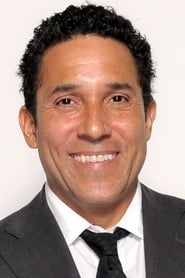
Oscar Martinez
AnalystOscar Martinez is the INTP as office intellectual—the one person in the room who cannot let a logical error go uncorrected, regardless of social cost. His dominant Ti compels him to analyze everything through rational frameworks: he corrects Michael's grammar, challenges Kevin's accounting, and fact-checks claims with a compulsion that is less about being right than about maintaining logical consistency in his environment. His catchphrase 'Actually...' is pure Ti—the automatic reflex to refine imprecise statements. His auxiliary Ne gives him the ability to see problems from multiple angles and connect disparate ideas: he is the first to recognize the implications of the budget surplus, he sees through corporate double-speak, and his political commentary reveals a mind that naturally synthesizes information across domains. His tertiary Si manifests in his methodical work habits and his deep knowledge base—he is the office's institutional memory for policy and procedure, and his accounting work is meticulous. His inferior Fe is his blind spot: he struggles to read emotional situations, his affair with the Senator shows poor judgment about relational dynamics, and Michael's forced kiss leaves him genuinely unsure how to process the social violation. Oscar's quiet exasperation with his coworkers' irrationality is the INTP's eternal burden—living in a world that prioritizes feeling over logic and wondering why no one else notices the errors.
“Actually, it's not.”Learn about INTP →

Jan Levinson
AnalystJan Levinson charts the ENTJ's descent from competent authority to destructive grandiosity, making her one of television's most compelling studies of type under stress. Early Jan's dominant Te is formidable: she manages Dunder Mifflin's regional branches with crisp efficiency, holds Michael accountable with pointed directness, and navigates corporate politics with strategic precision. Her auxiliary Ni provides a clear vision of professional success—she sees herself climbing to the highest levels of corporate leadership. But when she is fired and her Te-Ni structure collapses, her tertiary Se erupts catastrophically: she develops an obsession with sensory indulgence—expensive candles, plastic surgery, impulsive purchases, and Michael as a controllable source of physical comfort. The Dinner Party episode is a masterclass in ENTJ disintegration, as she controls every sensory detail of the evening while her command structure has become a prison for everyone present. Her inferior Fi—the function she has spent her career suppressing—surfaces as volcanic emotional instability: she oscillates between neediness and cruelty with Michael, pursues her candle business not from genuine passion but from a desperate need to prove her personal worth outside corporate identity. Jan's arc warns that the ENTJ's commanding strength becomes its greatest vulnerability when the systems it builds are stripped away, leaving raw ambition with nothing left to organize.
“I am taking a mental health day. It's not like I'm going on a bender.”Learn about ENTJ →
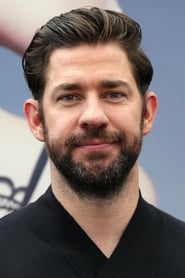
Jim Halpert
AnalystJim Halpert embodies the ENTP's signature blend of intellectual playfulness and underlying restlessness. His dominant Ne is the engine of his legendary pranks—encasing Dwight's stapler in Jell-O, impersonating Dwight with glasses and a wig, convincing him the CIA is recruiting him—each one requiring creative ideation and elaborate setup that a less imaginative mind would never attempt. His Ne also drives his discomfort with routine: he looks directly into the camera with knowing irony because he perceives the absurdity of corporate life that his colleagues accept at face value. His auxiliary Ti provides the analytical detachment that makes his humor surgical rather than cruel—he deconstructs Dwight's rigid logic, Michael's social failures, and corporate jargon with precision. His tertiary Fe emerges in his genuine social warmth: he is the office's emotional barometer, defusing tensions with a joke, supporting Pam's art career, and building authentic friendships across the hierarchy. His inferior Si is his Achilles heel—he struggles with commitment to routine, underperforms when forced into structured management roles at the Stamford branch, and his restlessness nearly destroys his marriage when Athlead pulls him away from the domestic stability Pam values. Jim's arc is the ENTP's central tension: the brilliant mind that sees every possibility but must learn that the most meaningful choice is sometimes the one that requires staying put.
“Bears. Beets. Battlestar Galactica.”Learn about ENTP →
Diplomats

Toby Flenderson
DiplomatToby Flenderson is the INFJ trapped in an environment that systematically invalidates every dimension of his personality. His dominant Ni gives him a deep understanding of interpersonal dynamics—he perceives the patterns of harassment, toxicity, and dysfunction in the office with clarity that no one else possesses, yet his warnings are consistently ignored. His auxiliary Fe drives his genuine desire to protect people: he enforces HR policies not as bureaucratic exercise but because he sincerely wants to create a fair and harmonious workplace. His quiet interventions—gently pulling Michael aside, documenting complaints, mediating conflicts—are Fe in service of a Ni vision of how the office should function. His tertiary Ti emerges in his surprisingly analytical nature: he writes a novel, serves on the Scranton Strangler jury with careful deliberation, and approaches HR cases with methodical thoroughness. His inferior Se is painfully evident in his physical awkwardness—his attempt to touch Pam's knee, his clumsy exit to Costa Rica, and his general inability to assert physical presence in a room. Michael's irrational hatred of Toby is the INFJ's existential nightmare: being despised precisely for trying to help. Toby's quiet melancholy is not weakness but the weight of an INFJ who sees how things could be, understands why they are not, and lacks the power to bridge that gap.
“Why are you the way that you are?”Learn about INFJ →

Pam Beesly
DiplomatPam Beesly's nine-season journey is television's most detailed portrait of INFP self-actualization. Her dominant Fi creates a rich inner world visible in her watercolor paintings, her quiet observations at the reception desk, and her deeply personal responses to office chaos—she does not judge loudly like Angela but feels intensely and privately. Early Pam is trapped in a relationship with Roy that suppresses her authentic self, her Fi values buried beneath accommodation. Her auxiliary Ne manifests first as wistful imagination—she dreams of art school, envisions a different life with Jim, and sees creative beauty in mundane moments others overlook. The pivotal coal-walk at Beach Day marks her Ne breaking free: she publicly declares her feelings and ambitions for the first time. Her tertiary Si provides comfort in routine—she clings to the reception desk long after she should move on—but also stores the accumulated emotional experiences that eventually give her courage. Her inferior Te is her greatest struggle: she fails art school, struggles with assertiveness as office administrator, and fabricates qualifications because direct competence-based confidence does not come naturally. Yet her final mural and her line about finding beauty in ordinary things reveal an INFP who has integrated all four functions—an artist who no longer needs external validation because her inner world has become self-sustaining.
“There's a lot of beauty in ordinary things. Isn't that kind of the point?”Learn about INFP →

Kevin Malone
DiplomatKevin Malone presents an unconventional ENFJ portrait—a man whose dominant Fe is expressed not through articulate leadership but through an almost primal emotional attunement to the people around him. His Fe manifests as unguarded warmth: he celebrates others' successes with genuine joy, mourns their losses with real tears, and creates moments of connection through cooking his famous chili, playing in Scrantonicity, and simply being present with infectious good nature. He reads emotional temperatures instinctively—he knows when someone is upset before they announce it and responds with simple, heartfelt gestures rather than sophisticated counseling. His auxiliary Ni emerges in surprising flashes of insight: his poker skills suggest pattern recognition abilities that his surface presentation obscures, and his occasional penetrating observations about office dynamics hint at an intuitive understanding deeper than anyone credits. His tertiary Se drives his love of sensory pleasures—food, music, physical comedy—and his famous efficiency philosophy of using few words reveals Se's preference for direct, concrete communication. His inferior Ti is his most visible limitation: mathematical errors, confused logic, and garbled explanations are the comedic hallmark of underdeveloped analytical thinking. Yet Kevin's emotional intelligence is consistently underestimated. He is the ENFJ as communal heart—the person who may not lead meetings but whose absence would leave the office emotionally colder.
“Why waste time say lot word when few word do trick?”Learn about ENFJ →

Michael Scott
DiplomatMichael Scott is the ENFP at his most unguarded—a man whose dominant Ne generates an endless torrent of ideas, personas, and improvisational gambits that range from brilliant to catastrophic. He creates Movie Mondays, the Dundies, Cafe Disco, and Prison Mike not out of strategic planning but because his Ne compulsively generates novel experiences to share with others. His auxiliary Fi is the emotional engine beneath the chaos: he genuinely believes the office is a family, and his desperate need to be loved stems from a childhood wound visible in the 'Bring Your Daughter to Work Day' episode where young Michael tells a camera he wants to have a hundred kids so he'll have a hundred friends. His Fi makes him surprisingly perceptive about individual pain—he comforts Dwight after Angela's rejection with unexpected tenderness, and his sales ability comes from authentic personal connection rather than technique. His tertiary Te is famously weak: he cannot manage budgets, understand corporate strategy, or organize his own calendar. Yet in rare moments of crisis—the client list theft, the Michael Scott Paper Company negotiation—his Te activates under pressure and he becomes shockingly competent. His inferior Si manifests as an inability to learn from past mistakes, repeating patterns of inappropriate behavior because lived experience simply does not register with the same force as present-moment possibility. When Michael finally finds Holly, it is the ENFP's ultimate reward: someone whose Ne-Fi matches his own, making him feel understood for the first time.
“Would I rather be feared or loved? Easy. Both. I want people to be afraid of how much they love me.”Learn about ENFP →
Sentinels

Angela Martin
SentinelAngela Martin demonstrates the ISTJ's Si-Te stack through her ironclad commitment to personal standards and procedural control. Her dominant Si creates an internal rulebook against which all experience is measured: parties must follow specific traditions, food must meet her exact specifications, and moral behavior must conform to the precedents she absorbed growing up in a strict religious household. Her running of the Party Planning Committee is pure Si—she has templates, approved vendor lists, and historical records of every prior event. Her auxiliary Te enforces these standards with clinical efficiency: she vetoes Phyllis's suggestions with blunt authority, assigns tasks with crisp delegation, and maintains accounting ledgers with zero tolerance for error. Her tertiary Fi reveals itself in the stark hypocrisy that makes her so compelling—she judges others harshly for moral failings while conducting affairs with Dwight and the Senator, because her Fi values are deeply personal and selectively applied rather than universally principled. Her inferior Ne is her anxiety trigger: unexpected changes to plans, spontaneous office events, or Michael's chaotic energy fill her with visible distress because unpredictable possibilities threaten her carefully constructed world. Angela's eventual acceptance of Dwight—the one person whose Si-Te devotion matches her own—is the ISTJ finding peace not through change but through finally aligning her private values with her public life.
“I find the mystery genre disgusting. I hate being titillated.”Learn about ISTJ →
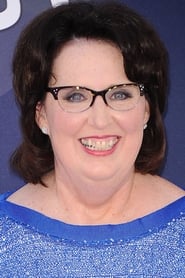
Phyllis Vance
SentinelPhyllis Vance is the ISFJ whose gentle exterior conceals a sophisticated understanding of social power dynamics that she deploys with surgical subtlety. Her dominant Si stores an encyclopedic memory of office relationships, past events, and personal details—she knows exactly what happened at every Christmas party, remembers birthdays without being reminded, and draws on years of accumulated experience to navigate social situations. Her auxiliary Fe manifests as warmth that is genuine but strategically deployed: she knits, she bakes, she nurtures, but she also leverages her husband Bob Vance's business connections and is not above using social guilt as leverage against Angela on the Party Planning Committee. Her passive-aggressive comment about having a lot to learn about this town reveals Fe's darker capability—she understands social hierarchies intimately and is willing to enforce them when her position is challenged. Her tertiary Ti emerges in her quiet competence as a saleswoman—she consistently meets quotas without drama, applying logical frameworks to client relationships. Her inferior Ne is visible in her discomfort with change and unpredictability—she becomes anxious when routines are disrupted and struggles with Michael's chaotic management style. Phyllis represents the mature ISFJ who has learned that kindness and power are not mutually exclusive, and that the person who remembers everything about everyone holds a unique form of social currency.
“You have a lot to learn about this town, sweetie.”Learn about ISFJ →

Dwight Schrute
SentinelDwight Schrute is the ESTJ in its most unfiltered form—a man whose devotion to hierarchy, duty, and procedure borders on parody yet remains entirely sincere. His dominant Te drives everything: he creates organizational charts for the office, maintains a rigid sales methodology, and enforces rules with the zeal of a bureaucrat who genuinely believes systems produce excellence. His title obsession—insisting he is Assistant Regional Manager, not Assistant to the Regional Manager—reveals Te's need for clearly defined authority structures. His auxiliary Si grounds him in tradition and precedent: Schrute Farms, beet farming, and Pennsylvania Dutch customs are not quirks but a lived heritage he considers superior to modern alternatives. He references historical battles, survival techniques, and agricultural wisdom drawn from generations of family experience. His tertiary Ne surfaces unexpectedly in his elaborate contingency plans—he has mapped the office for every conceivable emergency scenario, from fire to zombie apocalypse, showing a capacity for imaginative planning that serves his Si-Te worldview. His inferior Fi is his most vulnerable dimension: his desperate need for Michael's approval, his genuine heartbreak over Angela, and his quiet tears when Michael leaves reveal an emotional depth he struggles to articulate. When Dwight finally becomes Regional Manager, it is the ESTJ's earned triumph—authority granted to the one person who always took the institution most seriously.
“Whenever I'm about to do something, I think, 'Would an idiot do that?' And if they would, I do not do that thing.”Learn about ESTJ →

Kelly Kapoor
SentinelKelly Kapoor demonstrates the ESFJ's Fe-Si stack through her obsessive navigation of social relationships and cultural trends. Her dominant Fe does not merely read the room—it lives and breathes social dynamics as its primary reality. She processes every event through its relational impact: Ryan's promotion matters because of what it means for their relationship, the Dundies matter because of who gets recognized, and office gossip is not idle chatter but essential social intelligence. Her reaction to Ryan's indifference—elaborate schemes to provoke jealousy, dramatic declarations, feigned pregnancy—reveals Fe in overdrive, escalating emotional bids when connection is threatened. Her auxiliary Si anchors her to pop culture traditions and social scripts: she quotes movies, follows celebrity relationships as templates for her own, and references past slights with perfect recall. Her tertiary Ne surfaces in her surprisingly sharp wit—her retorts are creative and unexpected, and her business ideas, while undeveloped, show genuine imaginative spark. Her inferior Ti is her comedic weakness: she struggles with logical analysis, dismisses data as boring despite working in customer service quality assurance, and makes decisions based entirely on emotional reasoning. Kelly's depth lies beneath the superficial persona—she is a woman whose entire cognitive architecture is built for human connection, deployed in an environment that often treats social intelligence as frivolous.
“I have a lot of questions. Number one: how dare you?”Learn about ESFJ →
Explorers

Stanley Hudson
ExplorerStanley Hudson is the ISTP who has perfected the art of minimum viable engagement—doing exactly what is required and nothing more, with a pragmatic efficiency that conceals sharp intelligence. His dominant Ti operates as a cost-benefit calculator: every request from Michael is instantly assessed for logical necessity, and most are rejected as irrational wastes of time. His 'Did I stutter?' outburst is not emotional chaos but Ti reaching its threshold—a system overloaded by illogical demands finally asserting its boundaries with devastating clarity. His auxiliary Se is expressed through sensory pleasures he has methodically optimized: his crossword puzzles provide tactile-mental stimulation, Pretzel Day is the annual Se holiday he genuinely anticipates, and his Florida vacation represents the Se reward for enduring fifty weeks of office tedium. His tertiary Ni surfaces in quiet moments of insight—he occasionally delivers observations about office dynamics that cut straight to the truth, bypassing the social niceties others use to arrive at the same conclusion. His inferior Fe is deliberately suppressed: he refuses to participate in group bonding, dismisses Michael's attempts at emotional connection, and maintains rigid interpersonal boundaries. Yet when he believes he is having a heart attack, his vulnerability reveals the Fe beneath—a genuine fear of losing the people and pleasures he pretends not to value. Stanley's philosophy is the ISTP creed distilled: life is short, work is a means to an end, and anyone who complicates that equation is an obstacle.
“Did I stutter?”Learn about ISTP →

Darryl Philbin
ExplorerDarryl Philbin demonstrates the ISFP's quiet strength—a man whose authenticity and grounded confidence stand in sharp contrast to the office's performative chaos. His dominant Fi operates as an internal compass of dignity: he does not seek validation from Michael or corporate hierarchy, maintaining his self-respect through genuine personal values rather than positional authority. When Michael misappropriates warehouse culture, Darryl responds not with outrage but with Fi-driven bemusement, teaching Michael fabricated slang to expose the absurdity. His auxiliary Se gives him a physical groundedness that the upstairs office workers lack—he manages a warehouse floor, plays music with sensory pleasure, and approaches romantic relationships with present-moment authenticity rather than anxious planning. His tertiary Ni develops across the series as his ambitions grow: he begins to envision a career beyond the warehouse, proposing the delivery tracking app to Jo Bennett with a quiet confidence that reveals long-term thinking emerging naturally. His inferior Te is initially his limitation—he does not instinctively organize, strategize, or self-promote—but it matures as he moves upstairs and eventually to Athlead, learning to channel his ideas through business frameworks. Darryl's arc is the ISFP success story: a man who refuses to compromise his authenticity yet steadily grows into positions that match his actual capabilities, never performing ambition but genuinely developing it.
“I taught Mike some new phrases. I want to see him use them in a sentence.”Learn about ISFP →

Creed Bratton
ExplorerCreed Bratton is the ESTP taken to its most extreme and anarchic expression—a man who has lived so fully in the present tense that conventional morality, linear time, and social norms have all become optional. His dominant Se is total: he exists entirely in the current moment, responding to whatever situation arises with the improvisational skill of someone who has talked his way out of situations most people cannot imagine. He transfers a quality-control crisis to an innocent coworker without hesitation, steals, forges documents, and casually references criminal activities—all with the Se confidence of a man who has survived everything life has thrown at him. His auxiliary Ti provides the street-smart analytical framework that keeps him functional: he assesses threats instantly, calculates risk with amoral precision, and constructs logical justifications for behavior that defies every social contract. His tertiary Fe surfaces in fleeting moments of social charm—he can be surprisingly warm and engaging when it serves his purposes, and his cult leadership experience suggests a capacity for emotional influence. His inferior Ni is deliberately abandoned: he makes no plans, maintains no coherent personal narrative, and his blog contains stream-of-consciousness observations disconnected from any larger meaning. When he briefly becomes acting manager, his authoritarian decree reveals what the ESTP becomes without any tempering influence—pure tactical opportunism unconstrained by vision, values, or consequences.
“I've been involved in a number of cults, both as a leader and a follower. You have more fun as a follower, but you make more money as a leader.”Learn about ESTP →

Andy Bernard
ExplorerAndy Bernard is the ESFP whose desperate need for sensory validation and emotional approval drives both his most endearing and most destructive behaviors. His dominant Se is constantly performing: he bursts into a cappella renditions at every opportunity, plays banjo in the office, and approaches every social situation as a stage. His Se craves immediate sensory feedback—applause, laughter, admiration—and when deprived, he escalates until he gets a response, as when he punches a hole in the wall after being ignored. His auxiliary Fi harbors deep emotional wounds from parental rejection; his father's preference for his brother Walter Jr. creates a Fi wound that no amount of Se performance can heal. This Fi also generates his most genuine moments, like his heartfelt nostalgia about wishing you could know you were in the good old days while living them. His tertiary Te is inconsistent—he attended Cornell (which he mentions constantly) and can organize when motivated, but his management of the Scranton branch collapses because Te discipline cannot compete with Se impulses. His inferior Ni is almost absent: he cannot envision long-term consequences, abandoning Erin for a boat trip, torpedoing his career for a reality show audition, and making commitments he has no framework to sustain. Andy's tragedy is the ESFP who performs joy while internally searching for an audience that will never be large enough to fill the silence his parents left.
“I wish there was a way to know you were in the good old days before you actually left them.”Learn about ESFP →
Character Relationship Dynamics in The Office (US)
Jim Halpert × Pam Beesly
The Wit and The Artist
Jim's Ne-Ti and Pam's Fi-Ne share Ne as a bridge function — they both perceive the absurdity of Dunder Mifflin, which is why they're drawn to each other through knowing looks at the camera long before they're together. Jim's Ne generates ideas and humor, while Pam's Ne imagines possibilities for a different life. Their challenge emerges from the opposing dominant functions: Jim's Ti detaches from emotion to analyze, while Pam's Fi feels everything deeply but struggles to express it outwardly. Jim's restlessness with Athlead threatens the relationship because Ne-Ti constantly seeks new stimulation, while Pam's Fi needs emotional stability and present-moment connection. Their resolution comes when Jim learns to prioritize Fi values over Ti ambition, and Pam learns to activate her inferior Te to meet him in the world of action.
Michael Scott × Dwight Schrute
The Dreamer Boss and The Loyal Soldier
Michael's Ne-Fi generates chaos through imaginative whims driven by emotional need, while Dwight's Te-Si creates order through systematic enforcement of rules and hierarchy. Their relationship works precisely because of this opposition: Michael provides the vision (however absurd) and the emotional warmth Dwight craves, while Dwight provides the loyal execution and structured support Michael desperately needs. Dwight's devotion to Michael isn't just comedy — it's an ESTJ finding the one authority figure who genuinely appreciates his Te competence. Michael's affection for Dwight isn't just favoritism — it's an ENFP recognizing the one person who takes his Fi dreams seriously. When Michael leaves, Dwight's grief reveals the depth of an ESTJ's inferior Fi — the feelings he buried under duty and protocol.
Angela Martin × Dwight Schrute
The Silent Standards and The Loud Standards
Angela's Si-Te and Dwight's Te-Si share the same two dominant functions in reversed order, creating a pairing of two people who fundamentally agree on values but differ in expression. Angela's dominant Si creates internal standards she enforces through quiet judgment and disapproval — she maintains an inner world of How Things Should Be. Dwight's dominant Te creates external systems he enforces through loud assertion and action — he builds an outer world of How Things Must Be Done. Their on-again, off-again dynamic reflects the ISTJ-ESTJ tension: both want order and tradition, but Angela needs it private and pristine while Dwight needs it public and proclaimed. Their ultimate union makes cognitive sense — they're the only two people in the office who share the same fundamental worldview.
Find Your Character
Know your MBTI type? Find your character match below.
Frequently Asked Questions
Michael Scott is best typed as an ENFP. His boundless enthusiasm, constant idea generation, desperate need for emotional connection, and imaginative (if misguided) approach to management all reflect dominant Ne and auxiliary Fi. He genuinely cares about his employees but expresses it in chaotic, unconventional ways.
Dwight Schrute is a classic ESTJ. His devotion to hierarchy, rules, and tradition (Te-Si) is the core of his character. He respects authority, follows procedures religiously, takes his responsibilities extremely seriously, and values hard work and duty above all else.
Jim Halpert is typed as an ENTP. His clever pranks show dominant Ne creativity, his ability to deconstruct situations with witty observations reflects Ti analysis, and his charm and social ease make him the classic ENTP who uses humor to engage with an absurd world.
Pam Beesly is widely considered an INFP. Her artistic nature, quiet sensitivity, and gradual journey toward authenticity and self-expression are classic INFP traits. Her dominant Fi gives her strong inner values, while her Ne provides creativity and imagination that she expresses through her art.
Michael Scott is best typed as ENFP rather than ESFP. The key distinction is his dominant function: Ne (extraverted intuition) versus Se (extraverted sensing). Michael constantly generates abstract ideas and imaginative scenarios — Prison Mike, Date Mike, Michael Scarn — that come from Ne's pattern-making, not Se's sensory engagement. An ESFP would be grounded in the physical moment; Michael lives in a world of possibilities and 'what ifs.' His auxiliary Fi also explains his deep emotional sensitivity and desperate need to be loved, which drives his behavior far more than sensory thrill-seeking would.
Jim is typed as ENTP rather than ENFJ because his primary mode of engagement is intellectual playfulness (Ne-Ti), not emotional leadership (Fe-Ni). Jim's pranks on Dwight require creative ideation and logical setup — hallmarks of Ne-Ti working together. An ENFJ would focus on organizing people and creating harmony; Jim instead observes absurdity from a detached, analytical distance. His direct-to-camera looks are pure Ti commentary on illogical behavior. While Jim does show Fe warmth (tertiary function), he leads with ideas and analysis, not emotional connection.
Dwight is ESTJ, not ISTJ. Both types share Si-Te functions but in different order. Dwight leads with Te (extraverted thinking) — he actively organizes, commands, and enforces rules outwardly. He creates safety protocols, challenges authority structures, and vocally asserts his position in the hierarchy. An ISTJ would internalize these standards more quietly. Dwight's Te-dominance makes him externally bossy and controlling, while his auxiliary Si grounds him in Schrute family traditions and farming heritage. His constant need to be recognized as authority (Assistant Regional Manager, not Assistant to the) is classic Te-dominant behavior.
Explore More Shows
Find Your Own Type
Discover your MBTI personality type and see which fictional characters share your traits.
Take the Test