

Friends
Discover which Friends character matches your MBTI type
Analysts

Mr. Heckles
AnalystMr. Heckles represents the INTJ in extreme isolation—a man whose internal world has become so self-referential that external reality exists only as an annoyance to be managed. His dominant Ni has constructed an entirely private framework of meaning: he claims to play the oboe, to have a cat, and to own various items that belong to the apartment upstairs, not because these claims are factually true but because his internal narrative has become his only reality. His auxiliary Te manifests as systematic complaint—his grievances are delivered with procedural consistency, following established patterns of escalation, and he applies his personal rules to the building with the authority of someone enforcing logical policy. His famous line about disturbing his oboe practice is Te enforcing a Ni-constructed reality with complete conviction. His tertiary Fi reveals itself in the poignant discovery after his death: his apartment contains a lifetime of accumulated possessions and unfulfilled interests, suggesting a rich inner value system that he never shared with anyone. Chandler's realization that Mr. Heckles could be his own future—a man who pushed everyone away—speaks to the isolated Fi beneath the Ni-Te exterior. His inferior Se is his defining limitation: he has withdrawn so completely from sensory engagement and physical connection that his world has contracted to one apartment and a series of imagined grievances. Mr. Heckles is the cautionary INTJ—brilliant internal architecture with no external outlet, independence that calcified into solitude.
“You're disturbing my oboe practice.”Learn about INTJ →

David the Scientist
AnalystDavid the Scientist is the INTP whose intellectual absorption creates both his charm and his relational limitations. His dominant Ti is his primary mode of engaging with reality: he processes the world through scientific frameworks, approaches problems with analytical methodology, and finds his deepest satisfaction in the internal logic of his research. His decision to leave for Minsk reveals Ti's hierarchy of values—when forced to choose between a romantic relationship and an intellectually compelling research opportunity, Ti prioritizes the system of knowledge over the human connection. His auxiliary Ne gives him the creative spark that makes him an appealing partner: he is genuinely curious, asks unexpected questions, and his conversational tangents reveal a mind that naturally connects disparate ideas. His awkward charm with Phoebe works because Ne's playful randomness matches her own unconventional energy. His tertiary Si surfaces in his academic dedication—years of sustained research require the disciplined recall and procedural consistency that Si provides, even if it operates in service of Ti's analytical goals. His inferior Fe is painfully visible in his romantic struggles: he cannot articulate his feelings for Phoebe with emotional directness, his declarations of love are halting and intellectualized, and when he returns from Minsk years later, he still cannot navigate the emotional complexity of competing for her attention. David represents the INTP's central dilemma—a mind brilliant enough to understand the universe but struggling to express what the heart already knows.
“I just got offered a research grant. In Minsk.”Learn about INTP →

Frank Buffay Jr.
AnalystFrank Buffay Jr. demonstrates ENTJ cognitive functions in their rawest, most unpolished form—a young man whose Te-Ni decisiveness operates without the social refinement that typically develops with maturity. His dominant Te cuts through every objection with blunt force: when he announces he will marry his teacher, he does not debate, negotiate, or seek approval—he states his decision as accomplished fact and expects the world to organize itself accordingly. His famous declaration of intent is Te at its most commanding, delivered with the conviction of a CEO announcing a merger. His auxiliary Ni provides the singular vision that powers his certainty: he has seen his future and it includes Alice, children, and a specific life trajectory. This Ni vision is so clear and unwavering that the unconventionality of a student-teacher relationship is simply irrelevant to his framework—Ni dismisses social norms that conflict with its perceived truth. His tertiary Se manifests in his physical directness and energetic presence: he is loud, animated, and occupies space with a boldness that commands attention in every scene. His inferior Fi surfaces in the genuine emotional depth beneath his commanding exterior—his excitement about having children, his vulnerable moments with Phoebe about their family situation, and his authentic joy at the triplets' birth reveal personal values that are deeply felt even if rarely articulated with nuance. Frank is the ENTJ before life has sanded down the edges—pure will directed at a clear target, social consequences be damned.
“I'm gonna marry her. We're gonna have kids. The end.”Learn about ENTJ →

Chandler Bing
AnalystChandler Bing is the ENTP whose humor is not merely entertainment but a complete defense system built to protect a deeply wounded interior. His dominant Ne generates jokes at machine-gun pace, reframing every situation through ironic observation—his 'Could this BE any more...' construction is Ne at work, instinctively finding the absurd angle in mundane reality. He uses humor to deflect intimacy, avoid conflict, and process anxiety, turning every emotional moment into material. His auxiliary Ti provides the analytical sharpness that makes his humor surgical: he identifies logical contradictions in others' behavior with precision, deconstructs social conventions with skepticism, and his career shift to advertising reveals Ti's affinity for systematic creative problem-solving. His tertiary Fe develops through his relationship with Monica—he gradually learns to express genuine warmth, read emotional needs without immediately deflecting, and prioritize harmony over cleverness. His proposal to Monica, played straight with no jokes, marks the moment Fe overrides his Ne-Ti defense mechanism. His inferior Si manifests as unresolved childhood trauma: his parents' divorce and their humiliating Thanksgivings are sensory memories he cannot process directly, instead converting them into comedic material. Chandler's growth across the series is the ENTP's most important developmental challenge—learning that vulnerability is not a problem to be solved with wit but an experience to be inhabited with courage.
“Could this BE any more awkward?”Learn about ENTP →
Diplomats

Gunther
DiplomatGunther is the INFJ as silent witness—a man who perceives everything, feels deeply, and expresses almost nothing. His dominant Ni gives him an uncanny understanding of the group's dynamics: he knows about Ross and Rachel's relationship tensions before they are public, he intuits emotional undercurrents in the coffee shop, and his awareness of Rachel's feelings and relationships demonstrates pattern recognition that goes far beyond casual observation. His love for Rachel is itself a Ni phenomenon—an idealized vision of connection that he nurtures internally for years, building an entire emotional architecture around someone who barely registers his existence. His auxiliary Fe drives his quiet acts of service: he runs Central Perk with meticulous care for the group's comfort, he tolerates their unpaying presence because Fe values the emotional atmosphere they create, and his occasional sharp remarks toward Ross reveal Fe's protective instinct toward Rachel. His tertiary Ti surfaces in his dry, precise wit—his insults are economical and logically devastating, suggesting an analytical mind operating behind the placid exterior. His inferior Se is his most poignant limitation: he cannot act on his feelings in the physical world, cannot assert his presence into Rachel's awareness, and cannot transform his internal vision into tangible reality. His final confession to Rachel in the series finale is the INFJ's bittersweet culmination—the internal world finally spoken aloud, too late to change anything but necessary for his own completion.
“I would like to say something. Rachel?”Learn about INFJ →

Mike Hannigan
DiplomatMike Hannigan is the INFP who chose authenticity over expectation and found his truest self in the process. His dominant Fi drove the defining decision of his life: walking away from a successful legal career because it violated his internal values, choosing instead to pursue piano despite limited talent. This is not laziness but Fi's insistence that how you spend your days must align with who you actually are. His quiet self-deprecation about his piano skills reveals healthy Fi—he knows he is not great but values the authentic pursuit more than the external achievement. His auxiliary Ne connects him to Phoebe: he instantly appreciates her eccentricity because Ne recognizes and delights in unconventional perspectives. Their relationship works because both lead with imagination and personal values rather than social convention—his willingness to legally change his name to Crap Bag demonstrates Ne's playful disregard for propriety. His tertiary Si surfaces in his relationship with family tradition: he comes from old money with established social expectations, and his rebellion against this background is a conscious Fi rejection of Si-inherited values that feel inauthentic. His inferior Te is visible in his professional struggles—he has difficulty organizing his career, lacks practical ambition, and sometimes lets his idealism prevent practical action. Mike represents the INFP who has made peace with the gap between society's definition of success and his own—choosing meaning over status with quiet, unshakeable conviction.
“I'm a pianist. I mean, not a good one, but...”Learn about INFP →

Janice Litman-Goralnik
DiplomatJanice Litman-Goralnik is the ENFJ whose dominant Fe operates at maximum volume—a woman so emotionally attuned and socially persistent that she becomes impossible to avoid. Her Fe does not merely read emotional dynamics; it projects warmth with overwhelming force, her signature laugh and 'Oh my God!' functioning as emotional sonar that demands reciprocal engagement from everyone in range. Her repeated returns to Chandler's life demonstrate Fe's relentless pursuit of connection—she is not oblivious to rejection but genuinely cannot accept that emotional bonds can be permanently severed. Her auxiliary Ni gives her an uncanny ability to reappear at precisely the most inconvenient moments, as if she intuitively senses when Chandler is emotionally vulnerable. Her Ni also provides surprising insight into relationship dynamics: she accurately identifies Chandler's commitment phobia and emotional avoidance long before he acknowledges them himself. Her tertiary Se manifests in her bold physical presence—her distinctive voice, expressive gestures, and unapologetic style reveal someone fully comfortable occupying space in the sensory world. Her inferior Ti is evident in her struggle to process logical rejections: she responds to breakups with emotional escalation rather than analytical acceptance. Janice's comedic brilliance masks a genuine ENFJ truth—she is fundamentally a person of enormous emotional generosity who simply wants to love and be loved, and her persistence is not pathology but the ENFJ's refusal to accept that connection can fail.
“Oh... my... God!”Learn about ENFJ →

Phoebe Buffay
DiplomatPhoebe Buffay is the ENFP forged in hardship—her dominant Ne produces a worldview so creatively unconventional that it becomes her survival mechanism. Having grown up on the streets, lost her mother to suicide, and lived through experiences her sheltered friends cannot fathom, Phoebe's Ne transforms trauma into eccentric philosophy: past lives, psychic abilities, and 'Smelly Cat' are not delusions but imaginative frameworks that make an unbearable past bearable. Her songs—absurd, darkly funny, brutally honest—are pure Ne-Fi creation, turning raw emotional truth into art that nobody expects. Her auxiliary Fi provides an uncompromising moral compass: she is passionately vegetarian, refuses to participate in systems she considers unjust, and defends her values even when her friends mock them. She once mugged Ross as a teenager and decades later confronts that truth with Fi honesty rather than evasion. Her tertiary Te surfaces as surprising practical toughness—she negotiates aggressively (selling the Porsche, handling her father), and her street survival skills reveal organizational ability born from necessity. Her inferior Si is her relationship with the past: she carries her traumatic memories not as organized history but as fragmented emotional impressions that surface unpredictably, creating the disjointed storytelling and sudden darkness that punctuate her sunny exterior. Phoebe's genius is the ENFP's resilience—the ability to generate meaning, connection, and joy from the most unlikely raw materials.
“I don't even have a pla.”Learn about ENFP →
Sentinels
Ross Geller
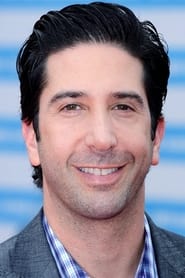
SentinelRoss Geller demonstrates the ISTJ's complete cognitive stack through his academic rigidity, his desperate attachment to tradition, and his catastrophic inability to adapt when his carefully constructed world collapses. His dominant Si is his defining feature: he draws on established knowledge with passionate authority (correcting everyone about dinosaurs, insisting on proper grammar), he treasures institutional credentials (his PhD, his museum position), and he treats past experiences as binding precedent—his insistence that he and Rachel 'were on a break' is Si clinging to a specific factual interpretation of events regardless of emotional context. His auxiliary Te organizes his world into efficient systems: his apartment is meticulously arranged, his lectures are precisely structured, and he approaches relationships with a checklist mentality (the pros and cons list about Rachel and Julie). His tertiary Fi surfaces as volcanic emotional outbursts when his ordered world is violated—the 'MY SANDWICH' meltdown, his rage at the tanning salon, and his possessiveness in relationships all reveal deeply personal values erupting through his controlled exterior. His inferior Ne is the source of both his comedy and his suffering: he cannot handle ambiguity, improvisation, or open-ended possibilities, which is why his three divorces devastate him so completely—each one represents a future he had rigidly planned being shattered by unpredictable reality.
“We were on a break!”Learn about ISTJ →

Emily Waltham
SentinelEmily Waltham reveals the ISFJ under extreme relational stress—a woman whose Si-Fe stack craves security and trust, then shatters when both are destroyed at the altar. Her dominant Si invests deeply in the ritual significance of her wedding: every detail matters because Si treats ceremonies as sacred precedents that define a relationship's foundation. When Ross says Rachel's name during their vows, it is not merely embarrassing but an Si catastrophe—the foundational memory of their marriage is permanently corrupted, and no amount of subsequent reassurance can overwrite that sensory imprint. Her auxiliary Fe initially drew her to Ross through genuine warmth and romantic connection, and her post-wedding demands (that Ross never see Rachel again) are Fe's desperate attempt to restore relational security by controlling the emotional environment. Her tertiary Ti emerges in the logical ultimatums she constructs: her conditions are systematic and internally consistent, even if emotionally extreme. She is not being irrational—she has correctly analyzed that Rachel is a threat and designed a logical countermeasure. Her inferior Ne manifests as the anxiety that pervades her marriage: she imagines worst-case scenarios about Ross and Rachel, cannot tolerate ambiguity about his feelings, and the uncertainty drives her to increasingly controlling behavior. Emily's ultimate decision to end the marriage is, ironically, healthy ISFJ growth—recognizing that a relationship without trustworthy Si memories and secure Fe bonds is one she cannot sustain.
“It's my wedding. I should be able to do whatever I want.”Learn about ISFJ →

Monica Geller
SentinelMonica Geller is the ESTJ whose need for control and excellence transforms every domain she touches—kitchen, apartment, relationships, games—into a system to be optimized. Her dominant Te is relentless: she organizes Thanksgiving dinner with military precision, categorizes her towels into eleven categories, and runs her professional kitchen with the intensity of a drill sergeant. Competition activates her Te at peak intensity—whether it is football on the street, a cooking challenge, or proving she can host a better party than anyone else. Her auxiliary Si provides the template for excellence: she draws on her mother Judy's high standards as both motivation and wound, replicating the domestic perfectionism she grew up with while trying to surpass it. Her childhood obesity is the Si memory that fuels her adult discipline—she never forgets what it felt like to be judged, and her compulsive cleaning and fitness are Si-driven responses to that past. Her tertiary Ne surfaces in her creative cooking and her ability to improvise solutions when plans go wrong, though she strongly prefers structure over spontaneity. Her inferior Fi is her most vulnerable dimension: she struggles to process rejection personally, her competitive fury masks deep insecurity about being the less-favored child, and her controlling behavior with Chandler reveals how difficult it is for her to trust that she is loved without managing every variable. Monica's growth comes when she learns that love, unlike a recipe, cannot be perfected through better organization.
“I KNOW!”Learn about ESTJ →

Joey Tribbiani
SentinelJoey Tribbiani demonstrates the ESFJ's Fe-Si stack through a loyalty and emotional warmth so fundamental that it defines his entire identity. His dominant Fe makes other people's happiness his primary concern: he walks Chandler through relationship anxiety with surprising emotional intelligence, he supports Ross through divorces with unwavering presence, and his devastation when the group begins to separate reveals how deeply he experiences the collective emotional bond. His famous refusal to share food is not selfishness but an Si-Fe boundary—food is his love language, and sharing it represents an intimacy he reserves for his closest people. His auxiliary Si gives him deep attachment to routines and traditions: the apartment with Chandler, their recliner-based friendship rituals, and his consistent audition approach all reflect Si's comfort in established patterns. His tertiary Ne emerges in his acting ability—he can inhabit characters and imagine scenarios with surprising creativity, and his improvisational social charm reveals a playful capacity for generating novel responses in the moment. His inferior Ti is his comedic weakness: he struggles with abstract logic, misuses vocabulary, and his encyclopedia purchase (only the V volume) reveals analytical thinking that never fully developed. Joey's depth lies in his emotional consistency—he is the friend who never wavers, never schemes, and never prioritizes ambition over people. His ESFJ warmth is the group's emotional foundation.
“Joey doesn't share food!”Learn about ESFJ →
Explorers

Richard Burke
ExplorerRichard Burke embodies the mature ISTP—a man whose quiet competence and emotional steadiness come from decades of Ti-Se integration. His dominant Ti approaches life with analytical calm: as an ophthalmologist he diagnoses with precision, as a romantic partner he assesses relationships with rational clarity, and his famous declaration that he does not need to have fun reveals Ti's pragmatic relationship with pleasure—enjoyment is fine but not a requirement for a well-examined life. His auxiliary Se gives him an effortless physical presence: he is handsome without trying, competent in practical matters, and comfortable in sensory experiences like fine dining and cigar smoking. His relationship with Monica initially works because his Se matches her need for a physically present partner, while his Ti provides the calm counterbalance to her Te intensity. His tertiary Ni emerges in his moments of clarity about what he wants—when he realizes too late that he wants Monica back, he articulates it with the focused conviction of Ni piercing through his usual analytical detachment. His inferior Fe is his limitation: he cannot match Monica's emotional intensity, he struggles to express the depth of his feelings until she has moved on, and his stoic composure, while attractive, ultimately prevents the emotional vulnerability she needs. Richard represents the ISTP's paradox—competence that commands respect but emotional reserve that can cost them the connections they value most.
“I'm a grown man. I don't need to have fun.”Learn about ISTP →

Tag Jones
ExplorerTag Jones represents the young ISFP in his most natural state—authentic, present, and unburdened by the ambition or anxiety that drives everyone around him. His dominant Fi gives him a quiet self-acceptance that is disarming: when he admits he had no goals after college, it is not apathy but Fi's honest refusal to adopt external motivations that do not resonate internally. He does not pretend to be more ambitious than he is, and this authenticity is precisely what attracts Rachel, who has spent her life surrounded by people performing success. His auxiliary Se keeps him grounded in the present moment: he is physically attractive without effort, comfortable in his body, and responds to situations with relaxed immediacy rather than anxious planning. His approach to the assistant job is Se-practical—he does what is in front of him without overcomplicating it. His tertiary Ni is largely undeveloped, visible in his lack of long-term vision: he does not know where he is headed and is genuinely comfortable with that uncertainty, which is both his charm and eventually the reason Rachel outgrows the relationship. His inferior Te manifests as professional disorganization—he is not incompetent but lacks the systematic drive to build career structures. Tag embodies the ISFP's core philosophy: life is best experienced in the present, authenticity matters more than achievement, and being genuinely yourself is enough—a perspective that the show's more driven characters secretly envy.
“I didn't really have any goals for after college.”Learn about ISFP →

Jack Geller
ExplorerJack Geller is the ESTP patriarch—a man whose Se-Ti directness cuts through social niceties with blunt practicality that his children find both endearing and mortifying. His dominant Se engages with the world through immediate, tangible experience: he tells stories with physical gusto, comments on food and drink with sensory enthusiasm, and his famous inability to keep the wedding cost secret reveals Se's compulsion to share concrete, present-tense information rather than maintain abstract discretion. His auxiliary Ti gives him a pragmatic logical framework: he assesses situations with common-sense cost-benefit analysis, his parenting advice is practically oriented rather than emotionally nuanced, and he approaches problems with a fix-it mentality that values efficiency over sensitivity. His tertiary Fe appears in his genuine warmth toward his family—he clearly loves his children, enjoys social gatherings, and his humor is meant to connect rather than wound, even when it lands awkwardly. His favoritism toward Ross over Monica is not conscious cruelty but Fe operating on autopilot, defaulting to the child whose achievements (academia, dinosaurs) are easier for his Ti to value than Monica's emotional and creative accomplishments. His inferior Ni is evident in his lack of awareness about long-term emotional consequences—he does not perceive how his favoritism shapes Monica's adult psychology or how his tactless comments land. Jack represents the ESTP father archetype: present, practical, and loving in his own blunt way, blind to the emotional subtleties his directness leaves in its wake.
“I'm not gonna tell you what they spent on that wedding. But forty thousand dollars is a lot of money!”Learn about ESTP →
Rachel Green
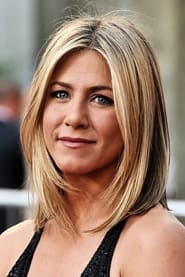
ExplorerRachel Green's ten-season arc is the definitive ESFP growth story—from pampered princess to self-made professional, driven entirely by sensory engagement and personal values. Her dominant Se is unmistakable: she arrives at Central Perk in a wedding dress having just abandoned her planned future on pure impulse, and from that moment forward she learns through direct experience rather than planning. Her fashion career is Se-driven—she has an innate eye for aesthetic detail, thrives in the tactile world of clothing and design, and advances by being physically present in rooms where opportunities arise. Her auxiliary Fi is the engine of her transformation: her 'shoe' speech in the pilot reveals a woman discovering personal values beneath decades of external validation. She does not leave Barry because she analyzed the relationship—she leaves because something inside her felt wrong. Her tertiary Te develops steadily as she builds professional competence: she moves from waitress to Bloomingdale's buyer to Ralph Lauren executive, learning to organize, delegate, and assert authority. Her inferior Ni remains her weakness throughout—she struggles with long-term planning, makes impulsive romantic decisions, and her on-again-off-again relationship with Ross suffers because she cannot commit to a definitive vision of their future. Her final choice to stay in New York rather than take the Paris job is the mature ESFP integrating all functions—Se presence, Fi values, Te practicality, and finally, Ni clarity about what truly matters.
“It's like all my life everyone's told me, 'You're a shoe! You're a shoe! You're a shoe!' Well, what if I don't want to be a shoe?”Learn about ESFP →
Find Your Character
Know your MBTI type? Find your character match below.
Frequently Asked Questions
Chandler Bing is best typed as an ENTP. His constant use of humor and sarcasm as a defense mechanism, his quick wit, and his tendency to analyze situations from every angle reflect dominant Ne and auxiliary Ti. His struggle with emotional vulnerability and commitment is characteristic of ENTPs who lead with intellect over feeling.
Monica Geller is a classic ESTJ. Her obsessive organization, competitive nature, and need to be in charge of everything from dinner parties to game nights all stem from dominant Te. Her Si auxiliary drives her love of tradition, routine, and doing things the 'right' way.
Phoebe Buffay is typed as an ENFP. Her eccentric personality, creative songwriting, and free-spirited approach to life reflect dominant Ne. Her strong personal values and authenticity come from auxiliary Fi, and her refusal to conform to social expectations is quintessential ENFP individuality.
Joey is typed as an ESFJ. Despite his comedic portrayal, Joey is fundamentally defined by his loyalty, warmth, and deep care for his friends. His Fe dominant makes him attuned to others' feelings, and his Si auxiliary gives him strong attachment to routines, traditions, and the people he considers family.
Explore More Shows
Find Your Own Type
Discover your MBTI personality type and see which fictional characters share your traits.
Take the Test