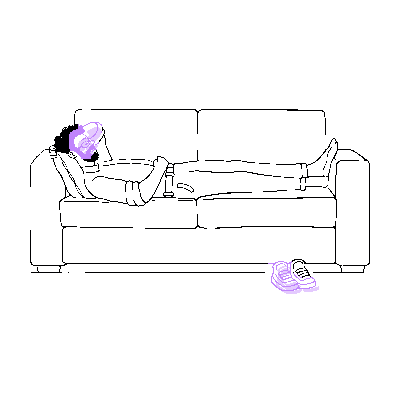
INTPの睡眠パターンとクロノタイプ
INTPはMBTIシステムの中で最も極端な夜型といえるかもしれません。彼らの睡眠との関係は混乱していることが多く、知的な調査に没須すると時間感覚を失い、数時間が経過したことに気づかないまま午前3時または4時になっていることがよくあります。INTPの脳は9時から5時の世界が求めるリズムとは根本的に異なるリズムで動いており、自然に夜へと流れていく非構造的な探索の長い期間を好みます。
INTPはMBTIシステムの中で最も極端な夜型といえるかもしれません。彼らの睡眠との関係は混乱していることが多く、知的な調査に没須すると時間感覚を失い、数時間が経過したことに気づかないまま午前3時または4時になっていることがよくあります。INTPの脳は9時から5時の世界が求めるリズムとは根本的に異なるリズムで動いており、自然に夜へと流れていく非構造的な探索の長い期間を好みます。
INTPの優勢機能Ti(内向的思考)は内部で論理的フレームワークを構築しまたは解体する分析エンジンであり、激しい昇の時間帯にはほぼ不可能な中断のない集中力を必要とします。補助機能Ne(外向的直観)はTiに終わりのない接続やアイデアを溛ぎ続け、世界が静かになるにつれて強まる探索のフィードバックループを生み出します。深夜のWikipediaを连る探索、コーディングマラソン、理論的な議論はTi-Neの自然な活動の場です。
Ti operates best when it can follow a logical thread without external interruption. Nighttime eliminates the phone calls, social obligations, and environmental noise that fragment Ti’s focus, allowing INTPs to think with razor clarity for hours at a stretch.
Ne generates its richest associations during low-pressure periods. In the evening, freed from the day’s demands, Ne begins offering Ti a buffet of possibilities — this is why INTPs often have their most creative ideas at 1 AM but struggle to explain them the next morning.
INTPs often experience a ‘zombie morning’ phase until around 10 AM, functioning on autopilot. Mental fog lifts gradually, with analytical capacity reaching usable levels by 11 AM. Early afternoon brings the best window for structured tasks that require Ti precision. Energy dips around 4-5 PM, but then begins a steady climb from 8 PM onward. By 11 PM, the INTP is fully ‘online’ and can maintain intense focus until exhaustion forces sleep around 3-4 AM.
12 AM - 4 AM
11 AM - 2 PM
3 PM - 5 PM
Wake around 9-10 AM without an alarm if possible. Allow 90 minutes of gentle startup — coffee, casual browsing, low-stakes reading. Do NOT schedule important meetings before 11 AM. Morning is for autopilot tasks: email, household chores, routine maintenance.
Late morning through early afternoon (11 AM - 2 PM) is the analytical sweet spot. Use this for debugging, technical writing, problem-solving, or any task requiring Ti precision. After 2 PM, energy wanes — switch to collaborative work or casual exploration. A brief nap around 4 PM can extend evening productivity significantly.
From 8 PM onward, let curiosity lead. This is the time for research, side projects, learning new skills, or diving into complex problems. Don’t fight the Ne tangents — they often lead somewhere valuable. Keep snacks and water nearby to avoid breaking flow state.
Set a 1 AM ‘awareness alarm’ that simply reminds you of the time (not to stop immediately, but to begin wrapping up within 30-60 minutes). Use a wind-down activity that satisfies Ne without escalating — podcasts, light fiction, or puzzle games work well. Avoid starting new research threads after midnight.
INTPs are at high risk for ‘social jet lag’ — the discrepancy between their natural rhythm and society’s expectations. Chronic sleep deprivation from forcing early schedules can impair Ti’s precision, leading to logical errors and reduced learning capacity. Prioritizing consistent sleep duration (even at unconventional hours) over conventional timing is far more beneficial for INTP cognitive health.
INTPs paired with early bird types (especially ISFJ or ESFJ) often experience the most extreme schedule mismatch. The INTP is hitting peak form at midnight while their partner has been asleep for two hours. Successful navigation requires dedicated overlap time (dinner and early evening) and mutual respect for different biological rhythms rather than attempts to ‘convert’ each other.
INTPのこのクロノタイプ分析は、MBTIの認知機能と概日リズム研究の間の相関に基づいています。個人の睡眠パターンは異なり、遺伝子、年齢、ライフスタイル、環境の影響を受けます。このコンテンツは情報提供とエンターテインメント目的のみであり、睡眠障害や健康状態についての専門的な医療アドバイスの代替ではありません。