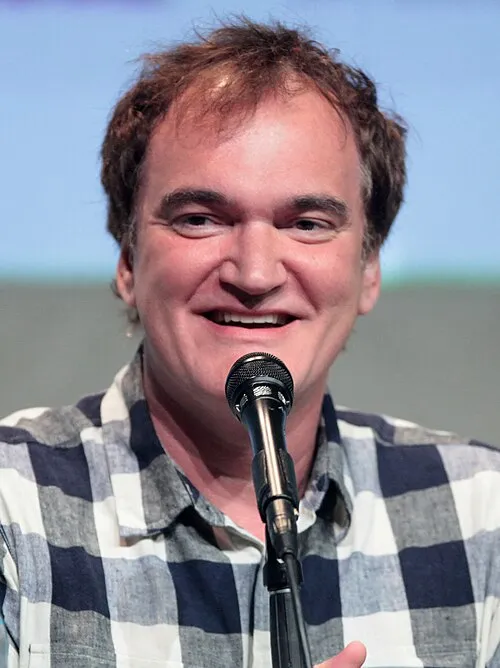
Quentin Jerome Tarantino was born on March 27, 1963, in Knoxville, Tennessee, and raised in Los Angeles. His film education began not in school but in theaters and video stores. He dropped out of school at fifteen and began working at Video Archives, a Hermosa Beach video rental store, where his encyclopedic knowledge of film history developed through years of watching and discussing every film in the store's inventory. He has described the years at Video Archives as his film school. He began writing screenplays obsessively, generating dozens of drafts before selling True Romance and Natural Born Killers while developing his own projects.
Reservoir Dogs (1992), made on a budget of approximately $1.2 million, announced a major new voice: a filmmaker who wrote dialogue with the rhythm and wit of the best American novelists, who staged violence with theatricality that forced audiences to examine their own relationship to it, and who structured narrative with sophistication. The film's success at Sundance made Tarantino the most anticipated filmmaker of a generation. Pulp Fiction (1994), made for $8 million and earning over $200 million worldwide, is arguably the most influential American film of the last thirty years: the film that changed what independent cinema thought was possible.
Subsequent films — Jackie Brown, Kill Bill, Inglourious Basterds, Django Unchained, The Hateful Eight, Once Upon a Time in Hollywood — have each been events generating enormous cultural conversation and passionate audience response. He has won Academy Awards for Best Original Screenplay for Pulp Fiction and Django Unchained. He has stated publicly that he plans to stop directing after ten films, with Once Upon a Time in Hollywood being his ninth.
Tarantino's ENFP nature is expressed primarily through his relationship to cinema itself, which functions for him the way other people experience religion or romantic love — a total devotion that has organized his entire life. The ENFP's enthusiasm is not casual interest but consuming passion. His dialogue — the thing most immediately distinctive about his work — is ENFP creativity in its purest form: the experience of finding conversation inherently delightful, of believing that how people talk reveals who they are completely, of taking genuine pleasure in the texture and rhythm of speech as aesthetic experience.