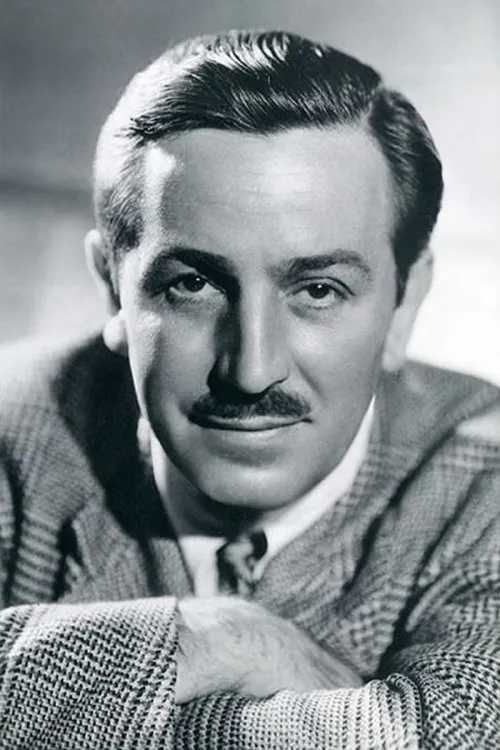
Walter Elias Disney was born on December 5, 1901, in Chicago, Illinois, the fourth child of Elias and Flora Disney. His father was a strict disciplinarian whose financial instability shaped the family's constant relocations. Walt's earliest passion was drawing, which he pursued obsessively from childhood. During World War I he lied about his age to join the Red Cross Ambulance Corps and drove an ambulance in France, decorating it with cartoons. Back in the United States, he began pursuing commercial art and animation in Kansas City, where he met Ub Iwerks, who would become his primary animation collaborator.
Disney's early career was a series of spectacular failures followed by improbable recoveries. His first animation company, Laugh-O-Gram Studios in Kansas City, went bankrupt. He moved to Hollywood with forty dollars and a suitcase, convinced he could reinvent himself. His first major success, the Oswald the Lucky Rabbit character, was then taken from him by his distributor — a devastating loss that taught him he needed to own what he created. He and Iwerks created Mickey Mouse in 1928, and Steamboat Willie — the first animated film with synchronized sound — made Mickey an immediate sensation and established the Disney studio as the most original in Hollywood.
The subsequent decade was an era of extraordinary creative ambition. Snow White and the Seven Dwarfs (1937), which the industry called 'Disney's Folly,' was the first feature-length animated film in history and earned more than $8 million in its initial release. Fantasia, Dumbo, Bambi, Pinocchio — each a risk, each an innovation. After the trauma of a studio labor strike in 1941, Disney pivoted toward live-action films and a new dream: Disneyland, a theme park that opened in Anaheim, California, in 1955 and created an entirely new category of entertainment. He died in 1966 before seeing his most ambitious project — Walt Disney World in Florida — completed.
Disney's ENFP nature drove the creative restlessness that made each success feel immediately insufficient — there was always the next vision, the next impossible project. The ENFP's gift is the ability to see possibility where others see only impossibility, and Disney was the supreme American practitioner of this gift. He could visualize a completed theme park when there was only an orange grove, a completed animation feature when there was only rough storyboard. His ENFP shadow was the difficulty of sustaining what he had created — he was more interested in the next project than the one just completed — and his reliance on his brother Roy saved the enterprise from the ENFP's tendency to chase the next dream before the current one is finished.