TerroristsVenezuelan
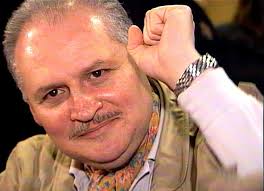
Ilich Ramirez Sanchez
“The Jackal”
 ISTP - The Cold Operator
Active:1973-1994
Life:1949 - Present
Victims:At least 11 killed, 150+ injured across multiple attacks in Europe and the Middle East
“To be a revolutionary you have to be a human being. You have to care about people who have no power.”
Educational Content: This psychological analysis is for educational purposes only - to understand criminal behavior patterns and warning signs. We do not glorify or condone criminal acts.
Biography
Ilich Ramirez Sanchez, known worldwide as Carlos the Jackal, was the Cold War's most notorious international terrorist - a figure whose exploits blurred the line between revolutionary ideology and mercenary violence. For over two decades, he operated across continents, serving Palestinian, communist, and various state-sponsored causes with equal willingness.
Born in Caracas, Venezuela, to a wealthy Marxist lawyer who named his three sons after Vladimir Ilyich Lenin, Carlos was sent to study at Patrice Lumumba University in Moscow. There he was recruited by the Popular Front for the Liberation of Palestine (PFLP) and trained in guerrilla warfare. By his early twenties, he was carrying out operations across Europe.
His most spectacular operation came in December 1975 when he led a team that stormed the OPEC headquarters in Vienna, taking 60 hostages including 11 oil ministers. The siege resulted in three deaths and ended with Carlos securing safe passage and a rumored $20-50 million ransom. The operation cemented his reputation as the world's most dangerous terrorist and earned him celebrity status among radical movements.
Throughout the late 1970s and 1980s, Carlos orchestrated bombings in France, attacked a nuclear facility, threw grenades at Israeli targets, and carried out assassinations. He maintained a network of safe houses across the Middle East and Eastern Europe, protected by sympathetic governments including Syria, Libya, Iraq, and East Germany's Stasi.
After the Cold War ended and his state sponsors collapsed, Carlos became a liability. He was captured in Khartoum, Sudan, in 1994 by French intelligence agents in a covert operation. Tried in France, he received multiple life sentences for the murders of two French intelligence agents and an informant, and later for a 1974 grenade attack on a Paris drugstore that killed two people.
Psychological Profile: ISTP
Carlos the Jackal embodies the ISTP cognitive stack applied to ideological violence - cool tactical precision combined with detached pragmatism:
**Dominant Ti (Introverted Thinking):** Carlos operated with cold analytical logic, treating terrorist operations as tactical problems to be solved. He assessed risks, calculated angles of attack, and made dispassionate decisions under extreme pressure. His ability to plan the OPEC siege - managing multiple hostages, negotiating with governments, and orchestrating an escape - demonstrates Ti's capacity for impersonal systems thinking applied to lethal ends.
**Auxiliary Se (Extraverted Sensing):** His Se was highly developed, making him exceptional in high-stakes physical situations. He was described as preternaturally calm during shootouts, able to react instantly to changing circumstances. He lived fully in the present moment during operations, adapting his plans on the fly with a tactician's instinct for the immediate environment.
**Tertiary Ni (Introverted Intuition):** Carlos used Ni to maintain a longer-term ideological framework - the global revolutionary struggle - that gave purpose to his tactical actions. However, his Ni was subordinate to his Se pragmatism; he shifted between causes and patrons with ease, suggesting his ideological commitment was more justification than driving force.
**Inferior Fe (Extraverted Feeling):** His inferior Fe manifested as a complicated relationship with public image and emotional connection. He cultivated a romantic image as a revolutionary playboy, enjoyed media attention, and maintained numerous romantic relationships. Yet he remained fundamentally disconnected from the human cost of his actions, treating casualties as abstractions.
Cognitive Function Analysis
Dominant
Ti - Analytical tactical planning of terrorist operations
Auxiliary
Se - Calm physical execution under extreme pressure
Tertiary
Ni - Loose ideological framework justifying pragmatic violence
Inferior
Fe - Cultivated public image disconnected from human cost
Warning Signs Exhibited
- ⚠Early radicalization through family ideology and paramilitary training
- ⚠Calm detachment during violent confrontations and shootings
- ⚠Ability to shift allegiances between causes and state sponsors pragmatically
- ⚠Cultivation of celebrity persona masking operational ruthlessness
- ⚠Nomadic lifestyle maintaining safe houses across multiple countries
- ⚠Escalating scale of operations from targeted killings to mass hostage events