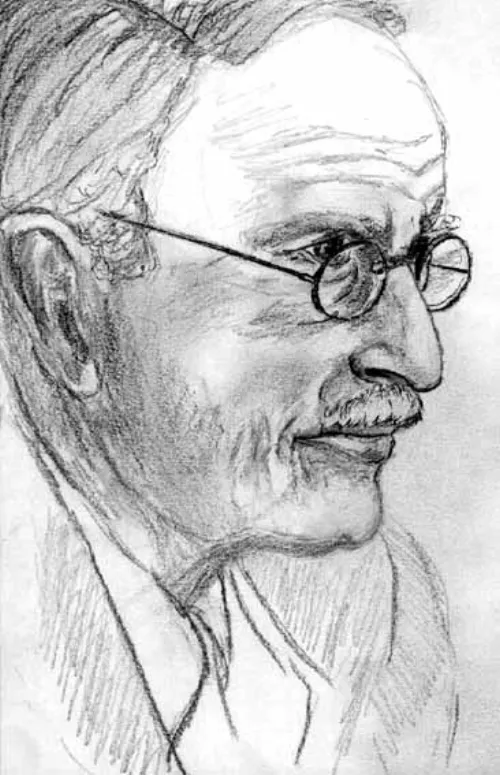
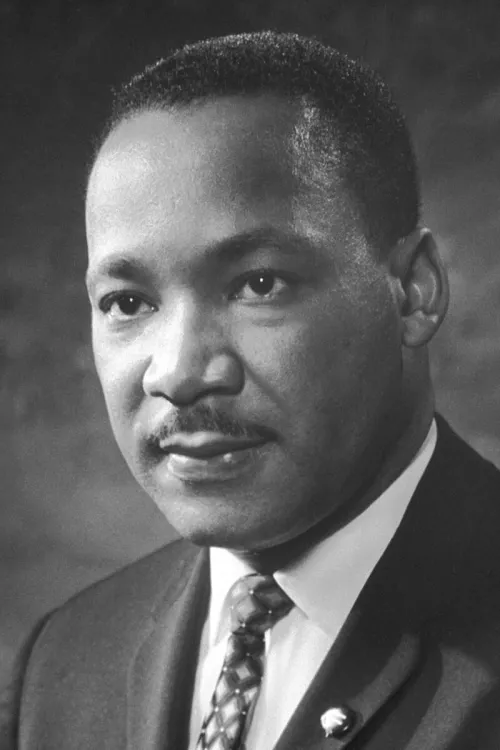
Martin Luther King Jr. - INFJ Personality Type

Martin Luther King Jr.INFJ - Cố vấn

Civil Rights Leader

Xuất xứ

USA

Mức độ tin cậy khi xác định loại

được chấp nhận rộng rãi

Quick Facts

Born
January 15, 1929
Birthplace
Atlanta, Georgia, USA
Nationality
American
Height
5'7" (170 cm)
Zodiac Sign
Education
Morehouse College (BA Sociology); Crozer Theological Seminary; Boston University (PhD Systematic Theology)
Known For
I Have a Dream SpeechMontgomery Bus BoycottNobel Peace PrizeMarch on WashingtonCivil Rights Act of 1964

Who is Martin Luther King Jr.?

Michael King Jr. was born on January 15, 1929, in Atlanta, Georgia, the middle child of Reverend Michael King Sr. and Alberta Williams King. His father, a prominent Baptist minister, later changed both their names to Martin Luther King in honor of the German Protestant reformer. Martin grew up in a home of intellectual and spiritual seriousness: his maternal grandfather had founded Ebenezer Baptist Church and his father led it, and King was steeped from childhood in the African American Christian tradition of using biblical language to speak directly to social and political reality. He was intellectually precocious — entering Morehouse College at fifteen — and experienced segregation's violence not as an abstract injustice but as a lived daily assault on his dignity and that of every person he loved.

King's graduate education at Crozer Theological Seminary in Pennsylvania and Boston University, where he earned his PhD in Systematic Theology in 1955, gave him the philosophical vocabulary to articulate what he had always known experientially: that segregation was not merely politically unjust but ontologically wrong — a violation of the fundamental reality of human dignity that transcended any particular legal or social arrangement. His encounter with Gandhi's philosophy of nonviolent resistance provided the strategic methodology that transformed moral vision into political effectiveness. When Rosa Parks was arrested in December 1955 and the Montgomery Improvement Association asked King, newly arrived as pastor of Dexter Avenue Baptist Church, to lead the bus boycott, he accepted with the understanding that the boycott's real purpose was not merely desegregation of Montgomery's buses but the demonstration that organized nonviolent resistance could defeat institutionalized racial injustice.

The Montgomery Bus Boycott's success in 1956 established King as the movement's preeminent leader and set the template for the decade of activism that followed. The Southern Christian Leadership Conference, which he co-founded in 1957, provided organizational infrastructure. The Birmingham Campaign of 1963 — in which protesters, including schoolchildren, faced Bull Connor's fire hoses and police dogs while maintaining nonviolent discipline — produced images that outraged the national conscience and directly drove President Kennedy's public commitment to complete civil rights legislation. King's 'I Have a Dream' address at the March on Washington in August 1963, delivered before 250,000 people and a national television audience, remains the most celebrated speech in American history — a demonstration that the INFJ's gift of giving voice to what the deepest part of people already knows, expressed with extraordinary rhetorical power, can genuinely move history.

King's final years — after the Civil Rights Act of 1964 and Voting Rights Act of 1965 that represented the formal legislative achievements of the movement — found him expanding his critique to poverty and the Vietnam War, positions that cost him significant political support and made him enemies across the political spectrum. He was assassinated on April 4, 1968, on the balcony of the Lorraine Motel in Memphis, Tennessee, at the age of thirty-nine, the night after delivering his 'I've Been to the Mountaintop' sermon. His INFJ quality is perhaps most visible in the completeness of his integration of personal vision and public mission: he did not advocate nonviolence for strategic reasons alone but because he had a detailed metaphysical vision of reality in which the means of achieving justice were inseparable from the nature of justice itself.
Loại tính cách INFJ của Martin Luther King Jr.

Martin Luther King Jr., nổi tiếng với công việc trong vai trò Civil Rights Leader, thể hiện những đặc điểm điển hình của loại tính cách INFJ - Cố vấn. Hồ sơ tính cách này được đặc trưng bởi sự kết hợp độc đáo của các chức năng nhận thức định hình cách họ nhìn nhận thế giới và đưa ra quyết định.

Những đặc điểm INFJ chính trong Martin Luther King Jr.

Là INFJ, Martin Luther King Jr. thể hiện những đặc điểm cốt lõi liên quan đến loại tính cách này. Những đặc điểm này đã đóng vai trò quan trọng trong thành công và hình ảnh công khai của họ với tư cách là Civil Rights Leader. Hiểu loại tính cách của họ cung cấp cái nhìn sâu sắc về động lực, điểm mạnh và quan điểm độc đáo mà họ mang đến lĩnh vực của mình.

Tại sao Martin Luther King Jr. được xác định là INFJ

Loại tính cách INFJ là một trong 16 loại tính cách Myers-Briggs, và hành vi công khai, khuôn mẫu ra quyết định cũng như phong cách giao tiếp của Martin Luther King Jr. rất phù hợp với phân loại này. Những cá nhân INFJ như Martin Luther King Jr. được biết đến với cách tiếp cận đặc trưng trong giải quyết vấn đề và các mối quan hệ giữa người với người.

Martin Luther King Jr.'s Political Career

1955-1956

Montgomery Bus Boycott

Led 381-day boycott; Supreme Court ruled bus segregation unconstitutional

1957

Co-Founded Southern Christian Leadership Conference

1963

Birmingham Campaign

Key demonstrations that drove civil rights legislation

1963

March on Washington / 'I Have a Dream'

250,000 attendees; landmark of American rhetoric

1964

Civil Rights Act passed

1965

Voting Rights Act passed

Awards & Recognition

\u2605Nobel Peace Prize (1964)\u2605Presidential Medal of Freedom (posthumous) (1977)\u2605Congressional Gold Medal (posthumous) (2004)\u2605Martin Luther King Jr. Day (federal holiday) (1983)

Martin Luther King Jr.'s Mystic Profile

Discover Martin Luther King Jr.'s cosmic connections through zodiac, tarot, crystals, and spirit animals.

capricorn

Zodiac Prediction

As a Capricorn, Martin Luther King Jr. represented the sign's most demanding and most essential quality: the long-term vision that sustains effort through years of incremental, costly, dangerous work toward a goal that most contemporaries believed impossible. Capricorn rules patient ambition, strategic discipline, and the willingness to climb the hardest mountain because one understands what is visible from the summit. King's commitment to nonviolence was itself Capricornian: the patient, disciplined, long-game strategy of someone who understood that rapid emotional victories were less durable than slow structural transformations.

🃏

the hierophant

Tarot Card Match

The Hierophant is the keeper of sacred wisdom who translates spiritual truth into institutional form — who builds the bridge between the transcendent and the practical, between what the spirit knows and what the world requires. King was the Hierophant of the civil rights movement: the person who held the movement's spiritual vision and translated it into marches, legal strategies, legislative campaigns, and rhetorical forms that could enter the institutions of American democracy and transform them.

💎

lapis lazuli

Crystal Match

Lapis lazuli — the stone of truth, wisdom, and the courage to speak what must be spoken regardless of consequence — connects with King's entire public life. Associated in ancient traditions with divine communication and the speaking of sacred truth, lapis lazuli carries the deep blue of a sky that is both beautiful and vast enough to hold all human struggle in perspective. It is the stone of someone who has received a vision and accepted the responsibility of communicating it.

🦁

eagle

Spirit Animal

The eagle sees from altitude what those on the ground cannot perceive — and King's great gift was exactly the eagle's perspective: the ability to see through the details and contradictions of contemporary American life to the underlying trajectory of justice and to articulate that trajectory with such clarity that even those who were fighting against it could not deny what they were fighting against. His 'I Have a Dream' speech was an eagle's flight — seeing from above what the country could become and describing it in terms so vivid that the vision entered the collective imagination permanently.

Thêm nhân vật nổi tiếng INFJ

Về phân tích này

Phân tích loại tính cách của Martin Luther King Jr. này dựa trên thông tin có sẵn công khai, các cuộc phỏng vấn, hồ sơ tiểu sử và quan sát hành vi. Việc xác định loại INFJ đại diện cho những đánh giá có học thuật của những người hâm mộ và chuyên gia về loại tính cách, nhưng không nên được coi là xác nhận chính thức trừ khi có thông báo khác. Tính cách rất phức tạp và đa chiều, và bản thân công khai có thể khác với tính cách cá nhân.