Succession
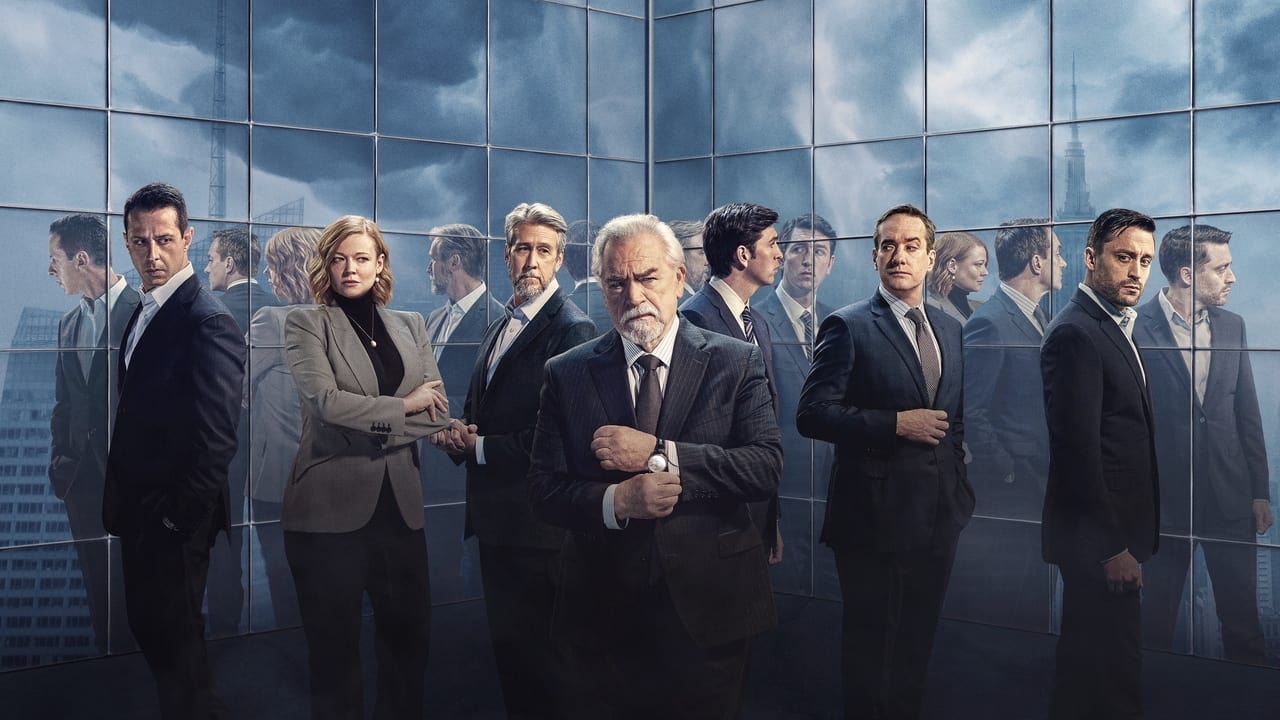
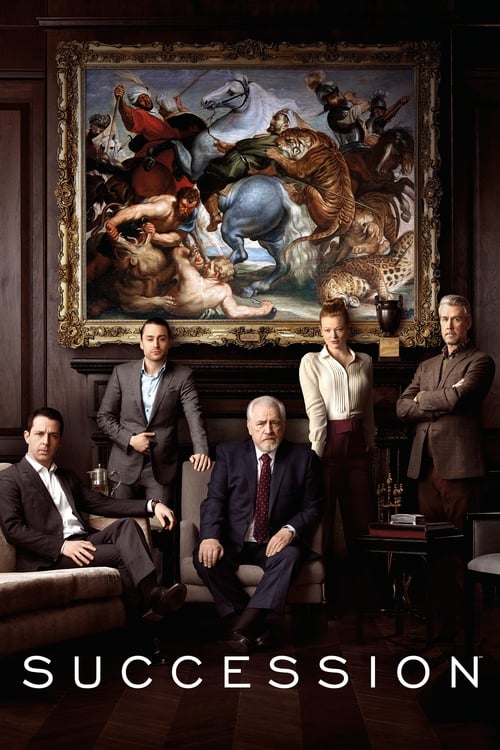
Откройте типы MBTI персонажей Наследников - Логан, Кендалл, Шив, Роман и другие
Аналитики

Gerri Kellman
AnalystGerri Kellman embodies the INTJ cognitive stack through masterful strategic patience in a world of volatile egos. Her dominant Ni manifests as an extraordinary ability to perceive the long-term trajectory of corporate power dynamics—while the Roy children cycle through dramatic power grabs and emotional meltdowns, Gerri quietly positions herself for maximum influence with minimum exposure, understanding that the person who survives succession isn't the loudest contender but the most indispensable advisor. Her auxiliary Te provides the practical expertise that makes her irreplaceable: her legal and corporate knowledge is encyclopedic, she navigates regulatory challenges with systematic precision, and she manages board dynamics with the efficiency of someone who has mapped every relationship and leverage point. Gerri's tertiary Fi emerges in her complex relationship with Roman—she maintains professional boundaries while acknowledging genuine emotional investment, and her eventual hurt when Roman humiliates her publicly reveals personal feelings she has kept carefully compartmentalized. Her inferior Se surfaces in rare moments of physical discomfort with Roman's inappropriate advances and her preference for operating through documents, phone calls, and indirect influence rather than face-to-face confrontation. Gerri's arc demonstrates the INTJ survival strategy at its most effective: in a company where emotional volatility destroys careers daily, her calm strategic detachment and institutional expertise allow her to outlast every dramatic power struggle while maintaining the quiet authority that comes from being the person everyone needs but no one perceives as a threat.
“I've been playing this game longer than any of you.”Learn about INTJ →
Succession as INTP
AnalystSuccession connects with INTPs through its ruthlessly analytical dissection of power systems and the logical contradictions embedded in wealth and family. The dominant Ti perspective finds deep satisfaction in the show's systematic exposure of how power actually operates—beneath the surface narratives of legacy and love, every interaction reduces to a transaction, every relationship to a leverage point, and every moral claim to a strategic position, revealing the cold logical framework underneath emotional rhetoric. The auxiliary Ne dimension emerges in the show's endlessly branching plot possibilities: each episode generates new configurations of alliance and betrayal that reward pattern recognition and strategic speculation. The tertiary Si element surfaces in the show's meticulous attention to institutional detail—board dynamics, regulatory procedures, media ownership structures, and corporate governance mechanics are depicted with enough specificity to satisfy analytical minds. The inferior Fe challenge appears in the show's devastating emotional core: the Roy children's desperate need for love from a father incapable of giving it confronts INTP viewers with emotional truths that resist analytical frameworks. INTPs connect with Succession because it validates their instinct to analyze systems while simultaneously challenging them to acknowledge that human suffering cannot be fully understood through logical deconstruction alone.
“It's all a game.”Learn about INTP →

Siobhan 'Shiv' Roy
AnalystShiv Roy demonstrates the ENTJ cognitive stack complicated by the contradiction of progressive ideals and dynastic ambition. Her dominant Te manifests as razor-sharp political maneuvering—she navigates power dynamics with instinctive precision, reading negotiation rooms, identifying leverage points, and executing strategic pivots with the confidence of someone who learned corporate warfare at the dinner table. Her auxiliary Ni provides strategic vision: she positions herself as the progressive Roy, cultivating political connections and a modern public image designed to differentiate her from her brothers while still claiming the throne. Shiv's tertiary Se surfaces in her comfort with confrontation and physical presence—she enters rooms with commanding energy, uses her appearance strategically, and responds to crises with action rather than deliberation. Her inferior Fi represents her most devastating blind spot: she genuinely believes in her progressive values but repeatedly sacrifices them for power, dismissing the cruises scandal victims, betraying allies, and manipulating Tom's emotions without recognizing the moral cost. Shiv's arc reveals the ENTJ's gender-specific challenge within a patriarchal dynasty: her Te-Ni competence is arguably superior to her brothers', yet she must fight for recognition that they receive automatically, creating a bitter cycle where her frustrated ambition produces increasingly ruthless behavior that confirms her family's dismissal of her as too emotional to lead.
“I'm smarter than my brothers.”Learn about ENTJ →
Roman Roy
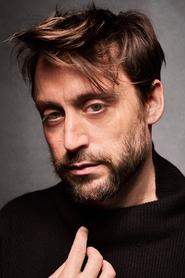
AnalystRoman Roy exemplifies the ENTP cognitive stack weaponized as a defense mechanism against profound emotional damage. His dominant Ne manifests as rapid-fire wit and provocative observations that expose the absurdity in every situation—he sees the logical contradictions in his family's power plays faster than anyone, delivering devastating one-liners that simultaneously reveal truth and prevent intimacy. His auxiliary Ti provides the analytical framework behind the jokes: Roman often makes the most strategically astute assessments in the room, correctly reading people's motivations and predicting outcomes that his siblings miss, yet he undermines his own insights with self-sabotaging humor. Roman's tertiary Fe surfaces in his surprising emotional intelligence—he genuinely connects with workers during facility visits, reads rooms with empathic precision, and occasionally displays vulnerable warmth, particularly in his complex dynamic with Gerri where he seeks both mentorship and acceptance. His inferior Si manifests as the childhood trauma he can never directly address: Logan's abuse has created a personality that must constantly generate novelty and chaos to avoid sitting with painful memories, and his sexual dysfunction reflects Si-related difficulty inhabiting his own body and history. Roman's arc traces ENTP development arrested by trauma—a brilliant mind that uses Ne-Ti to deconstruct everything except its own wounds, ultimately revealing at Logan's funeral that beneath the clown mask lives a devastated child still seeking a father's love.
“If it is to be said, so it be — so it is.”Learn about ENTP →
Дипломаты
Succession as INFJ
DiplomatSuccession resonates with INFJs through its profound exploration of generational trauma and the search for authentic love in a world that commodifies everything. The dominant Ni perspective appreciates the show's layered symbolic architecture—each character represents a different response to the same patriarchal wound, and the recurring patterns of betrayal and reconciliation form a tapestry that rewards deep interpretive engagement. The auxiliary Fe connection emerges in the show's empathic demands: viewers must simultaneously understand Logan's monstrous cruelty and the childhood abuse that created it, Kendall's destructive ambition and the desperation driving it, Shiv's manipulative intelligence and the gender-based dismissal fueling it. The tertiary Ti element surfaces in the show's structural sophistication—its plotlines follow logically consistent power dynamics where every character's position can be mapped and predicted through careful analysis. The inferior Se dimension appears in the show's visceral moments of physical reality—Logan's rages, Kendall's drug binges, the claustrophobic intensity of yacht and helicopter scenes that ground abstract power dynamics in bodily experience. INFJs connect with Succession because it validates their deepest perception: that beneath the surface performance of human relationships lie patterns of pain and longing that only empathic insight can truly comprehend, and that understanding these patterns is both a gift and a burden.
“You can't do anything.”Learn about INFJ →
Succession as INFP
DiplomatSuccession's tragic emotional core connects deeply with INFP values through its portrayal of characters desperately seeking authentic love in a system that punishes vulnerability. The dominant Fi perspective recognizes the show's central wound: every Roy child wants genuine parental love but has been taught that expressing this need is weakness, creating characters who perform power because they cannot access authentic feeling. The auxiliary Ne dimension emerges in the show's endlessly shifting possibilities for redemption that never quite materialize—each season offers moments where characters seem on the verge of choosing authenticity over ambition, and the persistent hope that this time will be different reflects Ne's faith in transformative possibility. The tertiary Si element surfaces in the show's exploration of how childhood memories shape adult behavior—the glimpses of the Roy children's early experiences explain their current dysfunction with devastating specificity. The inferior Te challenge appears in the INFPs watching characters whose Te-driven pursuit of power systematically destroys the very relationships that would satisfy their deeper needs. INFPs connect with Succession because it articulates their worst fear and deepest conviction simultaneously: that a world organized around power and transactions will always betray authentic human connection, and that the characters' inability to choose love over ambition represents a tragedy of values rather than intelligence.
“I don't know if this is a good thing or a bad thing.”Learn about INFP →

Connor Roy
DiplomatConnor Roy demonstrates the ENFP cognitive stack operating in a bubble of privilege-enabled delusion. His dominant Ne generates endless enthusiastic ideas—presidential campaigns, butter-making ventures, historical passion projects, Napoleonic obsessions—each pursued with genuine excitement but abandoned or ignored when reality fails to cooperate, reflecting Ne's love of possibility untethered from practical constraint. His auxiliary Fi drives sincere emotional responses that his siblings dismiss as irrelevant: his pain at being excluded from family decisions is genuine, his love for Willa is authentic even if transactional, and his political convictions, however uninformed, reflect real personal values about government and society. Connor's tertiary Te surfaces in occasional moments of surprising practical clarity—he correctly observes family dynamics that his younger siblings are too enmeshed to see, and his ranch functions as a reasonably well-managed operation. His inferior Si appears as selective amnesia about his own privileged upbringing: he genuinely believes he is self-made despite having been raised by the same abusive father in the same billionaire dynasty. Connor's arc provides the show's most poignant commentary on ENFP vulnerability: as the eldest son who was sidelined early, he represents what happens when Ne-Fi idealism is never tested by genuine adversity, producing a personality of infinite aspiration and zero self-awareness whose presidential ambition becomes less absurd and more heartbreaking as the show reveals the lonely child beneath the eccentric adult.
“I was interested in politics from a very young age.”Learn about ENFP →
Стражи

Hugo Baker
SentinelHugo Baker demonstrates the ISTJ cognitive stack through dutiful procedural competence strained by circumstances that exceed his operating parameters. His dominant Si manifests in his adherence to established communications protocols—he approaches crisis management through a framework of proven strategies, prepared statements, and damage control procedures developed over years of corporate communications experience, relying on what has worked before. His auxiliary Te drives efficient execution: he drafts statements quickly, manages press interactions with organized precision, and maintains the machinery of corporate messaging even when the content he's required to communicate is morally questionable. Hugo's tertiary Fi surfaces in growing moral discomfort with the cruises scandal cover-up—unlike the Roys, who can compartmentalize ethical concerns behind power dynamics, Hugo's personal values are quietly but persistently troubled by what he's being asked to spin, creating internal tension he lacks the power to resolve. His inferior Ne appears as anxiety about unpredictable consequences: every new revelation fills him with dread about scenarios he cannot control or prepare for, and his famous panic about being the designated fall guy reflects Ne's fear of catastrophic possibilities. Hugo's arc illustrates the ISTJ's vulnerability in corrupt organizations: his Si-Te reliability makes him the perfect institutional functionary, but his inability to imagine creative alternatives to loyal service keeps him trapped in a system that will sacrifice him without hesitation.
“We need to control the narrative.”Learn about ISTJ →

Karl Muller
SentinelKarl Muller embodies the ISFJ cognitive stack in pure survival mode within a corporate predator environment. His dominant Si manifests as total devotion to the established order—he has spent decades observing which behaviors ensure survival at Waystar, and he replicates these patterns with the consistency of someone for whom deviation from proven safety carries existential risk. His auxiliary Fe gives him an exceptional ability to read the emotional atmosphere of any meeting: he detects Logan's mood shifts before anyone else, senses when a room is turning dangerous, and calibrates his expressions of agreement or concern with the precision of someone whose career depends on never being on the wrong side of an emotional current. Karl's tertiary Ti surfaces in his practical understanding of corporate governance mechanics—he maintains competence in legal and financial matters that keeps him marginally useful beyond his role as human weather vane. His inferior Ne appears as almost paralyzing anxiety about change: every new crisis, every power shift, every unexpected development triggers visible panic about unpredictable consequences he cannot control. Karl's arc serves as Succession's darkest commentary on institutional survival: he represents what decades of ISFJ loyalty produce in a toxic environment—not growth or development but a perfectly adapted organism whose entire cognitive apparatus has been redirected toward a single function: detecting and agreeing with whoever holds power in any given moment.
“I agree with whatever Logan says.”Learn about ISFJ →
Succession as ESTJ
SentinelWaystar Royco as an institutional entity resonates with ESTJ values through its hierarchical structure and results-driven culture. The dominant Te perspective sees the company as the ultimate expression of organized power—a media empire built on clear chains of command, measurable outcomes, and the systematic acquisition and deployment of influence. The auxiliary Si dimension manifests in the company's deep institutional traditions: family ownership spanning generations, established power rituals like the birthday celebrations and board meetings, and the reverence for Logan's founding vision that persists even as it becomes increasingly anachronistic. The tertiary Ne element surfaces in the show's exploration of how traditional media empires must adapt to a changing landscape—the GoJo acquisition plotline represents the Ne challenge of technological disruption threatening Si-Te established order. The inferior Fi dimension appears in the company's systematic suppression of personal ethics in favor of institutional loyalty—the cruises scandal cover-up demonstrates how Te-Si organizational efficiency can become a machine for concealing moral atrocities when individual conscience is subordinated to corporate survival. ESTJs watching Succession confront an uncomfortable mirror: the company exemplifies their cognitive strengths at maximum scale while revealing how those same strengths, without moral grounding, can produce institutions that are brilliantly organized but ethically bankrupt.
“This is a business.”Learn about ESTJ →

Tom Wambsgans
SentinelTom Wambsgans exemplifies the ESFJ cognitive stack navigating an environment designed to exploit his deepest needs. His dominant Fe manifests as an acute sensitivity to social hierarchy and approval—he reads the emotional temperature of every Roy family interaction with painful precision, constantly calibrating his behavior to match what he perceives is expected, oscillating between obsequious deference to Logan and petty dominance over Greg depending on who holds power in any given moment. His auxiliary Si provides the aspirational template: he has internalized a specific vision of what belonging to an elite family looks like and methodically tries to enact it through proper etiquette, appropriate gifts, and performative displays of loyalty, even when these efforts are met with contempt. Tom's tertiary Ne surfaces in his surprisingly dark humor and occasional flashes of creative desperation—the imprisoned chicken speech, his frantic pre-prison preparations, and his unexpected alliance with Matsson demonstrate a capacity for unconventional strategic thinking when conventional approaches fail. His inferior Ti appears as the devastating logical clarity he cannot sustain: he occasionally perceives the truth of his situation—that Shiv doesn't love him and the Roys view him as disposable—but his Fe need for belonging overwhelms these analytical insights. Tom's arc represents the ESFJ nightmare: pouring everything into social bonds only to discover they were never reciprocated, ultimately learning that the only way to survive is to become the user rather than the used.
“Here's the thing about being rich: it's f*cking great.”Learn about ESFJ →
Искатели

Greg Hirsch
ExplorerGreg Hirsch demonstrates the ISFP cognitive stack stumbling through a world of corporate power he barely comprehends. His dominant Fi manifests as a genuine but underdeveloped moral compass—he instinctively senses that the cruises scandal is wrong and saves incriminating documents, but his ethical convictions are constantly undermined by his equally sincere desire for wealth and status, creating a character who is simultaneously the most morally grounded and most easily corruptible person in the building. His auxiliary Se drives reactive, present-moment decision-making: Greg doesn't plan his moves but responds to whatever situation confronts him with improvised physical awkwardness and social stumbling that somehow produces results, like accidentally positioning himself as a key player through sheer proximity to events. Greg's tertiary Ni surfaces in occasional flashes of strategic intuition—he sometimes perceives the trajectory of power dynamics and positions himself accordingly, though whether this represents genuine foresight or lucky instinct remains ambiguous. His inferior Te appears as a complete inability to organize, strategize, or execute plans with any systematic efficiency, leaving him perpetually scrambling. Greg's arc captures ISFP development in a hostile environment: he enters Waystar as a genuinely innocent outsider and gradually develops survival instincts without ever fully losing his essential guilelessness, becoming the show's moral weathervane whose increasing corruption measures how thoroughly the Roy ecosystem poisons everyone it touches.
“If it is to be said, so it be, so it is.”Learn about ISFP →
Stewy Hosseini
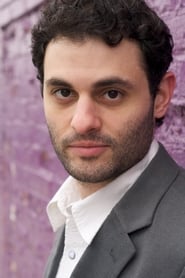
ExplorerStewy Hosseini embodies the ESTP cognitive stack through effortless social navigation and opportunistic deal-making. His dominant Se manifests as an extraordinary ability to read any room instantly—he picks up on body language, power dynamics, and emotional undercurrents with the speed of a natural predator, adapting his approach in real-time to maximize advantage in every social interaction. His auxiliary Ti provides the analytical framework for exploiting these observations: he calculates risk-reward ratios with cold precision, aligning with Sandy Furness against Waystar not from personal vendetta but from a logical assessment that the hostile takeover represents the best investment opportunity. Stewy's tertiary Fe surfaces in his social fluency and charm—he maintains his friendship with Kendall across competing interests, navigating the contradiction of personal loyalty and professional opposition with a smoothness that reveals genuine social intelligence rather than mere manipulation. His inferior Ni appears as a relative indifference to long-term vision: he doesn't care about media empires or family legacies but focuses on the immediate deal, the current leverage point, the present opportunity, which makes him both effective in the short term and ultimately a satellite in others' orbits. Stewy's role in Succession illustrates the ESTP's natural position in power ecosystems: not the king but the indispensable dealmaker who thrives in the chaos between competing factions, profiting from conflict without being consumed by it.
“Money wins.”Learn about ESTP →
Найдите Своего Персонажа
Знаете свой тип MBTI? Найдите своего персонажа ниже.
Часто задаваемые вопросы
Logan Roy is widely typed as ENTJ — his commanding presence, strategic business mind, and domineering leadership style are textbook Te-Ni traits.
Kendall is commonly typed as ENFP — his creative visions, emotional intensity, and constant reinvention reflect Ne-Fi, though his dysfunction often overshadows these traits.
Другие Сериалы
Найдите Свой Тип
Узнайте свой тип личности MBTI и посмотрите, какие вымышленные персонажи разделяют ваши черты.
Пройти Тест