
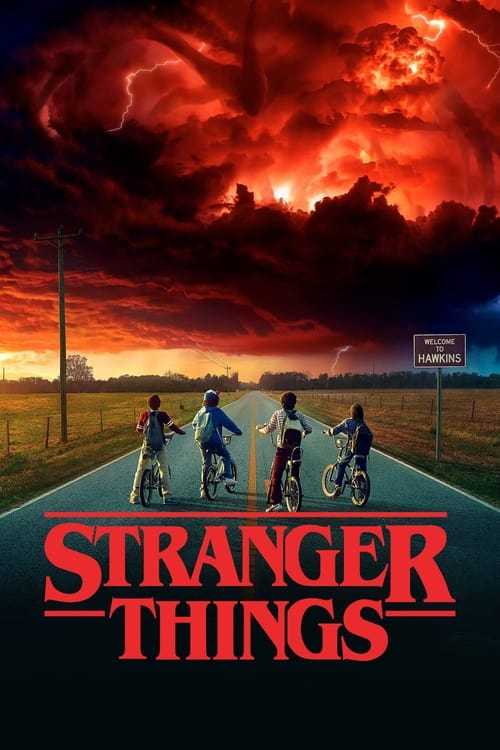
Stranger Things
Find out which Stranger Things character shares your MBTI personality type
Аналитики

Nancy Wheeler
AnalystNancy Wheeler is a driven INTJ whose dominant Ni locks onto a vision and refuses to let go. Once she senses something is wrong—whether Barb's disappearance or the corruption at Hawkins Lab—she pursues the truth with single-minded intensity that others find unnerving. Her auxiliary Te provides the systematic execution: she gathers evidence, recruits allies strategically, and builds her case with methodical precision, whether arming herself with weapons or presenting proof to journalists. Her tertiary Fi emerges in her deeply personal motivations—her guilt over Barb drives her entire Season 2 arc, and she carries an internal moral compass that makes her willing to defy authority when she believes she is right. Her inferior Se manifests as occasional recklessness when her plans require physical action; she throws herself into danger with a determination that borders on disregard for her own safety, as when she dives into the Upside Down portal. Nancy's character arc demonstrates classic INTJ growth: she evolves from a girl constrained by Hawkins' social expectations into a formidable investigator who channels her Ni vision and Te execution into exposing the truth, regardless of what polite society expects of her.
“I wanted to finish what we started. I want to kill it.”Learn about INTJ →

Robin Buckley
AnalystRobin Buckley is a brilliantly realized INTP whose dominant Ti shines in her code-breaking abilities at Scoops Ahoy, where she deciphers the Russian transmission through pure logical analysis and pattern recognition. Her auxiliary Ne fuels her rapid-fire associations and tangential thinking, jumping between ideas at a pace that leaves others bewildered but consistently arriving at creative solutions no one else would consider. Her tertiary Si emerges in her surprisingly detailed memory for facts and patterns—she recalls specific musical scores, historical trivia, and linguistic details that prove crucial to solving problems. Her inferior Fe is Robin's most endearing and relatable quality: she stumbles through social interactions, rambles nervously when stressed, and struggles to read emotional cues that come naturally to others, as shown in her painfully awkward attempts at flirting and her anxiety-driven monologues. The bathroom confession scene with Steve in Season 3 perfectly captures INTP vulnerability—she reveals her deepest truth not through emotional expression but through logical, almost clinical honesty, trusting that intellectual authenticity will be enough. Robin's development across the series shows an INTP learning that her analytical mind is not a social liability but a genuine superpower, especially when paired with people who appreciate her unique way of seeing the world.
“I cracked the code!”Learn about INTP →

Murray Bauman
AnalystMurray Bauman is an ENTJ whose dominant Te makes him the most bluntly direct person in any room, delivering uncomfortable truths with zero regard for social pleasantries. He takes command of every situation he enters—from orchestrating the Hawkins Lab exposé to coordinating the Russian infiltration—with systematic decisiveness and organizational authority. His auxiliary Ni drives his conspiracy-theorist instincts in a productive direction; he sees connections and patterns that others dismiss, and his long-range strategic thinking proves consistently correct about the larger threats at play. His tertiary Se gives him surprising physical presence and adaptability in action sequences, whether fighting Russians or navigating the underground facility in Season 4. His inferior Fi occasionally surfaces as unexpected emotional vulnerability beneath the commanding exterior, particularly in his genuine connection with Alexei and his visible grief when that relationship ends tragically. Murray's role in the series demonstrates the ENTJ at their best: he takes charge not for personal glory but because he genuinely sees the most efficient path to the truth and cannot tolerate watching others fumble toward it slowly. His confrontational style—pushing Nancy and Jonathan together, forcing honesty from everyone around him—is Te-driven directness wielded as a tool for clarity.
“It's all connected!”Learn about ENTJ →

Dustin Henderson
AnalystDustin Henderson is a textbook ENTP whose dominant Ne makes him the group's idea machine. He constantly generates creative hypotheses—from figuring out the Demogorgon's behavior using D&D logic to theorizing about interdimensional gates and compasses. His auxiliary Ti provides the analytical framework to test these ideas, evident when he systematically explains electromagnetic interference or decodes Russian transmissions with Robin at Scoops Ahoy. His tertiary Fe shows in his genuine warmth and social adaptability; unlike a stereotypically cold thinker, Dustin builds bonds with unlikely allies like Steve and Eddie, charming adults and peers alike with his infectious enthusiasm. His inferior Si manifests as a weakness in following established rules and procedures—he keeps Dart as a pet despite obvious danger, ignoring past evidence that creatures from the Upside Down are lethal. Dustin's character arc showcases healthy ENTP development: his curiosity never dims, but he learns to channel it responsibly, evolving from the kid who hid a baby Demogorgon to the young man who coordinates critical operations across multiple teams in Season 4.
“I am on a curiosity voyage, and I need my paddles to travel.”Learn about ENTP →
Дипломаты

Jonathan Byers
DiplomatJonathan Byers reflects the INFJ's characteristic depth beneath a quiet exterior. His dominant Ni manifests through his photography—he doesn't just capture images, he sees the hidden emotional truths in people and moments that others miss, framing the world through a lens of deeper meaning. His auxiliary Fe drives his selfless devotion to his family, particularly his mother Joyce and brother Will, putting their needs consistently above his own without complaint or expectation of recognition. His tertiary Ti emerges in his analytical approach to problems, methodically working through the mystery of Will's disappearance and later the conspiracy surrounding Hawkins Lab with quiet logical precision. His inferior Se is his most visible weakness—he is uncomfortable in the physical, social world, awkward at parties, uneasy with confrontation, and often retreating into observation rather than participation. Jonathan's arc embodies the INFJ's central tension: he perceives the world's deeper patterns and feels compelled to protect others from them, yet struggles to assert his own place within that world. His relationship with Nancy works because she provides the Te assertiveness he lacks, while he offers the Ni-Fe emotional insight she needs.
“Nobody normal ever accomplished anything meaningful in this world.”Learn about INFJ →

Will Byers
DiplomatWill Byers is the INFP whose rich inner world becomes both his greatest strength and deepest vulnerability. His dominant Fi processes everything through a deeply personal emotional lens—his trauma from the Upside Down is not just a memory but a wound he carries silently, struggling to articulate feelings that run far deeper than words can express. His auxiliary Ne fuels his creative imagination, most visible in his devotion to D&D campaign creation and his painting for Mike, where he channels emotions he cannot speak into art and storytelling. His tertiary Si manifests as a painful attachment to the past—he desperately wants things to remain as they were, resisting the group's natural growing apart in Season 3 and clinging to childhood bonds that are evolving beyond his comfort zone. His inferior Te surfaces as frustration with the practical world that refuses to accommodate his inner needs, leading to his emotional outburst about D&D in the rain. Will's arc is a poignant INFP journey: a sensitive soul learning that the inner world he retreats to for safety can also become a prison, and that authentic self-expression—however painful—is the only path to genuine connection.
“Sometimes I feel like I'm going crazy.”Learn about INFP →

Mike Wheeler
DiplomatMike Wheeler is the quintessential ENFJ leader who organizes his world around people and causes. His dominant Fe is evident from the very first episode—he instinctively takes in Eleven, a stranger, because he senses her vulnerability and need for connection. He rallies the Party not through authority but through emotional conviction, making everyone feel their role matters in the fight against the Upside Down. His auxiliary Ni shows in his ability to envision the larger stakes before others do, whether grasping the significance of Eleven's powers or understanding Will's connection to the Mind Flayer. Mike's tertiary Se emerges in moments of crisis when he acts with surprising physical courage, like jumping off a cliff to protect Dustin. His inferior Ti is his Achilles' heel—when emotionally overwhelmed, he struggles with logical detachment, becoming reactive and possessive in his relationships. His Season 4 arc reveals classic ENFJ stress: when he cannot express his feelings to Eleven, his entire sense of purpose unravels, because for an ENFJ, disconnection from loved ones is the deepest form of failure.
“She's our friend and she's crazy!”Learn about ENFJ →

Joyce Byers
DiplomatJoyce Byers is an ENFP operating at full intensity, and her dominant Ne is what drives the entire first season's plot. While everyone else accepts Will's apparent death at face value, Joyce's intuition generates possibility after possibility—the lights, the phone calls, the wall—each one a thread she refuses to drop because her Ne tells her the surface explanation is wrong. Her auxiliary Fi provides the unshakeable emotional conviction that fuels her relentlessness; this is not logic driving her but a mother's deeply personal, values-based certainty that her son is alive. Her tertiary Te emerges when she shifts from intuiting to acting—she becomes remarkably systematic in her approach, painting letters on the wall and creating a communication system with methodical determination. Her inferior Si manifests as her difficulty maintaining normalcy and stability; her home and life are in constant disarray, and she struggles with routine responsibilities when her Ne-Fi is activated. Joyce's arc across the series is quintessential ENFP heroism: she sees what no one else can see, feels what no one else will feel, and her willingness to look completely unhinged in pursuit of the truth she senses is precisely what saves everyone around her.
“This is not yours to fix alone. You act like you're all alone out there in the world, but you're not.”Learn about ENFP →
Стражи

Hopper
SentinelChief Hopper is an ISTJ whose dominant Si anchors him in experience, duty, and the weight of the past. His police work is methodical and procedural—he investigates Will's disappearance by following established law enforcement protocols, trusting physical evidence over wild theories until the evidence itself becomes undeniable. His auxiliary Te provides his no-nonsense efficiency and blunt communication style, cutting through emotional noise to focus on what needs to be done practically. His tertiary Fi reveals itself in the deeply personal grief he carries from losing his daughter Sara, a wound he buries beneath gruff exterior but which profoundly shapes his protective relationship with Eleven. His inferior Ne is Hopper's greatest challenge—he resists abstract, unfamiliar possibilities and becomes visibly uncomfortable when reality stops following the rules he understands, as when Joyce insists the Christmas lights are communicating with Will. Hopper's arc demonstrates ISTJ growth under pressure: he moves from a man paralyzed by past trauma, self-medicating and going through the motions of duty, to someone who opens himself to an impossible world and an unconventional family. His adoption of Eleven is peak ISTJ love—expressed not through words but through consistent, reliable, protective action.
“Mornings are for coffee and contemplation.”Learn about ISTJ →

Erica Sinclair
SentinelErica Sinclair reveals classic ISFJ qualities beneath her sharp-tongued exterior. Her dominant Si manifests as an impressive memory for details and facts—she recalls specific information at critical moments and applies practical knowledge learned from past experience, such as her surprisingly useful understanding of My Little Pony lore and mathematics during the Russian base infiltration. Her auxiliary Fe drives her fierce protectiveness toward her brother Lucas and the group, expressed through her characteristic sass which is ultimately a form of caring engagement with those she considers her people. Her tertiary Ti gives her the logical sharpness and quick wit that makes her one-liners so devastating; she analyzes situations with surprising precision for her age and calls out logical inconsistencies without hesitation. Her inferior Ne surfaces as occasional anxiety about truly unknown situations—while she talks a big game, genuinely novel dangers push her out of her comfort zone, as seen during her first real encounter with Upside Down threats. Erica's arc from annoying little sister to valued team member demonstrates ISFJ development: she discovers that her natural loyalty, reliable memory, and practical competence make her indispensable to the group, earning her place not through dramatic heroics but through consistent, dependable contribution when it matters most.
“You can't spell America without Erica.”Learn about ISFJ →

Lucas Sinclair
SentinelLucas Sinclair functions as the Party's grounding force, displaying classic ESTJ traits throughout the series. His dominant Te demands evidence and logical proof—he is the first to question Eleven's trustworthiness, refusing to accept her on faith alone and insisting on verifiable facts before committing to a plan. His auxiliary Si shows in his respect for established order and past experience; he trusts the system of the Party's rules, remembers lessons from previous encounters, and values consistency. His tertiary Ne emerges in later seasons as he becomes more open to unconventional possibilities, particularly when he joins the basketball team and tries to navigate between social worlds. His inferior Fi is where Lucas struggles most—expressing his deeper feelings to Max in Season 4 requires enormous effort, and his internal conflict about choosing popularity over his friends reveals Fi under stress. Lucas's growth arc is a healthy ESTJ journey: from a boy who rejected anything outside his logical framework to a young man who learns that loyalty sometimes means standing against the crowd, as he does when he ultimately chooses his real friends over social acceptance.
“What is she, some kind of wizard?”Learn about ESTJ →

Steve Harrington
SentinelSteve Harrington's character arc is one of television's best illustrations of ESFJ development. His dominant Fe is the engine of his transformation—initially channeled into maintaining his popular-kid social standing, it gradually redirects toward genuine caregiving as he becomes the beloved babysitter of Hawkins' younger heroes. His auxiliary Si provides the dependability that makes him trustworthy: once Steve commits to protecting the kids, he shows up reliably every time, drawing on past experience to handle each new supernatural threat with practiced competence. His tertiary Ne surfaces as unexpected adaptability and humor, from his comedic chemistry with Dustin to his willingness to embrace increasingly bizarre situations that would paralyze a rigid thinker. His inferior Ti manifests as his well-known difficulty with complex strategic thinking—he freely admits he is not the brains of any operation, deferring analytical tasks to Robin or Dustin while he handles the people and the bat-fighting. Steve's growth from Season 1 to Season 4 is quintessential healthy ESFJ maturation: he moves from performative social harmony driven by insecurity to authentic emotional leadership rooted in genuine care, becoming the person everyone instinctively turns to not for plans but for courage and heart.
“How many children are you friends with?”Learn about ESFJ →
Искатели

Max Mayfield
ExplorerMax Mayfield exemplifies the ISTP's fierce independence and practical resilience. Her dominant Ti drives her to analyze situations with cool detachment—she assesses threats rationally, figures out how things work on her own, and refuses to accept emotional explanations when logic will do. Her auxiliary Se is evident in her physical confidence, from skateboarding fearlessly through Hawkins to setting a new high score at the arcade, engaging with the world through direct sensory mastery. Her tertiary Ni surfaces in Season 4 when she begins to sense deeper patterns in Vecna's attacks, connecting her guilt over Billy's death to the curse targeting her, showing an emerging ability to see beneath the surface. Her inferior Fe is Max's greatest struggle—she walls herself off from emotional connection after Billy's death, pushing Lucas and the group away because processing grief through interpersonal vulnerability feels impossibly threatening. The Dear Billy episode is peak ISTP under extreme stress: Max confronts her Fe inferior by writing letters to everyone she loves, finally acknowledging the emotional bonds she has been suppressing, and literally runs for her life powered by the memory of connection—a moment where her weakest function becomes her salvation.
“I'm not afraid of you.”Learn about ISTP →

Eleven
ExplorerEleven embodies the ISFP at its most primal and powerful. Her dominant Fi is the core of her identity—she makes every major decision based on deeply personal emotional bonds, choosing to protect Mike, her friends, and eventually the world not out of duty but out of love. Her auxiliary Se manifests through her extraordinary physical presence in moments of crisis, channeling telekinetic power with raw sensory intensity, whether flipping a van in Season 1 or closing the gate in Season 2. Her tertiary Ni emerges as she begins to piece together her fragmented past, sensing that Hawkins Lab holds truths she must uncover and following an inner vision of who she truly is beyond her number. Her inferior Te surfaces as a weakness—she struggles with structured environments like school in Season 4, finding systematic social rules incomprehensible and frustrating. Eleven's character arc is quintessential ISFP growth: from a girl defined entirely by others' labels to someone who declares her own identity, choosing her name, her family, and her purpose on her own deeply personal terms.
“Friends don't lie.”Learn about ISFP →

Billy Hargrove
ExplorerBilly Hargrove is an ESTP operating from a place of deep damage, and his dominant Se manifests as aggressive sensory dominance—fast cars, physical intimidation, provocative behavior, and a constant need to command every room he enters. His auxiliary Ti provides the cold, calculating edge beneath the bravado; Billy does not simply lash out randomly but reads situations tactically, knowing exactly which buttons to push to destabilize others, whether targeting Lucas or undermining Steve. His tertiary Fe appears in its shadow form as social manipulation—he can charm adults effortlessly, turning on surface warmth for Mrs. Wheeler while showing his true nature to those without power. His inferior Ni surfaces tragically in Season 3 when the Mind Flayer takes hold; stripped of his Se control over the physical world, Billy is trapped in Ni-like visions of his childhood memory at the beach, the one moment of genuine inner peace he possesses. His final sacrifice—stepping between the Mind Flayer and Eleven—represents a moment of inferior Ni integration, where he finally sees beyond the immediate and acts from a deeper place than survival instinct. Billy's arc is a devastating portrait of an ESTP whose natural vitality was corrupted by abuse into destructive force.
“I've been waiting for this.”Learn about ESTP →

Eddie Munson
ExplorerEddie Munson is an ESFP whose dominant Se makes him the most magnetically alive person in any scene. He commands attention through pure physical showmanship—whether performing theatrical Dungeon Master narrations for the Hellfire Club or shredding Master of Puppets on a guitar atop a trailer in the Upside Down, Eddie transforms every moment into a performance. His auxiliary Fi provides his fierce authenticity and refusal to conform; he openly embraces his freak identity, wearing his outsider status as armor against a world that judges him. His tertiary Te emerges under pressure when he needs to organize and execute plans, showing surprising competence at following through on strategy when the stakes demand it, as during the Upside Down bat battle. His inferior Ni surfaces as his deep insecurity about his future—he has been held back repeatedly, and beneath the bravado lies a fear that he will never amount to more than what Hawkins already thinks of him. Eddie's final sacrifice is the ultimate ESFP moment: a spontaneous, physically courageous act driven by deeply personal values, choosing to be the hero rather than the coward he fears he is. His arc proves that living authentically and dying on your own terms is the ESFP's definition of a life well lived.
“This is music! This is my year, Henderson. I can feel it!”Learn about ESFP →
Найдите Своего Персонажа
Знаете свой тип MBTI? Найдите своего персонажа ниже.
Часто задаваемые вопросы
Eleven is best typed as an ISFP. She leads with introverted feeling (Fi), making deeply personal decisions based on her own values and emotional bonds. Her strong connection to the physical world through auxiliary Se powers her telekinetic abilities and her instinct to act decisively to protect those she loves.
Steve Harrington is an ESFJ. His character arc is one of the best in the show as he grows into his Fe-dominant nature, becoming the group's beloved caretaker and protector. His Si-auxiliary gives him a strong sense of duty and responsibility toward the kids he watches over.
Yes, Dustin is widely considered an ENTP. His extraverted intuition (Ne) drives his curiosity and creative problem-solving, while his Ti helps him analyze scientific concepts. He loves debating, exploring new ideas, and making unexpected connections between things.
Eddie Munson is an ESFP. His dominant Se is evident in his theatrical performances, love of spectacle, and living fully in the moment. His auxiliary Fi drives his fierce loyalty to his values and his refusal to pretend to be someone he's not, even when society pressures him to conform.
Другие Сериалы
Найдите Свой Тип
Узнайте свой тип личности MBTI и посмотрите, какие вымышленные персонажи разделяют ваши черты.
Пройти Тест