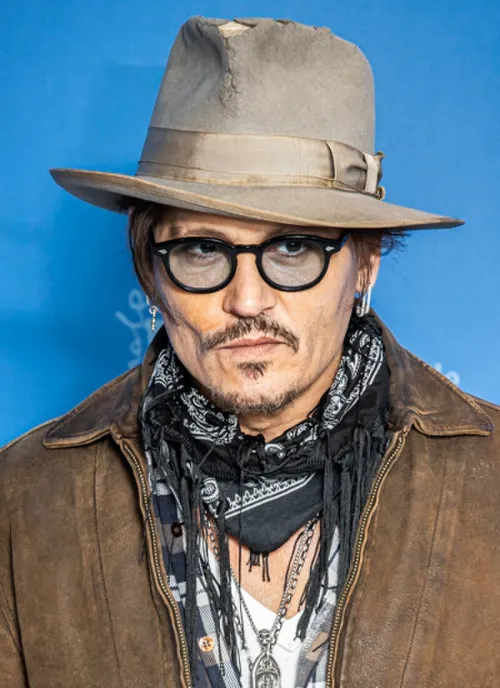
Joaquin Rafael Bottom was born on October 28, 1974, in San Juan, Puerto Rico, the fourth of five children. He grew up in a family that joined the religious cult Children of God, living communally in Venezuela before his parents became disillusioned and moved the family to Los Angeles. He and his siblings — including his brother River Phoenix, who became a successful actor before his death from a drug overdose in 1993 — were raised in an unconventional environment where performance and creative expression were central. He attended La Guardia High School for the Arts and began acting as a teenager.
His early film career established him as a performer of unusual psychological depth. Gladiator (2000) — in which his portrayal of the megalomaniacal Emperor Commodus, both monstrous and pitiable simultaneously — earned him his first Academy Award nomination. Walk the Line (2005), in which he played Johnny Cash with an intensity that required him to learn guitar and develop a performing voice convincing enough for Cash's widow to approve, earned him a second nomination and a Golden Globe. His work with Paul Thomas Anderson and Spike Jonze placed him consistently at the center of the most ambitious American cinema of the 2010s.
The Master (2012) — in which he played Freddie Quell, a traumatized Navy veteran entangled with a Scientology-like movement — produced what many critics consider the finest individual film performance of the decade: a physical and psychological commitment of such completeness that the character's body seemed to have been inhabited rather than constructed. Joker (2019) brought him a third nomination and won him the Academy Award for Best Actor.
Phoenix's INFP quality is the engine of his method: he disappears into characters not through technical construction but through something closer to genuine empathic occupation — finding in the character's experience something continuous with his own. His veganism, his environmental advocacy, his decades-long commitment to animal rights — pursued without the publicity-seeking that usually accompanies celebrity activism — reflect the same INFP integrity: the alignment of stated values and actual life, maintained privately rather than performed publicly.