William Shakespeare - INFP Personality Type

William ShakespeareINFP - Harmonizador

Playwright, Poet

Origem

UK

Confiança da Tipagem

amplamente aceito

Quick Facts

Born
April 23, 1564
Birthplace
Stratford-upon-Avon, Warwickshire, England
Nationality
English
Height
Unknown
Zodiac Sign
Education
King's New School, Stratford (grammar school)
Known For
HamletRomeo and JulietKing LearOthelloA Midsummer Night's Dream

Who is William Shakespeare?

William Shakespeare was baptized on April 26, 1564, in Stratford-upon-Avon, England — his birth date is traditionally given as April 23. He was the third child of John Shakespeare, a glover and local alderman, and Mary Arden. He attended the King's New School in Stratford, studying Latin and classical rhetoric. At eighteen he married Anne Hathaway; their daughter Susanna was born six months later, followed by twins Hamnet and Judith in 1585. The 'lost years' between 1585 and 1592 are almost entirely undocumented — by 1592 he was established in London as both playwright and actor, already established enough to provoke the envious attacks of established dramatists.

He became a shareholder in the Globe Theatre in 1599. His dramatic output — approximately thirty-seven plays, 154 sonnets, and longer poems — spans every genre available to the Elizabethan stage. The early comedies and history plays gave way to the great tragedies of the 1600s (Hamlet, Othello, King Lear, Macbeth), which gave way to the late romances (The Tempest, The Winter's Tale) that seem to reflect a deliberate movement toward reconciliation and forgiveness.

The sonnets, published in 1609, contain the most direct record of his inner emotional life — though even here, characteristically for an INFP, the depth of feeling is expressed through elaborate formal constraint rather than direct disclosure. His son Hamnet died at eleven in 1596; the death resounds through King John and Hamlet, and possibly through everything he wrote afterward. He retired to Stratford around 1613 and died on April 23, 1616, at fifty-two.

Shakespeare's INFP quality is the engine of his central achievement: the extraordinary empathy that allowed him to inhabit — and to make audiences inhabit — human beings of radically different types. Hamlet's paralysis and intellectual self-consciousness, Iago's crystalline malevolence, Falstaff's joyful dissolution, Prospero's reluctant forgiveness — these are not the constructions of an intellect building psychological types but of an imagination that could genuinely feel what it was to be each of them. The INFP's gift is exactly this: the capacity for empathy so complete that it does not merely understand another person's experience but briefly becomes it, and the artistic discipline to then transform that becoming into language that has outlasted four centuries.
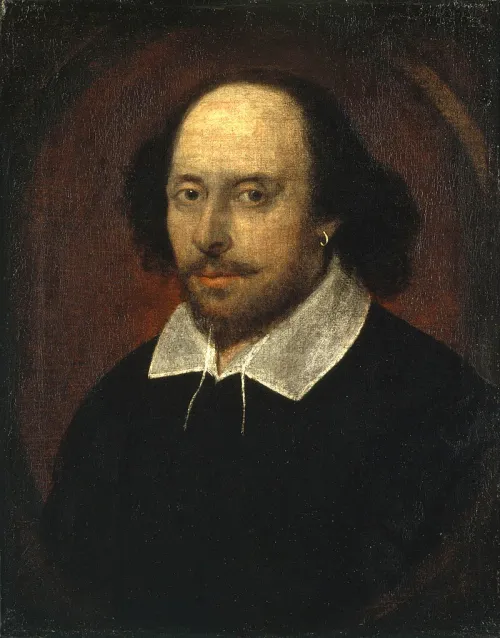
Tipo de Personalidade INFP de William Shakespeare

William Shakespeare, conhecido(a) por seu trabalho como Playwright, Poet, exibe os traços clássicos de um tipo de personalidade INFP - Harmonizador. Este perfil de personalidade é caracterizado por uma combinação única de funções cognitivas que moldam como eles percebem o mundo e tomam decisões.

Principais Traços INFP em William Shakespeare

Como um INFP, William Shakespeare demonstra as características centrais associadas a este tipo de personalidade. Esses traços desempenharam um papel significativo em seu sucesso e persona pública como Playwright, Poet. Compreender seu tipo de personalidade fornece insights sobre suas motivações, pontos fortes e a perspectiva única que trazem para seu campo.

Por Que William Shakespeare é Tipado como INFP

O tipo de personalidade INFP é um dos 16 tipos Myers-Briggs, e o comportamento público de William Shakespeare, padrões de tomada de decisão e estilo de comunicação se alinham estreitamente com esta classificação. Indivíduos INFP como William Shakespeare são conhecidos por sua abordagem distintiva para resolução de problemas e relacionamentos interpessoais.

William Shakespeare's Notable Works

1595-1600

Great Comedies & First Tragedies

A Midsummer Night's Dream, Romeo and Juliet, Hamlet, Twelfth Night

1600-1608

Great Tragedies

Othello, King Lear, Macbeth, Antony and Cleopatra

1609

Sonnets Published

1610-1613

Late Romances

The Tempest, The Winter's Tale

Awards & Recognition

\u2605First Folio published — 36 plays preserved (1623)

William Shakespeare's Mystic Profile

Discover William Shakespeare's cosmic connections through zodiac, tarot, crystals, and spirit animals.

taurus

Zodiac Prediction

As a Taurus, William Shakespeare produced work with the sign's most essential quality: art that endures across time because it is rooted in what is most permanently human. Taurus rules what persists — and Shakespeare's work has persisted for four hundred years because it is built from materials that do not change: jealousy, ambition, love, grief, humor, the terror of death, the desire for meaning. His Taurus quality is also visible in his approach to the theatre as a business he managed with considerable shrewdness while producing transcendent art.

🃏

the world

Tarot Card Match

The World card represents the completion of mastery across the full range of human experience — the final card of the Major Arcana. Shakespeare's achievement is the World card in literary terms: the most thorough single representation of human experience that the Western literary tradition contains, ranging from the comedic to the tragic, from the royal to the domestic.

💎

clear quartz

Crystal Match

Clear quartz — the master crystal, the transparent amplifier through which any energy can flow and be magnified — connects with Shakespeare's defining artistic quality: the extraordinary transparency of his language to the emotional truth it carries. His prose and verse are functional rather than decorative, amplifying human experience rather than commenting on it.

🦁

chameleon

Spirit Animal

The chameleon's defining gift is complete adaptive transformation. Shakespeare could become Hamlet and Iago and Falstaff and Cordelia and Bottom and Cleopatra — characters of radically different consciousness — with such complete conviction that four centuries of readers have found their own experience reflected in each. The chameleon holds the intelligence that enables transformation while giving nothing of itself away in the colors it wears.

Mais Personalidades INFP Famosas

Sobre Esta Análise

Esta análise do tipo de personalidade de William Shakespeare é baseada em informações publicamente disponíveis, entrevistas, relatos biográficos e observações comportamentais. A tipagem INFP representa uma avaliação fundamentada por entusiastas e especialistas em tipos de personalidade, mas não deve ser considerada oficialmente confirmada, a menos que declarado de outra forma. A personalidade é complexa e multifacetada, e as personas públicas podem diferir das personalidades privadas.