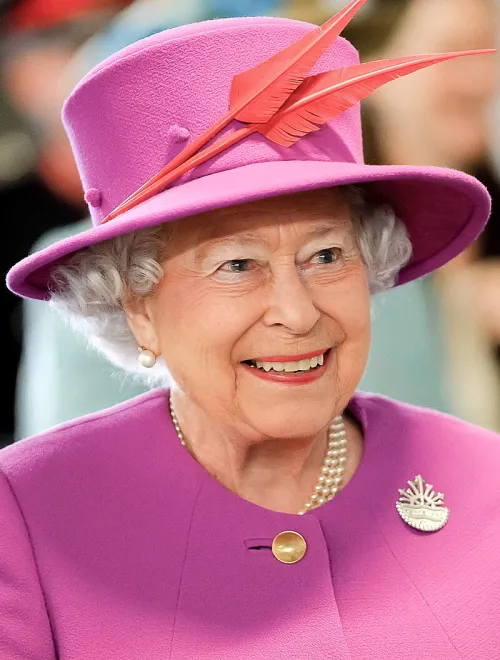
Elizabeth Alexandra Mary was born on April 21, 1926, in Mayfair, London, the first child of Prince Albert, Duke of York, and Lady Elizabeth Bowes-Lyon. She was not born to be queen — her father was the younger brother of the Prince of Wales, and the expectation was that Edward VIII would reign and have children who would succeed him. The abdication crisis of 1936, when Edward VIII gave up the throne to marry the divorced American Wallis Simpson, made her father King George VI and made Elizabeth, at ten years old, the heir presumptive. This unexpected destiny was approached with characteristic ISTJ seriousness: she understood duty as absolute, service as the primary meaning of the position she had inherited through no choice of her own.
During World War II, Princess Elizabeth served as a driver and mechanic in the Auxiliary Territorial Service — one of the royal family's deliberate decisions to share in the national effort rather than retreat to safety. She was the first female member of the royal family to serve in the armed forces. Her wartime radio broadcasts to children, beginning when she was fourteen, established a pattern of direct, reassuring communication that would characterize her public style for seven decades. She married Prince Philip Mountbatten in 1947 in a ceremony that offered postwar Britain a rare moment of celebration, and succeeded to the throne on February 6, 1952, when her father died of lung cancer. Her coronation in June 1953 was the first to be televised.
Elizabeth II's seventy-year reign — the longest in British history — encompassed the end of the British Empire and the Commonwealth's transformation, multiple constitutional crises, social revolutions, technological transformations, and twelve different Prime Ministers. She remained above partisan politics with extraordinary consistency, providing constitutional continuity while governments changed. Her relationship with each of her Prime Ministers was conducted through weekly private audiences from which no records survive — a structure that allowed frank exchange and that was praised by most of the twelve who experienced it. The consistency, the discretion, the lifelong commitment to constitutional duty — these were ISTJ qualities deployed at the scale of a civilization.
Queen Elizabeth II's ISTJ nature was the perfect match for the role of constitutional monarch: a position that requires the suppression of personal opinion in favor of institutional duty, the maintenance of consistency across vast changes of context, and the willingness to serve a function rather than express a personality. She excelled in this role not despite its constraints but because of them — the ISTJ finds genuine fulfillment in faithful service to a larger structure. Her personal warmth, visible in her interactions with animals, in her wit in private settings, and in her genuine relationship with the Commonwealth she served, was real — but always disciplined by her understanding that the role came first. She died on September 8, 2022, at ninety-six years old.