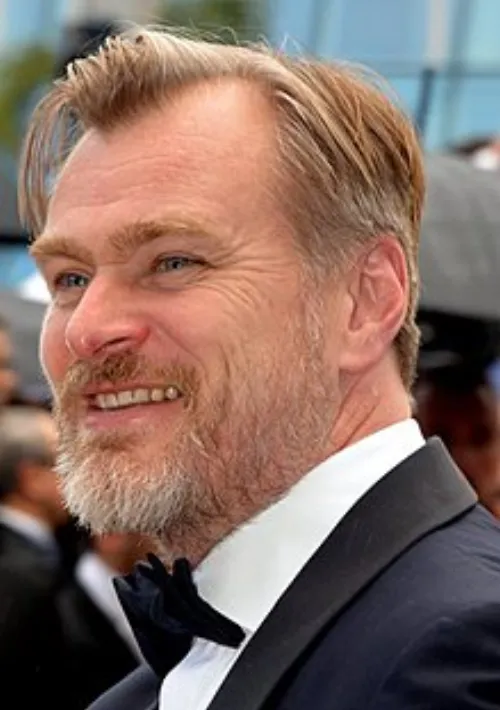
Stanley Kubrick was born on July 26, 1928, in the Bronx, New York, to Jacob Leonard Kubrick, a physician, and Gertrude Perveler. A mediocre student by conventional metrics, Kubrick was electrified by photography and chess — two disciplines that shaped his filmmaking: the former teaching him about composition, light, and the one perfect shot; the latter instilling his obsession with strategy, pattern recognition, and thinking many moves ahead. His father gave him a camera at thirteen, and by seventeen he was selling photographs to Look magazine. He dropped out of high school, briefly attended City College of New York without formally enrolling, and began his film career making documentary shorts in the early 1950s.
Kubrick directed his first feature, Fear and Desire, in 1953 at age twenty-four with money borrowed from family and friends. His early films — Killer's Kiss, The Killing, Paths of Glory — established his visual mastery and his refusal to sentimentalize. Spartacus (1960) was his only film made under significant studio control, an experience he found sufficiently unpleasant to relocate permanently to England, where he could operate with total creative autonomy. From England he made every subsequent film, rarely leaving his Hertfordshire estate and becoming legendarily reclusive — a control that extended to every element of production, from lenses to music rights to the exact shade of paint on a wall.
His filmography is an exercise in INTJ perfectionism applied to cinema: each film a complete and internally consistent system, each genre selected to expose a specific dimension of human nature at its most extreme. Dr. Strangelove dissected nuclear-age absurdity. 2001: A Space Odyssey redefined the possibilities of science fiction as serious philosophical inquiry. A Clockwork Orange examined free will and institutional violence. Barry Lyndon created a visual language derived entirely from period light sources. The Shining transformed horror into a meditation on memory, family, and the architecture of the mind. Full Metal Jacket bifurcated war's brutalization. Eyes Wide Shut explored desire and power in marriage. Each film required years of preparation, often two or more years of shooting, and resulted in something that no contemporary could have made.
Kubrick died on March 7, 1999, six days after completing Eyes Wide Shut, leaving behind thirteen features that collectively constitute one of cinema's most sustained arguments for film as a philosophical medium. His influence extends to virtually every serious filmmaker working today, not because they imitate his style — which was entirely his own — but because he demonstrated that cinema could bear the full weight of human inquiry, that the director who combined total technical mastery with genuine intellectual ambition could produce art that belongs in conversation with the great novels and philosophical works of the twentieth century.