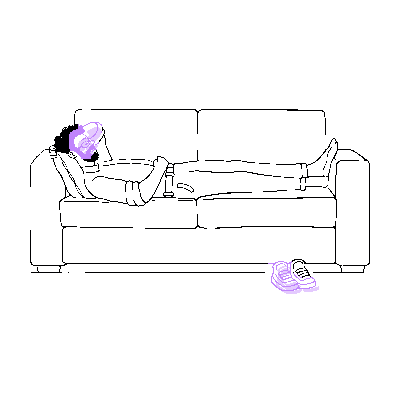
INTP 수면 패턴 & 크로노타입
INTP는 MBTI 시스템에서 가장 극단적인 올빼미형일 것입니다. 이들의 수면 관계는 종종 혼돈스럽습니다. 지적 탐구에 몰입하다 시간을 잊고, 몇 시간이 지난 것을 깨닫기도 전에 규칙적으로 오전 3시나 4시를 맞이합니다. INTP의 뇌는 9시에서 5시의 세상이 요구하는 것과 근본적으로 다른 리듬으로 작동하며, 자연스럽게 야간으로 흘러가는 길고 비구조적인 탐색 시간을 선호합니다.
INTP는 MBTI 시스템에서 가장 극단적인 올빼미형일 것입니다. 이들의 수면 관계는 종종 혼돈스럽습니다. 지적 탐구에 몰입하다 시간을 잊고, 몇 시간이 지난 것을 깨닫기도 전에 규칙적으로 오전 3시나 4시를 맞이합니다. INTP의 뇌는 9시에서 5시의 세상이 요구하는 것과 근본적으로 다른 리듬으로 작동하며, 자연스럽게 야간으로 흘러가는 길고 비구조적인 탐색 시간을 선호합니다.
주요 기능인 Ti(내향적 사고)는 내부 논리 틀을 구축하고 해체하는 분석 엔진으로, 낮 시간대에는 거의 불가능한 지속적이고 방해받지 않는 집중을 필요로 합니다. 보조 기능인 Ne(외향적 직관)는 세상이 조용해질수록 강해지는 탐색의 피드백 루프를 만들며 Ti에 끝없는 아이디어와 접선적 연결을 공급합니다. 심야의 위키피디아 탐험, 프로그래밍 마라톤, 이론적 토론은 Ti-Ne가 자연 서식지에서 발휘되는 모습입니다.
Ti operates best when it can follow a logical thread without external interruption. Nighttime eliminates the phone calls, social obligations, and environmental noise that fragment Ti’s focus, allowing INTPs to think with razor clarity for hours at a stretch.
Ne generates its richest associations during low-pressure periods. In the evening, freed from the day’s demands, Ne begins offering Ti a buffet of possibilities — this is why INTPs often have their most creative ideas at 1 AM but struggle to explain them the next morning.
INTPs often experience a ‘zombie morning’ phase until around 10 AM, functioning on autopilot. Mental fog lifts gradually, with analytical capacity reaching usable levels by 11 AM. Early afternoon brings the best window for structured tasks that require Ti precision. Energy dips around 4-5 PM, but then begins a steady climb from 8 PM onward. By 11 PM, the INTP is fully ‘online’ and can maintain intense focus until exhaustion forces sleep around 3-4 AM.
12 AM - 4 AM
11 AM - 2 PM
3 PM - 5 PM
Wake around 9-10 AM without an alarm if possible. Allow 90 minutes of gentle startup — coffee, casual browsing, low-stakes reading. Do NOT schedule important meetings before 11 AM. Morning is for autopilot tasks: email, household chores, routine maintenance.
Late morning through early afternoon (11 AM - 2 PM) is the analytical sweet spot. Use this for debugging, technical writing, problem-solving, or any task requiring Ti precision. After 2 PM, energy wanes — switch to collaborative work or casual exploration. A brief nap around 4 PM can extend evening productivity significantly.
From 8 PM onward, let curiosity lead. This is the time for research, side projects, learning new skills, or diving into complex problems. Don’t fight the Ne tangents — they often lead somewhere valuable. Keep snacks and water nearby to avoid breaking flow state.
Set a 1 AM ‘awareness alarm’ that simply reminds you of the time (not to stop immediately, but to begin wrapping up within 30-60 minutes). Use a wind-down activity that satisfies Ne without escalating — podcasts, light fiction, or puzzle games work well. Avoid starting new research threads after midnight.
INTPs are at high risk for ‘social jet lag’ — the discrepancy between their natural rhythm and society’s expectations. Chronic sleep deprivation from forcing early schedules can impair Ti’s precision, leading to logical errors and reduced learning capacity. Prioritizing consistent sleep duration (even at unconventional hours) over conventional timing is far more beneficial for INTP cognitive health.
INTPs paired with early bird types (especially ISFJ or ESFJ) often experience the most extreme schedule mismatch. The INTP is hitting peak form at midnight while their partner has been asleep for two hours. Successful navigation requires dedicated overlap time (dinner and early evening) and mutual respect for different biological rhythms rather than attempts to ‘convert’ each other.
INTP에 대한 이 크로노타입 분석은 MBTI 인지 기능과 일주기 리듬 연구 사이의 상관관계를 바탕으로 합니다. 개인의 수면 패턴은 유전자, 나이, 라이프스타일, 환경에 따라 다릅니다. 이 콘텐츠는 정보 제공 및 오락 목적으로만 제공되며 수면 장애나 건강 상태에 관한 전문적인 의료 조언을 대체해서는 안 됩니다.