Sigmund Freud - ISTJ Personality Type

Sigmund FreudISTJ - 管理者

Psychoanalyst

出身

Austria

タイピングの信頼性

一般的なタイピング

Quick Facts

Born
May 6, 1856
Birthplace
Freiberg, Moravia (now Czech Republic)
Nationality
Austrian
Height
5'7" (170 cm)
Zodiac Sign
Education
University of Vienna (medicine)
Known For
Founder of psychoanalysisThe Interpretation of Dreamsunconscious mind theorypsychosexual development

Who is Sigmund Freud?

Sigismund Schlomo Freud was born on May 6, 1856, in Freiberg, Moravia (now Příbor, Czech Republic), the oldest son of Jacob Freud, a wool merchant, and his third wife Amalie Nathansohn. His family moved to Vienna when he was four, and he grew up in the Jewish intellectual milieu of late nineteenth-century Vienna — a culture of rigorous learning, social aspiration, and the specific anxiety of a Jewish minority navigating a society of anti-Semitic undercurrents. He was his mother's favorite child, and her conviction of his exceptional destiny gave him an unusual confidence that carried him through the decades of professional rejection and controversy that preceded his eventual recognition. He studied medicine at the University of Vienna, initially interested in neurological research.

Freud's intellectual development moved from neurology through a brief but formative period of studying hysteria with Jean-Martin Charcot in Paris, through Josef Breuer's talking cure with Anna O., toward the systematic construction of the theory and practice that would become psychoanalysis. The Interpretation of Dreams (1899), which he considered his masterwork, argued that dreams were the disguised fulfillment of repressed wishes — a window into the unconscious mind that could be systematically analyzed to reveal its contents. Three Essays on the Theory of Sexuality (1905) extended his model to a theory of sexual development that, whatever its clinical validity, transformed Western culture's willingness to discuss sexuality openly.

Freud built the psychoanalytic movement with the organizational precision and protective territoriality of a founder who had fought hard for his ideas and intended to defend them. His relationships with early disciples — Alfred Adler, Carl Jung, Wilhelm Reich — were characterized by initial enthusiasm and eventual schism when the disciples' ideas diverged from the founder's. The International Psychoanalytic Association and the network of institutes he helped establish spread psychoanalysis throughout Europe and, eventually, America. The Nazis burned his books in 1933; he remained in Vienna until 1938, when the Anschluss made flight necessary. He died in London in 1939, at 83, from oral cancer.

Freud's ISTJ nature explains the particular form his genius took: not the intuitive leap of the INTJ or the synthesizing vision of the INFJ, but the patient, systematic construction of a full framework from the careful observation of specific cases. He was a meticulous observer who documented everything, whose case studies are remarkable for their narrative precision and analytical rigor, and who then built from those specific observations toward general principles. His ISTJ commitment to his own system — the rigidity that made him unable to tolerate theoretical disagreement from colleagues — was both the strength that protected psychoanalysis through decades of hostility and the limitation that prevented him from updating his model when evidence suggested it needed revision.
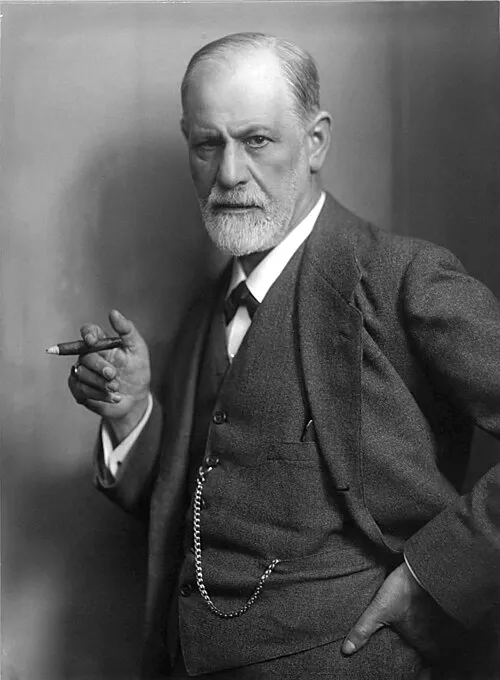

Sigmund FreudのISTJ性格タイプ

Sigmund FreudはPsychoanalystとしての活動で知られており、ISTJ性格タイプ(管理者)の典型的な特性を示しています。この性格プロファイルは、世界の認識と意思決定のプロセスを形成するユニークな認知機能の組み合わせによって特徴づけられています。

Sigmund Freudにおける主要なISTJの特性

ISTJとして、Sigmund Freudはこの性格タイプに関連するコアな特性を示しています。これらの特性は、Psychoanalystとしての成功と公的なペルソナに重要な役割を果たしてきました。彼らの性格タイプを理解することで、その動機、強み、そして専門分野にもたらすユニークな視点についての洞察が得られます。

Sigmund FreudがISTJと判定される理由

ISTJ性格タイプはMyers-Briggsの16性格タイプの一つで、Sigmund Freudの公的な行動、意思決定パターン、コミュニケーションスタイルはこの分類に密接に一致しています。Sigmund FreudのようなISTJの人々は、問題解決と対人関係への独特なアプローチで知られています。

Sigmund Freud's Key Discoveries

1895

Studies in Hysteria

Co-authored with Josef Breuer; foundation of psychoanalytic theory

1899

The Interpretation of Dreams

His masterwork; lays groundwork for psychoanalysis and theory of the unconscious

1905

Three Essays on the Theory of Sexuality

Life-changing and controversial theory of psychosexual development

1910

International Psychoanalytic Association

Founds international organization to spread psychoanalytic movement

1930

Civilization and Its Discontents

Extended application of psychoanalytic ideas to culture and civilization

Awards & Recognition

\u2605Goethe Prize for Literature (1930)

Sigmund Freud's Mystic Profile

Discover Sigmund Freud's cosmic connections through zodiac, tarot, crystals, and spirit animals.

taurus

Zodiac Prediction

Taurus is the sign of the one who builds to last — the patient, methodical creator whose work is designed not for the moment but for the ages, who invests in the slow construction of something that will endure beyond the individual life. Freud's Taurus energy drove the decades of systematic theory construction — the accumulation of case after case, observation after observation, into a thorough framework of human psychology that, whatever its scientific validity, has permanently altered the way human beings understand themselves. Taurus also rules the physical and the sensory, and Freud's insistence on the centrality of bodily drives — sexuality, appetite, the physical life of the unconscious — is deeply Taurian: the materialist who insists that the mind cannot be separated from the body.

🃏

the hermit

Tarot Card Match

The Hermit is the tarot's card of the solitary truth-seeker — the one who withdraws from conventional understanding to pursue the deeper reality that conventional understanding avoids. Freud descended into the unconscious mind — the social dark that no one wanted to examine — with exactly The Hermit's lantern: his theory of the unconscious was the light he carried into territory others preferred to leave unlit. The Hermit's journey is inevitably lonely; Freud's decades of professional isolation before psychoanalysis was recognized were The Hermit years: the sustained pursuit of understanding in the face of institutional rejection.

💎

smoky quartz

Crystal Match

Smoky quartz — the stone of clarity about what lies in shadow, of the ability to see the dark without being consumed by it, associated with the transmutation of difficult unconscious material into conscious understanding — connects with Freud's entire professional project. He worked in the smoke — the repressed, the unconscious, the socially unacceptable — and brought back quartz clarity: systematic understanding of what the darkness contained. Smoky quartz is also associated with grounding: the ability to work with shadow material while maintaining enough stability to be useful rather than overwhelmed.

🦁

raven

Spirit Animal

The raven — the bird associated across cultures with the underworld, with the messages that travel between the visible and invisible worlds, with the intelligence that finds meaning in what others overlook — is Freud's spirit animal. Ravens are extraordinarily intelligent problem-solvers who are also culturally associated with the dark, the hidden, and the liminal. Freud's professional life was raven work: the persistent descent into the unconscious material that polite society preferred to ignore, the extraction of meaning from dreams and slips and symptoms that conventional medicine dismissed as insignificant.

もっと多くの著名なISTJの人物

この分析について

Sigmund Freudのこの性格タイプ分析は、公開情報、インタビュー、伝記、および行動観察に基づいています。ISTJのタイピングは、性格タイプ愛好家と専門家による推測的評価であり、特段の記述がない限り公式に確認されたものではありません。性格は複雑で多面的であり、公的なペルソナは私的な性格と異なる場合があります。