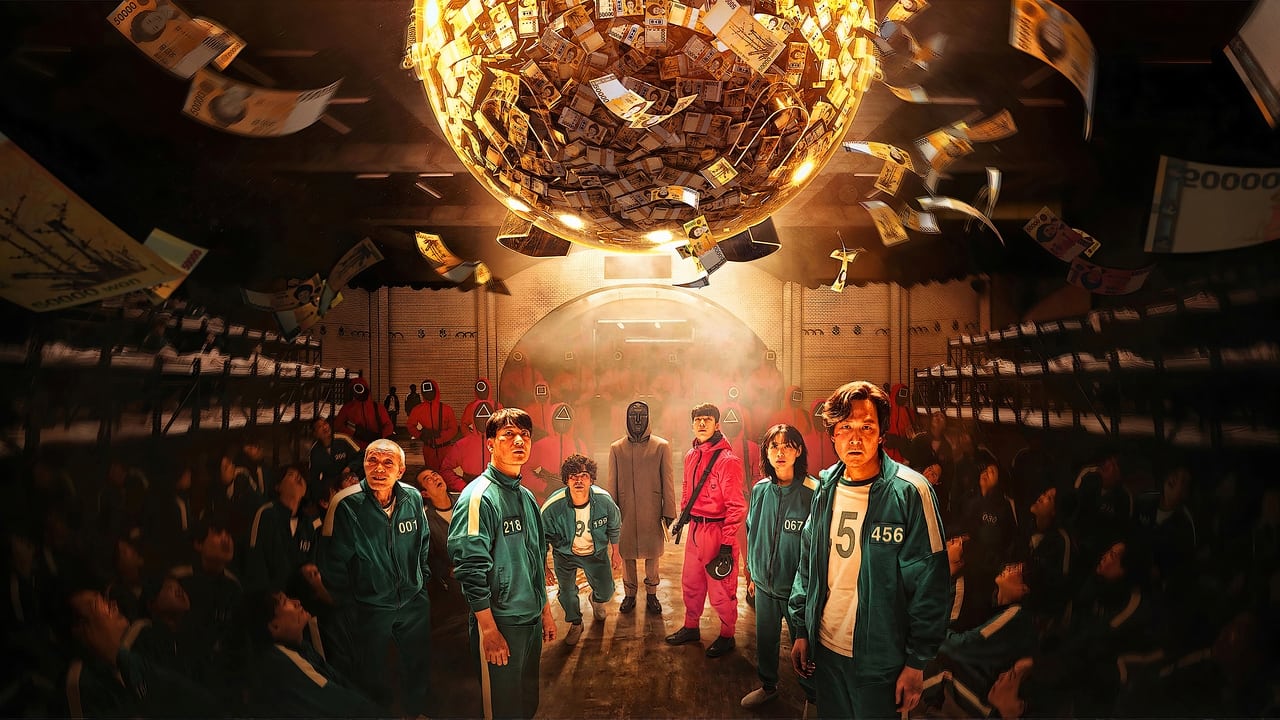
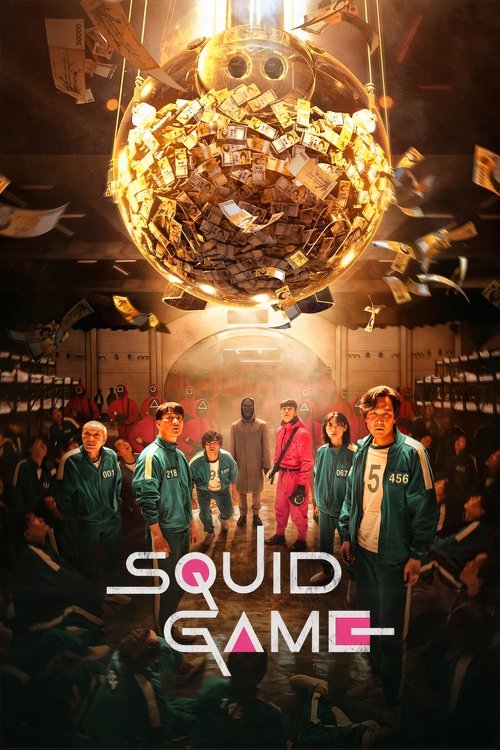
Squid Game
Which Squid Game player matches your MBTI personality type?
Analis

Cho Sang-woo (Player 218)
AnalystCho Sang-woo is the INTJ whose dominant Ni constantly calculates the trajectory of events several moves ahead, seeing the inevitable outcomes that others refuse to face. From the marble game where he manipulates Ali to the glass bridge where he pushes the player ahead of him, Sang-woo perceives the logical endgame of each situation with unflinching clarity and acts on that vision regardless of moral cost. His auxiliary Te provides the cold efficiency to execute his strategic calculations—he forms and breaks alliances based purely on their utility, treats human relationships as variables to be optimized, and never allows sentiment to override strategic necessity. His tertiary Fi runs agonizingly deep beneath his calculated exterior: his tearful phone call to his mother, his visible self-loathing after betraying Ali, and his final suicide reveal a person whose personal values are devastated by his own actions but cannot stop his Ni-Te from overriding them. His inferior Se manifests as his vulnerability to physical, sensory overwhelm—the raw visceral horror of the games occasionally breaks through his strategic detachment, particularly in the early episodes. Sang-woo's arc is a tragic INTJ study: a brilliant mind whose Ni vision of survival becomes so consuming that it destroys everything his buried Fi actually values, until the only strategic move remaining is the one that ends the game entirely.
“This isn't about trusting others. It's about not being an idiot.”Learn about INTJ →

Player 69 (the Doctor)
AnalystThe Doctor is the INTP whose dominant Ti reduces the Squid Game to a system to be analyzed, understood, and exploited with maximum efficiency. He approaches the life-and-death competition with the clinical detachment of a scientist studying lab conditions, viewing other players not as fellow human beings but as variables in an equation he is solving for personal survival. His auxiliary Ne drives his ability to see exploitable patterns in the game's structure—he identifies the organ-harvesting operation as an opportunity, recognizes the information asymmetry between guards and players, and devises creative schemes to gain advance knowledge of upcoming games. His tertiary Si provides the medical expertise accumulated through years of disciplined training, which he leverages as currency in his arrangement with the corrupt guards, trading his professional skills for survival advantages. His inferior Fe is almost entirely suppressed, allowing him to participate in organ harvesting of fellow players without apparent moral distress because his Ti framework treats ethics as a variable to be optimized rather than a constraint to be honored. The Doctor's downfall comes when his Ti system fails—the information he receives about the next game proves useless because his Ne pattern recognition cannot account for genuine randomness. His arc is a warning about the INTP shadow: when Ti analytical power operates without Fe moral grounding, intelligence becomes indistinguishable from predation.
“Information is power in a game like this.”Learn about INTP →

The Front Man (Hwang In-ho)
AnalystThe Front Man is the ENTJ who has transformed himself into the perfect instrument of systematic authority. His dominant Te manifests as absolute organizational control over the Squid Game operation—he manages hundreds of masked workers, enforces rules with zero tolerance for deviation, executes staff members who violate protocols, and maintains the games' operational integrity with the cold precision of a CEO running a flawless enterprise. His auxiliary Ni provides the philosophical vision that justifies the games in his mind: he has internalized Il-nam's worldview about human nature and equality, seeing the games not as cruelty but as the purest expression of a meritocratic system where everyone has the same chance. His tertiary Se manifests in his commanding physical presence and direct personal intervention when situations demand it—he does not merely give orders from a distance but engages directly, whether confronting his brother on the cliff or personally overseeing critical game moments. His inferior Fi is the function he has most thoroughly suppressed: he shoots his own brother without hesitation because acknowledging the personal emotional bond would destabilize his entire Te-Ni framework. The Front Man's arc reveals the ENTJ's darkest potential—a leader whose organizational genius and strategic vision become instruments of systematic dehumanization when the inferior Fi that should provide moral anchoring is completely overridden by the drive for control and order.
“Everyone is equal while they play this game.”Learn about ENTJ →

Oh Il-nam (Player 001)
AnalystOh Il-nam is the ENTP whose dominant Ne transforms the Squid Game from a survival contest into a philosophical experiment about human nature. He approaches every game with intellectual curiosity rather than fear, seeing patterns and possibilities that make each round fascinating rather than terrifying—because, as the architect of the entire operation, he is playing a fundamentally different game than everyone else. His auxiliary Ti provides the analytical framework for his grand social experiment: he has designed the games as a logical system to test his theory about whether humans will choose cooperation or self-interest under extreme pressure, treating the entire apparatus as a controlled study. His tertiary Fe manifests in his surprisingly genuine warmth toward Gi-hun, forming a bond that may have started as observation but develops into something that complicates his detached thesis about human nature. His inferior Si surfaces in his nostalgia for childhood games—the games themselves are drawn from his youth, revealing that beneath the philosophical experiment lies a dying man trying to recapture the sensory vitality of his past. Il-nam's final scene with Gi-hun, betting on whether a stranger will help a freezing homeless man, captures the ENTP's ultimate question: are his Ne-Ti theories about human nature correct, or does the messy reality of human goodness defy his elegant framework? His death before seeing the answer is poetically fitting—the ENTP who loved the question more than any answer.
“Do you know what someone with no money has in common with someone with too much money? Living is no fun for either of them.”Learn about ENTP →
Diplomat

Player 244 (the Pastor)
DiplomatThe Pastor is the INFJ whose dominant Ni creates an overarching framework of spiritual meaning that transforms the horror of the Squid Game into a narrative of divine purpose. He perceives patterns of providence where others see only chaos, interpreting each game as a test of faith and each survival as evidence of God's plan, his Ni constructing a coherent narrative that provides psychological shelter from the incomprehensible cruelty surrounding him. His auxiliary Fe drives him to share this vision with others, offering prayers, comfort, and moral guidance to fellow players, using his emotional attunement to provide hope to those whose psychological defenses are crumbling. His tertiary Ti provides the theological reasoning that supports his spiritual framework—he articulates logical arguments for faith and constructs systematic interpretations of events that reinforce his worldview. His inferior Se is his ultimate undoing: when the visceral, physical reality of the games becomes impossible to spiritualize—when he witnesses brutality that no Ni framework can redeem—his entire cognitive structure collapses. The Pastor's crisis of faith under extreme stress demonstrates the INFJ's deepest vulnerability: when the Ni vision that organizes their entire perception of reality is shattered by Se evidence that cannot be integrated, the result is not mere disappointment but a total collapse of meaning. His arc asks whether the INFJ's gift for finding deeper purpose is wisdom or self-protective illusion.
“God will save us. He has a plan.”Learn about INFJ →

Ji-yeong (Player 240)
DiplomatJi-yeong is the INFP whose dominant Fi processes her entire life experience through a deeply personal emotional framework that ultimately leads to the series' most quietly devastating sacrifice. She evaluates everything through internal values—her father's abuse, her mother's murder, her time in prison—and reaches the profoundly personal conclusion that her life has been defined by pain while Sae-byeok's still holds the possibility of meaning through her brother. Her auxiliary Ne allows her to see beyond the immediate marble game to the larger emotional truth: that this moment is not about winning or losing but about choosing whose story deserves to continue, a reframing that transforms a death game into an act of grace. Her tertiary Si provides the accumulated weight of painful memories that inform her decision—she is not being impulsive but drawing on a lifetime of stored experience to reach her conclusion about the relative value of two lives. Her inferior Te surfaces as her complete disinterest in the strategic dimension of the game; she never attempts to win because Te-driven competition is irrelevant to her Fi assessment of the situation. Ji-yeong's sacrifice is the most INFP moment in the series: a deeply internal, values-based decision made with quiet certainty, expressing love through the ultimate act of giving without any expectation of recognition or reward. Her final words are about gratitude, not regret—pure Fi authenticity in the face of death.
“Thank you. For playing with me.”Learn about INFP →

The Recruiter (Gong Yoo)
DiplomatThe Recruiter is the ENFJ whose dominant Fe has been weaponized into an instrument of predatory charm. He reads people's emotional states with extraordinary precision—identifying their desperation, loneliness, and wounded pride within moments of meeting them—and uses this Fe perception not to help but to lure them into the Squid Game. His auxiliary Ni allows him to see exactly which emotional pressure points will work on each target, perceiving the deeper patterns of human vulnerability that make his recruitment approach consistently effective. His tertiary Se manifests in the physical game of ddakji he plays with prospects—the slapping, the money, the tangible sensory engagement is deliberately designed to activate targets' Se desires for immediate gratification and physical relief from their circumstances. His inferior Ti surfaces in the cold, logical framework underlying his warm exterior: the recruitment process is a system, each interaction follows a calculated script, and the apparent spontaneity of his approach is actually a refined methodology. The Recruiter represents the ENFJ shadow at its most chilling: when Fe's ability to understand and connect with people is divorced from genuine care, it becomes the most effective manipulation tool imaginable. His charm is indistinguishable from real warmth, which is precisely what makes it so dangerous—targets cannot tell where authentic human connection ends and calculated exploitation begins.
“Shall we play a game?”Learn about ENFJ →
Seong Gi-hun (Player 456)
DiplomatSeong Gi-hun is the ENFP whose dominant Ne allows him to find hope and creative possibility even in the most hopeless circumstances of the Squid Game. While other players calculate odds and form strategic alliances, Gi-hun connects with people—seeing potential allies in a foreign worker everyone dismisses, befriending an elderly man others ignore, and consistently choosing human connection over statistical advantage. His auxiliary Fi provides the moral backbone that ultimately defines his journey: he cannot treat the games as a pure survival exercise because his deeply personal values about friendship and loyalty make him incapable of cold calculation, even when rationality demands it. His tertiary Te emerges in moments when he must organize others during team games, showing surprising practical leadership when the situation requires coordinated action. His inferior Si manifests as his inability to learn from past mistakes—his gambling addiction, his repeated trust in people who betray him, and his persistent optimism despite overwhelming evidence of human cruelty all reflect an Si blind spot where accumulated negative experience fails to override his Ne-Fi hope. Gi-hun's post-game transformation, where he spends a year in paralyzed depression before dyeing his hair red and choosing to fight, captures the ENFP's deepest arc: the idealist who discovers the world's darkness but refuses to let it extinguish his belief that things can be different.
“I'm not a horse. I'm a person.”Learn about ENFP →
Penjaga

Hwang Jun-ho
SentinelHwang Jun-ho is the ISTJ detective whose dominant Si drives his investigation with the methodical persistence of someone trained to follow evidence wherever it leads, one careful step at a time. He infiltrates the Squid Game operation by following established investigative procedures—assuming a dead guard's identity, documenting evidence with his phone, and building his case through systematic observation rather than dramatic confrontation. His auxiliary Te provides the practical efficiency of his approach: he processes information logically, makes tactical decisions about when to observe versus when to act, and maintains operational security with disciplined professionalism. His tertiary Fi emerges in his deeply personal motivation—this is not a case assigned by his department but a private mission driven by his emotional bond with his missing brother, revealing that beneath the procedural exterior lies a heart that will break every rule he normally follows for someone he loves. His inferior Ne manifests as his difficulty imagining the full scope of what he has uncovered: even as he gathers evidence of an impossibly elaborate death game, his Si-Te mind processes it through the framework of conventional criminal investigation rather than grasping the truly unprecedented nature of the conspiracy. Jun-ho's cliff confrontation with the Front Man captures the ISTJ's tragic limitation: his methodical investigation led him to the truth, but his Si framework could not prepare him for the revelation that the brother his Fi drove him to find was the very system he was trying to expose.
“I have to find the truth about what happened to my brother.”Learn about ISTJ →

Abdul Ali (Player 199)
SentinelAbdul Ali is the ISFJ whose dominant Si creates a worldview built on trust in established social bonds and the assumption that past kindness predicts future loyalty. When Gi-hun saves him during Red Light Green Light, Ali's Si records this as a defining relationship template: this person helped me, therefore this person is trustworthy. His auxiliary Fe drives his selfless generosity toward others—he shares food, offers his physical strength to protect weaker players, and consistently prioritizes the group's wellbeing over his own strategic advantage because his Fe cannot allow him to ignore someone in need. His tertiary Ti provides basic practical reasoning in game situations, allowing him to solve mechanical problems and follow logical instructions, but it is not strong enough to override his Si-Fe when it matters most. His inferior Ne is Ali's fatal weakness: he cannot imagine that someone he trusts would betray him because his Si-Fe framework simply does not generate that possibility. Sang-woo's marble game deception exploits this blind spot precisely—Ali's Si tells him his friend is trustworthy, his Fe wants to believe in human goodness, and his underdeveloped Ne cannot conceive of the creative betrayal being enacted. Ali's death is the most devastating moment in the series because it demonstrates what happens when an ISFJ's beautiful capacity for trust and loyalty meets a world that is designed to punish exactly those qualities.
“You saved my life. That makes us friends.”Learn about ISFJ →
The VIP Host
SentinelThe VIP Host is the ESTJ functionary whose dominant Te reduces the Squid Game to a set of operational protocols to be enforced with mechanical precision. He ensures that rules are followed, schedules maintained, and procedures executed according to established standards, treating the games' horrific content as irrelevant to his administrative role—what matters is that the system runs smoothly and the VIPs are satisfied. His auxiliary Si provides his deep respect for the games' established traditions and hierarchies, maintaining the same ceremonies, uniforms, and rituals that have defined the operation since its inception because precedent and consistency are the foundations of proper management. His tertiary Ne surfaces minimally as his ability to handle unexpected situations—player disruptions, rule ambiguities, or VIP requests—by finding solutions within the existing framework rather than inventing new approaches. His inferior Fi is virtually nonexistent in his professional capacity; he has completely divorced his personal moral feelings from his administrative function, executing his duties without any visible ethical discomfort because the Te-Si framework of rules and procedures provides a buffer against personal responsibility. The VIP Host represents the ESTJ shadow in institutional settings: the person who maintains an evil system not through malice but through the sincere belief that following procedures correctly is a sufficient moral standard, demonstrating how Te-Si dedication to order can enable atrocity when the system itself is corrupt.
“The games must follow the rules.”Learn about ESTJ →

Sang-woo's mother
SentinelSang-woo's mother is the ESFJ whose dominant Fe centers her entire existence around nurturing relationships and maintaining the social fabric of her community. She runs her fish shop not just as a business but as a social hub, sustaining the neighborhood bonds that give her life meaning and structure. Her auxiliary Si provides the deep well of memories she draws from—her son's academic achievements, his graduation, the pride of the neighborhood—creating a narrative of success that she clings to with unwavering devotion even as evidence mounts that something is terribly wrong. Her tertiary Ne is deliberately suppressed; she chooses not to imagine the dark possibilities about her son's disappearance because her Fe-Si framework needs to maintain the hopeful narrative that keeps her functioning. Her inferior Ti manifests as her inability to logically assess the warning signs—the debt, the absence, the unanswered calls—because analytical detachment would force her to confront truths her Fe heart cannot bear. Sang-woo's mother represents the ESFJ's most poignant dimension: the person whose capacity for unconditional love and trust becomes a source of suffering when the people they love most are unworthy of that devotion. Her scenes serve as a constant emotional counterweight to the games' brutality, reminding viewers that every player's choices ripple outward to affect the ESFJ caregivers who wait at home, sustained only by Si memories and Fe hope.
“My son is the pride of our neighborhood.”Learn about ESFJ →
Penjelajah

Kang Sae-byeok (Player 067)
ExplorerKang Sae-byeok is the ISTP whose dominant Ti creates a survival framework built on cool, detached analysis of every threat and opportunity. As a North Korean defector, her Ti has been honed by years of navigating genuinely life-threatening situations, and she approaches the Squid Game with the same practical, unsentimental assessment: observe the environment, identify resources, calculate risks, and act efficiently. Her auxiliary Se provides the street-smart physical awareness that makes her one of the most capable players—she climbs ventilation shafts to gather intelligence, moves through dangerous spaces with cat-like precision, and reads body language and environmental cues with the heightened sensory alertness of someone who has survived by noticing what others miss. Her tertiary Ni surfaces as she begins to perceive the larger meaning of the games beyond mere survival, particularly in her growing connection with Gi-hun and Ji-yeong that suggests she is starting to envision a future worth living for rather than just surviving another day. Her inferior Fe is her most guarded dimension—she keeps emotional distance from everyone because vulnerability has never been safe, yet her bond with Ji-yeong during the marble game reveals that beneath the ISTP armor lives someone who craves genuine connection but has learned that caring for others is the most dangerous risk of all.
“I don't need your sympathy. I need to survive.”Learn about ISTP →

Byeok's brother (Cheol)
ExplorerCheol is the ISFP whose dominant Fi centers his entire existence around one deeply personal bond: his devotion to his sister Sae-byeok. Every decision he makes is filtered through the internal emotional question of what will keep his sister safe and bring their family together, a Fi priority so absolute that it defines his identity more than any other trait. His auxiliary Se manifests in his practical survival awareness—he navigates his circumstances with the street-smart sensory alertness of someone who has learned to read environments for threats and opportunities, living moment to moment because long-term planning is a luxury his situation does not afford. His tertiary Ni provides a quiet, persistent vision of reunification with his sister that sustains him through separation, a hopeful inner image he holds onto despite the overwhelming evidence that circumstances may prevent it. His inferior Te surfaces as his difficulty with systematic, organized approaches to his problems—he lacks the strategic resources and institutional knowledge to navigate the bureaucratic systems that separate him from his sister, relying instead on personal determination and emotional resilience. Cheol's character represents the ISFP in survival mode: when all external structures are stripped away and only raw personal values remain, the ISFP's Fi becomes an indestructible core of devotion that endures not through strategic thinking or social connection but through the sheer, quiet power of loving someone beyond the capacity of circumstance to destroy.
“We'll be together soon. I promise.”Learn about ISFP →

Jang Deok-su (Player 101)
ExplorerJang Deok-su is the ESTP operating in his darkest shadow, where dominant Se becomes pure predatory dominance over the physical environment. He establishes control through immediate, tangible means—physical intimidation, territorial aggression, and the kind of in-your-face confrontation that leverages his Se awareness of physical dynamics and power hierarchies. His auxiliary Ti provides the tactical cunning that makes him more than a brute: he forms strategic alliances, hoards resources, secures information advantages through the doctor's organ-harvesting scheme, and calculates his moves with cold, practical logic. His tertiary Fe manifests in its shadow form as manipulation of group dynamics—he builds a faction through fear and reward, understanding social leverage and using it to maintain his position at the top of the player hierarchy. His inferior Ni is almost entirely absent, leaving him blind to consequences beyond the immediate situation: he cannot foresee that his brutality will turn allies against him or that Mi-nyeo's desire for revenge will prove lethal. Deok-su's death at Mi-nyeo's hands on the glass bridge is a fitting ESTP conclusion—a man who lived entirely in the present moment, controlling his environment through physical force, is destroyed by someone he dismissed as insignificant because his lack of Ni prevented him from seeing the long game of resentment building against him.
“In here, it's kill or be killed.”Learn about ESTP →

Han Mi-nyeo (Player 212)
ExplorerHan Mi-nyeo is the ESFP at her most chaotic and desperate, where dominant Se manifests as volatile, attention-demanding behavior that makes her the wildcard of the entire game. She lives entirely in the present moment with zero filter—screaming, seducing, bargaining, and betraying in rapid succession based on whatever immediate impulse or opportunity presents itself. Her auxiliary Fi provides the deeply personal emotional intensity that drives her actions: everything she does is motivated by visceral personal feeling rather than strategy, from her attachment to Deok-su to her rage at being abandoned. Her tertiary Te emerges as her surprising survival pragmatism—she claims to be good at everything and proves it often enough to remain viable, making practical calculations about alliances and positioning with more competence than her erratic exterior suggests. Her inferior Ni manifests as her inability to perceive deeper patterns or anticipate long-term consequences, leaving her perpetually reactive rather than proactive. Mi-nyeo's final act—dragging Deok-su to their deaths on the glass bridge—is the ultimate ESFP moment of raw, unfiltered Se-Fi expression: a physical act of personal vengeance executed in the immediate moment without any thought for survival, driven entirely by the Fi conviction that being discarded demands a response so dramatic that the entire world must witness it. She proves that the ESFP's emotional intensity, when weaponized, is as lethal as any strategic mind.
“I'm good at everything except the things I can't do.”Learn about ESFP →
Temukan Karaktermu
Sudah tahu tipe MBTI kamu? Temukan karakter yang cocok untukmu di bawah ini.
Pertanyaan yang Sering Diajukan
Seong Gi-hun (Player 456) is an ENFP. His dominant Ne keeps him optimistic and creative in finding solutions, while his auxiliary Fi gives him deep empathy that prevents him from treating the games as purely strategic. His refusal to sacrifice others for personal gain, even in life-or-death situations, is driven by his strong Fi values.
Cho Sang-woo is an INTJ. His Ni-Te combination makes him the most strategic player in the game, always thinking several steps ahead. His descent into moral darkness shows the shadow side of INTJ when survival pressure strips away Fe considerations, leaving only cold Ni-Te efficiency.
Kang Sae-byeok is best typed as an ISTP. While she may seem INTJ at first glance, her survival approach is more Se-driven and reactive rather than Ni-planned. She relies on street smarts, physical awareness, and in-the-moment adaptability rather than long-term strategic vision.
The Front Man (Hwang In-ho) is an ENTJ. He manages the entire game operation with Te-Ni strategic authority, maintaining order through systematic rule enforcement and commanding presence. His ability to make cold, calculated decisions without emotional interference is classic ENTJ leadership in its shadow form.
Jelajahi Lebih Banyak Serial
Temukan Tipe Kamu Sendiri
Temukan tipe kepribadian MBTI kamu dan lihat karakter fiksi mana yang berbagi sifatmu.
Ikuti Tesnya