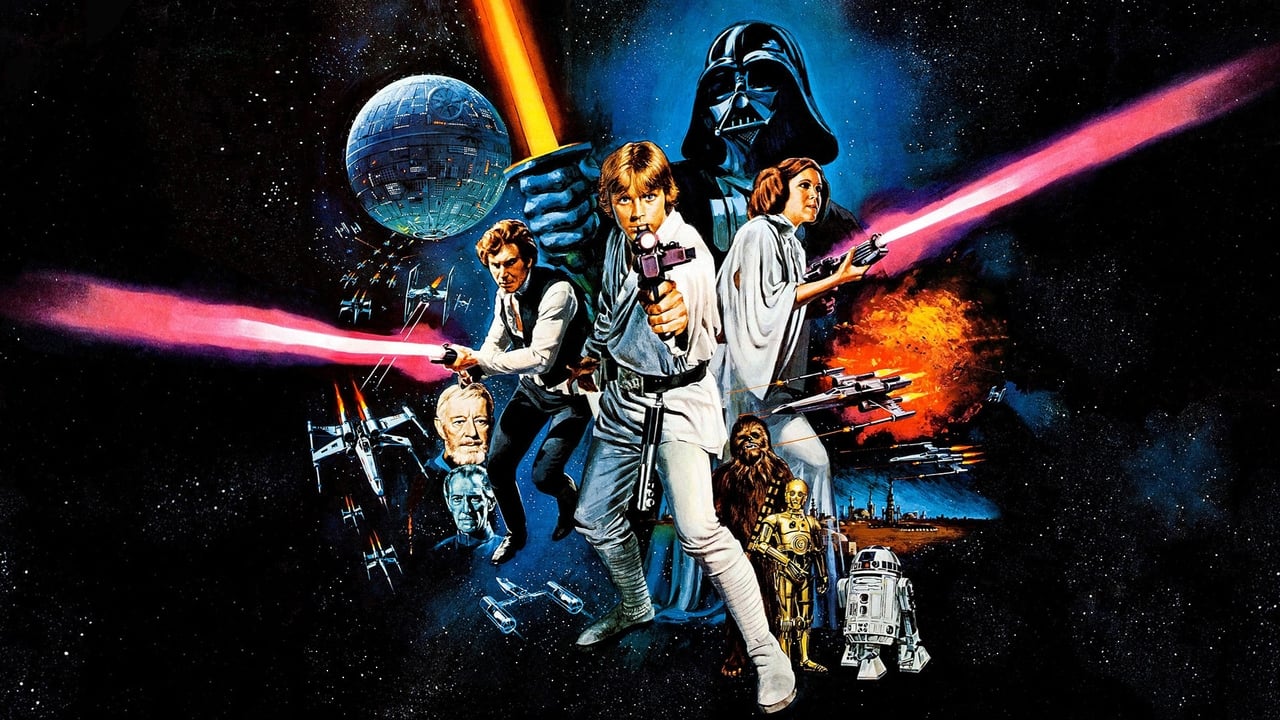
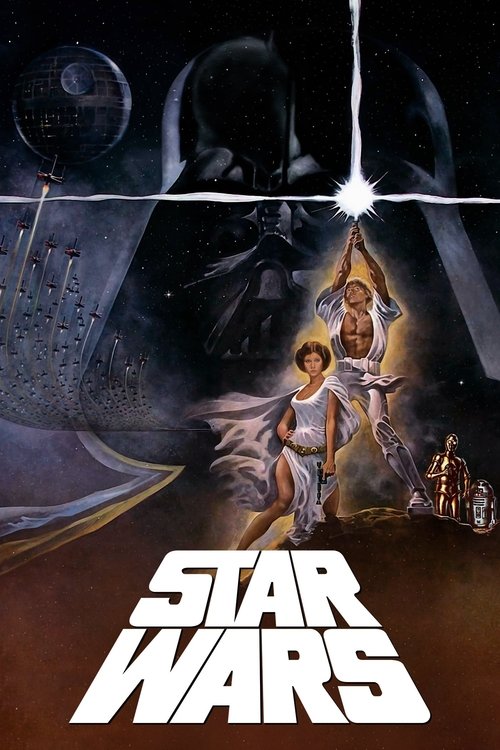
Star Wars
Discover which Star Wars character matches your MBTI type
Analis
Emperor Palpatine
AnalystPalpatine is arguably the most terrifying portrayal of a dark INTJ in all of fiction, and his cognitive functions operate with surgical precision across the entire saga. His dominant Ni is breathtaking in scope — he does not merely plan ahead, he constructs a singular, decades-spanning vision of galactic domination and methodically bends reality to match it. From engineering the Trade Federation blockade to orchestrating the Clone Wars on both sides to manipulating Anakin's fears, every event feeds into a master blueprint that only Palpatine can fully see. His auxiliary Te executes this vision with ruthless institutional efficiency: he builds political coalitions, passes emergency powers legislation, and restructures the entire Republic into an Empire using perfectly legal mechanisms. There is no wasted motion. His tertiary Fi manifests as a deeply personal, almost aesthetic pleasure in the Dark Side — he does not merely use power instrumentally, he savors it, relishing the corruption of Anakin as a personal artistic triumph. His inferior Se shows in his underestimation of physical, present-moment threats: he never anticipates Vader's sudden physical intervention because he cannot conceive of impulsive, bodily action disrupting his perfect Ni vision. His quote 'Everything is proceeding as I have foreseen' is not arrogance — it is the INTJ's genuine experience of watching reality conform to their internal model.
“Everything is proceeding as I have foreseen.”Learn about INTJ →
Boba Fett
AnalystBoba Fett's INTP nature reveals itself through his distinctive approach to bounty hunting — he treats it not as brute-force pursuit but as an intellectual exercise in deduction, pattern recognition, and systems analysis. His dominant Ti builds precise internal models of his targets' behavior: while other bounty hunters scatter across the galaxy hoping to stumble onto Han Solo, Boba reasons through Solo's psychology and anticipates that he will hide in the Star Destroyer's waste ejection before jumping to a nearby system, leading him directly to Bespin. This is Ti at its most elegant — solving the puzzle through pure logical deduction rather than expending unnecessary energy. His auxiliary Ne provides the creative lateral thinking that makes him the galaxy's most feared hunter: he considers unconventional possibilities that linear thinkers miss, which is why Vader specifically warns him about disintegrations — Ne generates options that other hunters would never contemplate. His tertiary Si gives him meticulous attention to his equipment and methods, maintaining his father's Mandalorian armor and ship with careful precision and building on Jango's established techniques. His inferior Fe is his most underdeveloped function, visible in his near-total lack of social engagement — he speaks only when necessary, forms no alliances beyond transactional ones, and shows no interest in the emotional dynamics swirling around him in Jabba's palace or on Cloud City. In The Book of Boba Fett, his arc toward leading Mos Espa represents painful inferior Fe development: the consummate loner forced to build community, negotiate relationships, and earn loyalty through connection rather than fear.
“He's no good to me dead.”Learn about INTP →
Mace Windu
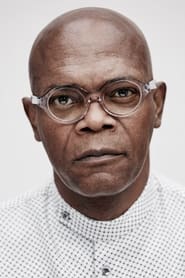
AnalystMace Windu is the Jedi Order's ENTJ field commander — where Yoda provides spiritual guidance, Mace provides strategic decisiveness and the willingness to make hard calls that others shy away from. His dominant Te is unmistakable: he speaks in direct, authoritative statements that expect compliance, he organizes the Jedi's military response to the Clone Wars with systematic efficiency, and when he decides Palpatine is too dangerous to live, he acts on that judgment immediately without seeking consensus or agonizing over the ethical implications. His auxiliary Ni gives him penetrating insight into threats: he senses the Dark Side's growing influence before most Jedi, he reads Anakin's instability with uncomfortable accuracy, and his suspicion of Palpatine precedes concrete evidence. The Vaapad lightsaber form he invented is pure Te-Ni made physical — a combat system that channels an opponent's dark energy back at them, requiring both strategic analysis and intuitive reading of the enemy's intent. His tertiary Se manifests in his commanding physical presence and combat prowess; Mace does not merely theorize about threats, he confronts them directly, leading the charge at Geonosis and personally dueling Palpatine to near-victory. His inferior Fi is his critical weakness: he dismisses Anakin's emotional struggles as irrelevant to the mission, cannot empathize with the fear driving Anakin's choices, and his impersonal treatment of Anakin directly contributes to the boy's alienation from the Order. Mace's downfall is the ENTJ blind spot — achieving the strategic objective while failing to manage the human element that ultimately undermines everything.
“The oppression of the Sith will never return! You have lost.”Learn about ENTJ →

Lando Calrissian
AnalystLando Calrissian's ENTP nature makes him one of the most intellectually agile characters in the Star Wars universe, a smooth operator whose dominant Ne constantly generates new angles, possibilities, and escape routes from any situation. When Vader alters the deal on Cloud City, Lando does not freeze — his Ne immediately begins mapping alternative possibilities while his Ti calculates which option maximizes survival for the most people. He is a natural debater and reframer: he can make a betrayal sound like a reasonable compromise and a desperate gamble sound like a strategic masterstroke, all delivered with the ENTP's characteristic charm that makes you want to believe him even when you probably should not. His auxiliary Ti provides the logical architecture beneath the charm — running Cloud City requires genuine administrative intelligence, cost-benefit analysis, and systems thinking, not just charisma. His tertiary Fe is more developed than many ENTPs, showing in his genuine guilt over betraying Han and his ability to rally the Rebel fleet at the Battle of Endor through inspirational communication rather than just tactical orders. His inferior Si manifests as a complicated relationship with his past — he reinvents himself constantly, from gambler to administrator to general, never quite settling into one identity. The moment he gambles the Millennium Falcon in a card game and then spends years trying to get it back perfectly captures the ENTP cycle: Ne sees an exciting possibility, Ti calculates the risk as acceptable, and then Si regret kicks in when the impulsive decision has lasting consequences.
“This deal is getting worse all the time.”Learn about ENTP →
Diplomat
Yoda
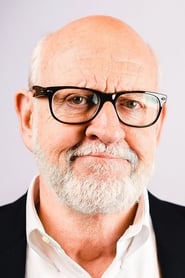
DiplomatYoda embodies the INFJ archetype at its most refined — 900 years of Ni-Fe development have made him a figure who perceives the deepest patterns of the Force and communicates them through the INFJ's characteristic blend of mysticism and interpersonal wisdom. His dominant Ni is evident in his ability to sense disturbances in the Force before they manifest, to perceive Anakin's dangerous attachments when other Jedi see only talent, and to speak in inverted syntax that forces listeners to engage with meaning rather than surface words. His auxiliary Fe drives his role as the Jedi Order's emotional and spiritual anchor — he does not merely teach lightsaber technique, he counsels young Jedi on fear, attachment, and loss, always attuning to what each student needs emotionally. When he tells Luke 'You must unlearn what you have learned,' he is using Fe to read Luke's psychological resistance and Ni to identify the root blockage. His tertiary Ti provides the logical framework for his philosophical teachings, but it serves the vision rather than driving it. His inferior Se explains his retreat to Dagobah — overwhelmed by the physical chaos of Order 66 and the Senate's corruption, the INFJ withdraws into solitary contemplation. Yoda's greatest failure, missing Palpatine's rise despite his Ni gifts, reflects the INFJ's blind spot: intuition about individuals does not always extend to institutional corruption.
“Do or do not. There is no try.”Learn about INFJ →
Luke Skywalker
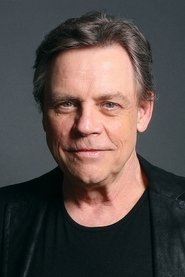
DiplomatLuke's INFP nature is rooted in his dominant Fi, which gives him an unshakable internal moral compass that operates independently of external validation. When the entire galaxy has written off Darth Vader as irredeemable, Luke alone feels — not thinks, but feels — that there is still good in his father, and he stakes his life on that conviction aboard the second Death Star. This is Fi at its most powerful: a deeply personal value judgment that defies all external evidence. His auxiliary Ne fuels the restless imagination that made him stare at Tatooine's twin suns and dream of something greater, seeing possibilities in a life that his uncle tried to keep safely contained. Ne also drives his ability to envision a redeemed father when everyone else sees only a Sith Lord. His tertiary Si shows in how he treasures his father's legacy and lightsaber as symbols of identity, while his inferior Te explains his struggle with systematic planning — he rushes to Cloud City against Yoda's advice because his feelings demand action. Luke's journey from dreamy farm boy to a Jedi who defines the Force on his own terms, rejecting both the Emperor's darkness and the old Jedi Order's rigidity, is the INFP's ultimate individuation arc.
“I am a Jedi, like my father before me.”Learn about INFP →

Padme Amidala
DiplomatPadme's dominant Fe is the engine that drives every major decision in her life — from becoming the youngest elected Queen of Naboo through sheer force of charismatic conviction, to standing before the Galactic Senate and rallying support through emotional rhetoric that moves entire planetary delegations to action. She does not lead through authority alone but through genuine connection: she disguises herself as a handmaiden to understand her people's suffering firsthand, she sees past Anakin's awkward exterior to the passionate person within, and she builds political alliances by making each ally feel personally invested in the cause. Her auxiliary Ni gives her the visionary quality that separates her from mere politicians — she perceives the Republic's democratic erosion before most senators acknowledge it, crystallized in her haunting observation about liberty dying to thunderous applause. Her tertiary Se manifests in her surprising physical courage: she fights in the Geonosis arena, leads troops on Naboo, and insists on being present for dangerous missions rather than leading from safety. Her inferior Ti is her vulnerability — she struggles to logically process Anakin's descent into darkness, choosing to believe in his goodness long past the point where evidence demands otherwise, because Fe-dominant types find it almost impossible to accept that someone they love deeply has become fundamentally different. Padme's tragedy is the ENFJ tragedy: pouring so much of yourself into inspiring and saving others that you cannot save the one person closest to you.
“So this is how liberty dies... with thunderous applause.”Learn about ENFJ →
Qui-Gon Jinn
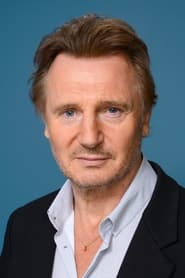
DiplomatQui-Gon Jinn is the Jedi Order's most celebrated maverick, and his ENFP cognitive functions explain exactly why. His dominant Ne drives him to see potential and possibility where the Jedi Council sees only risk — when he encounters a slave boy on Tatooine, he does not see a child too old for training or a political complication, he sees the Chosen One, a world-changing possibility that ignites his imagination and demands action. Ne also fuels his philosophical independence: he studies the living Force rather than the Council's institutional interpretations, always seeking fresh understanding rather than accepting received wisdom. His auxiliary Fi provides the moral backbone that transforms his Ne curiosity into principled defiance — he does not rebel against the Council for sport or ego, but because his deeply held personal values tell him the Council is wrong about Anakin, wrong about the living Force, and too calcified by tradition to see it. His tertiary Te gives him just enough practical decisiveness to act on his visions: he negotiates shrewdly with Watto, devises the podrace gamble, and navigates Tatooine's underworld with street-smart efficiency. His inferior Si is visible in his disregard for the Jedi Code's accumulated traditions and his inability to learn from the Council's repeated warnings about his recklessness. The tragedy of Qui-Gon is the ENFP tragedy of being right too early: his Ne-Fi correctly identified both Anakin's significance and the Jedi Order's dysfunction, but he died before he could guide either toward a healthy outcome, leaving his vision to be fulfilled by others who lacked his particular warmth and insight.
“Your focus determines your reality.”Learn about ENFP →
Penjaga
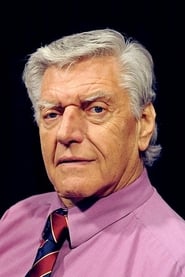
Darth Vader
SentinelDarth Vader represents the ISTJ's shadow side — what happens when Si-Te becomes rigidly locked into a dysfunctional system. His dominant Si fixates on the past: the memory of Padme's death, the betrayal he perceived from the Jedi, the promises Palpatine made about saving those he loved. These memories become the immovable foundation of his identity as a Sith Lord. His auxiliary Te drives his ruthless efficiency — he manages the Imperial military like a terrifying middle manager, enforcing deadlines on the Death Star with literal force chokes, demanding results from Admiral Ozzel and Captain Needa with zero tolerance for incompetence. Vader does not innovate or strategize broadly; he executes the Emperor's vision with mechanical precision, which is Te in service to Si loyalty. His tertiary Fi is buried deep but surfaces in his conflict over Luke — the one personal value he cannot fully suppress. His inferior Ne, the function of possibilities and alternatives, is almost entirely absent; he cannot imagine a different future until Luke forces him to. The moment Vader throws Palpatine down the shaft is his inferior Ne finally breaking through: for the first time, he sees a possibility beyond the rigid system he has served for decades. His redemption is an ISTJ reclaiming their suppressed values from institutional capture.
“I find your lack of faith disturbing.”Learn about ISTJ →

Obi-Wan Kenobi
SentinelObi-Wan exemplifies the ISFJ's Si-Fe function stack through his unwavering commitment to the Jedi Order's traditions and his deeply personal sense of duty toward those he mentors. His dominant Si manifests in how he constantly draws on past experiences — his training under Qui-Gon, the lessons of the Clone Wars, his failure with Anakin — to inform every decision he makes on Tatooine and beyond. When he tells Luke about his father, he filters the painful truth through a protective, idealized lens, a classic Si tendency to curate memory in service of emotional harmony. His auxiliary Fe drives his patient, warm mentoring style: he genuinely suffers when those he cares about suffer, as seen in his anguished cry of 'You were my brother, Anakin!' on Mustafar. Unlike a Te-dominant leader who would enforce rules impersonally, Obi-Wan enforces the Jedi Code because he personally feels its rightness. His tertiary Ti emerges in his tactical cleverness during lightsaber duels and negotiations, while his inferior Ne shows in his occasional inability to see the bigger picture — he missed Palpatine's machinations entirely. His entire arc is one of steadfast guardianship, sacrificing his own desires to protect the next generation, the quintessential ISFJ journey.
“The Force will be with you. Always.”Learn about ISFJ →

Princess Leia
SentinelLeia's dominant Te is on full display from her very first scene — captured by the Empire, she refuses to cower and instead snaps orders at Darth Vader himself. She instinctively takes command of her own rescue on the Death Star, barking directions at Luke and Han while they fumble, because Te users cannot tolerate inefficiency even when they are the ones being saved. Her auxiliary Si grounds her leadership in institutional knowledge and tradition: she understands the Senate's procedures, the Rebellion's chain of command, and the political history needed to build alliances. When the Rebellion needs organizing, Leia creates structure — briefing rooms, mission hierarchies, contingency plans. Her tertiary Ne allows her to adapt strategically when plans fail, as when she improvises the escape into the garbage chute, but she always returns to systematic thinking. Her inferior Fi emerges in rare private moments — her grief over Alderaan, her vulnerability with Han on Endor — feelings she typically suppresses in favor of duty. Leia's arc from senator to general reflects the ESTJ's natural progression: she does not merely participate in institutions, she builds and commands them, driven by an unshakable belief that order and decisive action are what save civilizations.
“Somebody has to save our skins. Into the garbage chute, flyboy!”Learn about ESTJ →
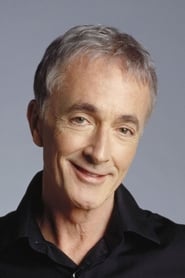
C-3PO
SentinelC-3PO is a brilliantly literal embodiment of ESFJ cognitive functions, programmed for the very activities that define the type. His dominant Fe makes him obsessively attuned to social dynamics — he fluently speaks six million forms of communication not for intellectual satisfaction but because his core purpose is facilitating harmonious interaction between beings. He constantly monitors the emotional temperature of every situation, warning about social faux pas, insisting on proper etiquette with Jabba the Hutt, and fretting about whether everyone is comfortable and safe. His auxiliary Si drives his reliance on established protocols and precedent: he quotes odds and regulations not to analyze them intellectually but because established procedures represent safety and social order. When dropped into the unfamiliar chaos of Tatooine or Hoth, his Si-driven need for familiar structure produces his signature anxiety — his catchphrase is the ESFJ's distress call when all known social frameworks collapse. His tertiary Ne occasionally surfaces as catastrophic imagination, always anticipating the worst possible social or physical outcomes. His inferior Ti, the weakest function, shows in his inability to think through problems logically under pressure — he panics rather than troubleshoots. The Ewoks worshipping him as a god is peak C-3PO: he is horrified by the social impropriety yet cannot help being flattered, because Fe craves being valued by the group above all else.
“We're doomed!”Learn about ESFJ →
Penjelajah
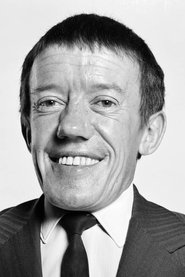
R2-D2
ExplorerR2-D2 is the purest expression of ISTP competence in the Star Wars universe — a character defined entirely by what he does rather than what he says, which is itself the most ISTP trait imaginable. His dominant Ti drives an internal logical framework that allows him to analyze any mechanical, electrical, or computational problem and devise a solution on the spot: hacking into the Death Star's systems, repairing the Naboo starship's shield generator under fire, or overriding door controls in Cloud City. He does not explain his reasoning or seek approval; he simply acts on his analysis. His auxiliary Se gives him remarkable situational awareness and physical adaptability — he reads the immediate environment, identifies the critical intervention point, and executes with precise timing, whether it is projecting Leia's message at exactly the right moment or shocking a Battle Droid at close range. His tertiary Ni shows in flashes of strategic foresight, like carrying Luke's lightsaber to Jabba's palace as part of a plan he clearly understood before others did. His inferior Fe is evident in his limited but genuine emotional bonds — he is fiercely loyal to specific individuals rather than groups, and his beeps and whistles convey frustration, sass, and affection in ways that bypass verbal communication entirely. R2's willingness to charge into danger without hesitation while C-3PO panics perfectly illustrates the ISTP's calm under fire: for Ti-Se types, a crisis is just another problem to solve with the tools at hand.
“*beeps and whistles determinedly*”Learn about ISTP →
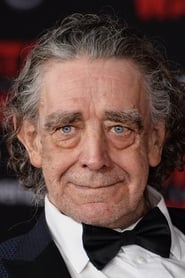
Chewbacca
ExplorerChewbacca embodies the ISFP's deep, action-oriented authenticity in a way that transcends his limited verbal communication — and in fact, his reliance on expression through action rather than words is itself a profoundly ISFP trait. His dominant Fi creates an intensely personal moral framework built around loyalty, honor, and the Wookiee life debt tradition: once he commits to Han Solo, that bond becomes the organizing principle of his existence, not because of external obligation but because Fi has internalized it as a core value. His auxiliary Se makes him powerfully attuned to his physical environment — he is a skilled mechanic who understands the Falcon's systems through tactile intimacy, a fierce warrior whose bowcaster skills reflect Se mastery, and a co-pilot who reads the sensory data of space combat with natural fluency. His tertiary Ni surfaces in moments of surprising perceptiveness: he distrusts Lando before anyone else does on Cloud City, sensing something wrong beneath the charm through an intuitive read that his Fi validates emotionally. His inferior Te is visible in his frustration with complex systems and bureaucracy — he would rather rip arms off than negotiate, and his approach to repairing the Falcon involves hitting things until they work, a beautifully literal expression of weak Te trying to impose order through physical force. Chewbacca's grief over Han's death in The Force Awakens is devastating precisely because ISFPs experience loss as a rupture in their deepest personal values — when the person who defined their Fi loyalty is gone, the ISFP's entire emotional architecture trembles.
“*loyal Wookiee roar*”Learn about ISFP →
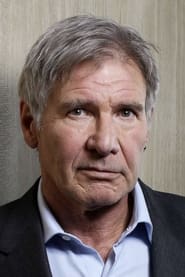
Han Solo
ExplorerHan Solo is the quintessential ESTP — his dominant Se makes him supremely attuned to his physical environment, able to pilot the Millennium Falcon through asteroid fields by feel rather than calculation, and to shoot Greedo with split-second reflexes born of reading the present moment perfectly. His auxiliary Ti provides the cool, detached logic he uses to assess danger: he calculates odds not to follow them but to know exactly how reckless he is being, which is why 'Never tell me the odds' is so perfectly in character. Han's tertiary Fe shows in his gruff but genuine warmth — he cannot actually leave his friends at Yavin, he thaws under Leia's influence, and he cares deeply about Chewie's wellbeing despite his loner persona. His inferior Ni is his blind spot: he avoids thinking about the future, commitments, and deeper meaning, which is why he resists joining the Rebellion for so long. The moment Han returns to the Battle of Yavin, swooping in at the last second to save Luke, perfectly captures the ESTP's growth arc — learning that present-moment courage can serve a cause larger than survival. His improvisational genius, from bluffing his way out of the detention block to carbonite freeze composure, reflects Se-Ti working in seamless tandem.
“Never tell me the odds!”Learn about ESTP →
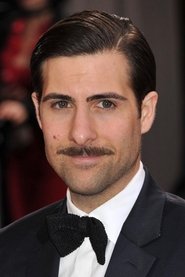
Anakin Skywalker
ExplorerAnakin Skywalker's ESFP cognitive stack is the key to understanding both his extraordinary gifts and his catastrophic fall. His dominant Se makes him the most physically gifted Jedi of his era — he experiences the Force as a visceral, sensory phenomenon, which is why he excels at podracing at age nine, performs acrobatic lightsaber combat that leaves even Dooku overwhelmed, and pilots starfighters with instinctive brilliance that no amount of Jedi training could teach. He is fully alive in the present moment, which makes him electrifying in action but dangerously unable to step back and reflect. His auxiliary Fi creates an intensely personal emotional world: he does not love abstractly or moderately — he loves Padme with consuming, possessive passion, he mourns his mother with rage rather than grief, and he feels the Jedi Council's distrust as a deeply personal wound. This Se-Fi combination is explosive: he acts on his feelings immediately and physically, slaughtering the Tusken Raiders in a moment of Fi grief amplified by Se impulsiveness. His tertiary Te emerges in his desire for control and efficiency — he tells Padme that someone wise should just make people agree, revealing the ESFP's frustrated tertiary Te wanting to impose order on a chaotic world. His inferior Ni is his tragic blind spot: he cannot see the long-term consequences of his choices, cannot perceive Palpatine's manipulation despite obvious clues, and his one attempt at Ni — prophetic dreams about Padme's death — drives him to the very actions that cause it.
“You underestimate my power!”Learn about ESFP →
Temukan Karaktermu
Sudah tahu tipe MBTI kamu? Temukan karakter yang cocok untukmu di bawah ini.
Pertanyaan yang Sering Diajukan
Luke Skywalker is best typed as an INFP. His journey is driven by deeply held personal values and an idealistic belief in redemption. His dominant Fi gives him unwavering moral conviction, while his auxiliary Ne allows him to see possibilities others miss, such as the good still remaining in Darth Vader.
Darth Vader (post-transformation) is typed as an ISTJ. He operates within the Empire's rigid hierarchy, follows the Emperor's orders, and enforces rules with disciplined consistency. As Anakin, he was more of an ESFP, making his fall a dramatic shift in how he engages with the world.
Yoda is widely considered an INFJ. His deep intuitive wisdom (Ni) allows him to perceive the nature of the Force and foresee events, while his warmth and mentoring style (Fe) guide young Jedi toward self-understanding. His cryptic teaching method reflects the INFJ's tendency to communicate through metaphor and insight.
Han Solo is a classic ESTP. He thinks on his feet, thrives in high-pressure situations, and relies on his sharp observational skills and quick reflexes (Se). His auxiliary Ti gives him a pragmatic, logical approach to problems, even if his methods are unconventional.
Jelajahi Lebih Banyak Serial
Temukan Tipe Kamu Sendiri
Temukan tipe kepribadian MBTI kamu dan lihat karakter fiksi mana yang berbagi sifatmu.
Ikuti Tesnya