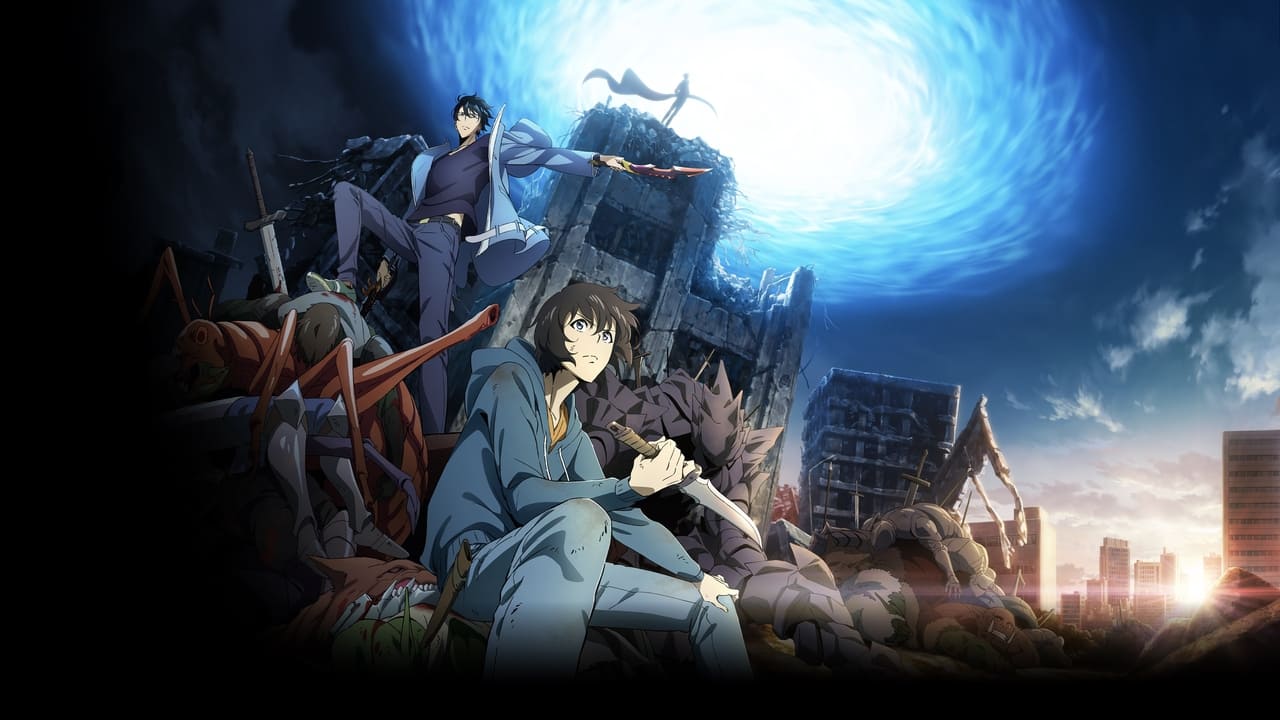
Solo Leveling
Explore the MBTI personality types of Solo Leveling characters from Chugong's landmark web novel turned anime. Solo Leveling's power fantasy premise is built on an INTJ protagonist whose entire arc is a systematic dismantling of weakness through calculated self-improvement and strategic dominance. The series surrounding cast — from methodical S-rank hunters to apex predator villains — provides a rich landscape of contrasting cognitive function stacks.
Analis
The Architect
AnalystThe Architect is an INTJ in his most abstract, inhuman form — a being who designed the entire System that governs Jin-Woo’s power progression, treating humans as variables in a mathematical optimization problem. His dominant introverted intuition (Ni) perceives patterns and trajectories across cosmic time with a scope that makes individual human lives statistically insignificant. The System itself is Ni made manifest: a vision of how power should develop, crystallized into rules and progression frameworks that shape reality toward the Architect’s predetermined endpoint. His auxiliary extraverted thinking (Te) expresses as the mechanical precision of the System he created — quest structures, level-up mechanics, daily requirements, and penalty protocols are all Te organizing Ni’s vision into executable processes. Every element of the System serves a calculated function within a larger optimization strategy. His tertiary introverted feeling (Fi) is almost entirely absent; he has abstracted himself so far from individual experience that personal values, emotions, and subjective meaning have become irrelevant data points. His inferior extraverted sensing (Se) represents his greatest oversight: he designed a system of abstract optimization but failed to account for the physical, embodied reality of human experience — the lived Se moments that make Jin-Woo fight for his family rather than following the System’s intended trajectory. The Architect’s character represents the INTJ’s characteristic blind spot at cosmic scale: absolute certainty in his Ni-Te vision caused him to miss the variables that could not be quantified, ultimately undoing a plan that was perfect in every dimension except the human one.
“You were simply a variable in the system. Nothing more.”Learn about INTJ →
Antares (Demon King)
AnalystAntares is the series’ apex ENTJ villain, having built and dominated entire civilizations through the absolute application of dominant extraverted thinking (Te) will and auxiliary introverted intuition (Ni) vision about the natural order of strength. His Te operates at cosmic scale: he commands the Monarchs as a military hierarchy, deploys armies as strategic assets, and treats the destruction of worlds as logistical operations to be executed with maximum efficiency. His worldview is not irrational but logically coherent within his Te framework — strength is the only objective truth, and anything that cannot survive contact with superior force is an inefficiency to be eliminated. His Ni provides the philosophical architecture: he perceives the universe’s fundamental nature as a competition between predators and prey, and this vision has hardened over millennia into an unshakeable conviction that justifies every act of destruction. His tertiary extraverted sensing (Se) manifests as overwhelming physical combat power — when strategy is unnecessary, his Se delivers annihilating force that makes his philosophical arguments irrelevant because the physical reality of his power proves his Te-Ni thesis. His inferior introverted feeling (Fi) is his true blind spot: he cannot comprehend why beings fight for each other rather than for survival, which is why Jin-Woo’s Fi-driven protectiveness is the one variable his Te-Ni framework cannot predict. Antares represents Te-Ni with all human ethical constraints removed — the ENTJ archetype taken to its most terrifying logical conclusion, where command, vision, and power operate without the moderating influence of values or empathy.
“The strong devour the weak. This is the only truth.”Learn about ENTJ →
Diplomat
Christopher Reed
DiplomatChristopher Reed leads with dominant extraverted feeling (Fe) expressed at its most heroic — as a National Level Hunter, his defining characteristic was his willingness to place himself between danger and the people he swore to protect, treating his extraordinary power as a responsibility to others rather than a personal asset. His Fe drove him to maintain public visibility and accessibility despite his immense power, understanding that a hero’s emotional impact on society is as important as his combat effectiveness. His auxiliary introverted intuition (Ni) gave him the foresight to understand threats that required personal sacrifice; when confronted with the Monarchs’ overwhelming power, his Ni perceived the scope of the danger clearly enough to know that his death was not pointless but necessary to signal the severity of the threat to the world. His tertiary extraverted sensing (Se) made him a genuinely formidable combatant — his physical power as a National Level Hunter provided the credible foundation for his Fe-driven heroism. His inferior introverted thinking (Ti) meant he did not approach the Monarchs’ threat with cold strategic calculation but through Fe’s relational framework, prioritizing protection over survival. Christopher Reed’s character, though briefly shown, represents the ENFJ hero archetype at its most complete: someone whose Fe-Ni stack produces not just compassion but the vision to understand when sacrifice serves a purpose greater than continued existence.
“Protecting others is what an S-rank hunter is for.”Learn about ENFJ →
Penjaga
Igris (Shadow Soldier)
SentinelIgris is the most ISTJ shadow soldier, his entire existence oriented around the code of the devoted knight — a Si framework so deeply internalized that it persists through death, resurrection, and fundamental transformation of his nature. His dominant introverted sensing (Si) maintains absolute loyalty to Jin-Woo through consistent, methodical service and the unwavering application of his knightly role, executing the same protective function with identical dedication regardless of the opponent’s power level. His Si-anchored devotion is not programmed obedience but genuine value commitment: he was loyal to his original king in life and transfers that same Si-rooted fidelity to Jin-Woo in his shadow existence. His auxiliary extraverted thinking (Te) manifests as reliable execution without independent initiative — he follows commands with precise efficiency and organizes his combat approach through established techniques rather than improvisation. His swordsmanship reflects Te’s systematic mastery: each strike follows optimal angles perfected through centuries of practice. His tertiary introverted feeling (Fi) is visible in the quiet dignity he maintains even as a shadow soldier, carrying himself with a personal code of honor that elevates him beyond mere servant. His inferior extraverted intuition (Ne) means he does not innovate or adapt creatively, but his Si-Te foundation is so thoroughly refined that innovation is unnecessary. Igris represents the ISTJ archetype at its most noble: duty, consistency, and unwavering loyalty expressed through disciplined service that needs no recognition or reward to sustain itself.
“My blade is yours, Shadow Monarch.”Learn about ISTJ →
Park Kyung-Hye
SentinelPark Kyung-Hye leads with dominant introverted sensing (Si) expressed as self-sacrificing maternal devotion — her entire existence was organized around the concrete, present-tense needs of her children even as the Eternal Sleep illness consumed her. Her Si maintained the family’s routines, values, and emotional stability through years of poverty and her husband’s disappearance, creating an internal framework of maternal duty that persisted even when her body could no longer support it. Her auxiliary extraverted feeling (Fe) manifests as quiet, consistent warmth that never called attention to itself — the kind of care expressed through prepared meals, maintained household order, and emotional availability rather than dramatic gestures. Her Fe nurtured both Jin-Woo and Jin-Ah with a steadiness that formed the emotional foundation their personalities were built upon. Her tertiary introverted thinking (Ti) is minimal in the narrative, as her character is defined almost entirely through Si-Fe’s nurturing framework rather than analytical engagement. Her inferior extraverted intuition (Ne) represents her inability to imagine solutions to the family’s crisis beyond enduring and waiting — she could not envision the extraordinary path her son would take. Kyung-Hye’s character role in the story is to anchor Jin-Woo’s INTJ motivation in tangible human cost: her illness and recovery represent the personal stakes behind his systematic pursuit of power, ensuring that his Ni-Te optimization never becomes purely abstract but remains rooted in the Fi-driven need to protect the people his mother’s Si-Fe devotion taught him to value.
“My son will be fine. He always is.”Learn about ISFJ →
Sung Jin-Ah
SentinelSung Jin-Ah leads with dominant extraverted feeling (Fe), her world organized around family loyalty, social connection, and the wellbeing of the people she loves. Her Fe is most visible in her relationship with Jin-Woo: she notices subtle changes in his behavior, worries about his safety with genuine emotional investment, and maintains the family’s social and emotional infrastructure while her brother operates in an increasingly dangerous world. Her concern is not passive but actively expressed through checking in, preparing meals, and creating normalcy in a household disrupted by extraordinary circumstances. Her auxiliary introverted sensing (Si) grounds this care in concrete routines and tangible acts of service — she maintains consistent daily patterns that provide stability for both herself and her recovering mother, and her Si remembers the family’s past hardships with a clarity that deepens her Fe’s protective instincts. Her tertiary extraverted intuition (Ne) gives her enough perceptiveness to sense that Jin-Woo’s life has changed dramatically even when he conceals the specifics, though she cannot perceive the full scope. Her inferior introverted thinking (Ti) means she processes her brother’s impossible transformation through emotional rather than analytical frameworks, accepting the reality of his power through Fe’s relational trust rather than Ti’s logical verification. Jin-Ah’s character serves as the series’ primary representation of Fe-Si warmth in a world dominated by Te-Ni power, and her relationship with Jin-Woo provides his INTJ personality with its most essential human emotional anchor.
“Oppa, please be safe.”Learn about ESFJ →
Penjelajah
Liu Zhigang
ExplorerLiu Zhigang leads with dominant introverted thinking (Ti), assessing situations with cold pragmatism that strips away social convention, political maneuvering, and emotional consideration to focus purely on what is mechanically true and functionally necessary. His communication style — minimal, precise, and devoid of performative elements — reflects Ti’s efficiency in information transfer. He speaks only when the information has functional value, which makes his rare statements carry significant weight. His auxiliary extraverted sensing (Se) makes him a highly effective in-the-moment combatant who reads physical threats and responds with precise, economical action. As one of the world’s top National Level Hunters, his Se operates at peak efficiency, translating Ti’s analytical assessments into immediate physical execution without the delay of conscious deliberation. His tertiary introverted intuition (Ni) gives him strategic awareness sufficient to navigate international hunter politics without being consumed by them — he perceives long-term implications clearly enough to position himself advantageously while maintaining his characteristic detachment. His inferior extraverted feeling (Fe) is his most deliberately suppressed function; he has no interest in the social dynamics, alliance-building, or emotional diplomacy that surrounds the global hunter ecosystem. Liu Zhigang’s character represents the ISTP at maximum competence: a person whose Ti-Se integration produces an effectiveness so refined that it requires no external validation, and whose deliberate opacity serves as both professional strategy and genuine cognitive preference.
“Results are all that matter in this world.”Learn about ISTP →
Hwang Dong-Su
ExplorerHwang Dong-Su leads with dominant extraverted sensing (Se) but without the introverted thinking refinement that makes Baek Yoonho formidable — his Se is entirely in service of status display and reactive aggression rather than strategic effectiveness. His confrontational entrance at the Korean guild meeting is Se dominance performed for maximum social impact: physical intimidation, territorial assertion, and immediate-world power projection designed to establish hierarchy through presence alone. His auxiliary introverted thinking (Ti) is underdeveloped, giving him limited ability to analyze opponents beyond their immediate threat level or adapt his approach when brute force fails. He assesses Jin-Woo based on outdated information because his Ti cannot construct updated frameworks fast enough. His tertiary extraverted feeling (Fe) is corrupted into social manipulation — he leverages his S-rank status and American guild connections as social weapons rather than genuine relational tools. His inferior introverted intuition (Ni) is his fatal blind spot: he cannot perceive that Jin-Woo’s power has grown exponentially beyond his last data point, and he lacks the Ni foresight to recognize when a situation has fundamentally changed beyond his ability to control it. Hwang Dong-Su’s character serves as a cautionary version of Se dominance: physical power and immediate-world focus weaponized by ego rather than disciplined by thinking. His defeat demonstrates that Se without Ti development produces a fighter who is dangerous but predictable, making him the series’ most direct illustration of cognitive imbalance as competitive weakness.
“Weaklings don't deserve to live in this world.”Learn about ESTP →
Temukan Karaktermu
Sudah tahu tipe MBTI kamu? Temukan karakter yang cocok untukmu di bawah ini.
Pertanyaan yang Sering Diajukan
Sung Jin-Woo is an INTJ. His dominant introverted intuition builds a clear, evolving vision of the power level he needs to reach and the methods required to get there, treating every dungeon as a data point in a long-range optimization. His auxiliary extraverted thinking deploys resources — shadow soldiers, dungeon strategies, social alliances — with cold efficiency. His emotional reserve, singular purpose, and systematic approach to self-improvement are classic Ni-Te hallmarks.
Jin-Woo does not change type — INTJs do not become different types under stress or growth — but his Ni-Te stack operates at progressively higher levels of confidence and scope. Early Jin-Woo's Ni is narrow and survival-focused; late Jin-Woo's Ni encompasses cosmic-scale strategic vision. What changes is the shadow functions: his tertiary Fi becomes more visible as he grows, expressing as fierce protection of his family and the rare moments of genuine emotional vulnerability that humanize him.
Jin-Woo shares the Ni-Te stack with characters like Makima (Chainsaw Man), Rin Itoshi (Blue Lock), and Light Yagami (Death Note), but his INTJ expression is uniquely goal-positive rather than destructive. Where Light's Te becomes a system of domination and Makima's Ni serves a consuming personal agenda, Jin-Woo's Te is deployed in service of protection — his family, Korea, eventually humanity. He is the power fantasy expression of INTJ at its most aspirational.
Cha Hae-In's cognitive pattern is organized around introverted sensing rather than introverted intuition. Her excellence as an S-rank hunter comes from mastery of established combat principles and adherence to the hunter's code, not from fresh strategic vision. Her defining character trait — her unique sensory reaction to Jin-Woo's scent — is also Si-driven: a disruption to her carefully organized sensory-based internal world. An INTJ Hae-In would lead with visionary foresight; the actual character leads with methodical, principled execution.
Jelajahi Lebih Banyak Serial
Temukan Tipe Kamu Sendiri
Temukan tipe kepribadian MBTI kamu dan lihat karakter fiksi mana yang berbagi sifatmu.
Ikuti Tesnya