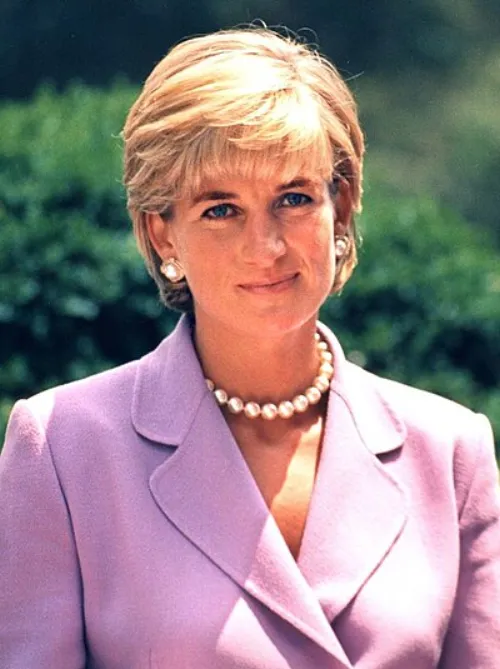
Diana Frances Spencer was born on July 1, 1961, at Park House on the Sandringham estate in Norfolk, the third child of Edward John Spencer, Viscount Althorp, and Frances Ruth Burke Roche. Her parents' contentious divorce when she was seven — her mother losing custody in an unusual reversal — left Diana with a deep sensitivity to emotional pain and a gift for reading other people's feelings with extraordinary accuracy. She moved between residences through her adolescence, developing the empathy of a child who had learned to read the emotional temperature of any room she entered. She was not academically successful but showed genuine warmth and natural ability with children and with people who were suffering.
Her engagement to Prince Charles at nineteen and their wedding on July 29, 1981 — watched by 750 million people worldwide — launched a phenomenon of public fascination. The marriage, which she later described as 'three of us' from early on, was marked by severe isolation, depression, and eating disorders she struggled with throughout the 1980s in conditions of complete public scrutiny. The birth of her sons William (1982) and Harry (1984) gave her the emotional anchor the marriage could not. Her genuine warmth toward ordinary people — her way of sitting with them, touching them, listening — was understood immediately as different in kind from royal obligation.
In her charitable work Diana found the fullest expression of her INFP gifts. Her visits to AIDS patients at a time of real social stigma — touching people who were widely avoided, holding their hands, engaging with them as individuals — were acts that genuinely changed public attitudes. Her involvement with the International Campaign to Ban Landmines, including her famous walk through an active Angolan minefield, helped build the political pressure that produced the Ottawa Treaty of 1997. She was killed in a car accident in Paris on August 31, 1997, at the age of thirty-six.
Diana's INFP quality was the source of both her extraordinary connection with ordinary people and her genuine difficulty within the institution that framed her life. The INFP's fundamental orientation is toward authentic expression of genuine feeling and genuine values — and the Royal Family's fundamental requirement was the suppression of both in the interests of institutional continuity. The collision between these two orientations produced the psychological suffering she described in her 1995 Panorama interview, and it also produced the charitable work that genuinely moved people: the capacity to be actually present with those who were suffering, rather than performing compassion from behind institutional glass.