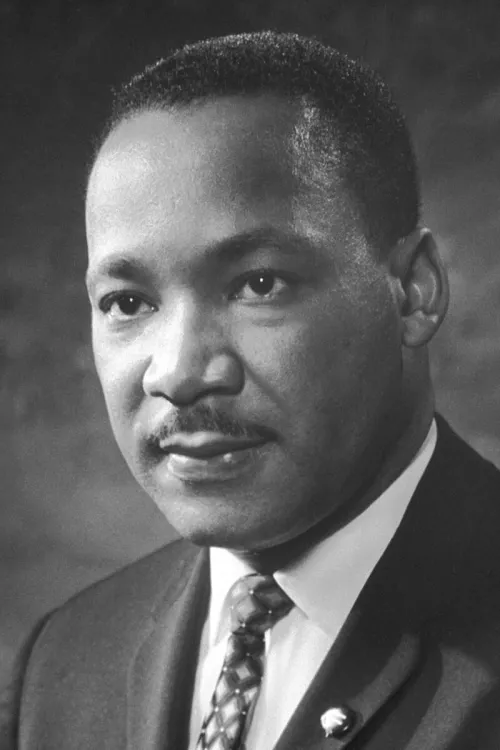
Michael King Jr. was born on January 15, 1929, in Atlanta, Georgia, the middle child of Reverend Michael King Sr. and Alberta Williams King. His father, a prominent Baptist minister, later changed both their names to Martin Luther King in honor of the German Protestant reformer. Martin grew up in a home of intellectual and spiritual seriousness: his maternal grandfather had founded Ebenezer Baptist Church and his father led it, and King was steeped from childhood in the African American Christian tradition of using biblical language to speak directly to social and political reality. He was intellectually precocious — entering Morehouse College at fifteen — and experienced segregation's violence not as an abstract injustice but as a lived daily assault on his dignity and that of every person he loved.
King's graduate education at Crozer Theological Seminary in Pennsylvania and Boston University, where he earned his PhD in Systematic Theology in 1955, gave him the philosophical vocabulary to articulate what he had always known experientially: that segregation was not merely politically unjust but ontologically wrong — a violation of the fundamental reality of human dignity that transcended any particular legal or social arrangement. His encounter with Gandhi's philosophy of nonviolent resistance provided the strategic methodology that transformed moral vision into political effectiveness. When Rosa Parks was arrested in December 1955 and the Montgomery Improvement Association asked King, newly arrived as pastor of Dexter Avenue Baptist Church, to lead the bus boycott, he accepted with the understanding that the boycott's real purpose was not merely desegregation of Montgomery's buses but the demonstration that organized nonviolent resistance could defeat institutionalized racial injustice.
The Montgomery Bus Boycott's success in 1956 established King as the movement's preeminent leader and set the template for the decade of activism that followed. The Southern Christian Leadership Conference, which he co-founded in 1957, provided organizational infrastructure. The Birmingham Campaign of 1963 — in which protesters, including schoolchildren, faced Bull Connor's fire hoses and police dogs while maintaining nonviolent discipline — produced images that outraged the national conscience and directly drove President Kennedy's public commitment to complete civil rights legislation. King's 'I Have a Dream' address at the March on Washington in August 1963, delivered before 250,000 people and a national television audience, remains the most celebrated speech in American history — a demonstration that the INFJ's gift of giving voice to what the deepest part of people already knows, expressed with extraordinary rhetorical power, can genuinely move history.
King's final years — after the Civil Rights Act of 1964 and Voting Rights Act of 1965 that represented the formal legislative achievements of the movement — found him expanding his critique to poverty and the Vietnam War, positions that cost him significant political support and made him enemies across the political spectrum. He was assassinated on April 4, 1968, on the balcony of the Lorraine Motel in Memphis, Tennessee, at the age of thirty-nine, the night after delivering his 'I've Been to the Mountaintop' sermon. His INFJ quality is perhaps most visible in the completeness of his integration of personal vision and public mission: he did not advocate nonviolence for strategic reasons alone but because he had a detailed metaphysical vision of reality in which the means of achieving justice were inseparable from the nature of justice itself.