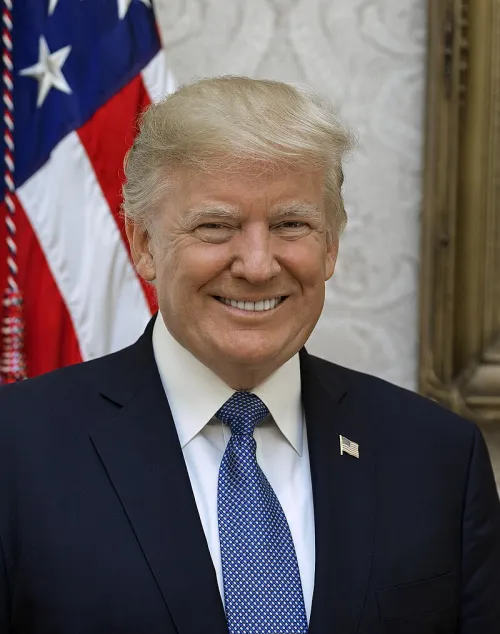
Donald John Trump was born on June 14, 1946, in Queens, New York City, the fourth of five children of Fred Trump, a successful real estate developer in New York's outer boroughs, and Mary Anne MacLeod Trump, a Scottish immigrant. He was educated at the Kew-Forest School before being sent to the New York Military Academy at thirteen, where he played baseball and graduated in 1964. He attended Fordham University for two years before transferring to the Wharton School at the University of Pennsylvania, graduating with a degree in economics in 1968. He immediately joined his father's real estate business, Elizabeth Trump & Son.
Trump's early real estate career was marked by bold moves that applied his father's established connections and credit relationships to pursue larger and more prominent projects than the family had previously attempted. His 1978 renovation of the Commodore Hotel in Midtown Manhattan into the Grand Hyatt New York — accomplished through a complex arrangement involving the City of New York during its fiscal crisis — established him as a significant Manhattan developer. The completion of Trump Tower on Fifth Avenue in 1983, a mixed-use skyscraper in one of the world's most expensive real estate markets, made his name synonymous with a particular brand of gilded New York ambition.
Trump's persona as a businessman-celebrity crystallized through the 1980s and 1990s: the tabloid presence, the casino developments in Atlantic City, the yacht, the airline, the books including The Art of the Deal (1987), which he and ghostwriter Tony Schwartz described as selling a lifestyle image as much as business advice. His financial difficulties in the early 1990s — multiple bankruptcies of his casino operations — did not diminish his public persona, which had by that point become self-sustaining as a brand independent of his underlying business performance. The NBC reality series The Apprentice, which debuted in 2004, introduced him to a new generation and reestablished his brand as associated with decisive business success.
Donald Trump's entry into electoral politics — culminating in his victory in the 2016 presidential election against Hillary Clinton, his presidency from 2017-2021, and his return to the presidency in 2025 — transformed American political life in ways that are still being assessed. His political style combined ESTP directness, improvisational confidence, and the showman's instinct for what an audience wants to hear with a systematic willingness to break with political convention that both energized his supporters and alarmed his opponents. His use of social media, particularly Twitter, redefined how political communication functioned in the digital era.