
The Witcher
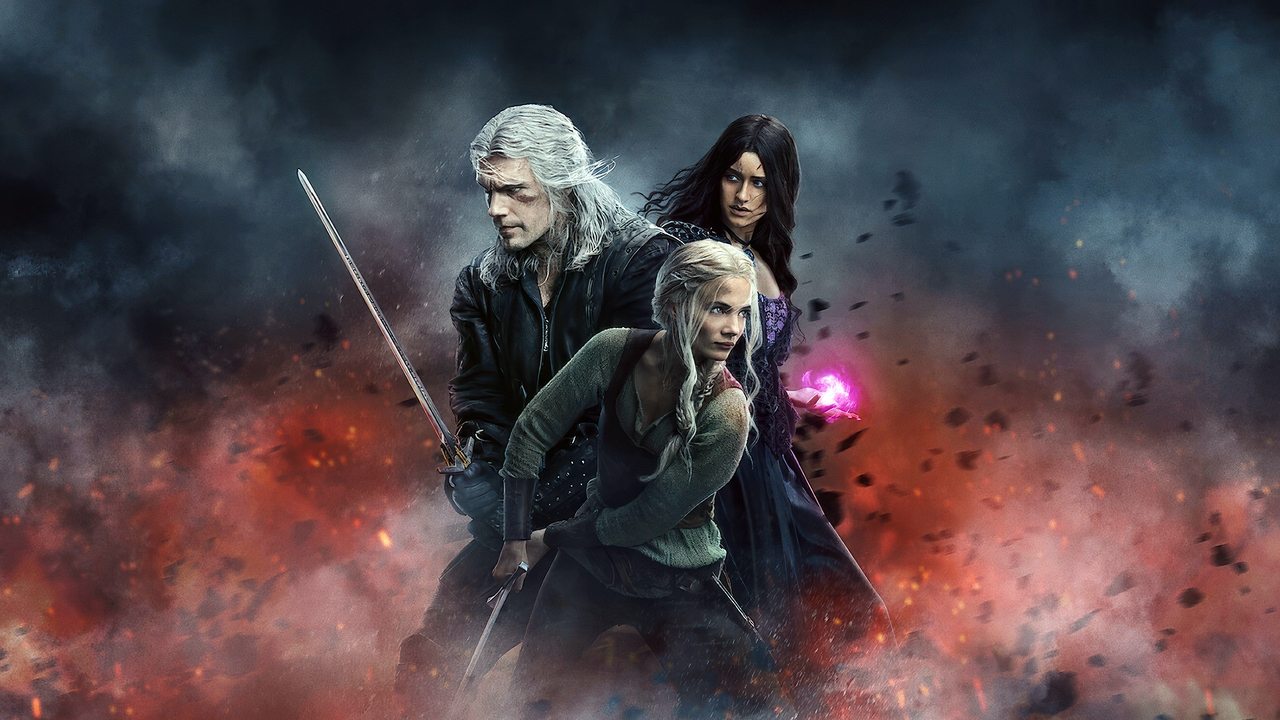
Discover the MBTI types of The Witcher characters — Geralt, Yennefer, Ciri, Jaskier, and more
विश्लेषक
Yennefer of Vengerberg
AnalystYennefer of Vengerberg displays the INTJ cognitive stack through her fierce ambition and strategic brilliance. Her dominant Ni manifests as an all-consuming vision of the powerful, beautiful, autonomous woman she is determined to become — from the moment she arrives at Aretuza as a hunchbacked girl, she fixates on a singular future self and pursues it with relentless focus, sacrificing her fertility for beauty and power in a decision that reflects Ni's willingness to trade present reality for future vision. Her auxiliary Te drives her commanding presence in mage politics; she manipulates kings and courtiers with calculated precision, positions herself strategically within the Brotherhood of Sorcerers, and executes complex magical operations with authoritative competence, as demonstrated during the Battle of Sodden Hill. Yennefer's tertiary Fi surfaces in the deeply personal nature of her desires — her yearning for a child is not a practical goal but a profound internal ache that her Te-driven sacrifices cannot resolve, and her love for Geralt reflects authentic emotional depth that her strategic exterior tries to contain. Her inferior Se appears in her impulsive moments of sensory indulgence and emotional reactivity that disrupt her normally controlled demeanor; her chaotic magical outburst when she absorbs fire magic represents Se overwhelming her structured Ni-Te framework. Yennefer's arc is a quintessential INTJ growth story: learning that the vision she ruthlessly pursued was incomplete, and that true power includes the vulnerability of emotional connection with Geralt and maternal love for Ciri.
“I want everything. I want it all.”Learn about INTJ →
Stregobor
AnalystStregobor represents the INTP type at its most morally detached and intellectually self-serving. His dominant Ti manifests in his construction of elaborate theoretical frameworks to justify horrific actions — his research into the Curse of the Black Sun produces logical arguments for imprisoning and experimenting on young girls born during eclipses, treating human suffering as acceptable data within his philosophical system. His auxiliary Ne drives his theoretical creativity and his ability to generate multiple justifications for his position; when challenged by Geralt in the Blaviken episode, he pivots between arguments with the intellectual agility of someone who can always find another angle to defend his conclusions. Stregobor's tertiary Si surfaces in his attachment to historical precedent and established magical knowledge; he cites ancient texts and past cases to support his theories, grounding his speculative Ne in accumulated evidence that he selectively interprets to confirm his existing framework. His inferior Fe is dramatically underdeveloped — he shows virtually no empathy for the girls he studied, treats Renfri's suffering as irrelevant to his theoretical conclusions, and manipulates Geralt's sense of moral duty without any genuine concern for the consequences to others. Stregobor's character illustrates the INTP shadow: when Ti's logical framework-building operates without Fe's humanizing influence, the result is a brilliant mind that can rationalize cruelty as academic necessity, using intellectual sophistication to avoid moral accountability while hiding behind the walls of his tower.
“The lesser evil is still evil.”Learn about INTP →
Vilgefortz of Roggeveen
AnalystVilgefortz of Roggeveen exemplifies the ENTJ shadow at its most calculating and dangerous. His dominant Te manifests in his masterful orchestration of complex operations across multiple factions — he manipulates the Brotherhood of Sorcerers, coordinates with Nilfgaard, and positions himself at the nexus of every significant power structure, executing plans with the commanding efficiency of someone who views entire civilizations as systems to be managed. His auxiliary Ni drives his long-term strategic vision; he perceives how the pursuit of Elder Blood will reshape the Continent's political landscape and positions himself years in advance to exploit these shifts, demonstrating the patience of a grandmaster who sees the endgame while others are still reacting to opening moves. Vilgefortz's tertiary Se surfaces in his devastating combat prowess — his physical defeat of Geralt, the Continent's most skilled swordsman, reveals an Se competence that makes him dangerous in both the strategic and physical dimensions simultaneously. His inferior Fi is almost entirely suppressed; he shows virtually no authentic emotional connection to anyone, treating all relationships as transactional tools, and his willingness to perform horrific experiments on captive women reveals the terrifying absence of internalized moral values. Vilgefortz's character arc serves as a dark mirror to Geralt's: both are extraordinarily capable men, but while Geralt's suppressed Fe gradually opens him to genuine connection, Vilgefortz's buried Fi remains inaccessible, making him a being of pure ambition unchecked by any authentic human feeling.
“I chose my side. You should choose yours wisely.”Learn about ENTJ →
Philippa Eilhart
AnalystPhilippa Eilhart showcases the ENTP cognitive stack through her masterful political scheming and intellectual dominance. Her dominant Ne manifests in her extraordinary ability to juggle multiple alliances, factions, and contingency plans simultaneously — she thrives in the complex, ever-shifting web of mage politics precisely because she can see angles, possibilities, and opportunities that more linear thinkers miss entirely, pivoting her strategy the moment new information reshapes the landscape. Her auxiliary Ti provides the analytical framework for her Ne's creative scheming; she deconstructs political situations with logical precision, identifies the structural weaknesses in every alliance, and constructs her plans with internal consistency that makes them remarkably resilient to disruption. Philippa's tertiary Fe surfaces in her ability to manipulate others through emotional leverage — she understands what motivates people and uses this knowledge instrumentally, forming the Lodge of Sorceresses by appealing to each member's personal interests and sense of collective purpose. Her inferior Si appears in her contempt for tradition and precedent; she views the Brotherhood's old structures as obstacles to be dismantled rather than preserved, and her revolutionary instinct to rebuild political systems from scratch reflects Si's minimal influence on her decision-making. Philippa's character represents the ENTP at their most politically dangerous: a mind so adept at seeing possibilities and manipulating systems that the question of whether she serves any cause beyond her own intellectual dominance remains genuinely ambiguous throughout the series.
“In politics, nothing happens by accident. If it happens, you can bet it was planned that way.”Learn about ENTP →
राजनयिक
Triss Merigold
DiplomatTriss Merigold embodies the INFJ type through her empathetic idealism and her commitment to protecting the vulnerable. Her dominant Ni manifests in her ability to perceive the broader implications of the mages' political persecution — she sees patterns of oppression that others dismiss and envisions a future where mages can live freely, pursuing this vision with quiet but unwavering determination long before the situation becomes openly dangerous. Her auxiliary Fe drives her deep emotional connections and her protective instincts; she bonds genuinely with Ciri during their time together, advocating fiercely for the girl's wellbeing, and her ability to sense and respond to others' emotional needs makes her a natural healer and counselor. Triss's tertiary Ti surfaces in her competent analytical assessment of magical and political situations — she evaluates threats logically, contributes strategic thinking to resistance efforts, and demonstrates intellectual precision in her magical practice that complements her emotional intelligence. Her inferior Se appears in her difficulty with direct physical confrontation and her lingering trauma from the Battle of Sodden Hill, where the overwhelming sensory horror of combat left deep psychological scars that her Ni-Fe processing struggles to integrate. Triss's character arc illustrates the INFJ's characteristic tension between personal desires and perceived duty: she suppresses her feelings for Geralt when she recognizes that his destiny lies with Yennefer, sacrificing personal happiness for what she believes serves the greater relational harmony, embodying the INFJ's selfless devotion to causes larger than themselves.
“We don't get to choose who we love. We don't get to choose who loves us back.”Learn about INFJ →
Fringilla Vigo
DiplomatFringilla Vigo demonstrates the INFP cognitive stack through her idealistic devotion and its susceptibility to manipulation. Her dominant Fi manifests as a deeply sincere, internally-driven belief system — her attachment to the White Flame's cause is not political calculation but genuine personal conviction that she is serving a transformative vision of a better world, and the intensity of this belief gives her the courage to betray the Brotherhood of Sorcerers and stand against her former allies. Her auxiliary Ne fuels her imaginative vision of the future she desires; she envisions a transformed Continent under Nilfgaard's leadership with the creative idealism that characterizes Ne's speculative capacity, constructing elaborate mental pictures of the world her devotion will help create. Fringilla's tertiary Si surfaces in her connection to personal history and memory — she draws on past experiences of feeling marginalized and undervalued by the Brotherhood to fuel her allegiance to a cause that promises recognition and purpose. Her inferior Te appears in her difficulty with practical power dynamics and political maneuvering; she is outmaneuvered by more strategically sophisticated players and struggles to translate her idealistic vision into effective organizational action. Fringilla's arc serves as a cautionary INFP narrative: her authentic Fi devotion and Ne imagination, which could have been forces for genuine good, are exploited by authoritarian leadership that recognizes how powerfully an INFP's idealism can be channeled when it attaches to a charismatic cause that seems to validate their deepest values.
“I believed in something greater than myself. That's not weakness — that's faith.”Learn about INFP →
Vesemir
DiplomatVesemir embodies the ENFJ type as the emotional patriarch and mentor of the witcher family. His dominant Fe manifests in his natural ability to nurture, guide, and emotionally sustain the remaining witchers at Kaer Morhen — he creates a sense of family and belonging among men who are told they have no emotions, mediating conflicts between Geralt and other witchers with warm authority and providing the emotional infrastructure that holds their community together. His auxiliary Ni drives his visionary concern for the witchers' future; he perceives that their kind is dying out and grapples with profound questions about whether to create new witchers or accept extinction, making decisions guided by long-term implications rather than immediate convenience. Vesemir's tertiary Se surfaces in his still-formidable combat abilities and his practical training methods — he teaches young witchers through hands-on physical instruction, demonstrating techniques with the experienced precision of someone who has survived centuries of monster hunting. His inferior Ti appears in his occasional difficulty with purely logical decision-making when it conflicts with his protective instincts; his emotional attachment to Ciri complicates his analytical assessment of the threat she represents, and he prioritizes the family's emotional bonds over cold strategic calculations. Vesemir's sacrifice to protect Ciri from the Wild Hunt represents the ultimate ENFJ act: giving his life not for an abstract cause but for the person he considers family, demonstrating that his Fe-driven love for his adopted children is the deepest truth of his centuries-long existence.
“Witchers were meant to protect people, not be feared by them.”Learn about ENFJ →
Jaskier (Dandelion)
DiplomatJaskier is a masterful portrayal of the ENFP type, bringing boundless enthusiasm and emotional authenticity to every encounter. His dominant Ne manifests in his ability to see adventure, drama, and song potential in every situation — a terrifying monster hunt becomes epic ballad material, a political intrigue becomes a romantic tale, and even Geralt's monosyllabic responses become inspiration for creative embellishment that transforms a feared witcher into a beloved folk hero through 'Toss a Coin to Your Witcher.' His auxiliary Fi drives his genuine emotional depth beneath the flamboyant exterior; his loyalty to Geralt persists through years of dismissal and the devastating mountain scene where Geralt blames him for his problems, revealing Fi's capacity for deeply personal attachment that survives rejection. Jaskier's tertiary Te surfaces in his practical effectiveness as a cultural force — his songs don't just entertain but strategically reshape public perception of witchers, demonstrating that his Ne creativity is grounded in tangible impact on the real world. His inferior Si appears in his difficulty learning from repeated heartbreaks and dangerous situations; he charges into the same patterns of romantic entanglement and perilous adventure without absorbing cautionary lessons from past experiences. Jaskier's character arc enriches the ENFP archetype by showing how their gifts of emotional expression and imaginative storytelling can literally transform the world around them, turning fear into admiration and loneliness into connection through the sheer force of Ne-Fi creativity.
“Toss a coin to your Witcher, O' Valley of Plenty!”Learn about ENFP →
प्रहरी
Tissaia de Vries
SentinelTissaia de Vries demonstrates the ISTJ cognitive stack through her disciplined guardianship of magical tradition and institutional order. Her dominant Si manifests in her deep reverence for Aretuza's established educational methods and centuries-old protocols — she has internalized generations of magical pedagogy and maintains these standards with unwavering conviction, teaching young mages through structured, time-tested approaches that prioritize control and discipline over raw creative expression. Her auxiliary Te drives her authoritative leadership of Aretuza; she enforces rules with decisive clarity, makes difficult institutional decisions without sentimentality, and manages the political complexities of the Brotherhood with organizational precision. Tissaia's tertiary Fi surfaces in her relationship with Yennefer, where genuine personal attachment exists beneath her stern exterior — she sees potential in the wild, hunchbacked girl that goes beyond institutional assessment, and her investment in Yennefer's development carries emotional weight she rarely acknowledges. Her inferior Ne appears in her difficulty adapting when the established magical order begins to crumble; she struggles to envision alternatives to the institutional framework she has devoted her life to protecting, and the collapse of the Brotherhood represents an Ne nightmare of unprecedented chaos. Tissaia's tragic arc at the Battle of Sodden Hill illustrates the ISTJ's deepest vulnerability: when the institution she defined herself by is destroyed, her Si-Te framework loses its foundation, and the weight of that loss, combined with her inability to imagine a new order, drives her to a devastating conclusion that underscores how completely an ISTJ's identity can be bound to the structures they serve.
“Chaos is the most dangerous thing in this world. It is all around us all the time. Volatile. Powerful.”Learn about ISTJ →
Cahir Mawr Dyffryn aep Ceallach
SentinelCahir demonstrates the ISFJ cognitive stack through his evolving loyalty and deeply protective nature. His dominant Si manifests in how powerfully past experiences shape his identity — his failure during the fall of Cintra haunts him relentlessly, and the memory of Ciri's terrified face during the attack becomes an Si imprint so vivid that it drives his entire subsequent quest, transforming guilt into an obsessive need to find and protect her. His auxiliary Fe drives his devotion first to Nilfgaardian institutional duty and later to personal bonds; as he travels with Geralt's company, his Fe attaches to the group's welfare, and he becomes a quietly dependable caretaker whose emotional investment in others' wellbeing defines his contributions. Cahir's tertiary Ti surfaces in moments of tactical assessment during combat and travel, where he demonstrates practical analytical skills developed through military training, evaluating situations with measured logic that complements his emotional motivations. His inferior Ne appears in his difficulty imagining alternative futures or unconventional solutions — he tends to see his path as fixed by duty and fate rather than exploring creative possibilities, and his anxiety about the unknown reflects Ne's threatening presence in the ISFJ psyche. Cahir's character arc is a compelling ISFJ growth story: he evolves from a soldier defined by institutional loyalty to a man who develops genuine personal convictions, ultimately sacrificing himself not for an empire but for the people he has grown to love, demonstrating that true ISFJ devotion transcends the institution that originally shaped it.
“I've been looking for you. I was sent to find you and protect you.”Learn about ISFJ →
Dijkstra (Sigismund)
SentinelDijkstra exemplifies the ESTJ cognitive stack through his ruthlessly efficient management of Redania's intelligence apparatus. His dominant Te manifests in his direct, no-nonsense approach to espionage and statecraft — he organizes vast spy networks with systematic precision, evaluates every person and situation by their practical utility, and communicates with blunt clarity that wastes no energy on diplomatic niceties, as seen in his famously abrasive interactions with both allies and enemies. His auxiliary Si drives his extraordinary institutional knowledge; he has accumulated decades of intelligence gathering experience and draws on this vast database of past operations, political patterns, and personal histories to inform his current strategies, treating precedent and proven methods as the foundation of effective governance. Dijkstra's tertiary Ne surfaces in his ability to anticipate opponents' moves and construct contingency plans — running a spy network requires seeing multiple possible outcomes and positioning agents to cover various scenarios, demonstrating Ne's speculative capacity applied through a Te-Si framework. His inferior Fi appears in his genuine patriotic attachment to Redania beneath the cynical pragmatism; his loyalty to his kingdom is deeply personal, and his willingness to sacrifice personal relationships for Redania's security reveals values he rarely articulates but consistently acts upon. Dijkstra's character demonstrates how the ESTJ's organizational genius and pragmatic intelligence can be applied to the morally ambiguous world of espionage, where efficiency and institutional loyalty must navigate the gray areas between protection and manipulation.
“Intelligence is knowing what to do when you don't know what to do.”Learn about ESTJ →
Nenneke
SentinelNenneke embodies the ESFJ type through her warm, practically grounded approach to healing and community care. Her dominant Fe manifests in her natural maternal authority and her ability to create a sanctuary of emotional warmth and safety at the Temple of Melitele — she provides a haven for the wounded, the lost, and the troubled, including Geralt, whom she treats with the no-nonsense affection of someone who sees through his stoic facade to the emotional needs beneath. Her auxiliary Si drives her reliance on established healing traditions, herbal knowledge, and proven remedies accumulated over decades of temple service; she approaches medicine and spiritual care through time-tested methods rather than experimental innovation, and her understanding of Geralt is grounded in years of personal history with him. Nenneke's tertiary Ne surfaces in her perceptive wisdom about human nature — she reads between the lines of what people tell her, recognizing patterns of self-deception and avoidance that her visitors cannot see in themselves, and her advice to Geralt often contains insights that go beyond surface-level observation. Her inferior Ti appears in her preference for practical, emotionally-informed guidance over abstract philosophical reasoning; she does not engage in theoretical debates about destiny or ethics but instead offers grounded, experiential wisdom rooted in caring for real people. Nenneke's character represents the ESFJ at their wisest: a woman whose Fe warmth and Si experience combine to create a stabilizing presence that even the most hardened witcher relies on when the world becomes too heavy to carry alone.
“You can't keep running from the world, Geralt. Even a witcher needs a home.”Learn about ESFJ →
अन्वेषक
Geralt of Rivia
ExplorerGeralt of Rivia is one of fantasy's most iconic ISTP portrayals, embodying the type's analytical detachment and physical mastery. His dominant Ti manifests in his logical, methodical approach to monster hunting — he researches each creature's weaknesses, selects appropriate potions and oils, and deconstructs each contract as an analytical problem to solve rather than a heroic quest, as seen in his systematic preparation before confronting the striga in King Foltest's court. His auxiliary Se drives his extraordinary combat reflexes and sensory awareness; his witcher-enhanced senses allow him to read physical environments with supernatural precision, and his fighting style is fluid, adaptive, and rooted in immediate tactical response to each opponent's movements. Geralt's tertiary Ni surfaces in his deeper philosophical contemplation about destiny, the nature of evil, and the lesser evil dilemma — he claims to reject Ni-style grand thinking but consistently makes choices guided by an intuitive moral framework he cannot fully articulate. His inferior Fe is the emotional core of his character: he insists witchers have no emotions, yet his actions consistently reveal profound empathy, from adopting Ciri to protecting the downtrodden, and his famous 'Hmm' responses mask an Fe that feels deeply but lacks the vocabulary to express itself. Geralt's arc traces the ISTP's journey from emotional isolation to reluctant connection, proving that the lone wolf is actually a deeply feeling man who built walls of Ti logic to protect an Fe heart he was taught to deny.
“Evil is evil. Lesser, greater, middling, it's all the same. If I'm to choose between one evil and another, I'd rather not choose at all.”Learn about ISTP →
Ciri (Cirilla)
ExplorerCiri embodies the ISFP type through her fierce pursuit of authentic identity and her instinctive physical resilience. Her dominant Fi manifests as an intense, deeply personal value system that resists every external attempt to define or control her — empires, mages, elves, and prophecies all seek to use her power for their purposes, but Ciri's core drive is to determine her own identity and choose her own path, as seen in her repeated escapes from those who would cage her. Her auxiliary Se drives her survival instincts and adaptive physical abilities; she fights, runs, and navigates dangerous environments with fluid, instinctive responses, learning sword combat from Geralt and survival skills from the Rats with the kind of hands-on, experiential learning that defines Se engagement. Ciri's tertiary Ni surfaces in her connection to Elder Blood and prophetic visions — she perceives deeper patterns of destiny and dimensional travel that she cannot fully control but intuitively understands, and her growing ability to navigate between worlds reflects developing Ni insight. Her inferior Te appears in her difficulty organizing her considerable power into sustained, strategic application; she struggles with structured magical training at Aretuza and tends toward impulsive action rather than calculated planning. Ciri's character arc is fundamentally an ISFP story about self-determination: a young woman with extraordinary power learns that being true to her own values matters more than fulfilling the roles others have written for her, and that finding chosen family with Geralt and Yennefer is the anchor her Fi needs.
“People linked by destiny will always find each other.”Learn about ISFP →
Renfri
ExplorerRenfri demonstrates the ESTP cognitive stack shaped by trauma into a formidable, dangerous warrior. Her dominant Se manifests in her complete engagement with the physical present — she fights with aggressive, adaptive skill, reads her immediate environment for tactical advantage, and confronts every threat with direct physical action rather than planning or avoidance, as seen in her fierce combat with Geralt in the Blaviken marketplace where she matches his witcher reflexes with raw, trained Se mastery. Her auxiliary Ti drives her pragmatic assessment of her situation; she has logically concluded that killing Stregobor is the only viable solution to the threat he poses, and she constructs her plan with cold tactical precision, positioning hostages and allies with calculated efficiency. Renfri's tertiary Fe surfaces in her ability to connect with Geralt on an emotional level during their night together — she reveals vulnerability and genuine human connection beneath her hardened exterior, demonstrating that her capacity for warmth has been buried by survival necessity rather than destroyed. Her inferior Ni appears in the prophetic quality of her final words about the girl in the woods, suggesting a flash of intuitive foresight that transcends her normally present-focused orientation. Renfri's tragic arc illustrates how the ESTP's action-oriented nature responds to systematic persecution: stripped of her royal identity and hunted for a curse she may not even carry, she channels her Se-Ti capabilities into survival and vengeance, becoming the very threat that Stregobor predicted in a devastating self-fulfilling prophecy.
“The girl in the woods will be with you always. She is your destiny.”Learn about ESTP →
Eyck of Denesle
ExplorerEyck of Denesle represents the ESFP type in its most theatrically glory-driven form. His dominant Se manifests in his complete immersion in the physical spectacle of knighthood — he lives for the visceral thrill of monster hunting, the crowd's admiration, and the sensory drama of combat, approaching the dragon hunt not as a strategic operation but as a grand performance where he can demonstrate his physical prowess to an audience. His auxiliary Fi drives his rigid personal code of chivalric honor; he genuinely believes in the knight's virtuous mission and judges himself and others against an internalized standard of heroic conduct that, while sincere, lacks the nuance to distinguish between genuine heroism and performative bravery. Eyck's tertiary Te surfaces in his practical confidence about logistics and preparation — he recites his past kills with matter-of-fact precision and approaches each hunt with procedural certainty based on his track record of success. His inferior Ni is strikingly underdeveloped; he cannot perceive the deeper complexities of the dragon situation, failing to consider that the dragon might be intelligent and peaceful, and his inability to see beyond the immediate physical challenge leads to his humiliating defeat when the situation proves far more complex than a simple hunt. Eyck's brief but memorable appearance illustrates the ESFP shadow: when Se-Fi's love of action and personal honor lacks Ni depth, the result is a brave but dangerously simplistic approach to situations that require thoughtful consideration rather than theatrical courage.
“I have slain three basilisks, a manticore, and a wyvern. A dragon shall be no different.”Learn about ESFP →
अपना चरित्र खोजें
अपना MBTI प्रकार जानते हैं? नीचे अपना मिलान चरित्र खोजें।
अक्सर पूछे जाने वाले प्रश्न
Geralt is widely typed as ISTP — his reserved demeanor, tactical combat mastery, logical approach to monster contracts, and famous 'Hmm' responses all reflect Ti-Se. Despite claiming witchers don't have emotions, Geralt consistently makes deeply principled choices that reveal strong inferior Fe values beneath his stoic exterior.
Yennefer of Vengerberg is commonly typed as INTJ. Her fierce ambition, strategic political maneuvering, and singular vision of what she wants from life are classic Ni-Te traits. Her character arc beautifully illustrates the INTJ journey from cold strategic isolation to integrating emotional vulnerability and genuine connection.
Geralt (ISTP) and Jaskier (ENFP) are a classic introvert-extrovert complementary pairing. Jaskier's Ne enthusiasm and emotional expressiveness draw Geralt out of his Ti-Se shell, while Geralt's grounded practicality provides an anchor for Jaskier's scattered energy. Together, they represent the balance between action and storytelling, silence and song.
और शो देखें
अपना प्रकार खोजें
अपना MBTI व्यक्तित्व प्रकार खोजें और देखें कि कौन से काल्पनिक चरित्र आपके गुणों को साझा करते हैं।
परीक्षण लें