
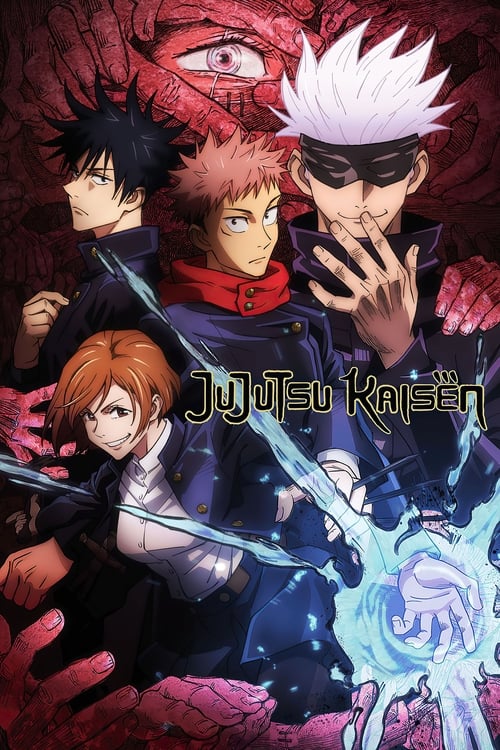
Jujutsu Kaisen
Explore the MBTI personality types of Jujutsu Kaisen characters — Gojo, Itadori, Megumi, and more
विश्लेषक
Megumi Fushiguro
AnalystMegumi’s INTJ cognitive stack operates behind a quiet, calculated exterior. His dominant Introverted Intuition (Ni) drives his personal philosophy of selective salvation—he doesn’t save people because it’s right but because he wants to, a deeply Ni-driven moral framework that prioritizes internal vision over external rules. His auxiliary Extraverted Thinking (Te) manifests in his strategic use of shikigami—he deploys Ten Shadows Technique with systematic efficiency, combining summons in calculated combinations and always planning several moves ahead, as shown in his tactical battle against Reggie Star. Megumi’s tertiary Introverted Feeling (Fi) shows in his fierce protectiveness toward specific people—his sister Tsumiki represents a personal emotional anchor so important that it becomes his primary vulnerability. His inferior Extraverted Sensing (Se) surfaces in his occasional reluctance to engage physically—preferring strategic distance through shikigami over direct combat, though his Se develops when he begins using shadows more aggressively. His arc from a stoic teenager suppressing his potential to the vessel Sukuna specifically chose for his extraordinary latent power reflects INTJ’s tragedy—when strategic reserve and untapped depth make you the perfect target for those who can see your true capabilities.
“I don't save people because it's the right thing to do. I save them because I want to.”Learn about INTJ →
Ryomen Sukuna
AnalystSukuna’s ENTJ cognitive stack operates with the terrifying efficiency of a being who considers all others beneath consideration. His dominant Extraverted Thinking (Te) drives his absolute command presence—he issues orders expecting instant compliance, eliminates threats with maximum efficiency, and his ‘know your place’ philosophy reflects Te hierarchy at its most extreme. His auxiliary Introverted Intuition (Ni) shows in his centuries-spanning strategic patience—he waited inside Yuji’s body for the perfect moment to seize Megumi as his vessel, orchestrating events across multiple arcs toward a singular vision of supremacy. Sukuna’s tertiary Extraverted Sensing (Se) emerges in his appreciation for combat artistry—he acknowledges worthy opponents like Jogo and Mahoraga with genuine Se respect for physical excellence, savoring the sensory experience of battle. His inferior Introverted Feeling (Fi) surfaces in the one thing that disturbs his composure—Yuji’s refusal to break emotionally, which suggests a capacity for authentic feeling that Sukuna cannot comprehend or control. His arc as the King of Curses reflects the ultimate ENTJ shadow—commanding intelligence applied without any moral constraint, proving that strategic brilliance without empathy creates tyranny, not leadership.
“Know your place.”Learn about ENTJ →
Mahito
AnalystMahito’s ENTP cognitive stack makes him the series’ most intellectually terrifying villain. His dominant Extraverted Intuition (Ne) drives his insatiable curiosity about the human soul—he experiments with Idle Transfiguration like a child pulling wings off insects, constantly discovering new applications for his technique, and approaches each encounter as an opportunity to explore possibilities rather than simply destroy. His auxiliary Introverted Thinking (Ti) shows in his philosophical framework—he engages in genuine intellectual debate about the nature of souls, questions the boundary between humans and curses, and constructs logical arguments for why his actions are natural rather than evil. Mahito’s tertiary Extraverted Feeling (Fe) emerges in his masterful emotional manipulation—he understands human psychological pressure points intuitively, using Junpei’s grief and Yuji’s guilt as weapons with the precision of a therapist turned torturer. His inferior Introverted Sensing (Si) surfaces in his inability to learn from past defeats—he repeatedly underestimates Yuji’s emotional resilience because he cannot integrate past experience into future strategy. His arc from a newly born curse to a being consumed by the very fear he inflicted on others reflects ENTP’s shadow—when infinite curiosity operates without any ethical constraint, it creates a monster that ultimately devours itself.
“Humans are so interesting!”Learn about ENTP →
राजनयिक
Suguru Geto
DiplomatGeto’s INFJ cognitive stack traces the archetype’s most tragic possible trajectory. His dominant Introverted Intuition (Ni) originally created a noble vision—protecting non-sorcerers from curses—but when reality repeatedly contradicted this vision, his Ni couldn’t adapt; instead, it warped into a new, darker certainty that non-sorcerers must be eliminated to create a ‘pure’ world. His auxiliary Extraverted Feeling (Fe) shows in both his light and shadow—as a student, his Fe drove genuine compassion for the weak; as a villain, the same Fe justified genocide through twisted utilitarian logic about reducing total suffering. Geto’s tertiary Introverted Thinking (Ti) emerges in his intellectual framework for mass murder—he constructed elaborate philosophical justifications for his position, making his extremism feel logically coherent. His inferior Extraverted Sensing (Se) surfaces in his disconnection from immediate human reality—he processed the deaths of his followers as abstract data rather than individual tragedies. His arc from Gojo’s best friend to the man whose body was stolen by Kenjaku reflects INFJ’s most cautionary tale—when visionary idealism encounters an imperfect world and breaks rather than bends, the resulting shadow is proportional to the original light.
“The strong should be the ones to decide.”Learn about INFJ →
Yuta Okkotsu
DiplomatYuta’s INFP cognitive stack channels devastating power through emotional authenticity. His dominant Introverted Feeling (Fi) is the source of both his greatest vulnerability and his extraordinary cursed energy—his love for Rika was so deeply personal that it manifested as the most powerful cursed spirit in modern history, and his desire to find self-worth drives every subsequent action. His auxiliary Extraverted Intuition (Ne) shows in his remarkable adaptability—Copy allows him to learn and replicate any technique he encounters, reflecting Ne’s ability to absorb and recombine diverse inputs into something new. Yuta’s tertiary Introverted Sensing (Si) emerges in his attachment to past relationships—Rika’s memory, his bond with his classmates at Jujutsu High, and the experiences that shaped his sense of duty. His inferior Extraverted Thinking (Te) surfaces in his initial helplessness with practical matters—he arrived at Jujutsu High unable to function independently, relying on external structure to organize his overwhelming inner world. His arc from a cursed child who wanted to die to the sorcerer trusted with Gojo’s contingency plan reflects INFP growth—discovering that the intensity of feeling that once seemed like a curse is actually the foundation of extraordinary strength.
“I want the confidence to say it's okay to live.”Learn about INFP →
Panda
DiplomatPanda’s ENFP cognitive stack thrives despite his existence as a cursed corpse. His dominant Extraverted Intuition (Ne) fuels his adaptable, playful nature—he approaches every situation with creative flexibility, finds humor in absurd circumstances, and his insistence that he is ‘not a panda’ reflects Ne’s constant exploration of identity beyond surface categorization. His auxiliary Introverted Feeling (Fi) shows in his genuine emotional intelligence—he reads his classmates’ feelings with surprising accuracy, offers support at exactly the right moments, and holds deeply personal loyalty toward Principal Yaga, his creator and de facto father. Panda’s tertiary Extraverted Thinking (Te) emerges in his three-core combat system—strategically switching between balanced, gorilla, and triceratops modes based on tactical needs, demonstrating organized versatility in battle. His inferior Introverted Sensing (Si) surfaces in his existential questions about his origins and nature—lacking biological memories or a human past, he must construct identity entirely from present experience. His arc as a cursed corpse who develops genuine emotional depth reflects ENFP’s essential insight—that authentic personality and connection are not determined by what you are but by how you choose to engage with the world.
“I'm not a panda!”Learn about ENFP →
प्रहरी
Kento Nanami
SentinelNanami’s ISTJ cognitive stack makes him jujutsu sorcery’s most grounded professional. His dominant Introverted Sensing (Si) shapes his entire worldview—his experience as a former salaryman taught him that work is work regardless of whether you’re filing reports or exorcising curses, and he maintains strict working hours even as a sorcerer, refusing to fight after his shift ends. His auxiliary Extraverted Thinking (Te) manifests in his Ratio Technique—a quintessentially Te ability that identifies the mathematically precise weak point in any target and exploits it with systematic efficiency. Nanami’s tertiary Introverted Feeling (Fi) shows in his deeply personal reasons for returning to jujutsu after quitting—realizing that corporate work felt meaningless while fighting curses, despite its dangers, aligned with his internal sense of purpose. His inferior Extraverted Intuition (Ne) surfaces in his refusal to consider creative alternatives to his structured approach—he follows established protocols and rarely improvises. His death against Mahito—calm, accepting, and asking Yuji to handle it—reflects the ultimate ISTJ moment: fulfilling duty to the very last second and passing responsibility to the next reliable person with quiet, dignified trust.
“I am a salaryman at heart.”Learn about ISTJ →
Choso
SentinelChoso’s ISFJ cognitive stack is entirely devoted to familial protection. His dominant Introverted Sensing (Si) creates an unbreakable connection to his brothers—his memories of the Death Painting Womb siblings are his entire identity, and his blood tears when sensing their deaths demonstrate Si’s power to bind present experience to stored emotional memory. His auxiliary Extraverted Feeling (Fe) manifests in his all-consuming protective instinct—he attacks Yuji relentlessly to avenge his brothers, then pivots to protecting Yuji with equal intensity upon discovering they share blood, his Fe loyalty transferring instantly to newly recognized family. Choso’s tertiary Introverted Thinking (Ti) shows in his analytical combat abilities—his Blood Manipulation technique requires precise understanding of fluid dynamics, pressure systems, and tactical timing. His inferior Extraverted Intuition (Ne) surfaces in his narrow worldview—he struggles to process information that doesn’t relate to his brothers, and his transition from enemy to ally was driven entirely by a familial revelation rather than abstract reasoning. His arc from a revenge-driven antagonist to Yuji’s fiercely protective elder brother reflects ISFJ’s core truth—that the protective instinct doesn’t choose based on logic but on the heart’s recognition of family.
“I will protect my brothers.”Learn about ISFJ →
Nobara Kugisaki
SentinelNobara’s ESTJ cognitive stack fuels her unapologetic confidence and practical combat approach. Her dominant Extraverted Thinking (Te) drives her direct, no-nonsense personality—she speaks her mind without diplomatic filters, makes split-second tactical decisions in combat, and refuses to let anyone undermine her self-worth with a bluntness that shocks both enemies and allies. Her auxiliary Introverted Sensing (Si) shows in her grounded sense of identity rooted in her rural upbringing—she came to Tokyo not to escape her past but to expand her world while maintaining her core self, and her fighting techniques rely on precise, methodical nail-placement she’s honed through practice. Nobara’s tertiary Extraverted Intuition (Ne) emerges in her creative application of Straw Doll Technique—using resonance and hairpin strikes in unexpected combinations that catch opponents off guard, particularly her devastating Black Flash against Mahito. Her inferior Introverted Feeling (Fi) surfaces in rare vulnerable moments—her final scene choosing to smile rather than show fear reflects deeply personal values about how she wants to be remembered. Her arc as the character who declared she is neither man nor woman but simply Nobara Kugisaki reflects ESTJ authenticity—defining identity through competence and self-assurance rather than others’ categories.
“I am not a man or a woman. I am Nobara Kugisaki.”Learn about ESTJ →
Kasumi Miwa
SentinelMiwa’s ESFJ cognitive stack makes her the series’ most relatable sorcerer. Her dominant Extraverted Feeling (Fe) drives her desperate desire to be useful to others—she joined jujutsu sorcery specifically to support her family financially, idolizes Gojo because he represents the strength she wishes she could provide, and her self-deprecating ‘Useless Miwa’ nickname reflects Fe’s tendency to measure self-worth through perceived contribution to others. Her auxiliary Introverted Sensing (Si) shows in her traditional approach to swordsmanship—New Shadow Style relies on established techniques refined through disciplined practice rather than innate talent or cursed technique innovation. Miwa’s tertiary Extraverted Intuition (Ne) emerges in her ability to find creative applications for her Simple Domain—a defensive technique that she maximizes through clever positioning and timing. Her inferior Introverted Thinking (Ti) surfaces in her emotional self-assessment overriding logical reality—she labels herself useless despite demonstrating genuine competence in critical moments. Her arc as the ordinary sorcerer in an extraordinary world reflects ESFJ’s most honest expression—that showing up, trying your hardest, and caring deeply about others has value even when you’ll never be the strongest person in the room.
“Useless Miwa strikes again...”Learn about ESFJ →
अन्वेषक
Maki Zenin
ExplorerMaki’s ISTP cognitive stack drives her relentless pursuit of merit through action. Her dominant Introverted Thinking (Ti) fuels her analytical approach to combat—lacking cursed energy, she compensates by understanding weapons at a fundamental mechanical level, analyzing opponents’ techniques for exploitable weaknesses, and developing fighting systems based on pure logical efficiency. Her auxiliary Extraverted Sensing (Se) manifests in her extraordinary physical abilities—after the Zenin massacre, her body reaches Toji-level physical perfection, and her combat becomes pure Se flow, reading and responding to threats with superhuman reflexes. Maki’s tertiary Introverted Intuition (Ni) shows in her singular determination to destroy the Zenin clan’s hierarchy—a focused vision that she pursues with terrifying resolve once Mai’s sacrifice removes her last emotional restraint. Her inferior Extraverted Feeling (Fe) surfaces in her complicated relationship with Mai—she struggles to express care through words, and her sister’s death reveals Fe grief she had no framework to process. Her arc from a rejected Zenin outcast to the warrior who single-handedly dismantled her clan reflects ISTP at its most devastatingly effective—proving that practical competence needs no supernatural validation.
“I'll destroy everything. Every last thing.”Learn about ISTP →
Mai Zenin
ExplorerMai’s ISFP cognitive stack carries the weight of being the twin who didn’t choose to fight. Her dominant Introverted Feeling (Fi) creates her deepest wound—she never wanted to be a jujutsu sorcerer, and Maki’s ambition forced her into a world that violates her authentic desires, generating resentment that masks genuine love. Her auxiliary Extraverted Sensing (Se) manifests in her practical combat approach—her Construction technique creates objects from nothing, and her marksmanship reflects Se precision applied with quiet competence rather than showmanship. Mai’s tertiary Introverted Intuition (Ni) shows in her understanding of the Zenin clan’s true nature—she sees the system’s cruelty clearly but, unlike Maki, her Ni vision is resignation rather than revolution. Her inferior Extraverted Thinking (Te) surfaces in her inability to organize effective resistance against the clan’s hierarchy—she simmers in frustration rather than taking systematic action. Her death—sacrificing her life to give Maki a perfect weapon and unlimited potential—is the ultimate ISFP act: a deeply personal gift born from authentic love that she could never express in words, proving that Fi values expressed through sacrifice speak louder than any declaration.
“I never wanted any of this.”Learn about ISFP →
Todo Aoi
ExplorerTodo’s ESFP cognitive stack creates jujutsu sorcery’s most intensely physical combatant. His dominant Extraverted Sensing (Se) manifests in his absolute love of combat as a sensory experience—he fights with joyous intensity, his Boogie Woogie technique requires split-second physical awareness, and he evaluates everyone through the immediate Se litmus test of their ‘type of woman’ answer. His auxiliary Introverted Feeling (Fi) drives his deeply personal but unconventional value system—he instantly declared Yuji his ‘best friend’ based on a single answer, fabricated an entire shared backstory through sheer emotional conviction, and his loyalty once given is absolute and non-negotiable. Todo’s tertiary Extraverted Thinking (Te) shows in his surprising tactical brilliance—he coached Yuji to achieve Black Flash through structured instruction and his IQ of 530,000 (self-reported) reflects genuinely sophisticated strategic thinking beneath the manic exterior. His inferior Introverted Intuition (Ni) surfaces in his philosophical moments—his question about women’s types is actually a test of imaginative depth and personal values. His arc as the character who transforms Yuji from a brawler into a true sorcerer reflects ESFP’s gift—that passionate, physical engagement with life creates bonds and catalyzes growth in ways that careful planning never could.
“What kind of woman is your type?”Learn about ESFP →
अपना चरित्र खोजें
अपना MBTI प्रकार जानते हैं? नीचे अपना मिलान चरित्र खोजें।
अक्सर पूछे जाने वाले प्रश्न
Satoru Gojo is widely typed as ENTP — his brilliant mind, love of challenging authority, unconventional methods, and playful arrogance are classic traits of the 'Debater' personality type.
Megumi is commonly typed as INTJ — strategic, reserved, and guided by his own moral vision rather than societal expectations.
Yes, Sukuna is widely considered ENTJ — his domineering presence, strategic mind, and absolute refusal to accept anything less than supremacy reflect Te-Ni at its most intense.
और शो देखें
अपना प्रकार खोजें
अपना MBTI व्यक्तित्व प्रकार खोजें और देखें कि कौन से काल्पनिक चरित्र आपके गुणों को साझा करते हैं।
परीक्षण लें