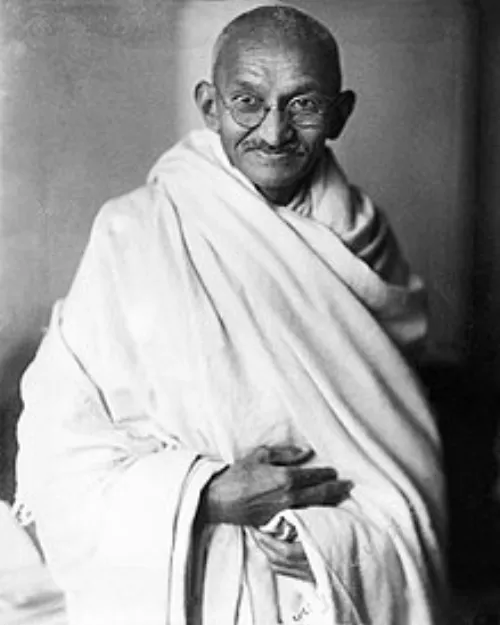
Mohandas Karamchand Gandhi was born on October 2, 1869, in Porbandar, a coastal city in present-day Gujarat, India, into a family of the Modh Bania caste. His father, Karamchand Gandhi, served as the diwan (chief minister) of Porbandar and several other small principalities; his mother, Putlibai, was a deeply religious woman whose practice of Jain fasting and vow-keeping left a deep impression on her son. Gandhi was a shy, unprepossessing child who struggled academically and was married by arrangement at thirteen to Kasturba Makanji, with whom he would remain married for sixty-two years. At nineteen, against family opposition and despite a Brahmin warning that ocean travel would result in his loss of caste, he sailed to London to study law at the Inner Temple, where he was called to the bar in 1891.
His first attempt to establish a legal practice in India failed; in 1893 he accepted a one-year contract to work for an Indian law firm in Natal, South Africa. What happened in South Africa over the next twenty-one years transformed both Gandhi and the history of political resistance. Within a week of arriving, he was thrown off a train at Pietermaritzburg for refusing to move to a third-class carriage despite holding a first-class ticket — an experience he later identified as the most formative of his life. He resolved not to leave South Africa until he had fought the injustice he had encountered, and the fight lasted two decades. He organized the Natal Indian Congress in 1894, developed his first campaigns of nonviolent resistance (which he called Satyagraha — 'truth-force' or 'soul-force'), led the 1907 campaign against compulsory registration of Indians, and was imprisoned multiple times.
Returning to India in 1915, Gandhi was greeted as a hero by the Indian National Congress but spent his first year traveling the country to understand it from within rather than from the perspective of the educated class that dominated Congress. He led the Champaran agitation of 1917 against British indigo plantation farmers, the Khilafat movement of 1919, and the Non-Cooperation Movement of 1920–1922 — the first nationwide campaign of mass civil disobedience against British rule. The Salt March of 1930 — a 240-mile walk to the sea at Dandi to protest the British salt monopoly — became one of the most celebrated acts of political theater in world history, demonstrating that the entire apparatus of colonial taxation could be challenged by the simple act of individuals making their own salt.
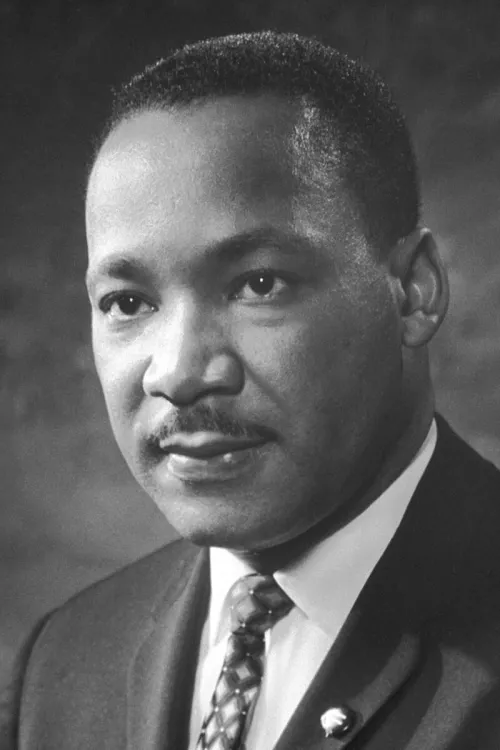
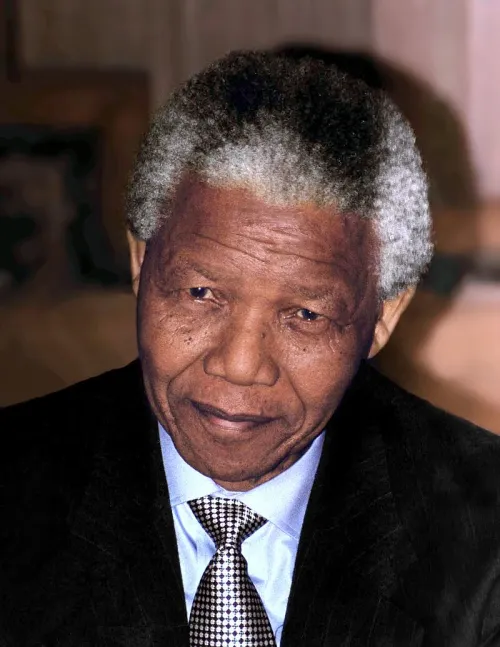
Gandhi's INFJ quality manifested most completely in his conviction that the means of achieving a goal were inseparable from the nature of the goal itself — that violence could not produce a just peace any more than lying could produce an honest relationship. This was not a pragmatic calculation but a philosophical conviction rooted in his understanding of truth as a living force that operated through human action. He was assassinated on January 30, 1948, by Nathuram Godse, a Hindu nationalist who considered his commitment to Muslim-Hindu unity treasonous to Hindu India. His influence on Martin Luther King Jr. and Nelson Mandela — who explicitly credited Gandhi's nonviolent methodology as foundational to their own — means that his strategic contribution to twentieth-century liberation movements extends far beyond India's independence.