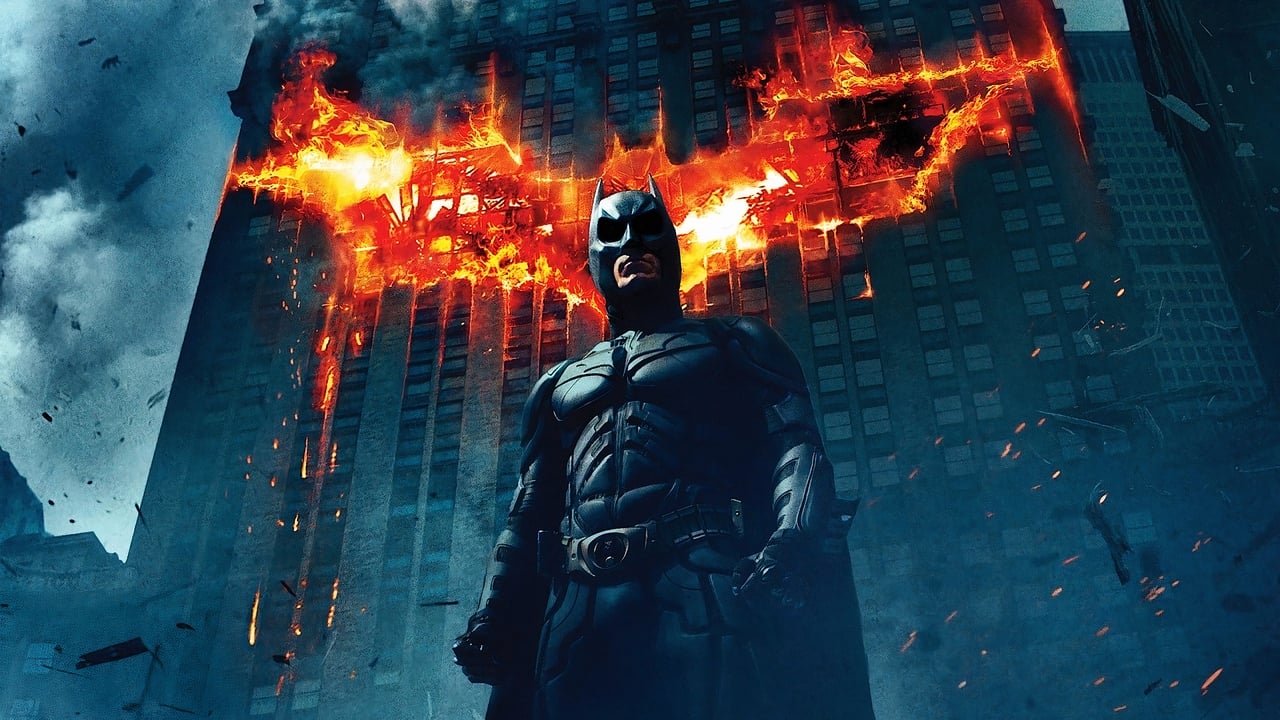
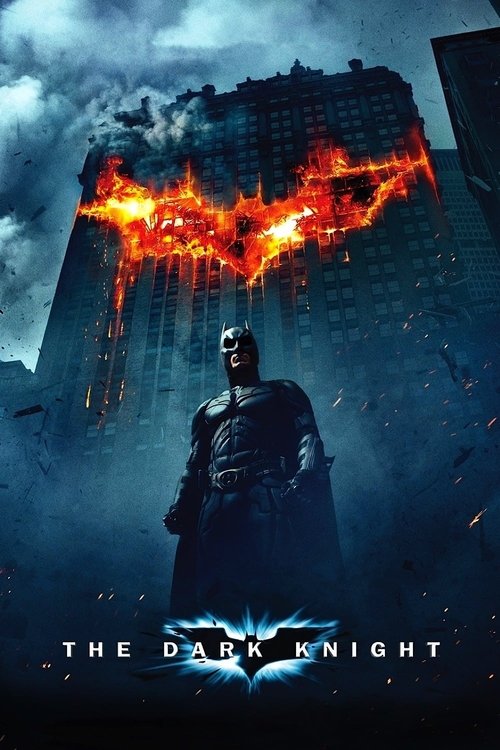
The Dark Knight Trilogy
Discover the MBTI types of The Dark Knight characters — Batman, Joker, Bane, and more
אנליסטים

Bruce Wayne / Batman
AnalystBruce Wayne embodies the INTJ cognitive stack with extraordinary precision. His dominant Ni manifests as an unwavering singular vision—he doesn't just fight crime reactively but architects a decades-long campaign to transform Gotham, evident when he spends seven years training with the League of Shadows to become a symbol rather than merely a vigilante. His auxiliary Te drives systematic execution: designing the Batsuit with Lucius Fox, building surveillance networks, and maintaining contingency plans for every scenario—including his own allies turning against him. Batman's tertiary Fi surfaces in his rigid moral code, most powerfully demonstrated when he refuses to kill the Joker despite every logical reason to do so, revealing deeply personal values that override strategic calculation. His inferior Se appears in moments of physical recklessness and his struggle to live in the present—he can plan Gotham's salvation but cannot maintain a normal relationship or enjoy Bruce Wayne's privileged life. His character arc across the trilogy illustrates classic INTJ growth: from isolated strategist who believes he must work alone, to accepting that his vision requires trusting others, culminating in his ultimate sacrifice that transforms Batman from a person into an enduring idea.
“It's not who I am underneath, but what I do that defines me.”Learn about INTJ →

Scarecrow / Jonathan Crane
AnalystJonathan Crane exemplifies the INTP cognitive stack channeled into dark academic obsession. His dominant Ti drives a purely analytical fascination with fear as a psychological mechanism—he doesn't experience fear empathetically but dissects it as a system to be understood, reverse-engineered, and weaponized, treating his Arkham patients as experimental subjects rather than people requiring care. His auxiliary Ne fuels creative innovation in his fear toxin development, constantly iterating on chemical formulations and exploring novel delivery methods, seeing possibilities in psychopharmacology that conventional scientists would never consider. Crane's tertiary Si manifests in his methodical research documentation and his attachment to the Scarecrow persona—a carefully constructed identity he returns to repeatedly across all three films, suggesting deep comfort in an established pattern of behavior. His inferior Fe is almost entirely absent in healthy form: he shows virtually no empathy for his victims' suffering and uses emotional manipulation purely as a tool, as when he exploits institutional trust to declare sane criminals fit for release. Crane's arc across the trilogy demonstrates an unhealthy INTP pattern—brilliant intellectual capacity completely divorced from emotional development, reducing him from a potentially transformative psychologist to a petty criminal who keeps reappearing in Gotham's chaos, each time more diminished, unable to evolve beyond his singular intellectual fixation.
“Would you like to see my mask?”Learn about INTP →

Bane
AnalystBane demonstrates the ENTJ cognitive stack with terrifying efficiency and intellectual authority. His dominant Te manifests as supreme organizational command—he orchestrates a coordinated assault on Gotham's infrastructure including simultaneous attacks on the stock exchange, football stadium, bridges, and police force with military precision that requires managing thousands of operatives across multiple fronts. His auxiliary Ni provides the strategic vision behind the operation: every move serves a grander purpose of completing Ra's al Ghul's mission while psychologically breaking Bruce Wayne, recognizing that defeating Batman requires destroying his spirit before his body. Bane's tertiary Se surfaces in his imposing physical presence and his preference for direct confrontation—the Batcave fight scene where he systematically dismantles Batman's combat techniques demonstrates both tactical brilliance and raw physical dominance. His inferior Fi emerges unexpectedly through his devotion to Talia al Ghul, revealing that beneath the calculated conqueror lies deeply personal loyalty born in the hellish pit prison where he sacrificed himself to protect a child. Bane's arc challenges the typical ENTJ villain archetype: he isn't merely power-hungry but genuinely believes in his cause, and his willingness to die for Talia shows that even the most Te-dominant personality harbors a hidden emotional core that can override all strategic calculation.
“When Gotham is ashes, you have my permission to die.”Learn about ENTJ →

The Joker
AnalystHeath Ledger's Joker demonstrates the ENTP cognitive stack twisted to its darkest expression. His dominant Ne is staggering in scope—he doesn't just plan crimes, he designs elaborate social experiments that expose the fragility of civilization, like forcing two ferries full of people to choose between self-preservation and morality. His auxiliary Ti provides the ruthless logical framework beneath the chaos: every seemingly random act serves a precise philosophical argument that order is an illusion and people are only as good as the world allows them to be. The Joker's tertiary Fe manifests as masterful social manipulation—he reads Harvey Dent's grief with surgical precision in the hospital scene, crafting exactly the emotional narrative needed to transform Gotham's White Knight into Two-Face. His inferior Si surfaces in his constantly shifting origin stories about his scars, showing a complete disconnection from personal history and concrete facts. His arc doesn't follow traditional growth but rather functions as an ENTP debate taken to its extreme: he exists solely to challenge Batman's Ni vision of order, making him the perfect philosophical foil who forces every character to confront the logical contradictions in their moral frameworks.
“Why so serious?”Learn about ENTP →
דיפלומטים

Talia al Ghul
DiplomatTalia al Ghul demonstrates the INFJ cognitive stack weaponized through generational trauma and unwavering devotion to her father's legacy. Her dominant Ni manifests as an extraordinarily patient long-term plan—she infiltrates Wayne Enterprises as Miranda Tate years before activating her scheme, building a complete false identity with such conviction that even Bruce's INTJ pattern recognition fails to detect her true purpose. Her auxiliary Fe enables devastating emotional manipulation: she forms a genuine romantic connection with Bruce, reads his need for trust and intimacy with surgical precision, and exploits that vulnerability at the moment of maximum impact, revealing her betrayal as she literally twists the knife. Talia's tertiary Ti provides the strategic logic underlying her emotional approach—she understands the technical details of the fusion reactor, orchestrates Bane's military operations from behind the scenes, and constructs an internally consistent justification for Gotham's destruction. Her inferior Se surfaces in her willingness to die for her vision rather than adapt to changing circumstances, refusing to abandon the plan even when escape is possible. Talia's arc represents the INFJ shadow: when Ni vision becomes consumed by past trauma and Fe empathy is corrupted into manipulation, the counselor archetype transforms into the most dangerous kind of antagonist—one who genuinely believes destruction is an act of love.
“I am the League of Shadows.”Learn about INFJ →

Rachel Dawes
DiplomatRachel Dawes demonstrates the ENFJ cognitive stack through principled idealism expressed via institutional channels. Her dominant Fe manifests in her ability to see and articulate moral truth in a way that moves others to action—her words to young Bruce about justice versus revenge become the philosophical foundation of his entire crusade, and her later challenge that Batman makes it impossible for Gotham to govern itself forces Bruce to confront the limitations of vigilantism. Her auxiliary Ni provides the visionary framework: she sees a Gotham where justice works through law rather than masked vigilantes, backing Harvey Dent precisely because he represents that institutional future. Rachel's tertiary Se appears in her physical courage—she tasers Crane without hesitation and refuses to cower even when directly threatened by mobsters, showing a willingness to act decisively in dangerous moments. Her inferior Ti surfaces in her struggle to reconcile her feelings for Bruce with her logical assessment that he cannot be both Batman and the man she needs—a painful analytical conclusion that her Fe desperately wishes were different. Rachel's arc illuminates the ENFJ's deepest vulnerability: she invests her hope in people and systems that ultimately fail her, and her death becomes the moral catalyst that tests every surviving character's principles.
“It's not who you are inside, it's what you do that defines you.”Learn about ENFJ →
שומרים

Commissioner Gordon
SentinelCommissioner Gordon embodies ISTJ values with quiet, relentless determination. His dominant Si manifests in his deep institutional memory—he remembers comforting young Bruce Wayne the night his parents were murdered, and that personal connection to the past anchors his lifelong commitment to serving Gotham's police force despite systemic corruption. His auxiliary Te drives methodical, evidence-based police work: building cases step by step, organizing task forces, and executing operations with procedural precision, as when he meticulously plans the Joker's capture using the convoy trap. Gordon's tertiary Fi reveals itself in the moral stands he takes quietly—he's one of the few honest cops in Gotham not because he seeks recognition but because his internal compass simply won't allow compromise, even when it isolates him from corrupt colleagues. His inferior Ne appears as discomfort with the Joker's unpredictability and Batman's unconventional methods, yet he learns to adapt. Gordon's arc demonstrates ISTJ growth through the trilogy: he begins trusting only established systems, gradually accepts that extraordinary circumstances require extraordinary alliances, and ultimately carries the burden of the Harvey Dent lie—a devastating compromise of his Si-Te love of truth, made because his developed Fi tells him it serves the greater good.
“Because he's the hero Gotham deserves, but not the one it needs right now.”Learn about ISTJ →

Alfred Pennyworth
SentinelAlfred Pennyworth exemplifies the ISFJ cognitive stack through unwavering devotion tempered by hard-earned wisdom. His dominant Si manifests in his encyclopedic recall of the Wayne family history and his constant references to past experiences—the Burma story about the bandit who couldn't be bought isn't just an anecdote but a carefully preserved lesson he applies directly to understanding the Joker's motivations. His auxiliary Fe drives his primary purpose: maintaining Bruce's emotional wellbeing and social connections, seen when he burns Rachel's letter to protect Bruce from devastating truth, prioritizing emotional harmony over factual honesty. Alfred's tertiary Ti emerges in his practical tactical advice and logical assessments of Bruce's plans, offering grounded reality checks like reminding Bruce that the Batsuit wasn't designed to fight dogs. His inferior Ne surfaces as deep anxiety about unpredictable futures—his recurring fantasy of seeing Bruce at a Florentine cafe represents a single hopeful vision he clings to amid constant fear of losing his charge. Alfred's arc across the trilogy beautifully demonstrates ISFJ growth: he begins as a faithful servant who enables Bruce's crusade, but gradually learns to set boundaries, ultimately leaving Bruce in The Dark Knight Rises when his Fe-driven caretaking conflicts with his moral obligation to speak hard truths.
“Why do we fall, sir? So we might learn to pick ourselves up.”Learn about ISFJ →
The Dark Knight as ESTJ
SentinelGotham's institutional infrastructure throughout the trilogy resonates powerfully with ESTJ values and cognitive patterns. The dominant Te perspective sees the trilogy as fundamentally about whether organized systems can contain chaos—Gordon's police force, Harvey's legal crusade, and the Dent Act all represent Te-driven attempts to impose rational order on an irrational world. The auxiliary Si connection appears in the trilogy's reverence for institutional legacy: Gordon maintains decades of faithful service, the Wayne family tradition of civic responsibility spans generations, and even Bane's revolution exploits Gotham's historical grievances. The tertiary Ne challenge emerges through characters who threaten established order—the Joker specifically targets ESTJ structures, proving that procedural systems have blind spots when confronted with genuine unpredictability. The inferior Fi dimension surfaces in the moral compromises institutions make: the lie about Harvey Dent, police corruption, and the surveillance system all represent moments where organizational efficiency overrides personal ethics. ESTJs who watch the trilogy feel the tension between their Te desire for functional systems and the uncomfortable truth that rigid structures can become as dangerous as the chaos they were designed to prevent.
“The night is darkest just before the dawn.”Learn about ESTJ →
The Dark Knight as ESFJ
SentinelThe Dark Knight's most profound moral statement resonates deeply with ESFJ values and cognitive priorities. The dominant Fe perspective finds its ultimate vindication in the ferry scene—when ordinary citizens refuse to detonate the other boat, it proves that communal empathy and social bonds are stronger than self-preservation, affirming the ESFJ conviction that people are fundamentally good when they act collectively rather than individually. The auxiliary Si connection appears in the trilogy's emphasis on legacy, tradition, and the social institutions that hold communities together—the Wayne family's generational philanthropy, Gordon's decades of service, and Tommy's commitment to rebuilding all represent Si values of maintaining what matters. The tertiary Ne dimension surfaces in the hopeful possibility that Gotham can be better than its history suggests, that the cycle of corruption and violence can be broken through collective moral courage. The inferior Ti challenge appears in the trilogy's uncomfortable logical questions: is the Harvey Dent lie justified if it keeps the peace? Can a society built on deception be truly harmonious? ESFJs connect with the trilogy's ultimate message that social bonds and community faith—messy, imperfect, and sometimes requiring painful compromise—are what prevent civilization from collapsing into the Joker's nihilistic vision.
“We are not going to do what they want us to do.”Learn about ESFJ →
חוקרים

Catwoman / Selina Kyle
ExplorerSelina Kyle embodies the ISTP cognitive stack through effortless adaptability and fiercely independent pragmatism. Her dominant Ti manifests as a personal logical framework that operates entirely outside conventional morality—she doesn't steal because she's immoral but because she's analyzed the system and concluded that wealth distribution is inherently unjust, giving her actions an internal coherence that distinguishes her from common criminals. Her auxiliary Se drives her extraordinary physical prowess: the fluid combat scenes where she fights alongside Batman showcase instantaneous environmental awareness and the ability to improvise with whatever is available. Selina's tertiary Ni surfaces in her desire for the Clean Slate program—she isn't content just surviving day to day but envisions a completely different future identity, a surprisingly long-term goal for someone who lives so adaptively in the present. Her inferior Fe appears in her conflicted relationship with Batman: she initially insists she doesn't care about Gotham or its people, yet ultimately returns to fight alongside Bruce when the city faces annihilation, revealing buried communal feelings she'd rather deny. Her arc traces classic ISTP growth—from isolated operator who trusts no one to someone who discovers that competence and independence don't require emotional detachment, choosing to invest in connection without sacrificing her autonomy.
“There's a storm coming, Mr. Wayne.”Learn about ISTP →

John Blake
ExplorerJohn Blake embodies the ISFP cognitive stack through authentic moral conviction expressed in action rather than words. His dominant Fi manifests as an intensely personal sense of justice—he doesn't follow rules or ideology but an inner compass that tells him what's right, which is why he intuitively recognizes Bruce Wayne as Batman not through deduction but through emotional recognition of a shared experience of childhood rage masked behind a composed exterior. His auxiliary Se drives him to act on his convictions physically and immediately: he ventures into dangerous zones alone, confronts corruption directly, and puts his body on the line rather than working through bureaucratic channels. Blake's tertiary Ni surfaces in his ability to see through facades—he perceives the truth about Batman, senses that Gordon is hiding something about Harvey Dent, and intuits that Gotham's establishment has failed its people long before he has evidence. His inferior Te appears in his frustration with institutional systems: he grows increasingly impatient with police hierarchy and procedure, eventually throwing away his badge when organizational rules prevent him from saving lives. Blake's arc perfectly illustrates ISFP development—from a young cop trying to work within the system to someone who realizes his personal values demand action beyond institutional constraints, inheriting the Batcave as recognition that authentic moral courage matters more than any badge.
“Not a lot of people know what it feels like to be angry, in your bones.”Learn about ISFP →
The Dark Knight as ESFP
ExplorerThe Dark Knight trilogy connects with ESFPs through its visceral, present-tense intensity and raw emotional authenticity. The dominant Se experience is overwhelming—the Batpod chase through Gotham's streets, Bane's stadium explosion, and the Joker's truck flip deliver pure sensory spectacle that demands full physical engagement with the screen. The auxiliary Fi dimension hits through emotionally authentic moments that refuse to be intellectualized: Bruce watching his parents die, Joel discovering Rachel's letter, and Alfred's tearful confession at the grave bypass analytical processing and strike directly at personal values and gut-level emotional truth. The tertiary Te appreciation emerges in the satisfying precision of Batman's gadgets and tactical operations—ESFPs enjoy watching competence in action even more when it serves emotionally meaningful stakes. The inferior Ni connection appears in the trilogy's deeper thematic layers that reward repeated viewing: symbolism, foreshadowing, and philosophical undercurrents that ESFPs may initially absorb intuitively rather than consciously. The trilogy's genius for ESFPs is that it never sacrifices emotional immediacy for intellectual depth—every philosophical question is embedded in a viscerally thrilling moment, making abstract ideas feel physically real.
“Let's put a smile on that face!”Learn about ESFP →
מצאו את הדמות שלכם
יודעים את סוג ה-MBTI שלכם? מצאו את הדמות התואמת למטה.
שאלות נפוצות
Batman / Bruce Wayne is widely typed as INTJ — his strategic mind, long-term planning, technological innovation, and singular dedication to his mission are hallmark traits of the 'Mastermind' personality type.
Heath Ledger's Joker in The Dark Knight is commonly typed as ENTP — his brilliant improvisation, philosophical provocations, and desire to tear down established systems reflect Ne-Ti at its most chaotic.
Yes, Bane is widely considered ENTJ — his commanding presence, strategic military operations, and ability to execute complex plans with precision reflect Te-Ni leadership.
גלו עוד סדרות
גלו את הסוג שלכם
גלו את סוג האישיות MBTI שלכם וראו אילו דמויות בדיוניות חולקות את התכונות שלכם.
עשה את המבחן