Marvel MCU
Discover which Marvel MCU character matches your MBTI type — from Tony Stark's ENTP genius to Steve Rogers's ISFJ loyalty.
Marvel MCU MBTI Personality Analysis
The Marvel Cinematic Universe offers a masterclass in how different personality types approach heroism. Each Avenger represents a distinct MBTI type, and their conflicts often arise from fundamental cognitive function clashes rather than simple disagreements.
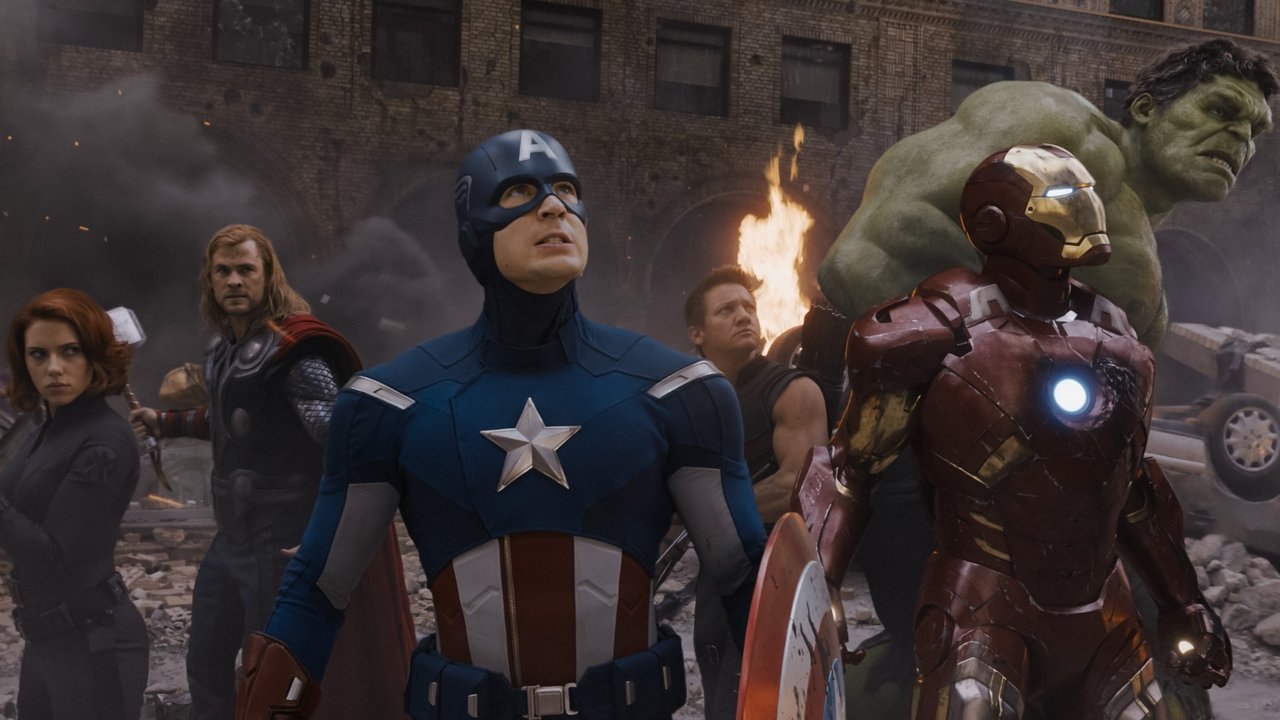
The central dynamic of the MCU — the tension between Tony Stark (ENTP) and Steve Rogers (ISFJ) — is a textbook clash between Ne-Ti and Si-Fe. Tony sees endless possibilities and improvises solutions (Ne), while Steve draws on tradition, loyalty, and established values (Si). Their Civil War disagreement isn't just political — it's a deep cognitive function conflict about how to keep people safe.
The MCU also brilliantly illustrates how personality type shapes each hero's relationship with power. T'Challa (INFJ) leads through quiet moral authority. Thor (ESTP) leads through action and physical presence. Stephen Strange (ENTJ) leads through strategic command. Each approach has strengths and catastrophic failure modes, which is what makes the ensemble storytelling so compelling.
Loki's typing as ENFJ is one of the MCU's most debated. While many see him as a manipulative villain, his core motivation is always Fe — he craves belonging, recognition, and emotional connection, even when he pursues them through destructive means. His redemption arc in the Loki series shows his Fe finally finding healthy expression.
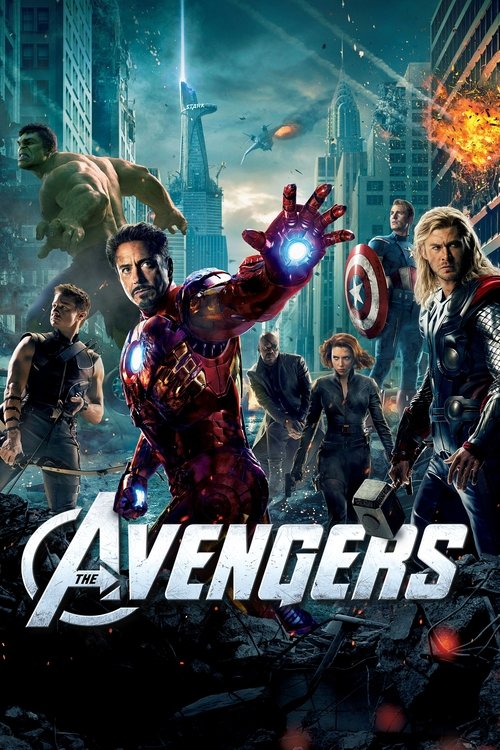
The MCU's team dynamics are a fascinating study in how all 16 types collaborate under stress. The Guardians of the Galaxy work because their types complement each other: Peter Quill's ENFP optimism inspires action, Gamora's ESFJ responsibility keeps them grounded, Rocket's ISTP tactical genius solves immediate problems, Drax's ESTP physicality handles threats directly, and Groot's quiet ISFP loyalty holds the emotional center. Compare this to the Avengers, where multiple dominant-Te and dominant-Fe types create constant leadership friction — everyone wants to be in charge, but through fundamentally different approaches.
אנליסטים

Nick Fury
AnalystNick Fury's dominant Ni manifests as an almost prophetic strategic vision — he conceived the Avengers Initiative years before any alien threat materialized, seeing a future that demanded extraordinary defenders long before anyone else recognized the need. His auxiliary Te executes that vision with ruthless organizational efficiency: building S.H.I.E.L.D. into a global intelligence apparatus, compartmentalizing information on a need-to-know basis, and making coldly pragmatic decisions like developing Phase 2 weapons from the Tesseract. Fury's tertiary Fi reveals itself in moments of quiet conviction — his belief in heroes is not sentimental but deeply personal, a core value he refuses to abandon even when the World Security Council orders a nuclear strike on Manhattan. The INTJ's characteristic distrust of external systems is evident in his relationship with authority: he answers to the Council but manipulates them constantly, fakes his own death in The Winter Soldier, and operates from the shadows because he trusts his own judgment above any institution. His inferior Se shows in occasional blind spots regarding immediate physical threats — losing his eye to a Flerken being the most literal example of an Ni-dominant personality failing to notice what is right in front of them.
“I still believe in heroes.”Learn about INTJ →
Bruce Banner (Hulk)
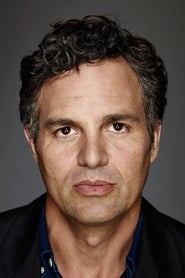
AnalystBruce Banner's dominant Ti is evident in his approach to every challenge as a system to be understood — whether it is gamma radiation, Ultron's neural network, or the quantum mechanics behind time travel, he methodically deconstructs problems with detached precision. His auxiliary Ne fuels his ability to see unconventional connections, such as theorizing that the Infinity Stones could be used to reverse the Snap rather than simply destroy them. The Hulk itself can be read as Bruce's repressed inferior Fe — the raw, uncontrolled emotional energy that a Ti-dominant personality struggles to integrate. His arc in the MCU traces the classic INTP journey of reconciling analytical detachment with emotional engagement: from hiding in Kolkata to avoid human connection, to eventually merging with the Hulk as Professor Hulk, achieving a synthesis of intellect and feeling. Bruce's discomfort in social settings, his self-deprecating humor as a deflection mechanism, and his tendency to retreat into the lab rather than confront interpersonal conflict all point to the INTP's characteristic struggle with the feeling realm. His willingness to snap his own fingers in Endgame marks the moment his Fe finally steps forward.
“That's my secret, Captain. I'm always angry.”Learn about INTP →
Stephen Strange (Doctor Strange)
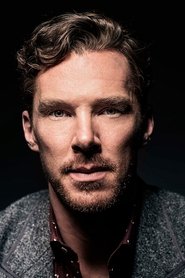
AnalystStephen Strange's dominant Te is unmistakable from his very first scene — he selects surgical cases based on their potential to enhance his reputation, optimizing every decision for measurable achievement with a ruthless efficiency that alienates colleagues and lovers alike. His auxiliary Ni gives him the capacity for the kind of singular strategic vision that later defines his role as Sorcerer Supreme: viewing fourteen million possible futures on Titan is essentially Ni on a cosmic scale, and his willingness to surrender the Time Stone based on one optimal outcome shows the ENTJ's confidence in their own long-range judgment. Strange's transition from surgeon to sorcerer maps perfectly onto ENTJ development — he initially resists the Ancient One's teachings because they challenge his Te need for empirical proof, but once his Ni grasps the larger framework, he pursues mastery with characteristic relentlessness, reading forbidden texts and practicing through the night. His tertiary Se emerges in his surprisingly quick physical adaptation to the mystic arts and his enjoyment of dramatic flair — the Cloak of Levitation and theatrical portal usage reflect an ENTJ who has learned to appreciate sensory impact. His inferior Fi, typically suppressed, surfaces in his growing capacity for self-sacrifice: the man who once cared only about his hands ultimately holds the gauntlet for the universe, showing the ENTJ's deepest growth occurs when they learn to serve values larger than personal ambition.
“We're in the endgame now.”Learn about ENTJ →

Tony Stark (Iron Man)
AnalystTony Stark is the quintessential ENTP — his dominant Ne is on full display in the way he constantly reinvents his Iron Man suits, pivoting from Mark I to nanotech with restless creative energy that treats every problem as an invitation to innovate. His auxiliary Ti gives him the analytical firepower to build an arc reactor in a cave with a box of scraps, reverse-engineer alien technology, and conceptualize time travel in a single evening. Tony's inferior Si shows in his disdain for tradition and authority — he openly mocks Senate hearings, defies military protocols, and refuses to hand over his suits because he fundamentally distrusts established systems. His tertiary Fe emerges under stress, particularly in his fear of losing those he loves, which drives the creation of Ultron as an anxious attempt to protect the world. The ENTP's signature pattern of arguing from every angle appears in his clashes with Steve Rogers, where Tony genuinely enjoys the intellectual sparring even when the stakes are existential. His sacrifice in Endgame represents the ENTP at their most evolved — channeling Ne-Ti brilliance not for ego, but for a cause that transcends his own survival.
“I am Iron Man.”Learn about ENTP →
דיפלומטים
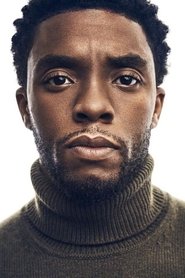
T'Challa (Black Panther)
DiplomatT'Challa demonstrates the INFJ cognitive stack with rare elegance. His dominant Ni gives him a singular vision for Wakanda's future — he does not merely react to Killmonger's challenge but uses it as a catalyst to reimagine his nation's entire relationship with the outside world, seeing a possibility for global engagement that generations of kings before him could not envision. His auxiliary Fe is what makes this vision compassionate rather than cold: he genuinely absorbs the pain of Killmonger's abandonment, the suffering of oppressed communities, and the fears of his own people, synthesizing these perspectives into a path forward that honors everyone's needs. The scene where T'Challa confronts his ancestors in the ancestral plane, declaring they were wrong to hide Wakanda, shows the INFJ's willingness to break with tradition when their Ni-Fe conviction demands it — a radical act for someone raised in deep reverence of the past. His tertiary Ti provides the analytical precision behind his diplomacy, allowing him to navigate UN politics and tribal council debates with logical clarity. T'Challa's inferior Se appears in his occasional difficulty with spontaneous physical confrontation — he is most effective when he has had time to prepare, and his early fights with Killmonger expose a king more comfortable with strategic vision than raw combat improvisation.
“In times of crisis, the wise build bridges while the foolish build barriers.”Learn about INFJ →

Wanda Maximoff (Scarlet Witch)
DiplomatWanda Maximoff's dominant Fi creates an emotional intensity that literally reshapes reality around her — no character in the MCU demonstrates the power and danger of introverted feeling more dramatically. Her grief over Vision's death does not process outward through social expression but burrows inward, becoming so all-consuming that her Ne auxiliary constructs an entire alternate Westview to house the life she feels she deserves. This is the INFP shadow at its most vivid: when Fi's idealized inner world clashes with unbearable external reality, Ne can become a tool for escapism rather than creative exploration. Wanda's Si tertiary shows in her attachment to specific sensory memories — the sitcoms she watched with her family in Sokovia become the literal architecture of her fantasy, revealing how INFPs ground their emotional world in deeply personal past experiences. Her inferior Te, the function she struggles with most, manifests as her inability to think through consequences logically: she does not consider the suffering of Westview's trapped residents because her Fi pain is so overwhelming that Te objectivity cannot break through. Wanda's arc from Age of Ultron through Multiverse of Madness traces the INFP's potential trajectory when healthy integration fails — when Fi becomes solipsistic rather than empathetic, the same depth of feeling that makes INFPs compassionate healers can transform them into devastating forces of destruction.
“You took everything from me.”Learn about INFP →
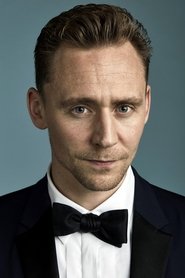
Loki
DiplomatLoki represents a fascinatingly unhealthy expression of the ENFJ cognitive stack that gradually evolves toward integration across the MCU. His dominant Fe gives him an extraordinary ability to read and manipulate others' emotions — his interrogation tactics, shape-shifting personas, and theatrical speeches all rely on understanding exactly what people want to hear and becoming that person. However, Loki's Fe is initially weaponized rather than nurturing: he mirrors others' desires to control them, a dark shadow of the ENFJ's natural gift for emotional leadership. His auxiliary Ni provides the long-game strategic thinking behind his schemes — from orchestrating his own fake death multiple times to engineering the invasion of New York as a stepping stone to larger ambitions. Loki's tertiary Se manifests in his love of spectacle, drama, and aesthetic presentation — he is the most theatrical villain in the MCU, relishing the sensory impact of his entrances and illusions. His inferior Ti, the function he struggles with most, shows in his inability to step back and objectively assess whether his plans are actually logical or merely emotionally satisfying. The Loki series represents his genuine ENFJ growth: when he finally uses his Fe to genuinely connect rather than manipulate, choosing to sacrifice his own ambitions to protect the multiverse, he completes the ENFJ journey from charismatic narcissist to selfless guardian of others' freedom.
“I am burdened with glorious purpose.”Learn about ENFJ →

Peter Parker (Spider-Man)
DiplomatPeter Parker's dominant Ne is on constant display through his rapid-fire quipping during combat, his ability to improvise creative solutions under pressure, and his boundless curiosity about everything from alien technology to quantum physics. His auxiliary Fi provides the moral foundation that makes him uniquely Spider-Man: Uncle Ben's death created a deeply personal value system that Peter carries as an internal compass, not as an external rule. This Fi-driven guilt separates him from other heroes — he fights not because of duty or strategy but because his conscience will not let him stand by. Peter's tertiary Te is still developing, visible in his fumbling attempts to coordinate the ferry rescue in Homecoming, where strategic thinking lags behind instinct. His inferior Si manifests as difficulty learning from past mistakes — trusting Mysterio despite red flags or ignoring the lessons Tony tried to teach him. Peter's arc across the MCU traces the ENFP maturation journey: from scattered enthusiasm that causes collateral damage to a more integrated personality that channels Ne creativity through Fi values with increasing wisdom, culminating in his devastating No Way Home decision to sacrifice all personal connections for the greater good.
“When you can do the things that I can, but you don't, and then the bad things happen, they happen because of you.”Learn about ENFP →
שומרים
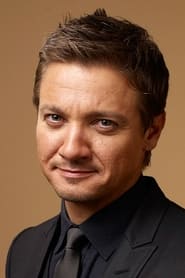
Clint Barton (Hawkeye)
SentinelClint Barton is the ISTJ grounding wire in a team of larger-than-life personalities, and his value lies precisely in his ordinary dependability amid the extraordinary. His dominant Si anchors him in concrete experience — he is the Avenger who has a secret family on a farm, who remembers what normal life feels like, and who draws on years of field experience rather than superpowers or genius intellect to get the job done. His auxiliary Te provides methodical tactical execution: every arrow shot is calculated, every mission approached with workmanlike precision, and his pep talk to Wanda in Age of Ultron is pure Te practicality — go out there, fight, or stay here, but decide now. Clint's tertiary Fi emerges most powerfully in his relationship with his family and with Natasha, where his loyalty runs so deep that losing them transforms him into the violent Ronin persona — an ISTJ whose Si-Fi values have been shattered, leaving only Te aggression. His inferior Ne, typically suppressed in favor of what he knows works, surfaces in his bewildered acknowledgment on Sokovia that nothing about his situation makes logical sense — a bow and arrow against robots — yet his Si-Te reliability carries him through regardless. Clint's arc in Hawkeye and Endgame reveals the ISTJ's deepest fear: that their steady, unglamorous service will be forgotten, and that the sacrifices they have witnessed will have been for nothing.
“The city is flying and we're fighting an army of robots. And I have a bow and arrow. None of this makes sense.”Learn about ISTJ →

Steve Rogers (Captain America)
SentinelSteve Rogers exemplifies the ISFJ through his unwavering commitment to duty and his deeply internalized moral code rooted in dominant Si — he literally carries the values of 1940s Brooklyn into the modern era, drawing on the lessons of his past to navigate an unfamiliar world. His auxiliary Fe drives his protective instincts, visible when he throws himself on a grenade during basic training or shields Bucky from Tony in Civil War, always prioritizing others' safety over his own. Steve's Si manifests not as rigid nostalgia but as a living moral compass: he remembers what it felt like to be powerless, which fuels his empathy for the vulnerable. His discomfort with moral ambiguity — refusing to sign the Sokovia Accords because they conflict with his internalized principles — shows how ISFJs can become immovable when core values are threatened. His arc from a skinny kid who just wanted to do the right thing to a man who finally learns to live for himself by choosing to stay with Peggy reflects the ISFJ's journey toward honoring personal needs after a lifetime of selfless sacrifice.
“I can do this all day.”Learn about ISFJ →

Pepper Potts
SentinelPepper Potts demonstrates the ESTJ cognitive stack through her role as the organizational backbone that keeps both Stark Industries and Tony Stark himself functioning. Her dominant Te is evident in her ability to manage a multinational corporation with decisive efficiency — she does not deliberate endlessly but identifies the most logical course of action and executes it, whether that means restructuring the company's weapons division or handling a congressional subpoena. Her auxiliary Si provides institutional memory and practical wisdom that Tony desperately lacks: she remembers every deadline, anticipates recurring problems, and maintains the operational continuity that allows Tony's Ne creativity to flourish without destroying everything around it. Pepper's tertiary Ne surfaces in her ability to adapt to increasingly absurd circumstances — from discovering Tony is Iron Man to eventually wearing her own Rescue armor, she stretches beyond her comfort zone when Te-Si alone cannot solve the problem. Her inferior Fi typically stays well-guarded behind professional composure, but it breaks through in her relationship with Tony, where her frustration at being emotionally neglected reveals the ESTJ's deep need for loyalty and reliability in their personal bonds. Pepper's arc from executive assistant to CEO to armored hero demonstrates the ESTJ's quiet superpower: creating the stable foundation upon which everyone else's extraordinary actions become possible.
“I do anything and everything that Mr. Stark requires, including occasionally taking out the trash.”Learn about ESTJ →

Gamora
SentinelGamora's dominant Fe drives her to take emotional responsibility for everyone around her — she becomes the moral compass of the Guardians not through philosophical arguments but through relational accountability, constantly reminding the team of their obligations to each other and to the people they are meant to protect. Her auxiliary Si provides a grounding in painful past experience that shapes every decision: growing up as Thanos's adopted daughter left her with deeply ingrained memories of violence and loss that she channels into a fierce determination to prevent others from suffering the same fate. Gamora's tertiary Ne shows in her ability to recognize the Guardians' potential as a team before anyone else does — she sees possibilities for redemption in Quill, Drax, Rocket, and Groot that a purely past-focused thinker would miss. Her inferior Ti surfaces as frustration when others refuse to think logically about threats, particularly when Quill lets emotion override tactical sense. What makes Gamora a compelling ESFJ rather than a generic warrior archetype is the tension between her Fe need for relational harmony and her traumatic Si conditioning as an assassin — she wants desperately to belong and to nurture, but her formative experiences taught her that caring makes you vulnerable. Her sacrifice on Vormir is the ultimate ESFJ act: she dies not fighting but in the context of a relationship, her value to Thanos as a daughter becoming the very currency of her destruction.
“I'm going to die surrounded by the biggest idiots in the galaxy.”Learn about ESFJ →
חוקרים

Natasha Romanoff (Black Widow)
ExplorerNatasha Romanoff's dominant Ti operates like an internal tactical computer — she reads situations with cold precision, dissecting opponents' psychological weaknesses during her interrogation of Loki on the Helicarrier by feigning emotional vulnerability to extract information. Her auxiliary Se makes her one of the most physically adaptive fighters in the MCU, seamlessly adjusting her combat style to each opponent with fluid, efficient movement rather than brute force. The ISTP's characteristic emotional reserve is central to Natasha's character: she compartmentalizes her Red Room trauma not out of coldness but because Ti processes experience through logic rather than feeling, making her appear detached when she is actually deeply affected. Her tertiary Ni emerges in her ability to anticipate enemy strategies — she is often the first Avenger to sense when something is wrong, as when she immediately suspects Loki wanted to be captured. What makes Natasha a compelling ISTP rather than a generic spy archetype is her inferior Fe journey: she begins as someone who views relationships as tools for manipulation, but gradually forms genuine bonds with Clint, Steve, and the team. Her sacrifice on Vormir is the ultimate expression of an ISTP whose Fe has matured — choosing relational love over self-preservation in a way that surprises even herself.
“I've got red in my ledger. I'd like to wipe it out.”Learn about ISTP →
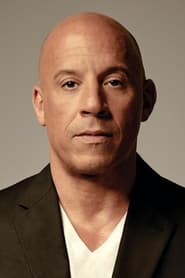
Groot
ExplorerGroot is a pure expression of the ISFP cognitive stack, stripped of the verbal complexity that often obscures personality typing. His dominant Fi creates an unwavering internal value system centered on loyalty and protection — when he wraps his branches around the Guardians to shield them from the Dark Aster crash, there is no deliberation, no strategic calculation, only the immediate expression of deeply held love through physical sacrifice. His auxiliary Se makes him intensely present and responsive to his environment: he grows flowers for a child on Knowhere, dances obliviously to his own music, and extends his branches in creative, spontaneous ways during combat that reflect genuine Se adaptability rather than planned tactics. Groot's limited vocabulary — three words in infinite variations — paradoxically highlights the ISFP's preference for action over explanation. He does not need to articulate his values because he lives them so completely that his intentions are unmistakable. Baby Groot and Teen Groot in later films reveal the ISFP's developmental journey: the younger version is more reactive and emotionally volatile (underdeveloped Fi still forming), while the teenage version shows the typical ISFP resistance to external demands, preferring his own internal world of video games over group obligations. His decision to extend his arm as the handle for Stormbreaker in Infinity War echoes his father's sacrifice — Fi values passed down through generations of authentic, wordless devotion.
“I am Groot.”Learn about ISFP →

Thor
ExplorerThor embodies the ESTP through his dominant Se — a visceral love of combat and physical experience that makes him never more alive than when Mjolnir is in hand and lightning crackles around him, as seen in his exhilarating arrival in Wakanda during Infinity War. His auxiliary Ti gives him tactical adaptability, letting him improvise in the heat of battle whether fighting the Destroyer in New Mexico or taking on Hela without his hammer. Thor's inferior Ni surfaces in his struggle with deeper purpose: he spends much of Ragnarok learning that he is not defined by his weapon but by something more fundamental, a painful Ni realization for someone who lives so fully in the present moment. His tertiary Fe shows in his genuine warmth and camaraderie — banter with the Avengers, his friendship with Korg, and heartfelt conversations with his mother in Endgame reveal emotional depth beneath the bravado. Thor's depression arc in Endgame is a powerful depiction of an Se-dominant personality cut off from their source of vitality, retreating into sensory numbing rather than processing grief. His recovery begins only when he reconnects with physical purpose, reclaiming Mjolnir and re-entering the fight with renewed conviction.
“I'm still worthy!”Learn about ESTP →
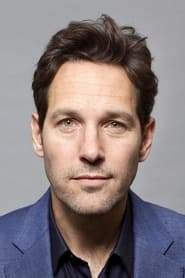
Scott Lang (Ant-Man)
ExplorerScott Lang's dominant Se makes him the most grounded and present-oriented Avenger — while others strategize or brood, Scott is fully immersed in whatever is happening right now, whether that means marveling at Captain America's shield, shrinking to ride an arrow, or gleefully becoming Giant-Man for the first time with zero preparation. His auxiliary Fi provides a warm, authentic emotional core that distinguishes him from thrill-seeking without purpose: everything Scott does ultimately traces back to his love for Cassie, a deeply personal value that motivated his original heist and continues to drive every heroic choice. Scott's tertiary Ni is notably underdeveloped — he rarely plans ahead and his strategic contributions tend to be accidental discoveries rather than deliberate insights, as when his experience in the Quantum Realm leads to the time travel theory in Endgame through lived experience rather than theoretical deduction. His inferior Te shows in his chronic disorganization and his willingness to let others handle logistics while he handles execution. What makes Scott a uniquely compelling ESFP is that his apparent simplicity masks genuine emotional intelligence — his speech to the Avengers in Endgame about what they have left to fight for cuts through intellectual paralysis precisely because it comes from pure Se-Fi sincerity rather than calculated persuasion.
“I do some dumb things, and the people I love the most pay the price.”Learn about ESFP →
Character Relationship Dynamics in Marvel MCU
Tony Stark × Steve Rogers
The Futurist and The Traditionalist
The central conflict of the MCU is a textbook Ne versus Si clash. Tony's dominant Ne constantly pushes forward — he builds Ultron, signs the Accords, and invents time travel because he sees dangers and possibilities that haven't materialized yet. Steve's dominant Si anchors him in proven values — he trusts the bonds he's built and the principles he learned in 1940s Brooklyn. Their Civil War split isn't political disagreement; it's a fundamental cognitive function conflict about whether safety comes from embracing change (Tony's Ne) or honoring established bonds (Steve's Si). What makes their dynamic compelling is mutual respect: Tony admires Steve's unwavering conviction, and Steve admires Tony's brilliance. They need each other — Ne without Si has no anchor, and Si without Ne has no vision.
Thor × Loki
The Warrior and The Illusionist
Thor's Se-Ti makes him direct, physical, and tactically adaptive — he leads by doing, not by persuading. Loki's Fe-Ni makes him indirect, theatrical, and strategically manipulative — he leads by inspiring or deceiving. Their brotherhood conflict mirrors the Se-Fe tension: Thor cannot understand why Loki won't simply be straightforward, while Loki cannot understand why Thor refuses to see the deeper game beneath the surface. When Loki fakes his death, it's Fe-Ni creating an emotional narrative for maximum impact. When Thor throws himself into battle, it's Se seeking resolution through immediate action. Their reconciliation in Ragnarok works because both brothers finally learn from each other's function: Thor gains Ni strategic patience, and Loki gains Se honest action.
Wanda Maximoff × Vision
The Dreamer and The Thinker
Wanda's Fi-Ne creates a world of intense personal feeling and imaginative possibility — she literally reshapes reality to match her inner emotional landscape. Vision's Ti-Ne creates a world of logical analysis and curious exploration — he seeks to understand what it means to be human through systematic inquiry. Their connection works because they share Ne as a common function: both see possibilities beyond the immediate, and both are outsiders trying to understand a world that fears them. The tragedy is in their divergent dominant functions: Wanda processes through feeling first (Fi), Vision through logic first (Ti). When grief overwhelms Wanda's Fi, she cannot access Ti rationality to see the consequences — and Vision's Ti calm is the very thing she's desperately trying to recreate.
מצאו את הדמות שלכם
יודעים את סוג ה-MBTI שלכם? מצאו את הדמות התואמת למטה.
שאלות נפוצות
Tony Stark is widely considered an ENTP. His rapid-fire wit, love of debate, constant innovation, and ability to see unconventional solutions all reflect dominant Ne. His auxiliary Ti drives his engineering brilliance and analytical problem-solving, while his inferior Si explains his difficulty with routine and tradition.
Steve Rogers is best typed as an ISFJ. His deep loyalty, sense of duty, and commitment to protecting others stem from his Si-Fe function stack. He draws on past values and experiences to guide his moral compass and shows unwavering dedication to the people and principles he believes in.
Peter Parker (MCU version) is typed as an ENFP. His enthusiasm, idealism, and ability to see possibilities everywhere reflect dominant Ne. His strong personal values (Fi) drive his commitment to being a hero, and his youthful energy and desire to connect with others are quintessential ENFP traits.
Thanos is often typed as an INTJ. His singular vision for the universe (Ni), his strategic and systematic approach to achieving it (Te), and his willingness to sacrifice everything for his plan reflect the INTJ's determined pursuit of a long-term goal. He truly believes his plan is the only logical solution.
Loki is typed as ENFJ, which surprises many fans who assume a villain must be a Thinker type. However, Loki's core motivation is always relational — he craves acceptance from Odin, recognition from Thor, and emotional belonging. His Fe-Ni drives him to inspire followers and orchestrate grand plans, but when his need for connection goes unmet, that same Fe turns manipulative. The Loki series reveals his true ENFJ nature as he finally channels his charisma toward genuine self-sacrifice rather than self-aggrandizement.
The Tony Stark (ENTP) vs Steve Rogers (ISFJ) conflict is a textbook Ne-Ti versus Si-Fe clash. Tony's Ne constantly seeks innovation and disruption — he wants to evolve, experiment, and future-proof the world through technology. Steve's Si anchors him in tradition, loyalty, and proven values — he trusts what has worked and distrusts unchecked change. Their Civil War split isn't political; it's a deep cognitive function disagreement about whether safety comes from embracing change (Ne) or honoring established bonds (Si).
Wanda Maximoff is typed as INFP. Her dominant Fi creates an intensely personal emotional world — her powers literally manifest her inner feelings as external reality. Her grief over Vision drives the events of WandaVision, where she unconsciously creates an entire alternate reality to avoid processing loss. This is the INFP shadow in its most dramatic form: when Fi becomes so overwhelmed that it rewrites reality rather than accepting pain. Her Ne allows her to imagine and create possibilities, while her inferior Te struggle explains why she resorts to emotional solutions rather than logical ones.
Thor is best typed as ESTP rather than ESFP. Both types lead with Se (extraverted sensing), but their auxiliary function differs: Ti (introverted thinking) for ESTP versus Fi (introverted feeling) for ESFP. Thor's combat style reveals tactical adaptability — he reads opponents and adjusts strategy mid-fight, which is Se-Ti at work. An ESFP would be more driven by personal values and emotional expression in the moment. Thor's humor is blunt and observational rather than emotionally expressive, and his approach to leadership is action-first, analyze-second — classic ESTP. His depression arc in Endgame also fits the ESTP pattern of shutting down when cut off from Se engagement.
Natasha Romanoff is ISTP, not ISTJ. The crucial difference is dominant Ti versus dominant Si. Natasha's primary mode is analytical problem-solving in real-time — she reads situations, deconstructs opponents' psychology, and adapts instantly. Her interrogation of Loki, where she feigns vulnerability to extract information, is pure Ti tactical thinking. An ISTJ would rely more on established procedures and past experience. Natasha improvises and innovates, using whatever tools are available in the moment (Se). Her emotional reserve comes from Ti's detachment, not Si's conservatism — she processes through logic, not precedent.
גלו עוד סדרות
גלו את הסוג שלכם
גלו את סוג האישיות MBTI שלכם וראו אילו דמויות בדיוניות חולקות את התכונות שלכם.
עשה את המבחן