

The Big Bang Theory
Explore the MBTI personality types and cognitive functions of The Big Bang Theory characters from Chuck Lorre's long-running CBS sitcom. From Sheldon's iconic INTP systematizing to Penny's extraverted ESFP warmth, the series built its comedy on the collision of distinct cognitive function stacks navigating friendship, romance, and scientific ambition. Each character in the Pasadena ensemble reflects a recognizable personality type that drives both their humor and their growth across twelve seasons.
אנליסטים

Amy Farrah Fowler
AnalystAmy leads with dominant introverted intuition (Ni) directed toward her own long-term vision of social and romantic fulfillment, which she pursues with systematic patience and no small amount of strategic calculation. From her first appearance, she has a clear Ni vision of the life she wants — friendship, romance, intellectual partnership — and she moves toward it with the patient determination that distinguishes Ni from wishful thinking. Her auxiliary extraverted thinking (Te) is visible in her rigorous neuroscience research and her tendency to analyze social situations as systems with knowable mechanisms; she approaches friendship milestones and relationship progression with the same methodical rigor she applies to her addiction studies on primates. Tertiary introverted feeling (Fi) develops significantly through the series as she moves from clinical observation of social bonds to genuine emotional investment, particularly in her friendship with Penny and Bernadette where she experiences authentic Fi vulnerability for the first time. Her inferior extraverted sensing (Se) manifests as her initial awkwardness with physical intimacy and sensory experience, gradually resolving as she becomes more comfortable with embodied emotion in her relationship with Sheldon. Amy\'s arc from isolated academic to genuine friend, partner, and Nobel laureate is a textbook INTJ growth story: the Ni-driven vision of who she wants to become, realized through Te-structured social experimentation, and validated by the developing Fi that makes the achievement emotionally meaningful rather than merely strategic.
“As a scientist, I must go where the data leads — even when the data leads to uncomfortable social conclusions.”Learn about INTJ →

Leonard Hofstadter
AnalystLeonard leads with dominant introverted thinking (Ti) expressed more warmly than Sheldon\'s — he approaches experimental physics with systematic curiosity and enjoys the logical architecture of problems, but his Ti is less rigid and more adaptive, allowing him to function as the group\'s social translator. His auxiliary extraverted intuition (Ne) is more socially directed than Sheldon\'s, making him genuinely interested in people as interesting puzzles and enabling the cross-contextual thinking that makes him the bridge between the scientists and Penny\'s social world. Tertiary introverted sensing (Si) manifests in his painful emotional memories, particularly the childhood wounds from Beverly\'s experimental parenting that he revisits repeatedly throughout the series, creating Si-anchored insecurities that his Ti cannot logically resolve. His inferior extraverted feeling (Fe) is more developed than Sheldon\'s but still anxious; his chronic people-pleasing and self-doubt are not Fe dominance but the INTP experience of caring about connection without having a reliable internal map for achieving it, leading to overcompensation visible in his relationship patterns with Penny. Leonard\'s arc across the series demonstrates a different INTP growth trajectory than Sheldon\'s: where Sheldon must develop Fe from near-zero, Leonard must learn that his existing Fe development, while more advanced, has been corrupted by childhood trauma into approval-seeking rather than authentic connection, and his marriage to Penny represents the integration of genuine emotional reciprocity.
“I'm smart. I'm just not socially adept. There's a difference.”Learn about INTP →

Priya Koothrappali
AnalystPriya leads with dominant extraverted thinking (Te) — she is professionally accomplished, strategically decisive, and approaches both her legal career and her relationship with Leonard with a systematic confidence that reflects Te-dominant orientation toward results and objectives. Her immediate restructuring of Leonard\'s social life, including her attempt to modify the Roommate Agreement and limit his interactions with Penny, demonstrates Te\'s instinct to optimize environments for efficiency rather than emotional harmony. Her auxiliary introverted intuition (Ni) gives her long-range strategic thinking to manage a long-distance relationship across international contexts and to perceive the trajectory of social situations before others do, anticipating complications and positioning herself accordingly. Tertiary extraverted sensing (Se) manifests in her polished professional presentation and her comfort with social assertion — she navigates both Raj\'s friend group and the London legal world with equal physical confidence. Her inferior introverted feeling (Fi) is her most underdeveloped function, visible in her difficulty accessing genuine personal vulnerability with Leonard and her eventual infidelity, which reflects Te-Ni\'s tendency to treat relationships as strategic arrangements that can be renegotiated when circumstances change rather than Fi commitments with inherent emotional weight. Priya\'s arc in the series illustrates the ENTJ\'s relationship challenge: her controlling behavior toward Leonard\'s friendships is Te-Ni overreach, optimizing for outcomes without adequate weighting of the relational values and emotional authenticity that sustain genuine intimacy.
“I'm a lawyer. I think in terms of what can be proven, not what people feel.”Learn about ENTJ →

Barry Kripke
AnalystKripke leads with dominant extraverted intuition (Ne) directed primarily at finding angles to mock, challenge, and one-up Sheldon — he is intellectually quick, socially provocative, and genuinely delighted by the intellectual contest more than any particular outcome. His sabotage of Sheldon\'s radio interview and his strategic maneuvering for the office with the better view demonstrate Ne\'s constant generation of competitive angles and creative strategies for advantage. His auxiliary introverted thinking (Ti) gives his provocations structural cleverness: his jabs at Sheldon\'s string theory work are not random insults but targeted at actual logical weaknesses in Sheldon\'s positions, reflecting genuine scientific competence deployed as intellectual weaponry. Tertiary extraverted feeling (Fe) surfaces in his surprisingly social nature — unlike the show\'s more introverted scientists, Kripke actively seeks out social interaction and seems genuinely energized by the give-and-take of competitive banter, even when he loses. His inferior introverted sensing (Si) manifests as a relative indifference to tradition, protocol, and established hierarchies within the university; he respects only demonstrated intellectual capability, not institutional authority or seniority. Kripke is the show\'s most consistently ENTP minor character: a brilliant, self-amused devil\'s advocate whose primary contribution to every scene is making the room more intellectually alive through the sheer force of his contrary energy and his genuine delight in the competition of ideas.
“Cooperw, your stwing theory is fwawed and you know it.”Learn about ENTP →
דיפלומטים
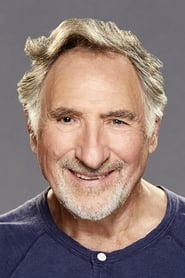
Alfred Hofstadter
DiplomatAlfred leads with dominant introverted intuition (Ni) shaped by decades of quiet observation of his family\'s emotional dynamics — he perceives the patterns in his children\'s psychological wounds and his marriage\'s dysfunction with a clarity that produces his characteristic gentle melancholy. His ability to understand Leonard\'s emotional needs within moments of conversation demonstrates Ni\'s capacity to perceive essential truths about people without requiring extensive data. His auxiliary extraverted feeling (Fe) makes him the warmest and most emotionally available Hofstadter, genuinely attuned to Leonard\'s need for paternal approval in a way Beverly\'s Te-Ni systematizing has never allowed; his hugs and his emotional directness provide Leonard with the Fe nurturing his mother withheld. Tertiary introverted thinking (Ti) surfaces in his anthropological research and his capacity for analytical observation of human behavior — like Beverly, he studies people, but through the lens of understanding and compassion rather than clinical categorization. His inferior extraverted sensing (Se) manifests as his passive acceptance of Beverly\'s dominance in the marriage; he perceives the dysfunction clearly through Ni but lacks the Se assertiveness to confront it directly, instead retreating into observation and quiet sadness. Alfred\'s brief appearances consistently reveal an INFJ who has learned to contain rather than express his deepest intuitions, demonstrating both the type\'s extraordinary empathetic perceptiveness and its vulnerability to being overwhelmed by insights it feels powerless to act upon.
“I've spent years studying what makes people happy. I'm still not entirely sure I know.”Learn about INFJ →

Raj Koothrappali
DiplomatRaj leads with dominant introverted feeling (Fi) — his entire character is organized around an internal emotional life of romantic longing, aesthetic sensitivity, and deeply personal values that he struggles to externalize directly. His elaborate romantic gestures, his sensitivity to music and beauty, and his genuine emotional investment in love stories all reflect Fi\'s rich inner world operating at full intensity. His auxiliary extraverted intuition (Ne) is visible in his creative, open-minded approach to culture, romance, and self-expression: he is the most imaginatively eclectic of the group, enthusiastically embracing art, fashion, and cuisine from multiple cultures with genuine Ne-driven curiosity about aesthetic possibilities. Tertiary introverted sensing (Si) manifests in his nostalgic attachment to romantic ideals and cultural traditions from his upbringing, creating a sometimes painful tension between the cosmopolitan life he has chosen and the family expectations encoded in his Si memories. His inferior extraverted thinking (Te) is his least developed function, visible in his difficulty asserting himself professionally and socially, and his tendency to spend extravagantly rather than managing resources with Te discipline. Raj\'s selective mutism around women in earlier seasons is a quintessential Fi-Ne presentation: a phenomenally rich inner world coupled with agonizing difficulty externalizing it to the people who matter most, and his gradual overcoming of this barrier represents the INFP\'s central growth challenge of learning to share their authentic inner life without the mediation of alcohol or performance.
“I'm a hopeless romantic living in a world that's destroyed romance.”Learn about INFP →

Howard Wolowitz
DiplomatHoward leads with dominant extraverted intuition (Ne) — he is imaginative, enthusiastic, and constantly generating new angles on social situations, particularly romantic ones, producing an endless stream of schemes, impressions, characters, and elaborate pickup strategies that demonstrate Ne\'s restless creative energy. His engineering creativity is also Ne-driven: he designs solutions that leap across conventional boundaries, from Mars rover components to space toilet repairs. His auxiliary introverted feeling (Fi) gives his relationships real emotional investment beneath the performative surface; his growth from crude flirtation into a devoted husband and father is Fi development, the authentic values underneath the Ne showmanship gradually becoming primary, particularly visible in his genuine emotional crisis when his mother dies. Tertiary extraverted thinking (Te) surfaces in his engineering competence — despite the comedic presentation, Howard is a genuinely accomplished MIT-trained engineer whose practical problem-solving abilities are repeatedly validated by NASA. His inferior introverted sensing (Si) manifests in his complicated relationship with his mother\'s overbearing household routines and his initial difficulty establishing adult domestic patterns with Bernadette, struggling to create new Si structures independent of his childhood home. Howard\'s arc across the series is one of television\'s best ENFP growth stories: his journey to the International Space Station represents Ne\'s audacious, possibility-embracing ambition at its peak, while his development into a responsible father demonstrates the maturation of Fi values and Te competence that transforms Ne creativity from self-serving performance into genuine contribution.
“I'm an engineer. I don't need a Ph.D. to know I'm the smartest guy in this room.”Learn about ENFP →
שומרים

Leslie Winkle
SentinelLeslie leads with dominant extraverted thinking (Te) — she approaches experimental physics, her professional rivalries, and her brief romance with Leonard with the same systematic, outcomes-focused directness, and she makes no apology for her blunt assessments of people\'s intelligence or methodology. Her dismissal of Sheldon\'s string theory as unfalsifiable pseudoscience is Te at its most uncompromising: she demands empirical results and has no patience for theoretical elegance that cannot be experimentally verified. Her auxiliary introverted sensing (Si) grounds her in concrete experimental data, established scientific procedure, and the reliable record of what has and has not been proven — she trusts the accumulated evidence base of physics over speculative frameworks, no matter how mathematically beautiful. Tertiary extraverted intuition (Ne) surfaces in her creative experimental design and her quick-witted verbal sparring with Sheldon, generating sharp counterarguments with a speed that reflects Ne\'s capacity for rapid conceptual reframing. Her inferior introverted feeling (Fi) is her least visible function, manifesting as emotional unavailability in her relationship with Leonard; she treats romance with the same Te efficiency she applies to lab work, ending things cleanly when they no longer serve a practical purpose. Leslie\'s antagonism with Sheldon represents one of the show\'s most intellectually interesting dynamics: Te-Si versus Ti-Ne, the experimentalist\'s demand for empirical grounding confronting the theorist\'s confidence in internally consistent logical architecture, a genuine philosophical divide expressed through academic rivalry.
“String theory is wrong, Cooper. The data says loop quantum gravity. The data doesn't care about your feelings.”Learn about ESTJ →

Mrs. Wolowitz / Voice
SentinelMrs. Wolowitz leads with dominant extraverted feeling (Fe) — her entire characterization, even as an offscreen presence communicated solely through her booming voice, is organized around the management of social bonds through obligation, guilt, food, and emotional demand. Her constant shouting about meals, medications, and Howard\'s whereabouts demonstrates Fe\'s need to maintain active emotional connection with everyone in her orbit, expressed at maximum volume. Her auxiliary introverted sensing (Si) grounds her Fe in deeply established routines of care and expectation: Howard\'s meals, his life choices, his relationships are all subject to her Si-anchored record of how things have always been done, and any deviation from established patterns triggers immediate Fe-Si anxiety. Tertiary extraverted intuition (Ne) surfaces in her surprisingly creative guilt strategies and her ability to generate novel emotional leverage from unexpected angles, keeping Howard perpetually off-balance. Her inferior introverted thinking (Ti) is underdeveloped, visible in her resistance to logical arguments about boundaries and her tendency to dismiss rational objections to her caregiving style with pure emotional force. Mrs. Wolowitz represents the ESFJ\'s shadow dynamic at its most extreme: Fe-Si warmth that becomes control when the boundary between care and possession is never negotiated, and her death in the later seasons forces Howard to confront the complicated legacy of a love that was simultaneously suffocating and irreplaceable.
“HOWARD! YOUR FRIENDS ARE HERE AND I MADE RUGELACH!”Learn about ESFJ →
חוקרים

Stuart Bloom
ExplorerStuart leads with dominant introverted feeling (Fi) — his quiet, melancholy self-deprecation is not performance but the expression of a genuinely deep, privately held emotional world that he lacks the assertiveness or extraverted function development to advocate for publicly. His private relationship with comic book art reveals Fi\'s authentic aesthetic sensitivity: he genuinely feels the beauty and meaning in the visual storytelling he sells, even when his business struggles to survive. His auxiliary extraverted sensing (Se) is visible in his appreciation for visual culture and artistic craftsmanship, and in the present-moment quality of his social interactions — he reads rooms accurately but lacks the confidence to act on what he perceives. Tertiary introverted intuition (Ni) surfaces in occasional flashes of sardonic insight about his own situation and the group\'s dynamics, revealing a perceptive mind that understands patterns it feels powerless to change. His inferior extraverted thinking (Te) is his most underdeveloped function, visible in his chronic inability to manage the comic book store\'s finances, assert professional boundaries, or organize his life with practical efficiency. Stuart\'s arc in the later seasons represents quiet ISFP growth: his genuine warmth toward the Wolowitz children and his eventual stabilization provide Fi a context in which it can express itself without competition from louder personalities, proving that the ISFP\'s gentle, value-driven presence is its own form of indispensable contribution.
“I used to have a dream. I think it was about comics. Or maybe it was just... comics.”Learn about ISFP →

Zack Johnson
ExplorerZack leads with dominant extraverted sensing (Se) — he is genuinely, uncritically present in every moment, enthusiastic, and interpersonally warm in a way that comes entirely from Se\'s engagement with immediate social reality rather than any theoretical framework. His enthusiastic agreement with concepts he clearly does not understand, like nodding along to discussions about string theory, demonstrates Se\'s comfort with surface-level engagement without the need for deeper comprehension. His auxiliary introverted feeling (Fi) gives him authentic goodwill and a genuinely kind disposition: he bears no malice toward anyone and treats the scientists with the same friendly openness he extends to everyone, reflecting Fi values of fairness and acceptance that require no intellectual scaffolding. Tertiary extraverted thinking (Te) surfaces occasionally in his surprisingly successful business ventures — his menu company demonstrates a practical competence that the group consistently underestimates because it does not conform to their definition of intelligence. His inferior introverted intuition (Ni) is his least developed function, manifesting as a genuine inability to perceive subtext, hidden meanings, or the intellectual condescension directed at him by the group. Zack\'s character serves an important thematic function in the series: his Se-Fi warmth and social ease represent a form of emotional intelligence that the show\'s INTP-dominated cast lacks, and his cheerful immunity to their condescension quietly questions whether academic intelligence is truly the highest form of human capability.
“I think science is great. I just don't really get how it works.”Learn about ESFP →
מצאו את הדמות שלכם
יודעים את סוג ה-MBTI שלכם? מצאו את הדמות התואמת למטה.
שאלות נפוצות
Your Big Bang Theory personality match reflects your cognitive function stack. INTPs align with Sheldon's systematic theorizing or Leonard's warmer but equally logic-first approach. ESFPs share Penny's socially immediate warmth. ENFPs speak to with Howard's imaginative scheming and eventual emotional depth. INFPs connect with Raj's romantic inner world and aesthetic sensitivity. ESTJs see themselves in Bernadette's efficient command presence. INTJs share Amy's strategic patience and vision-driven personal development. ISFPs connect with Stuart's quiet, melancholy depth. ENTJs align with Beverly's or Priya's systematic authority.
Sheldon Cooper is best typed as INTP, not INTJ as is sometimes argued. The critical distinction lies in his cognitive function stack: Sheldon's dominant introverted thinking is expressed through his elaborate internal rule systems, his delight in logical architecture for its own sake, and his tendency to apply consistent frameworks to wildly inconsistent situations. His auxiliary extraverted intuition drives his genuine theoretical creativity and his restless conceptual exploration. An INTJ's dominant Ni would produce a more singular, forward-directed vision and better strategic social awareness; Sheldon instead applies Ti frameworks indiscriminately, which is distinctly INTP. The Roommate Agreement is pure Ti-Ne: a logical system that generates endless interesting sub-clauses.
Amy is best typed as INTJ rather than INTP. The key difference is her primary cognitive orientation: Amy's dominant Ni is visible in her long-range personal vision — she has a clear picture of the social and romantic life she wants to build and pursues it with systematic patience. Her auxiliary Te manifests as methodical research practice, goal-directed social planning, and a directness in pursuing outcomes that distinguishes her from the more framework-exploring INTP. Sheldon's INTP and Amy's INTJ create a complementary dynamic: his Ti generates elaborate internal systems while her Ni synthesizes toward actionable conclusions, which is part of why their partnership, despite all obstacles, functions as well as it does.
INTP appears most prominently among the show's core cast, with both Sheldon and Leonard representing distinct expressions of the Ti-Ne cognitive stack — one rigid and rule-bound, one warmer and more socially motivated. ENTP also appears strongly in Wil Wheaton and Kripke, the show's most effective intellectual antagonists. This concentration of introverted thinking types in the main group reflects the show's central comedic premise: a social environment dominated by people who process the world through logic and theory, colliding with Penny's ESFP immediacy and the interpersonal demands of adult relationships that no theoretical framework fully prepares them for.
גלו עוד סדרות
גלו את הסוג שלכם
גלו את סוג האישיות MBTI שלכם וראו אילו דמויות בדיוניות חולקות את התכונות שלכם.
עשה את המבחן