
Yellowstone
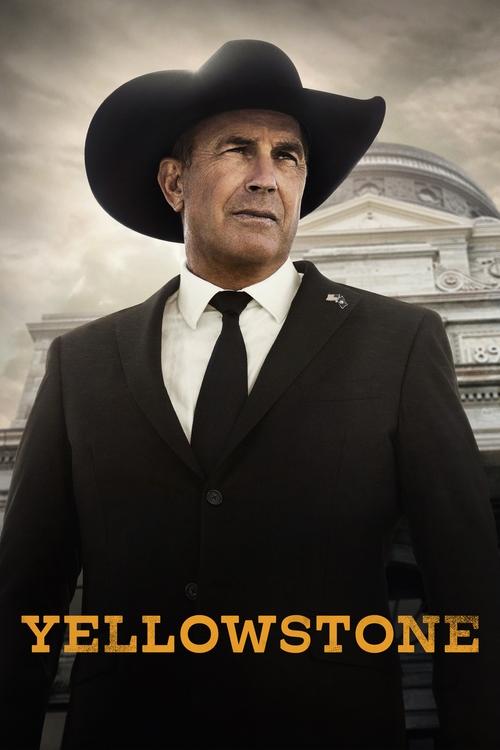
Yellowstone is a clash of MBTI archetypes stretched across the American West, where the Dutton family's incompatible function stacks produce as much internal conflict as any external threat. John's ISTJ land-loyalty, Beth's ENTJ predatory intelligence, and Kayce's ISFP search for authentic meaning create a family that cannot be at peace with itself, while characters like Thomas Rainwater and Rip Wheeler represent alternative modes of ISTJ and ENTJ energy that complicate every power dynamic on the ranch.
تحلیلگران
Market Equities CEO
AnalystThe Market Equities leadership operates as a pure ENTJ institutional force — dominant Te translates the Yellowstone's irreplaceable acreage into spreadsheet values, acquisition timelines, and development projections with the cold efficiency of a function stack that processes land exclusively as economic input. Their auxiliary Ni provides the strategic patience to outlast emotional opposition, deploying legal challenges, political pressure, and financial leverage across a timeline longer than any individual Dutton can sustain resistance, because corporations do not age or grieve or lose focus. Tertiary Se manifests in their appreciation for the physical value of the property itself — they recognize the sensory magnificence of Paradise Valley, but only as a marketable feature rather than a spiritual reality, converting beauty into brochure language with practiced fluency. Their inferior Fi is functionally absent, which is precisely what makes them the most existentially threatening antagonists the Duttons face: there is no personal grudge to resolve, no emotional wound to exploit, no human vulnerability to leverage. They are the show's representation of ENTJ energy fully detached from individual human stakes, the Te-Ni function stack operating as pure institutional logic against a family whose entire identity is built on Fi-Si attachment to specific, irreplaceable ground. The Duttons can outfight, outmaneuver, and outlast any human enemy, but Market Equities is not human — it is a system, and systems do not compromise.
“We're not here to take anything from you. We're here to make you an offer you'd be foolish to refuse.”Learn about ENTJ →
دیپلماتها

Jamie Dutton
DiplomatJamie begins as the INFJ people-pleaser — his dominant Ni perceives what each family member needs from him and constructs elaborate internal models of how to earn their approval, while his auxiliary Fe performs that version of himself compulsively, becoming the lawyer John needs, the brother Beth once loved, and the dutiful son the family demands, all while sacrificing his own authentic identity in the process. Tertiary Ti provides the analytical intelligence that makes him a successful attorney general, but it serves the Fe-Ni performance rather than Jamie's own interests, always deployed in service of what others require rather than what he genuinely wants. His inferior Se manifests as a disconnection from physical confidence and bodily presence — unlike Kayce's natural Se competence on horseback and in combat, Jamie is conspicuously uncomfortable in the physical world of the ranch. The revelation of his adoption and Beth's sustained psychological cruelty trigger a devastating collapse into shadow functioning: the Fe drops away entirely, and he operates through cold Ni-Te calculation with none of the relational warmth that once defined him, culminating in the murder of his biological father. Jamie's arc across five seasons is one of television's most psychologically accurate portrayals of INFJ disintegration — the type that gives the most of itself to others discovering that the giving was never reciprocated, and the subsequent withdrawal into an Ni-Ti loop that severs all human connection.
“Every choice I've made, I made for this family. And none of it was ever enough.”Learn about INFJ →

Monica Dutton
DiplomatMonica is the INFP as moral witness — her dominant Fi holds values rooted in Native American identity, historical justice, and authentic human connection that place her in permanent conflict with the Dutton way of acquiring and defending land through violence and institutional manipulation. Her auxiliary Ne connects her work as a university teacher to broader patterns of cultural preservation and resistance, enabling her to see the Dutton empire within the larger historical framework of colonization and dispossession that the family itself cannot or will not access. Tertiary Si grounds her in the lived memory of her people's history on this land, providing the experiential foundation that her Fi values and Ne analysis draw upon — she knows what the Duttons represent not as abstract concept but as accumulated generational experience. Her inferior Te manifests as a limited capacity to organize her values into practical political action; she can articulate what is wrong with moral clarity but struggles to construct the systematic response that would change the dynamics she perceives. Monica's character arc traces the INFP dilemma of loving someone whose world fundamentally contradicts your deepest values — she is not wrong about what the Yellowstone represents, and her tragedy is that her Fi-Ne perception sees the full picture while her love for Kayce prevents her from acting on that understanding with the decisiveness the situation demands.
“Your family doesn't own the land. They just think they do.”Learn about INFP →

Summer Higgins
DiplomatSummer is the ENFP as passionate idealist entering a world that systematically disproves her framework — her dominant Ne generates connections between environmental causes, systemic injustice, and the Dutton empire as a symbol of everything wrong with Western land ownership, constructing an abstract model of the situation that is intellectually coherent but experientially incomplete. Her auxiliary Fi gives these convictions genuine emotional weight; her activism is not performative but driven by deeply held values about ecological preservation and indigenous rights that she has organized her identity around. Tertiary Te provides enough organizational competence to stage protests and articulate her positions publicly, but it operates in service of her Ne-Fi idealism rather than pragmatic assessment of what her actions will actually achieve. Her inferior Si manifests as a lack of historical depth and experiential context — she arrives at the Yellowstone with a Ne-generated theory about land and power but without the lived experience that would complicate her framework with the messy realities John Dutton navigates daily. Summer's arc across the later seasons is less about the Duttons themselves and more about what happens when ENFP idealism encounters genuine moral ambiguity: she arrives certain and leaves complicated, which is the characteristic ENFP growth pattern of discovering that the world is more resistant to Ne-generated models than the models anticipated.
“You're destroying the land you claim to love. You're just too close to see it.”Learn about ENFP →
نگهبانان
Lloyd Pierce
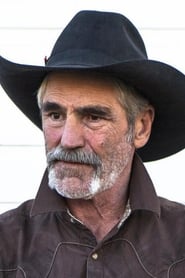
SentinelLloyd is the ISTJ as the old cowboy code made flesh — his dominant Si holds the values, practices, and hierarchies of ranching culture as inviolable, accumulated through decades of bunkhouse life where the rules were learned through experience and enforced through shared understanding rather than written policy. His auxiliary Te executes those values through direct, unambiguous action; when something needs doing on the ranch, Lloyd does it with the competent efficiency of a man who has performed every task a thousand times. Tertiary Fi surfaces in his unexpected emotional vulnerability during the conflict with Walker, where Laramie's attention to the younger man triggers a personal wound that his Si-Te framework cannot process rationally — the scene where Lloyd destroys Walker's guitar reveals the depth of feeling beneath the stoic exterior. His inferior Ne manifests as an inability to adapt to new social dynamics on the ranch; the arrival of younger hands with different values creates an Ne-threatening instability that Lloyd experiences as existential rather than merely annoying. Lloyd's character arc is the ISTJ confronting obsolescence: the code he has lived by for forty years is being eroded by changing demographics and values, and his conflict with Walker is not personal rivalry but an ISTJ defending a tradition he experiences as indistinguishable from his own identity, unable to separate who he is from what the bunkhouse has always been.
“There's a way things are done here. You'd better learn it fast.”Learn about ISTJ →

Dan Jenkins
SentinelDan is the ESTJ as a developer who respects institutional structures right up to the point where they stop serving his expansion — his dominant Te organizes his development projects with clear hierarchies, established processes, and measurable milestones, approaching Paradise Valley real estate with the same systematic efficiency he would bring to any business venture. His auxiliary Si gives him a real if shallow appreciation for the community he is trying to build, rooted in the American development tradition that equates construction with progress and property value with social contribution. Tertiary Ne provides enough flexibility to adapt his strategies when initial approaches fail, pivoting between political alliances and legal maneuvers with the pragmatic creativity of a businessman who has navigated regulatory environments before. His inferior Fi is his genuine blind spot: Dan cannot access or understand the emotional and spiritual relationship John Dutton has with the land because the ESTJ function stack processes territory as economic asset rather than identity. Dan's arc in the early seasons demonstrates the fundamental cognitive clash at the heart of the show — he is not corrupt in the way the show's true villains are corrupt, and he is not malicious in the way Beth's opponents tend to be. He is simply an ESTJ who cannot conceive of a value system that places undeveloped land above economic productivity, making him a tragically adequate antagonist in a conflict that requires moral depth his function stack does not provide.
“Progress is coming whether you want it or not. I'm just the one bringing it.”Learn about ESTJ →

Governor Perry
SentinelGovernor Perry is the ESFJ as political operator — her dominant Fe manages the relational network of Montana politics with genuine attentiveness to what each stakeholder needs and how alliances can be maintained without irrevocable ruptures, navigating between the Duttons, developers, tribal interests, and federal authorities with the social precision of someone who reads emotional dynamics as fluently as others read spreadsheets. Her auxiliary Si grounds her in institutional precedent and established political process, making her a reliable partner for John Dutton because both their function stacks ultimately prioritize the stability of known systems over revolutionary change. Tertiary Ne gives her enough political flexibility to adapt to unexpected developments without abandoning her core relational approach — she can improvise alliances when circumstances shift, though she always returns to the Fe-Si framework of maintaining established relationships as her primary governing strategy. Her inferior Ti occasionally surfaces as sharp analytical observations about power dynamics that surprise those who mistake her Fe warmth for naivete, revealing a woman who understands the mechanics of Montana politics with considerable intellectual clarity. Governor Perry's arc demonstrates the ESFJ's capacity for effective leadership in complex political environments: she is not naive about power, and she is not weak in her exercise of it — she simply prefers to govern through relationship management and institutional continuity rather than through the confrontational force that the Duttons and their enemies deploy.
“I serve the people of this state. Sometimes that means making choices nobody's happy with.”Learn about ESFJ →
کاشفان

Mo Brings Plenty
ExplorerMo is the ISTP as pure presence — his dominant Ti assesses every situation with minimal words and maximum analytical accuracy, processing threats, alliances, and tactical considerations internally before producing action only when his analysis is complete. His auxiliary Se makes him a formidable physical operator and a precise reader of immediate environments, visible in his calm competence during confrontations where other characters escalate into emotion while Mo simply observes, calculates, and acts with surgical economy. Tertiary Ni gives him an intuitive grasp of Rainwater's larger strategic vision, allowing him to serve as the chief's most trusted lieutenant not because he follows orders blindly but because his Ti-Se analysis independently confirms the wisdom of Rainwater's plans. His inferior Fe manifests as a minimal but genuine emotional investment in the people he serves — Mo cares about Rainwater and the tribal community, but this caring is expressed through action and presence rather than verbal affirmation or emotional display. Mo's character arc is defined by its consistency: he does not undergo dramatic transformation because the ISTP function stack is already optimally configured for his role as protector, advisor, and tactical asset. He communicates most in silence, achieves most through economy of action, and his value to every scene he appears in lies in the contrast between his quiet exterior and the precise Ti-Se analysis operating beneath it.
“Words are cheap. I prefer to show people.”Learn about ISTP →

Jimmy Hurdstrom
ExplorerJimmy is the ISFP in the process of becoming — his dominant Fi is searching for an authentic identity beneath the circumstances of addiction, poverty, and the branded loyalty he was born into, and his early scenes at the Yellowstone show a man whose internal value system has not yet formed because life never gave him the space to discover it. His auxiliary Se latches onto rodeo as the arena where he can test what he is physically and emotionally made of, the sensory intensity of eight seconds on a bull becoming the crucible where his Fi identity begins to crystallize. Tertiary Ni emerges during his time at the 6666 Ranch in Texas, where the slower pace and simpler expectations allow him to develop a genuine intuitive sense of who he wants to be rather than merely reacting to who others demand he be. His inferior Te develops significantly under Jimmy Davis's mentorship in Texas, where he learns practical competence, discipline, and the organizational skills that his Yellowstone stint never provided because he was always someone else's instrument rather than his own agent. Jimmy's journey from the Yellowstone to the Four Sixes and back is the purest ISFP development arc in the series: removing every external expectation and inherited obligation to see what values and capacities remain when only the authentic self is left, and he returns knowing who he is — which is the only thing an ISFP truly needs to function in the world.
“I just want to know if I can do something right for once.”Learn about ISFP →

Teeter
ExplorerTeeter is the ESFP at maximum volume — her dominant Se is entirely present-moment, physical, and unfiltered, making her the most spontaneous and least self-conscious person on the ranch, from her uninhibited skinny-dipping in the river to her willingness to fight anyone regardless of size or consequence. Her auxiliary Fi produces a fierce loyalty and warmth that are entirely genuine — her attachment to Colby is not strategic or calculated but a pure Fi response to someone who matches her energy, and her fury when the bunkhouse is threatened reveals how deeply she has invested her personal values in the ranch community. Tertiary Te gives Teeter enough practical competence to be a genuinely skilled ranch hand; she is not merely present for comic relief but performs her work with the efficiency of someone who has done physical labor her entire life. Her inferior Ni manifests as a complete absence of long-range planning or existential anxiety — she does not worry about the ranch's future, the political threats to the Yellowstone, or any abstract concern beyond the immediate present, which paradoxically makes her one of the happiest characters in the show. Teeter's consistent presence across multiple seasons demonstrates that ESFP energy in its healthiest form is the most vital and alive force in any room, and her refusal to be sent away from the ranch is the most authentically Se-Fi moment of her arc: she stays because this is where she is, and where she is matters more than where she might be.
“I ain't going nowhere. This is my home now.”Learn about ESFP →
شخصیت خود را پیدا کنید
نوع MBTI خود را میدانید؟ شخصیت مطابق را در زیر پیدا کنید.
سوالات متداول
John Dutton is typed as ISTJ, with dominant Introverted Sensing that binds him completely to the land, to tradition, and to the obligations set by every Dutton before him — the ranch is not property to him but an inherited identity that must be defended and transmitted intact. His auxiliary Extraverted Thinking measures all people by loyalty and by what they are willing to do when the land requires it, making him decisive in crisis and inflexible when principles are challenged. His tragedy is that ISTJ values built for one world increasingly cannot function in the world his children are inheriting.
Beth Dutton is typed as ENTJ because her dominant Extraverted Thinking deploys intelligence as a weapon with extraordinary precision — she identifies the fastest path to an objective and executes without hesitation, sentiment, or mercy when the Dutton world is threatened. Her auxiliary Introverted Intuition allows her to see through corporate structures, legal strategies, and personal motivations with a clarity that makes her the most strategically dangerous person in any room. What separates her from a simple antagonist is her inferior Introverted Feeling breaking through in her relationship with Rip and her father, producing the only authentic tenderness the function stack allows.
Rip Wheeler is typed as ISTJ, sharing John Dutton's function stack but organized around a different anchor: where John's dominant Si is bound to the land and its tradition, Rip's Si is bound to absolute personal loyalty, specifically to John and Beth. His auxiliary Extraverted Thinking executes enforcement with minimal waste and no hesitation, making him the most reliable instrument of the Dutton will. The ISTJ need for a stable, consistent framework explains why Rip's devotion is so absolute — he cannot function in a world without the certainty the Duttons represent.
The Dutton family spans a range of types that explains their perpetual internal conflict: John is ISTJ (land-bound tradition and loyalty), Beth is ENTJ (predatory strategic intelligence), Kayce is ISFP (authentic values in conflict with family methods), and Jamie begins as INFJ before collapsing into cold INTJ functioning after the accumulated weight of rejection and revelation. The family's dysfunction is essentially a function-stack collision — Beth and John share a dominant-Te auxiliary relationship with institutional order but express it at incompatible scales, while Kayce and Jamie are both types oriented toward internal values that the family's external demands consistently override.
سریالهای بیشتر را کاوش کنید
نوعتان را کشف کنید
نوع شخصیت MBTI خود را کشف کنید و ببینید کدام شخصیتهای خیالی ویژگیهای شما را دارند.
شروع آزمون