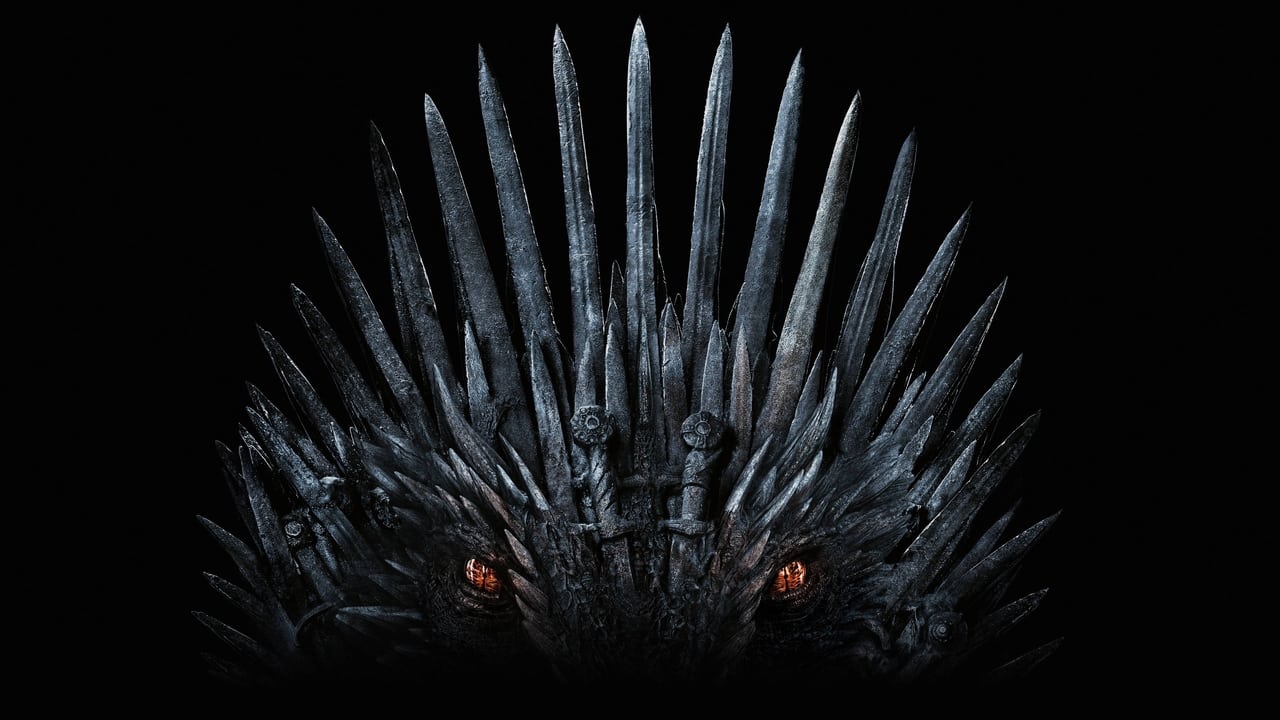

Game of Thrones
Discover which Game of Thrones character matches your MBTI type — from Tyrion's ENTP wit to Daenerys's ENFJ vision.
Game of Thrones MBTI Personality Analysis
Game of Thrones is one of the richest shows for MBTI analysis because its characters are defined by their cognitive functions under extreme pressure. The political intrigue of Westeros forces every personality type to either play to their strengths or be destroyed by their blind spots.
The show's most fascinating MBTI dynamics emerge from its power struggles. Tywin Lannister (ENTJ) and Petyr Baelish (INTJ) both pursue power through strategic thinking, but Te-dominant Tywin uses direct institutional control while Ni-dominant Littlefinger weaves invisible webs of manipulation. Ned Stark's ISTJ downfall comes from his inability to imagine the treachery that an INTJ or ENTP would anticipate instinctively.
The Stark children represent a spectrum of personality development under trauma. Sansa (INFP) transforms from naive idealist to politically astute survivor, developing her inferior Te. Arya (ISTP) channels her grief into Se-Ti mastery of combat and identity. Jon Snow (ISFP) leads through Fi-driven moral conviction rather than strategy, which makes him both beloved and politically vulnerable.
What makes Game of Thrones especially compelling for personality typing is that characters rarely change their core type — they develop their weaker functions. Jaime Lannister (ESTP) begins as a thrill-seeking knight and grows into someone who can access deeper values (Fi). Daenerys (ENFJ) starts as an empathetic liberator and progressively loses access to healthy Fe, culminating in her catastrophic final arc.
The romantic relationships in Game of Thrones also reveal classic MBTI compatibility patterns. Jon Snow (ISFP) and Ygritte (ESTP) share Se as a common function, creating physical chemistry and shared experiences — but Jon's Fi core ultimately clashes with Ygritte's lack of moral framework. Tyrion (ENTP) and Shae demonstrate the ENTP's vulnerability: his Ne-Ti brilliance fails him completely when inferior Si-Fe pulls him into an emotionally dependent attachment he can't rationally navigate. Meanwhile, Margaery Tyrell (ENFJ) and Cersei (ESTJ) represent one of the show's most fascinating type conflicts — both are master manipulators, but Fe-dominant Margaery wins hearts while Te-dominant Cersei demands obedience.
تحلیلگران

Petyr Baelish (Littlefinger)
AnalystPetyr Baelish is the INTJ as chess master—a man who treats the entire realm as a system to be reverse-engineered and exploited. His dominant Ni operates on a timeline no one else perceives: he orchestrates Jon Arryn's murder years before the events of the series, understanding that this single domino will cascade into a war that elevates him from minor lord to Lord of the Vale. His auxiliary Te executes these visions with cold efficiency—he builds a financial network as Master of Coin, leverages debts as leverage, and engineers Joffrey's assassination through an alliance with the Tyrells that serves his strategic interests. His tertiary Fi is the hidden engine beneath the scheming: his obsession with Catelyn Stark, later transferred to Sansa, reveals deeply personal values that he disguises as pragmatism. The duel with Brandon Stark in his youth scarred him with a Fi wound—the conviction that the world's rules are rigged against men without birthright—and every subsequent manipulation is revenge against that system. His inferior Se is his downfall: he misreads the physical, present-tense danger of the Stark children reuniting at Winterfell, failing to notice that Bran's omniscience and Arya's lethality have changed the game entirely. His execution in the great hall is the INTJ's nightmare—a perfect long-term plan undone by variables he could not model.
“Chaos isn't a pit. Chaos is a ladder.”Learn about INTJ →
Bran Stark
AnalystBran Stark's transformation into the Three-Eyed Raven is essentially the story of a child consumed by INTP cognitive functions taken to their absolute extreme. His dominant Ti emerges as he begins processing the visions—he does not simply see the past, he categorizes, cross-references, and builds an internally consistent model of all history. When he tells Littlefinger 'chaos is a ladder,' he is not making a threat but demonstrating Ti's compulsion to prove the accuracy of its analysis. His auxiliary Ne is amplified beyond human scale: he perceives infinite possibilities and connections across time, seeing how the Tower of Joy, Jon's parentage, and the Night King's creation form an interconnected web of causality. His tertiary Si stores the accumulated sensory memories of every greenseer before him, creating an archive of lived experience stretching back millennia. His inferior Fe is the most visible casualty of his transformation—he loses the ability to engage emotionally with his siblings, telling Meera 'I'm not really Bran anymore' with a flatness that devastates her. He cannot comfort Sansa, barely acknowledges Arya, and accepts the crown at the series' end not with joy but with the detached assessment that it was the most logical outcome. Bran represents what happens when an INTP's quest for understanding becomes so total that personhood itself is sacrificed to the system.
“I'm the Three-Eyed Raven now. I can see everything.”Learn about INTP →
Tywin Lannister
AnalystTywin Lannister is the ENTJ at maximum operating capacity—a commander who reshapes the political landscape through sheer force of will and strategic brilliance. His dominant Te is overwhelming: he orchestrates the Red Wedding not by swinging a sword but by writing letters, understanding that a few strokes of a pen can accomplish what thousands of soldiers cannot. He manages the Lannister war effort like a corporate restructuring, assigning Tyrion as Hand, positioning Jaime, and arranging marriages as strategic mergers. His auxiliary Ni provides the long-term vision—he thinks in generational terms, obsessing over the Lannister legacy and how history will remember his house. His conversation with Arya at Harrenhal reveals both his brilliance and his blind spot: he sees her intelligence but cannot imagine a servant girl being a threat, because his Ni models only conventional power structures. His tertiary Se gives him commanding physical presence—even seated at a desk skinning a stag, he radiates authority that makes kings defer. His inferior Fi is his fatal flaw: he cannot understand or engage with the emotional lives of his children. He despises Tyrion for reasons rooted in unprocessed grief over his wife's death, forces Cersei and Jaime into roles that ignore their humanity, and ultimately dies on the privy—murdered by the son whose emotional wounds he refused to acknowledge.
“A lion does not concern himself with the opinion of sheep.”Learn about ENTJ →
Tyrion Lannister
AnalystTyrion is the ENTP as survivor—a man who weaponizes intellect and wit because the world denied him every other weapon. His dominant Ne constantly generates possibilities: at the Eyrie he talks his way out of execution by demanding a trial by combat, at Blackwater he devises the wildfire trap no conventional military mind would conceive, and in Meereen he negotiates with slavers by reframing the conflict in terms they had not considered. His auxiliary Ti provides the analytical backbone—he dissects political situations with surgical precision, understanding power dynamics others navigate only through brute force. His famous line about wearing his dwarfism as armor reveals Ti's ability to turn self-knowledge into strategic advantage. His tertiary Fe emerges in genuine compassion: he treats Sansa with kindness during their forced marriage, advocates for the common people during small council meetings, and his love for Jaime survives every betrayal. His inferior Si manifests as a tortured relationship with the past—he cannot forget his father's cruelty or Tysha's fate, and these wounds drive decisions that override his usual rationality, most devastatingly when he murders Tywin. Tyrion's arc from privileged outcast to exiled advisor shows the ENTP learning that cleverness alone cannot substitute for belonging.
“I drink and I know things.”Learn about ENTP →
دیپلماتها
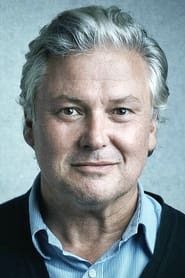
Varys
DiplomatVarys is the INFJ as shadow counselor—a man who sacrifices personal identity in service of a transcendent vision. His dominant Ni perceives the arc of history where others see only the present crisis: he supports Daenerys not because of who she is today but because of what he intuits she could become, and he switches allegiance when that intuition shifts. His famous riddle about where power resides reveals Ni's capacity to see through surface reality to underlying patterns. His auxiliary Fe manifests as extraordinary ability to read people—he maintains a network of little birds not through intimidation but through emotional attunement to the vulnerable. He protects Tyrion, counsels Ned with genuine concern, and weeps when discussing the suffering of common people. His tertiary Ti provides analytical structure for his intelligence network, synthesizing information from hundreds of sources into coherent political assessments. His inferior Se is visible in his physical vulnerability and discomfort with violence—he operates entirely through information and influence, never force. His final act—attempting to poison Daenerys when he recognizes her descent into tyranny—is the INFJ's ultimate moral stand: sacrificing himself because his vision of the greater good demands it, even when every instinct screams to flee.
“Power resides where men believe it resides. It's a trick. A shadow on the wall.”Learn about INFJ →

Sansa Stark
DiplomatSansa Stark's arc is the most complete INFP development journey in Game of Thrones—from naive idealist to hardened sovereign, with her dominant Fi as the unbreakable thread throughout. Early Sansa lives entirely in her Fi-Ne imagination: she romanticizes Joffrey, dreams of southern courtly life, and projects her idealized values onto a world that brutally refuses to conform. Her auxiliary Ne initially manifests as fantasy—she sees possibilities that do not exist, like a fairy-tale marriage to a prince. Her suffering under Joffrey, Cersei, Littlefinger, and Ramsay does not destroy her Fi; it tempers it. She learns to mask her authentic self behind a composed exterior, developing her tertiary Si through painful accumulated experience—she remembers every betrayal, every lesson, and applies them with increasing sophistication. By season seven, her Si recall of Cersei's tactics, Littlefinger's manipulations, and Ramsay's cruelty forms an experiential database that makes her politically formidable. Her inferior Te—initially her greatest weakness, leaving her unable to organize or assert authority—becomes functional as she claims Winterfell, manages its provisions for winter, and ultimately declares Northern independence. The girl who once wanted only to be queen of a fairy tale becomes the Queen in the North through the INFP's deepest strength: an inner value system so resilient that no amount of external trauma can corrupt it.
“I'm a slow learner, it's true. But I learn.”Learn about INFP →

Daenerys Targaryen
DiplomatDaenerys represents the ENFJ's towering potential and catastrophic shadow. Her dominant Fe is the source of her power—she does not simply conquer, she liberates, forging emotional bonds with the Unsullied, the Dothraki, and freed slaves who follow her out of devotion rather than fear. Her speech at Astapor, commanding the Unsullied in Valyrian before turning the masters' weapon against them, is Fe leadership at its most electrifying. Her auxiliary Ni provides the singular vision driving everything: she sees herself as the destined breaker of chains, a conviction that carries her across continents. Her tertiary Se gives her commanding physical presence—she walks into Drogo's funeral pyre, emerges unburned with three dragons, and rides Drogon into battle with visceral confidence. Her inferior Ti is where the tragedy unfolds: she struggles to build logical governance structures in Meereen, relying on advisors for systematic thinking she lacks. When Missandei is executed and Varys betrays her, the Fe-Ni loop takes over—she feels universally rejected and her vision narrows into righteous fury. The burning of King's Landing is the ENFJ's darkest expression: when the world refuses the love she offers, she concludes it must be remade by force.
“I will answer injustice with justice.”Learn about ENFJ →

Brienne of Tarth
DiplomatBrienne of Tarth is the ENFP who channels her boundless idealism into a singular quest: to prove that honor and knighthood transcend gender. Her dominant Ne perceives possibilities others dismiss—she sees in Renly a king worth serving when the realm sees a pretender, she envisions a world where a woman can be a true knight despite centuries of exclusion, and she recognizes Jaime's buried nobility long before anyone else does. Her auxiliary Fi provides the unshakeable moral core that sustains her through relentless mockery and rejection: she swears oaths and keeps them with a ferocity born from personal conviction, not institutional obligation. Her loyalty to Catelyn Stark persists beyond death itself, driving her search for the Stark girls across years and continents. Her tertiary Te develops throughout the series as she becomes more tactically effective—commanding troops at Winterfell, making hard strategic decisions, and earning the respect of seasoned warriors through demonstrated competence. Her inferior Si occasionally surfaces as vulnerability to past wounds—Renly's death haunts her, and the memory of childhood mockery at the ball in Tarth remains raw. When Jaime knights her before the Battle of Winterfell, it is the culmination of her ENFP journey: the idealistic vision she held against all evidence becomes reality, and her tears in that moment reveal the depth of feeling that powered her impossible quest.
“All my life men like you have sneered at me. And all my life I've been knocking men like you into the dust.”Learn about ENFP →
نگهبانان
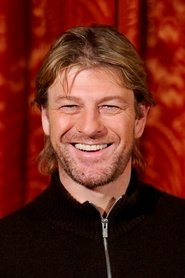
Ned Stark
SentinelNed Stark is the archetypal ISTJ—a man whose entire identity is built on duty, honor, and precedent. His dominant Si anchors him to the code his father taught him: the man who passes the sentence swings the sword, and promises made in the past are debts that must be paid. When Robert asks him to serve as Hand of the King, Ned accepts not out of ambition but obligation, a Si-driven sense that refusing would violate the bond forged during Robert's Rebellion. His auxiliary Te manifests as blunt, efficient governance—he confronts Cersei directly with evidence of her children's parentage, expecting the logical response (flee) rather than the political one (counterattack). His underdeveloped tertiary Fi surfaces in his private anguish over Jon Snow's true identity, a secret he keeps for decades out of deeply personal moral conviction. Ned's inferior Ne is his fatal blind spot: he cannot imagine the web of betrayal Littlefinger and Cersei are weaving, because anticipating treachery requires speculative thinking that feels alien to his experience-grounded worldview. His execution is the ultimate ISTJ tragedy—unwavering principle destroyed by an inability to adapt to chaos.
“The man who passes the sentence should swing the sword.”Learn about ISTJ →

Samwell Tarly
SentinelSam's arc is a masterful portrait of ISFJ growth under extreme pressure. His dominant Si is evident from the start—he is a voracious reader who absorbs the accumulated knowledge of the Night's Watch library, and later the Citadel, treating recorded history as a sacred resource. When he discovers the dragonglass cache at the Fist of the First Men, it is Si recall of old texts that gives the find its significance. His auxiliary Fe drives his self-sacrificing loyalty: he gives up his family inheritance for Jon, stands beside Gilly despite social scorn, and risks expulsion from the Citadel to cure Jorah's greyscale simply because a suffering man asked for help. Early on, his tertiary Ti is underdeveloped—he panics in combat and doubts his analytical ability. But as his Ti matures, Sam becomes a critical thinker who pieces together Jon's true parentage from disparate historical records, a discovery that reshapes the entire political landscape. His inferior Ne appears in his paralyzing fear of the unknown—the terror beyond the Wall, the uncertainty of battle—yet he kills a White Walker in a moment of desperate courage. Sam's journey from terrified recruit to Grand Maester shows the ISFJ at full bloom: quiet devotion transformed into world-altering scholarship.
“I'm not going to get any better at this, am I?”Learn about ISFJ →

Cersei Lannister
SentinelCersei exemplifies the ESTJ operating in survival mode, where every cognitive function serves the preservation of power and legacy. Her dominant Te is unmistakable: she governs through command and control, issuing directives to the Kingsguard, orchestrating Ned Stark's arrest, and later seizing the Iron Throne with bureaucratic ruthlessness—crowning herself not through birthright but through the systematic elimination of every rival. Her auxiliary Si fixates on the Lannister legacy and Maggy the Frog's prophecy, which she treats not as superstition but as lived certainty that shapes every decision regarding her children. Her tertiary Ne emerges in paranoid pattern-recognition—she sees threats everywhere, from Tyrion to Margaery to the Faith Militant—but lacks the imaginative flexibility to anticipate how those threats will actually materialize. The destruction of the Great Sept of Baelor reveals her inferior Fi at its most dangerous: when her last child dies, the personal values she buried beneath ambition surface as nihilistic grief, stripping away any pretense of governing for others. Cersei's tragedy is distinctly ESTJ—she builds systems of power with extraordinary efficiency but cannot adapt when those systems turn against her.
“When you play the game of thrones, you win or you die.”Learn about ESTJ →

Margaery Tyrell
SentinelMargaery Tyrell is the ESFJ as political virtuoso—every interaction calibrated to build loyalty through genuine warmth. Her dominant Fe is displayed when she visits Flea Bottom's orphanages, not merely as performance but because she instinctively knows that power flows from emotional bonds with people. She wins the smallfolk's adoration in ways Cersei never could, reading the emotional temperature of a room and responding with exactly what is needed. Her auxiliary Si gives her keen awareness of tradition and precedent—she studies each king she is betrothed to, learning from past failures. With Joffrey she is cautious and flattering; with Tommen she becomes a gentle mentor, each strategy drawn from accumulated social experience. Her tertiary Ne surfaces in political creativity—she finds novel ways to outmaneuver Cersei, such as using the Faith to build an alternative power base. Her inferior Ti is her weakness: she underestimates the High Sparrow's logical framework, believing charm alone can dismantle an ideological system. When she finally recognizes the wildfire threat in the Sept, her Fe screams that something is wrong, but it is too late—a tragic end for the ESFJ who understood people perfectly but underestimated ideas.
“I want to be the queen.”Learn about ESFJ →
کاشفان

Arya Stark
ExplorerArya Stark is the ISTP as lethal adaptation—defined by tactical intelligence and physical mastery forged through adversity. Her dominant Ti deconstructs every system she encounters: she analyzes Syrio Forel's water dancing as underlying principles of balance and perception, reverse-engineers the Faceless Men's assassination techniques by understanding their logical framework, and exploits Walder Frey's trust by coldly calculating the most efficient method of revenge. Her auxiliary Se keeps her alive in moment-to-moment survival—escaping King's Landing, navigating Harrenhal, reading physical cues during her blind training in Braavos. She catches details others miss, reciting her kill list like a tactical briefing. Her tertiary Ni develops as she matures, allowing her to sense the Night King's vulnerability at Winterfell and execute a plan no one else conceived—the leap from darkness that ends the Long Night. Her inferior Fe is her deepest struggle: the Faceless Men demand she become No One, erasing all emotional attachment, yet Arya ultimately rejects this because her bonds to the Stark name prove unbreakable. Her final choice—sailing west of Westeros into the unknown—is pure ISTP: autonomous, curious, and beholden to no one.
“A girl has no name.”Learn about ISTP →

Jon Snow
ExplorerJon Snow embodies the ISFP's quiet moral intensity—a man who leads not by strategy or tradition but by an unshakeable inner compass. His dominant Fi is the engine of every major decision: he spares the wildlings at Hardhome because he feels their humanity in his bones, he executes the mutineers at Castle Black not with pleasure but with grave personal conviction, and he bends the knee to Daenerys because his values demand he prioritize survival over pride. His auxiliary Se makes him a formidable warrior in the moment—the Battle of the Bastards reveals a man who fights with raw physical instinct, nearly suffocating under a pile of bodies yet clawing his way out through sheer sensory will. His tertiary Ni emerges gradually as he develops a broader vision, recognizing the existential threat of the White Walkers before anyone else takes it seriously, though he struggles to articulate this intuition in ways that convince political minds. His inferior Te is painfully visible in his inability to organize, delegate, or play political games—he is murdered by his own Night's Watch brothers precisely because he cannot frame his wildling alliance in logical, institutional terms they would accept. Jon's resurrection does not change his type; it deepens it. He returns more weary, more certain of his values, and less willing to compromise them for anyone.
“I know nothing.”Learn about ISFP →

Jaime Lannister
ExplorerJaime Lannister offers one of television's richest ESTP character studies—a man whose identity is built on physical prowess and in-the-moment action, then forced to reconstruct himself when those gifts are stripped away. His dominant Se is evident from his introduction: pushing Bran from a tower is an impulsive, immediate solution to a present-tense threat, executed without hesitation or long-term calculation. As the realm's greatest swordsman, his Se mastery is his entire self-concept. His auxiliary Ti provides a pragmatic moral framework—he killed the Mad King not out of ideology but because the logical calculus demanded it, and he remains baffled that the world judges this reasonable act as dishonorable. When Locke severs his sword hand, Jaime's Se-Ti identity collapses, forcing his tertiary Fe to develop: his vulnerability with Brienne in the Harrenhal bath, where he confesses the Aerys story, marks the first time he seeks emotional validation rather than physical dominance. His inferior Ni is his persistent weakness—he cannot sustain a long-term vision of who he wants to become, repeatedly returning to Cersei despite knowing she is destructive. His final choice to die beside her rather than complete his redemption arc is tragically ESTP: the pull of the immediate, the tangible, and the familiar overpowering any abstract aspiration for change.
“The things I do for love.”Learn about ESTP →

Robert Baratheon
ExplorerRobert Baratheon is the ESFP who peaked in the moment of conquest and spent his life mourning its passing. His dominant Se made him a legendary warrior—he killed Rhaegar Targaryen at the Trident with a single crushing blow, a feat of raw physical dominance that defined his identity. As king, his Se demands constant sensory stimulation: feasting, drinking, hunting, and tournaments become substitutes for the battlefield he craves. His auxiliary Fi drives the emotional core beneath the bluster—his love for Lyanna Stark is not political but deeply personal, a wound he never processes, and his hatred of the Targaryens is visceral rather than strategic. His tertiary Te is woefully underdeveloped: he delegates governance entirely to Jon Arryn and later Ned, unable to organize budgets, manage alliances, or discipline his own household. His inferior Ni is almost nonexistent—he cannot envision long-term consequences, ignoring the crown's mounting debt, Cersei's scheming, and the Lannisters' growing stranglehold on power. His death by boar on a drunken hunt is grimly fitting: the ESFP who lived for physical immediacy is destroyed by it, killed not by a rival's cunning but by his own appetites.
“I've been sitting here for days! Start the damn joust before I piss myself!”Learn about ESFP →
Character Relationship Dynamics in Game of Thrones
Jon Snow × Daenerys Targaryen
The Quiet Compass and The Burning Vision
Jon's dominant Fi operates as an internal moral compass — he knows what is right in his bones but struggles to articulate it publicly. Daenerys's dominant Fe needs external validation and emotional resonance from her followers. Their initial attraction makes sense: Fi sees authenticity in Fe's passion for justice, while Fe sees in Fi a genuinely principled man who won't flatter or manipulate. The fatal tension emerges because Jon cannot betray his values even for love (Fi is non-negotiable), while Daenerys needs total emotional alignment from her closest allies (Fe demands relational harmony). When Jon refuses to fully submit to her vision, Daenerys experiences it as the ultimate rejection — and the ENFJ shadow emerges: if you won't love me willingly, I'll reshape the world until you must.
Tyrion Lannister × Cersei Lannister
The Innovator and The Institution
Tyrion's Ne constantly generates creative possibilities and reframes problems from unexpected angles — he sees what the world could be. Cersei's Te-Si enforces established power structures and draws on precedent — she maintains what the world is. Their lifelong conflict is a cognitive function war: Ne versus Si. Tyrion's wit threatens Cersei because it exposes the absurdity of her rigid worldview; Cersei's institutional power threatens Tyrion because it can crush creativity with a single command. What makes their dynamic tragic is that they share a wound (Tywin's impossible standards) but process it through opposite functions: Tyrion adapts and innovates, Cersei doubles down and controls.
Ned Stark × Petyr Baelish
The Man of Honor and The Man of Ambition
Ned's Si-Te makes him the most reliable, honest man in Westeros — he follows established codes, keeps promises, and trusts that the system will reward integrity. Littlefinger's Ni-Te makes him the most dangerous — he sees the system as a game to be deconstructed and rebuilt in his image. Both use Te to execute their vision, but Si draws on the past (honor, tradition) while Ni projects into the future (opportunity, manipulation). Ned's fatal mistake is assuming everyone operates within the same moral framework he does. Littlefinger exploits this perfectly: he presents himself as a loyal Si-ally while engineering Ned's destruction through Ni-calculated betrayal. It's the ultimate clash between someone who trusts the world and someone who trusts only their own vision of it.
شخصیت خود را پیدا کنید
نوع MBTI خود را میدانید؟ شخصیت مطابق را در زیر پیدا کنید.
سوالات متداول
Tyrion Lannister is widely typed as an ENTP. His quick wit, love of intellectual sparring, and ability to see creative solutions to complex political problems reflect dominant Ne. His auxiliary Ti provides the logical framework he uses to analyze situations, while his humor and adaptability are quintessential ENTP traits.
Daenerys is best typed as an ENFJ. Her ability to inspire followers, her vision for a better world, and her charismatic leadership all stem from her Fe-Ni function stack. She connects with people emotionally to build alliances and pursues a grand ideal of justice, though her darker moments show the ENFJ's potential for righteous authoritarianism.
Jon Snow is typed as an ISFP. He makes decisions based on his personal moral compass (Fi) rather than rules or strategic advantage, and he demonstrates quiet physical courage in the present moment (Se). His brooding introspection and value-driven leadership distinguish him from more strategic or tradition-bound characters.
Cersei Lannister is typed as an ESTJ. She values power through established structures, family legacy, and tradition (Te-Si). Her authoritarian leadership style, need for control, and focus on maintaining the existing power hierarchy are characteristic of the ESTJ type, particularly when operating under stress.
This is one of the most debated typings in the MBTI community. Daenerys is best typed as ENFJ rather than INFJ. Her Fe is clearly extraverted — she inspires followers through public charisma and emotional connection, not quiet one-on-one influence. Her Ni manifests as a singular vision for the future, but it serves her dominant Fe rather than leading it. An INFJ would be more private and reflective; Daenerys actively seeks to lead and be seen.
Petyr Baelish is typed as INTJ. His dominant Ni gives him an uncanny ability to predict political outcomes years in advance, while his Te allows him to execute complex schemes through institutions and alliances. His famous quote 'chaos is a ladder' perfectly captures the INTJ's ability to see strategic opportunity where others see only disorder.
Game of Thrones is ideal for MBTI analysis because its characters face extreme moral dilemmas that reveal their true cognitive functions. Under pressure, people default to their dominant function — Ned Stark's Si clings to honor, Tyrion's Ne improvises creative solutions, and Cersei's Te doubles down on authoritarian control. The show's complex political dynamics also showcase how different types interact, clash, and form alliances.
Sansa Stark is typed as INFP. She begins the series as an idealistic dreamer guided by Fi values — she wants the fairy tale, the beautiful prince, the life she was promised. Her Ne imagines possibilities, but early Sansa lacks the real-world experience to ground them. Her transformation through trauma develops her inferior Te: she learns to navigate power structures, read political situations, and ultimately govern the North. By the finale, Sansa represents a mature INFP who has integrated her shadow functions without losing her core identity.
Jon Snow (ISFP) and Daenerys (ENFJ) share the NF temperament through their auxiliary and tertiary functions, which creates intense initial attraction — both care deeply about justice and protecting the vulnerable. However, Fi-dominant Jon makes decisions based on personal moral conviction, while Fe-dominant Daenerys seeks validation through collective loyalty. This mismatch becomes fatal: Jon cannot compromise his inner values even for someone he loves, and Daenerys cannot accept a partner who won't fully submit to her vision. Their relationship illustrates why ISFP-ENFJ pairings can be passionate but volatile.
Among the main Game of Thrones characters, INFP (represented by Sansa Stark) and INTP (represented by Bran Stark in his later Three-Eyed Raven form) are the rarest types. This mirrors real life — INFP and INTP are among the less common types. The show's world of political warfare naturally favors Te-dominant types (ENTJ Tywin, ESTJ Cersei) and Se types (ESTP Jaime, ISTP Arya) who thrive in high-stakes action. The scarcity of NP types reflects how Westeros punishes dreamers and rewards pragmatists.
Tyrion is ENTP rather than INTP. The key difference is energy direction: Tyrion thrives in social settings, talks his way out of danger, and actively engages with people to generate ideas — classic extraverted intuition (Ne). An INTP would retreat inward to analyze, preferring solitary thinking. Tyrion's wit is performative and social; he thinks out loud, debates publicly, and uses conversation as his primary tool. His trial speech at the Eyrie and his defense at King's Landing are Ne-Fe performances an INTP would find exhausting. While both types share Ti analysis, Tyrion leads with external idea generation, not internal logical frameworks.
Cersei is ESTJ, not ENTJ. The distinction lies in their auxiliary function: Si (introverted sensing) for ESTJ versus Ni (introverted intuition) for ENTJ. Cersei is anchored to the past — Maggy the Frog's prophecy, her father's legacy, the Lannister name. She replicates Tywin's methods rather than innovating new strategies. An ENTJ like Tywin himself operates with forward-looking Ni vision; Cersei operates with backward-looking Si precedent. When Cersei destroys the Sept of Baelor, it is not strategic innovation but desperate elimination of threats using the most blunt Te instrument available. She lacks the long-term strategic depth that defines ENTJ commanders.
Sansa is INFP, not ISFJ, though early Sansa can look like an ISFJ. The difference is her core motivation: Fi (introverted feeling) versus Si (introverted sensing). An ISFJ would maintain traditions and serve established institutions loyally. Sansa's journey is about discovering and asserting her personal values against institutions that failed her — she defies the Lannisters, manipulates Littlefinger, and ultimately declares Northern independence. Her idealism about knights and fairy tales is Fi-Ne imagination, not Si tradition. She transforms by developing Te (organizational competence), not by becoming more dutiful. Her final choice — breaking from the Iron Throne entirely — is a profoundly Fi act of self-definition.
سریالهای بیشتر را کاوش کنید
نوعتان را کشف کنید
نوع شخصیت MBTI خود را کشف کنید و ببینید کدام شخصیتهای خیالی ویژگیهای شما را دارند.
شروع آزمون