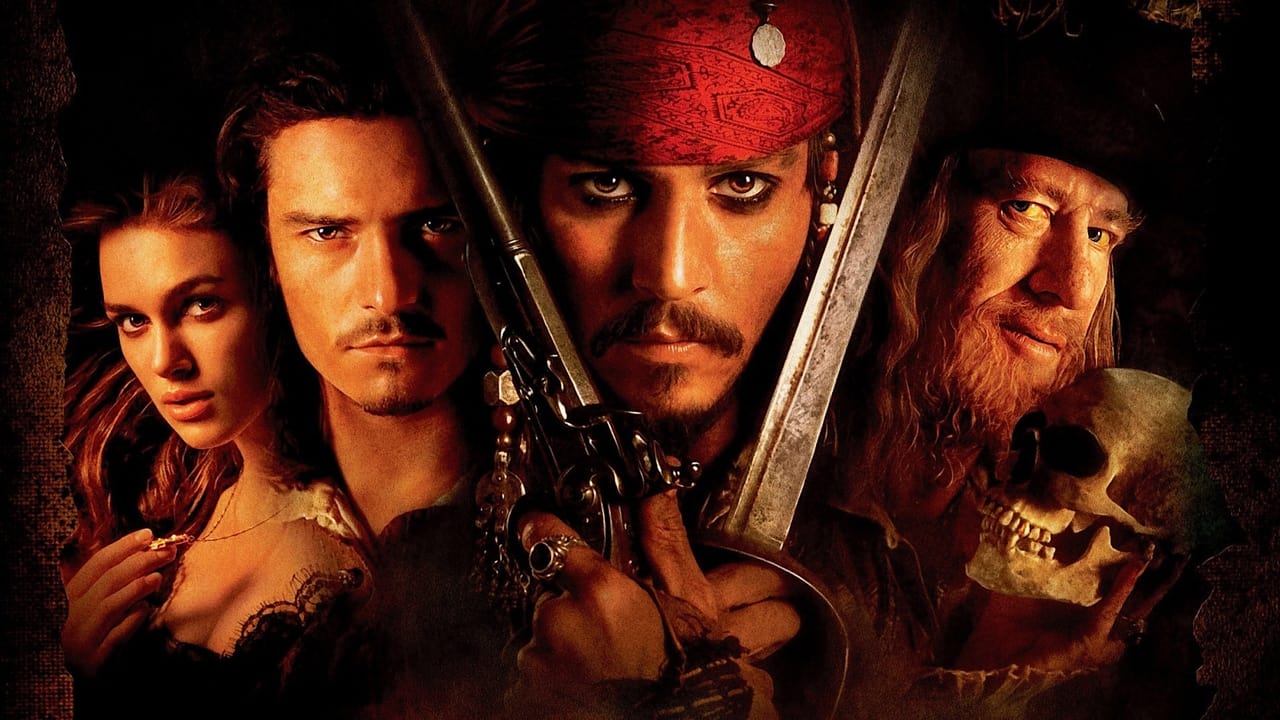

Pirates of the Caribbean
Discover the MBTI types of Pirates of the Caribbean characters — Jack Sparrow, Will Turner, Elizabeth Swann, Barbossa, and more
تحلیلگران
Davy Jones
AnalystDavy Jones's INTJ cognitive stack creates one of cinema's most tragic villains. His dominant Ni manifests in his centuries-long vision of controlling the seas through an intricate system of soul bargains and servitude—he constructed an entire metaphysical economy around death itself, thinking decades ahead of every mortal who crosses his path. His auxiliary Te enforces this vision with terrifying efficiency aboard the Dutchman, where every crew member serves a precise function and disobedience means being absorbed into the ship itself. Jones's tertiary Fi is the wound that defines him—his love for Calypso was so intensely personal that her betrayal caused him to literally cut out his own heart, the most extreme Fi response imaginable to emotional vulnerability. His inferior Se surfaces in his avoidance of the physical world, refusing to set foot on land more than once per decade, retreating from sensory reality into his Ni-constructed domain beneath the waves. Jones's arc illustrates the INTJ's darkest pattern: when their deeply held but rarely expressed Fi is devastated, they weaponize their Ni-Te capabilities to build systems of control that ensure they never feel vulnerable again.
“Do you fear death? I can offer you an escape.”Learn about INTJ →
Lord Cutler Beckett
AnalystLord Cutler Beckett's INTP cognitive stack makes him the franchise's most chillingly cerebral antagonist. His dominant Ti reduces everything—people, nations, the supernatural itself—to variables in an equation to be optimized, epitomized by his motto 'It's just good business.' He views Davy Jones not as a terrifying supernatural being but as an asset to be controlled through leverage, analyzing the heart's strategic value with detached precision. His auxiliary Ne envisions grand systemic restructuring, imagining a world where the East India Trading Company replaces the chaotic freedom of the seas with corporate order—a sweeping conceptual vision that goes far beyond simple profit. Beckett's tertiary Si manifests in his meticulous attention to legal frameworks and contractual precedent, using letters of marque and official documents as weapons with the same care others give to swords. His inferior Fe shows devastatingly in his final moments—as the Black Pearl and the Dutchman close in, he walks silently to his death in a state of dissociative calm, completely unable to process the emotional reality of defeat because his Fe is so underdeveloped that shock renders him catatonic rather than reactive. Beckett's arc illustrates the INTP's shadow: brilliant systematic thinking that collapses entirely when the human elements it dismissed as irrelevant ultimately determine the outcome.
“It's just good business.”Learn about INTP →
Elizabeth Swann
AnalystElizabeth Swann's ENTJ cognitive stack fuels one of cinema's great leadership arcs. Her dominant Te emerges early when she invokes the right of parley with Barbossa—she instinctively reaches for systemic leverage rather than emotional appeals. Her auxiliary Ni provides strategic foresight, most brilliantly demonstrated when she chains Jack to the mast in Dead Man's Chest, making the ruthless calculation that sacrificing one man saves the entire crew from the Kraken. Elizabeth's tertiary Se manifests in her growing physical competence—she transforms from a woman who faints in corsets to a sword-wielding warrior who fights alongside seasoned pirates at the maelstrom battle. Her inferior Fi surfaces in moments of genuine vulnerability, particularly her guilt over betraying Jack and her private confession to Will about what she did. Elizabeth's arc from sheltered governor's daughter to elected Pirate King perfectly illustrates ENTJ development: she starts by commanding small situations and steadily expands her sphere of influence until she unites the entire Brethren Court under a single strategic vision, proving that ENTJ leadership earns its authority through competence rather than birthright.
“You like pain? Try wearing a corset.”Learn about ENTJ →
Jack Sparrow
AnalystJack Sparrow's ENTP cognitive stack drives every scene he inhabits. His dominant Ne is on full display when he escapes Port Royal by commandeering the Interceptor—seeing twelve steps ahead while appearing to stumble through each one. His auxiliary Ti creates an internal logic system so unconventional that allies and enemies alike cannot predict him, as when he calculates the exact moment to betray and un-betray Barbossa during the Isla de Muerta confrontation. Jack's tertiary Fe manifests in his remarkable ability to read social dynamics and charm anyone from Tia Dalma to Lord Beckett, weaponizing rapport as effectively as any sword. His inferior Si surfaces in rare moments of genuine attachment—his devotion to the Black Pearl represents the one constant in his chaotic life, a Si anchor he cannot abandon. Jack's arc across the franchise shows ENTP development: from a purely self-serving trickster in Curse of the Black Pearl to someone who, in At World's End, chooses to return from the Locker and fight for something beyond himself, revealing the growth that comes when an ENTP finally integrates their lower functions.
“The problem is not the problem. The problem is your attitude about the problem.”Learn about ENTP →
دیپلماتها
Tia Dalma
DiplomatTia Dalma's INFJ cognitive stack operates on a mythic scale befitting a goddess in human form. Her dominant Ni grants her prophetic insight that transcends ordinary perception—she knows Jack will need her help before he arrives, speaks of futures and fates in layered metaphors, and understands the interconnected destiny of every character who enters her shack on the Pantano River. Her auxiliary Fe manifests in her deep reading of human emotional needs, offering each visitor exactly the guidance or artifact they require while maintaining genuine warmth and connection. When she resurrects Barbossa, it reveals Fe's willingness to serve others' needs as part of a larger Ni vision. Tia Dalma's tertiary Ti surfaces in her precise knowledge of magical systems, lore, and the rules governing supernatural bargains—she understands the logical framework behind every curse and ritual. Her inferior Se erupts dramatically when she is finally freed as Calypso, transforming into a towering physical force that creates the maelstrom—the repressed sensory function unleashed at overwhelming magnitude. Her arc from mysterious counselor to revealed goddess illustrates the INFJ pattern of operating behind the scenes until circumstances demand they reveal the full scope of their power.
“Him's a liar and he'll be wanting to know what it tastes like. Same story, different versions, and all are true.”Learn about INFJ →
Ragetti
DiplomatRagetti's INFP cognitive stack creates a beautifully incongruous character—a philosophical dreamer trapped in a pirate's life. His dominant Fi gives him a rich inner world that constantly surprises those around him, as when he earnestly debates the pronunciation of 'kraken' or contemplates whether the Pirate Code is more like actual guidelines, revealing a genuine concern for meaning and correctness that other pirates lack entirely. His auxiliary Ne manifests in his boundless curiosity about the supernatural, mythology, and abstract concepts—he is fascinated by curses, prophecies, and the deeper significance of events, always looking beyond the physical surface of their adventures. Ragetti's tertiary Si surfaces in his attachment to his wooden eye, a cherished personal possession he guards with devotion despite its obvious imperfection, and in his surprisingly detailed memory of pirate lore and scripture. His inferior Te shows in his inability to assert himself or organize effective action independently, always deferring to Pintel's more practical leadership. Ragetti's arc across the films illustrates the INFP experience of being underestimated: his quiet depth and idealistic nature are dismissed as stupidity by a world that values Se-Te aggression, yet his gentle perspective often captures truths that more forceful personalities miss entirely.
“Is it supposed to be doing that? ...It's not very nice.”Learn about INFP →
Governor Weatherby Swann
DiplomatGovernor Swann's ENFJ cognitive stack defines a well-meaning leader overwhelmed by forces beyond his social framework. His dominant Fe drives every decision through the lens of protecting others' wellbeing—his primary concern is always Elizabeth's safety and happiness, and he governs Port Royal through diplomacy, social grace, and genuine care for his community rather than military force. His auxiliary Ni gives him foresight about dangers to his daughter, sensing early that her fascination with pirates will lead to trouble, though his warnings are couched in Fe concern rather than Te commands. Governor Swann's tertiary Se emerges in moments of surprising physical courage, as when he attempts to free Elizabeth from the Dutchman despite being completely out of his depth in combat situations. His inferior Ti manifests as difficulty understanding the logical systems and political machinations that Beckett employs—he is outmaneuvered precisely because he cannot detach from his Fe values to think in purely strategic terms. His tragic arc in At World's End, where Beckett exploits and ultimately destroys him, illustrates the ENFJ's vulnerability: their Fe-driven trust in social bonds and institutional goodness can be weaponized against them by those who operate without such moral constraints.
“Elizabeth, are you alright? Are you hurt?”Learn about ENFJ →
Angelica
DiplomatAngelica's ENFP cognitive stack makes her Jack Sparrow's perfect foil and mirror. Her dominant Ne drives her remarkable adaptability—she impersonates Jack himself to recruit a crew, shifts allegiances with fluid ease, and generates creative deceptions on the fly, matching Jack's improvisational genius move for move. Her auxiliary Fi gives her actions a passionate emotional core that distinguishes her from mere opportunism: her devotion to Blackbeard, despite his cruelty, stems from a deeply personal father-daughter bond that she refuses to abandon regardless of logic. Angelica's tertiary Te surfaces in her surprising organizational competence, particularly when she takes practical command of situations aboard the Queen Anne's Revenge, demonstrating a structured efficiency that her Ne-Fi idealism normally conceals. Her inferior Si manifests in her inability to release the past—her convent upbringing, her history with Jack, and her father's legacy all haunt her present decisions, creating a tension between her forward-looking Ne and the Si memories she cannot escape. Angelica's arc in On Stranger Tides illustrates the ENFP's central dilemma: she simultaneously pursues limitless possibilities and clings to deeply personal loyalties, ultimately choosing to save her father over the Fountain's power because Fi conviction always trumps Ne opportunity in the ENFP's hierarchy.
“How is it we can never meet without you pointing something at me?”Learn about ENFP →
نگهبانان
James Norrington
SentinelJames Norrington's ISTJ cognitive stack defines the franchise's most principled officer. His dominant Si anchors him to naval tradition, protocol, and institutional loyalty—he pursues pirates not from personal vendetta but because the established order demands it, meticulously following procedures even when Jack Sparrow makes a mockery of them during the Port Royal escape. His auxiliary Te drives his systematic command style, organizing ship formations and pursuit strategies with military precision. Norrington's tertiary Fi emerges painfully in his love for Elizabeth, a deeply personal feeling he struggles to express within his rigid Si-Te framework, ultimately proposing to her as a matter of proper protocol rather than romantic passion. His inferior Ne manifests as genuine disorientation when his structured world collapses—after losing his ship, his commission, and his reputation pursuing Jack, he spirals into drunken despair in Tortuga because he cannot envision alternative paths forward. Norrington's tragic arc from decorated Commodore to disgraced drunk to Beckett's reluctant servant illustrates the ISTJ's vulnerability: when the institutional structure they devoted their life to betrays them, they lack the intuitive flexibility to rebuild from scratch, often attaching to the next available authority even when it conflicts with their buried Fi values.
“You are without doubt the worst pirate I have ever heard of.”Learn about ISTJ →
Will Turner
SentinelWill Turner's ISFJ cognitive stack anchors the emotional core of the franchise. His dominant Si manifests in his deep attachment to his father's memory and the legacy of Bootstrap Bill—he becomes a blacksmith precisely because it connects him to a tangible, inherited craft. His auxiliary Fe drives his selfless devotion to Elizabeth and his willingness to sacrifice personal desire for others' wellbeing, most powerfully demonstrated when he stabs the heart of Davy Jones not for power but to save his dying father and the crew of the Dutchman. Will's tertiary Ti shows in his methodical swordsmanship—he practices three hours daily with analytical precision, perfecting technique through systematic repetition rather than instinct. His inferior Ne surfaces as anxiety about the unknown, particularly his fear of what his father's pirate legacy means for his own identity. Will's arc from a rigid, honor-bound blacksmith to the captain of the Flying Dutchman illustrates the ISFJ's growth journey: learning that duty sometimes requires abandoning comfortable Si structures to embrace an entirely new role in service of those they love.
“I practice three hours a day so that when I meet a pirate, I can kill it.”Learn about ISFJ →
Hector Barbossa
SentinelHector Barbossa's ESTJ cognitive stack makes him the franchise's most formidable traditional authority figure. His dominant Te drives his command style—he runs the Black Pearl with military efficiency, delegates tasks with clear expectations, and eliminates obstacles with pragmatic ruthlessness, as when he marooned Jack on a desert island rather than wasting resources on a drawn-out conflict. His auxiliary Si manifests in his obsessive attachment to familiar sensory pleasures, most poignantly shown by his desperate longing for the taste of green apples during the curse—a Si fixation on lost physical experience that torments him for a decade. Barbossa's tertiary Ne surfaces in his surprising adaptability across films, reinventing himself from cursed captain to privateer to Blackbeard's rival, always finding new angles when his primary approach fails. His inferior Fi emerges in his final sacrifice in Dead Men Tell No Tales, where he gives his life to save his daughter Carina—a deeply personal act that overrides his Te pragmatism. Barbossa's arc shows ESTJ development: a man who initially serves only hierarchy and self-interest gradually discovers that the traditions worth preserving are those rooted in genuine personal bonds.
“I'm disinclined to acquiesce to your request. Means no.”Learn about ESTJ →
Joshamee Gibbs
SentinelJoshamee Gibbs's ESFJ cognitive stack makes him the indispensable social glue of Jack's crew. His dominant Fe is constantly at work maintaining group morale and cohesion—he smooths over conflicts, explains Jack's bizarre plans to confused crew members, and provides emotional support during moments of crisis, always ensuring everyone feels included and informed. His auxiliary Si manifests in his encyclopedic knowledge of pirate lore, superstitions, and maritime traditions, which he recounts with reverent detail—from the legend of Davy Jones to the protocols of parley, Gibbs is the living repository of the pirate world's collective memory. His tertiary Ne surfaces in his ability to spin tales and see the romantic possibilities in their adventures, though it also feeds his superstitious anxieties about bad omens and cursed voyages. Gibbs's inferior Ti shows in his willingness to follow Jack's illogical plans without demanding rational justification—he trusts the relationship over the reasoning. His arc across the franchise reveals the ESFJ's deepest loyalty: despite repeatedly being abandoned, demoted, or endangered by Jack, Gibbs always returns because his Fe-Si bond to his captain and the shared traditions they represent outweighs any logical argument for self-preservation.
“Not a lot's known about Jack Sparrow before he showed up in Tortuga with a mind to go after the treasure of the Isla de Muerta.”Learn about ESFJ →
کاشفان
Sao Feng
ExplorerSao Feng's ISTP cognitive stack makes him one of the franchise's most dangerous and unpredictable pirate lords. His dominant Ti operates behind an inscrutable exterior—he analyzes every situation with cold internal logic, never revealing his calculations until the moment of action, as when he weighs the costs of betraying the Brethren Court against the benefits of dealing with Beckett, switching allegiances based purely on rational self-interest. His auxiliary Se gives him commanding physical presence and acute environmental awareness, demonstrated in his mastery of the Singapore underworld where every bathhouse and back alley is his domain. Sao Feng's tertiary Ni surfaces in his fascination with the supernatural legend of Calypso, fixating on the vision of a goddess who could grant him power beyond mortal means—this Ni pursuit of deeper meaning behind the myth drives his obsession with Elizabeth, whom he mistakes for Calypso herself. His inferior Fe manifests in his clumsy attempts at emotional connection, particularly his awkward proposition to Elizabeth aboard the Empress, where his inability to express genuine feeling leads him to substitute power dynamics for intimacy. Sao Feng's brief arc illustrates the ISTP under pressure: capable and self-contained until their inferior Fe drives them toward misguided interpersonal pursuits that ultimately prove fatal.
“There is no honor in remaining with the losing side. Leaving it for the winning side, that's just good business.”Learn about ISTP →
Bootstrap Bill Turner
ExplorerBootstrap Bill Turner's ISFP cognitive stack drives one of the franchise's most quietly devastating character arcs. His dominant Fi manifests in the decision that defines his entire story—he sent a piece of cursed Aztec gold to young Will because his personal moral code could not abide Barbossa's betrayal of Jack, even knowing it would bring terrible consequences upon himself. His auxiliary Se connects him viscerally to his physical suffering aboard the Flying Dutchman, where he is slowly being absorbed into the ship's hull—a horrifying sensory reality he experiences with full awareness. Bootstrap's tertiary Ni surfaces in rare moments of clarity about his fate and his son's destiny, particularly when he warns Will that serving Jones will eventually consume his identity. His inferior Te shows in his inability to organize effective resistance against Jones or plan an escape—he endures rather than strategizes. Bootstrap's arc from principled mutineer to deteriorating Dutchman crewman to the father who helps Will stab the heart illustrates the ISFP's tragic pattern: their Fi convictions drive them to make honorable choices, but without strong Te execution, they often suffer the consequences alone until someone they love provides the catalyst for action.
“I knew there'd be a price. I'm willing to pay it.”Learn about ISFP →
Captain Teague
ExplorerCaptain Teague's ESTP cognitive stack creates an unforgettable presence in minimal screen time. His dominant Se is immediately apparent in his commanding physical authority—when he enters the Brethren Court, the entire room falls silent not because of his title but because of his sheer presence, and he enforces the Code by casually shooting a dissenting pirate without breaking his guitar riff. His auxiliary Ti provides the cool analytical detachment that separates him from mere brutes—he sizes up every situation with sharp precision, offering Jack cryptic but logically sound advice about immortality and the nature of the pirate life. Teague's tertiary Fe surfaces in his understated but genuine care for Jack, revealed through subtle gestures rather than emotional declarations—a nod, a meaningful look, the quiet act of keeping Jack's childhood trinket for decades. His inferior Ni manifests in rare moments of philosophical depth, particularly his enigmatic warnings about the cost of seeking eternal life, suggesting a wisdom born from hard experience rather than abstract contemplation. Teague's brief appearances illustrate the mature ESTP archetype: a man who has channeled Se-Ti mastery into earning such respect that his physical presence alone enforces order, making bureaucracy unnecessary when authority is this authentic.
“The Code is the law.”Learn about ESTP →
Pintel
ExplorerPintel's ESFP cognitive stack makes him one of the franchise's most entertaining secondary characters. His dominant Se drives his complete immersion in the physical chaos of pirate life—he reacts instantly to every explosion, sword fight, and supernatural event with exaggerated physicality and unfiltered commentary, most memorably during the Isla de Muerta battle where he charges into combat with gleeful abandon. His auxiliary Fi gives him surprisingly genuine emotional responses beneath the bluster, particularly in his unwavering loyalty to Ragetti and his personal offense when others disrespect their partnership. Pintel's tertiary Te surfaces in his practical, no-nonsense observations about their situations—he often states the obvious tactical reality that others are too proud or diplomatic to acknowledge, like pointing out when a plan is clearly suicidal. His inferior Ni shows in his complete inability to think long-term or anticipate consequences, living so fully in the moment that each new crisis genuinely surprises him. Pintel's consistent presence across the franchise illustrates the ESFP's gift for adaptation: he survives mutiny, curses, sea monsters, and supernatural warfare not through strategy but through Se responsiveness and an unshakeable ability to find entertainment in any situation.
“You're supposed to be dead! ...You're not dead!”Learn about ESFP →
شخصیت خود را پیدا کنید
نوع MBTI خود را میدانید؟ شخصیت مطابق را در زیر پیدا کنید.
سوالات متداول
Captain Jack Sparrow is best typed as an ENTP. His dominant extraverted intuition (Ne) drives his ability to improvise brilliant escape plans on the fly and see opportunities where others see only danger. His auxiliary introverted thinking (Ti) gives him an internal logic system that, while baffling to others, consistently leads him to victory. His love of debate, misdirection, and unconventional problem-solving are quintessential ENTP traits.
Elizabeth Swann is an ENTJ. She demonstrates natural strategic leadership throughout the franchise, rising from a sheltered governor's daughter to the Pirate King. Her Te-Ni combination shows in her ability to command fleets, forge alliances, and make tough decisions under pressure. She inspires loyalty through competence and vision rather than charm alone.
Davy Jones is typed as an INTJ. His Ni-dominant nature manifests in his centuries-long strategic control of the seas and his complex system of soul bargains. His Te enforces ruthless order aboard the Flying Dutchman. What makes his character compelling is his deeply repressed Fi — his heartbreak over Calypso's betrayal is the driving force behind everything he does, showing the INTJ's vulnerability when their inferior function is triggered.
سریالهای بیشتر را کاوش کنید
نوعتان را کشف کنید
نوع شخصیت MBTI خود را کشف کنید و ببینید کدام شخصیتهای خیالی ویژگیهای شما را دارند.
شروع آزمون