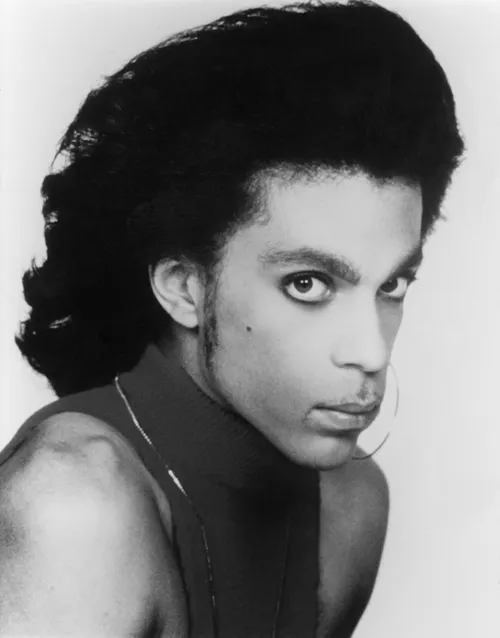
Prince Rogers Nelson was born on June 7, 1958, in Minneapolis, Minnesota, into a family where music was central. His father John L. Nelson was a jazz musician who performed under the name Prince Rogers, and his mother Mattie Shaw sang in a jazz band. Prince — who would later adopt his father's stage name as his own — taught himself to play guitar, piano, and drums as a child, and by his early teens was a fully formed musician of exceptional range and originality. Minneapolis in the 1970s was an unlikely incubator for one of popular music's most singular visionaries, but Prince would make it central to his artistic identity.
Prince signed with Warner Bros. Records at age seventeen, one of the youngest artists ever to negotiate full creative and production control over his recordings. His early albums — For You (1978), Prince (1979), Dirty Mind (1980) — established his signature blend of funk, rock, R&B, and pop, alongside the sexually explicit lyrics and androgynous aesthetic that made him both controversial and magnetic. He wrote, produced, arranged, and performed virtually all of his music himself, playing most or all instruments on his recordings — a degree of artistic self-sufficiency almost unique in popular music.
Purple Rain (1984) — the film and the album — transformed Prince from cult artist to mainstream phenomenon. The film's semi-autobiographical story, combined with the album's extraordinary song cycle, produced one of popular music's most complete artistic statements and commercial successes simultaneously. The title track, 'When Doves Cry,' 'Let's Go Crazy' — these were songs of such musical originality that they seemed to arrive from a different dimension. Prince's live performances, combining extraordinary musicianship with explicit theatricality, established him as one of the greatest live performers of his era.
Prince's career after Purple Rain was marked by prolific creative output and escalating conflicts with his record label over ownership and control of his masters. His decision to change his name to an unpronounceable symbol in 1993, writing 'slave' on his cheek in public appearances, dramatized his insistence on artistic ownership in ways that baffled mainstream observers but established principles about artist rights that would prove prescient. He died on April 21, 2016, from an accidental fentanyl overdose, leaving behind a vault of thousands of unreleased recordings that testified to his unceasing creative productivity.