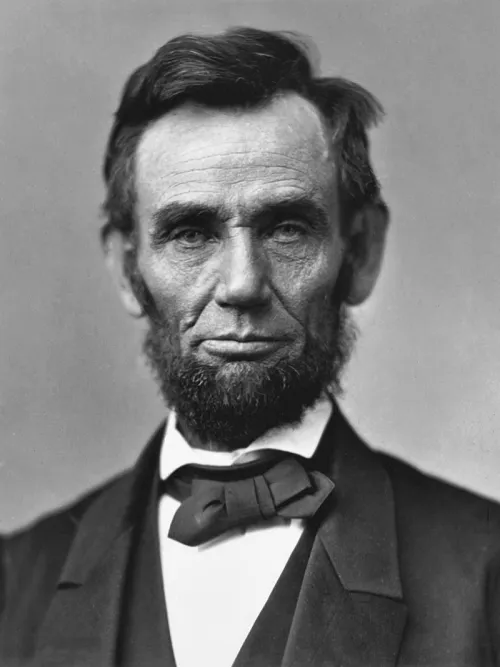
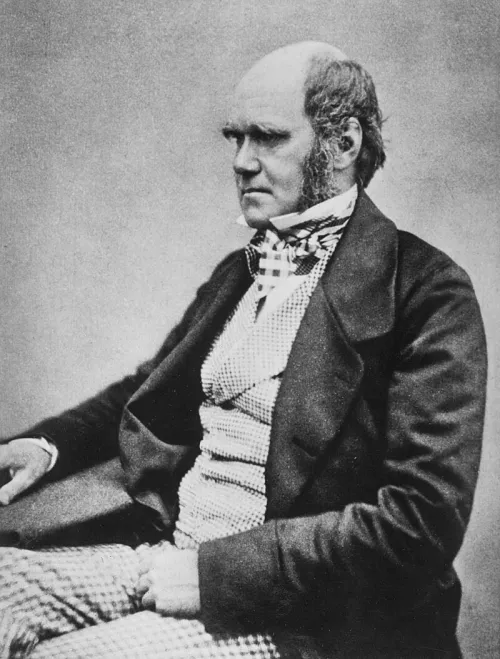
Abraham Lincoln was born on February 12, 1809, in a log cabin on Sinking Spring Farm in Hardin County, Kentucky — the same birthday, the same year, as Charles Darwin. His family moved through poverty and frontier hardship, eventually settling in Indiana. Lincoln's mother, Nancy Hanks Lincoln, died when he was nine; his stepmother Sarah Bush Johnston Lincoln became a powerful positive influence who encouraged his voracious self-education. Lincoln had less than a year of formal schooling in total. He taught himself to read, studied law by candlelight, and borrowed books constantly from neighbors and acquaintances — a pattern of self-directed, obsessive learning that is quintessentially INTP.
Lincoln worked as a flatboat pilot, store clerk, surveyor, and postmaster before passing the Illinois bar exam in 1836, largely through self-study. His entry into politics was driven less by ambition than by the INTP's compulsion to engage with interesting problems — and the question of American governance in the 1840s and 1850s was the most interesting problem in the country. He served in the Illinois state legislature for eight years and a single term in Congress before emerging as a national figure through his famous series of debates with Stephen Douglas during the 1858 Illinois Senate race. Though he lost that Senate race, the debates made him the national voice of anti-slavery constitutionalism.
Lincoln's presidency (1861–1865) was the most consequential in American history. He navigated the secession of eleven Southern states, the formation of the Confederacy, and four years of the bloodiest war in American history while simultaneously managing a fractious Cabinet, a hostile press, and his own deep depression. His management of the Civil War reflected the INTP's strategic depth: he was not a military genius but an intuitive systems thinker who understood that the North's advantage was economic and industrial, and who recognized Grant and Sherman as the instruments through which that systemic advantage could be applied to decisive effect.
Lincoln's most enduring legacy is the Emancipation Proclamation (1863) and the passage of the 13th Amendment abolishing slavery — outcomes he pursued through a combination of moral conviction and pragmatic political calculation that drove abolitionists and conservatives alike to alternating despair and admiration. His Gettysburg Address — 272 words that redefined the meaning of the Civil War and reframed American democracy's founding promise — remains one of the greatest speeches in the English language. He was assassinated by John Wilkes Booth on April 14, 1865, five days after the Confederacy's surrender, at the age of fifty-six.