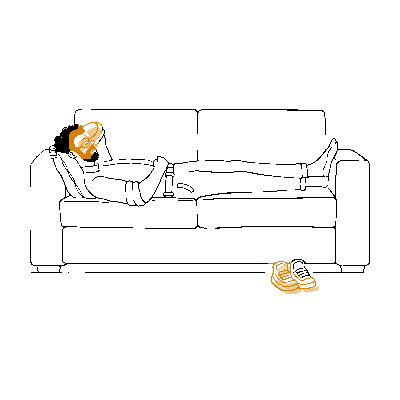
🕊️ Intermediartyp~50% of the population

ISTP ChronotypeThe CraftsmanIntermediartyp

ISTP-Schlafmuster & Chronotyp

ISTPs sind effiziente, minimalistische Schlifer, die Ruhe als praktische Notwendigkeit statt als Ritual behandeln. Sie haben keine starken Meinungen daruber, ob sie Fruhaufsteher oder Nachteule sind - sie schlafen, wenn sie mude sind, und wachen auf, wenn sie ausgeruht sind, mit einer pragmatischen Einfachheit, die andere Typen entweder bewundernswert oder verwirrend finden. Ihr produktivstes Fenster liegt am spaten Vormittag, und ihre Energie folgt einer gleichmassigen, fleissigen Kurve, die keine Ressourcen fur unnotiige Hohepunkte oder dramatische Abstirze verschwendet.

Warum ISTPs Intermediartyps sind: Kognitive Funktionen & Schlaf

Die dominante Funktion Ti (Introvertiertes Denken) ist eine logikaufbauende Funktion, die unabhangig von Zeithinweisen arbeitet - sie kann ein mechanisches Problem um 7 Uhr oder um 23 Uhr mit gleicher Prazision analysieren. Die Hilfsfunktion Se (Extravertierte Empfindung) fugt eine Vorliebe fur praktisches Engagement wahrend aktiver Stunden hinzu, was die Produktivitat naturlicherweise auf den spaten Vormittag bis fruhen Nachmittag konzentriert. Ti-Se erschafft zusammen einen pragmatischen Chronotyp ohne starken Zug zu einem der Extreme - der ISTP passt sich einfach an den Zeitplan an, den sein aktuelles Projekt oder sein Lebensstil verlangt.

Dominante Funktion

Ti operates with consistent analytical capacity across a wide time range, showing minimal variation between morning and evening precision. This gives the ISTP genuine chronotype neutrality — their thinking quality doesn’t depend on the clock the way other types’ does.

Hilfsfunktion

Se provides the hands-on, physical dimension that anchors ISTP productivity in daylight hours. While Ti can theorize at any hour, Se prefers to build, fix, and engage with the physical world during well-lit, active periods — typically 9 AM to 5 PM.

ISTP-Energiemuster im Tagesverlauf

ISTPs wake cleanly and without drama — no grogginess, no elaborate morning rituals. They’re functional within 15 minutes and operating at 80% within 30 minutes, regardless of wake time. Energy plateaus at a steady, efficient level from about 9 AM through 2 PM, then gradually descends without dramatic dips. Afternoon is adequate for routine tasks and moderate social interaction. Evening energy is low but stable — good for casual tinkering, light reading, or relaxed conversation. ISTPs typically fall asleep quickly and efficiently, often within 10 minutes of lying down, treating sleep with the same no-nonsense approach they bring to everything else.

ISTP-Höchstproduktivitätsfenster

🎨

Kreativer Höhepunkt

10 AM - 1 PM

📊

Analytischer Höhepunkt

9 AM - 12 PM

🤝

Sozialer Höhepunkt

1 PM - 4 PM

Häufige Schlafherausforderungen für ISTP

  • !Getting absorbed in hands-on projects (building, repairing, coding) and losing track of time, not from emotional engagement but from pure flow-state efficiency
  • !Ignoring cumulative sleep debt because the practical effects aren’t immediately obvious — Ti’s logic notes the deficit but Se overrides with ‘I feel fine right now’
  • !Discomfort with bedtime routines that feel like unnecessary overhead — the ISTP would rather just lie down and sleep immediately than follow a 30-minute wind-down protocol

Ideale Tagesroutine für ISTP

🌅

Morgen

Wake between 7-8 AM with minimal fuss. The ISTP’s ideal morning is efficient: wake, eat, start. No elaborate routines, no morning journaling, no meditation unless it genuinely helps. Physical activity (a quick run, weight session, or bike ride) before 9 AM activates Se and sets up the productive late-morning window.

☀️

Nachmittag

The 9 AM - 1 PM window is the hands-on productivity zone: building, coding, analyzing, fixing. This is when Ti-Se partnership peaks and the ISTP can operate in deep flow. After lunch, energy is adequate for collaborative work or learning new skills. Late afternoon (3-5 PM) is for routine maintenance tasks that require less cognitive engagement.

🌆

Abend

After 6 PM, the ISTP naturally downshifts to low-intensity activities: tinkering with personal projects, watching educational content, casual gaming, or relaxed socializing. The key is matching evening activities to actual energy levels rather than forcing productivity. The ISTP’s evening is best spent doing something mildly engaging — not nothing (boring), and not something intense (depleting).

🌙

Schlafenszeit

Keep it simple: decide on a sleep time (10:30-11:30 PM), do minimal preparation, and lie down. The ISTP’s ability to fall asleep quickly is a genuine advantage. If a project has them wired, 10 minutes of stretching or a brief walk is usually sufficient to shift from active mode to sleep mode. Avoid overcomplicating this with lengthy rituals.

Schlafoptimierungstipps für ISTP

  • Your quick sleep onset is a superpower — protect it by maintaining the minimalist approach. Don’t adopt elaborate bedtime routines just because others recommend them; your system works differently
  • Set a project-stop alarm 30 minutes before your intended sleep time — not because you need to wind down, but because Ti-Se flow states literally erase time awareness
  • Track your sleep with a fitness tracker to catch cumulative debt early — Ti respects data, and seeing objective numbers is more convincing than subjective feelings
  • On days when you need peak performance, front-load the critical work into the 9 AM - 1 PM window and trust that the job will be done efficiently within that timeframe

Gesundheitseinblicke für ISTP-Intermediartyps

ISTPs generally have healthy sleep when left to their own rhythm, but their pragmatic approach can lead to chronic slight under-sleeping (6 hours when they need 7.5) because they wake ‘feeling fine.’ Se masks mild sleep deprivation with physical functionality, but cognitive reaction time and fine motor skills (which ISTPs rely on professionally) degrade noticeably below 7 hours. An extra 30-60 minutes of sleep often produces outsized improvements in the physical precision ISTPs value most.

ISTP-Chronotyp-Kompatibilität

ISTPs are the easiest sleep partners because they adapt without complaint, fall asleep quickly, and don’t have strong schedule preferences. The only friction point is with ENFJ or ESFJ partners who want shared bedtime rituals — the ISTP’s five-minute lie-down-and-sleep approach can feel dismissive to types who view bedtime as bonding time. A brief compromise (10 minutes of quiet conversation before the ISTP falls asleep) satisfies both needs.

Andere Intermediartyp-Typen

Mehr entdecken

Über Diese Analyse

Diese Chronotyp-Analyse für ISTP basiert auf Korrelationen zwischen den kognitiven MBTI-Funktionen und der zirkadianen Rhythmusforschung. Individuelle Schlafmuster variieren und werden von Genetik, Alter, Lebensstil und Umwelt beeinflusst. Dieser Inhalt dient nur zu Informations- und Unterhaltungszwecken und sollte keinen professionellen medizinischen Rat zu Schlafstörungen oder Gesundheitszuständen ersetzen.