🦉Night Owl
~25% of the population
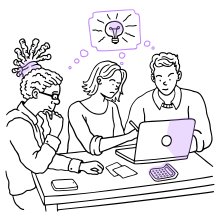
Night owls thrive after dark, experiencing their sharpest cognitive abilities and deepest creative flow during evening and nighttime hours. Their circadian rhythm naturally shifts later than the social norm, making them most alert when the world is quiet and distractions are minimal. Night owls often struggle with early-morning obligations but compensate with extraordinary nighttime productivity that conventional schedules rarely accommodate.
🐦Early Bird
~25% of the population
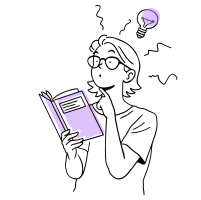
Early birds rise naturally with or before the sun, experiencing peak mental clarity and physical energy in the first half of the day. Their circadian rhythm is phase-advanced, meaning their melatonin release and cortisol awakening response occur earlier than average. Early birds tend to be highly organized, consistent, and aligned with traditional social schedules, often completing their most important work before others have started their day.
🕊️Third Bird
~50% of the population
Third birds are the flexible middle ground of chronotype, adapting their energy patterns to context, demand, and environment rather than following a fixed early-or-late biological mandate. They typically peak during mid-morning to mid-afternoon hours but possess the adaptability to shift earlier or later when circumstances require. Third birds represent the most common chronotype and often serve as the social bridge between early birds and night owls in teams, families, and communities.