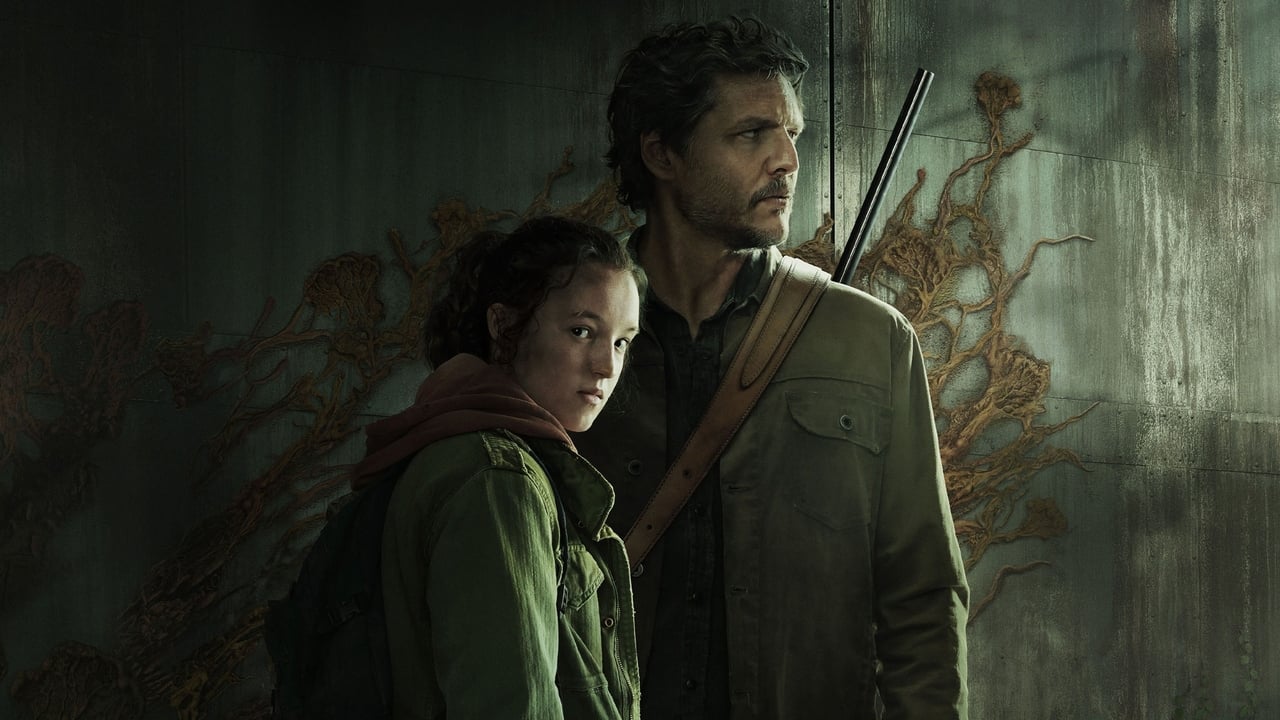

The Last of Us
Discover the MBTI types of The Last of Us characters — Joel, Ellie, and more
Analistler

The Last of Us as INTJ
AnalystThe Last of Us resonates with INTJs through its masterful exploration of strategic moral calculus and long-term consequences. The dominant Ni perspective finds satisfaction in the show's narrative architecture—every episode builds toward Joel's climactic choice with the inexorable logic of a perfectly constructed argument, rewarding viewers who perceive the thematic patterns early. The auxiliary Te connection appears in the show's unflinching analysis of survival systems: FEDRA's authoritarian control, the Fireflies' revolutionary organization, and Jackson's democratic community are each evaluated on their practical effectiveness rather than ideological merit. The tertiary Fi dimension surfaces in the show's core question about personal versus collective values—Joel's choice to save Ellie over humanity's potential cure is a deeply Fi decision that INTJs understand viscerally: sometimes personal conviction must override utilitarian calculation. The inferior Se element manifests in the show's grounding of abstract moral philosophy in visceral physical reality—every ethical question is inseparable from concrete violence, hunger, and bodily vulnerability. INTJs connect with this show because it validates their cognitive approach: seeing the long game, analyzing systems dispassionately, yet ultimately recognizing that some decisions transcend strategic logic and demand answers from a deeper place.
“You can't sacrifice the few for the many.”Learn about INTJ →
The Last of Us as INTP
AnalystThe Last of Us connects with INTPs through its rigorous philosophical examination of humanity, ethics, and meaning in extreme circumstances. The dominant Ti perspective appreciates the show's logical consistency—every character's behavior follows internally coherent principles, and the narrative never cheats by having characters act irrationally for plot convenience. The auxiliary Ne dimension emerges in the show's exploration of multiple valid frameworks for understanding the same events: was Joel's choice selfish or loving? Is Marlene's utilitarianism more moral than Joel's individualism? The show presents these questions without prescribing answers, inviting analytical engagement. The tertiary Si element appears in the show's meticulous world-building—the specific details of how society collapsed, how infection spreads, and how different communities organize themselves create a fully realized logical system that rewards careful observation and pattern recognition. The inferior Fe challenge surfaces in the show's most emotionally devastating moments: Bill and Frank's love story, Joel's breakdown describing Sarah, and Ellie's desperate plea all bypass analytical defenses and demand direct emotional response. INTPs find this show compelling because it poses genuinely difficult philosophical problems within a framework rigorous enough to satisfy their analytical standards while simultaneously challenging them to engage with the emotional dimensions they typically intellectualize.
“When you're lost in the darkness, look for the light.”Learn about INTP →

Kathleen
AnalystKathleen demonstrates the ENTJ cognitive stack consumed by grief-fueled vengeance. Her dominant Te manifests as formidable organizational command—she has transformed Kansas City's resistance from a loose rebel group into a disciplined military force, systematically hunting collaborators, executing prisoners, and maintaining control through decisive authority that brooks no dissent. Her auxiliary Ni provides the tunnel-vision focus that makes her both effective and dangerous: she perceives Henry's betrayal not as a survival choice but as the singular cause of her brother's death, and this narrative becomes an all-consuming mission that she pursues with the strategic patience of a general planning a campaign. Kathleen's tertiary Se surfaces in her willingness to personally oversee operations and confront threats directly—she doesn't delegate the hunt for Henry but leads it herself, preferring hands-on engagement over remote command. Her inferior Fi emerges in the raw grief she refuses to process: her brother's loss has created a wound she transforms into rage rather than mourning, and her rejection of the idea that Henry acted to save his dying brother reveals an inability to access the personal empathy that might complicate her vengeful clarity. Kathleen's arc warns of ENTJ disintegration under trauma—Te-Ni leadership excellence becomes terrifying when it serves personal vengeance rather than collective purpose, and her refusal to acknowledge the infected threat beneath the city symbolizes how grief-blinded determination ignores dangers that don't fit the obsessive narrative.
“I'm not a leader. I'm a person who needed to find the man who killed my brother.”Learn about ENTJ →
Diplomatlar
The Last of Us as INFJ
DiplomatThe Last of Us embodies INFJ storytelling values through its layered narrative structure and profound exploration of how trauma shapes destiny. The dominant Ni perspective connects with the show's revelation-based storytelling—each episode peels back another layer of meaning, slowly exposing the hidden connections between past wounds and present choices, building toward a climactic moment that feels both surprising and inevitable. The auxiliary Fe dimension manifests in the show's empathic range: it asks viewers to inhabit vastly different emotional perspectives, from Joel's protective love to Marlene's agonizing utilitarianism to David's predatory warmth, refusing to simplify moral complexity into comfortable categories. The tertiary Ti element surfaces in the show's logical world-building and consistent internal rules—the infection mechanics, social structures, and character motivations all follow coherent systems that satisfy analytical engagement. The inferior Se challenge appears in the show's ability to make abstract themes physically tangible—the recurring motif of hands reaching, holding, and releasing connects the body's reality to the soul's journey. INFJs connect with The Last of Us because it affirms their deepest conviction: that suffering has meaning, that connection is worth its devastating risks, and that the most important truths are revealed not through analysis but through the courage to remain emotionally present when everything demands retreat.
“If somehow the Lord gave me a second chance at that moment... I would do it all over again.”Learn about INFJ →
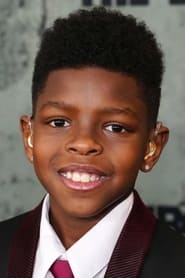
Sam
DiplomatSam embodies the INFP cognitive stack through rich inner life preserved against an external world of horror. His dominant Fi manifests in a deeply personal emotional landscape that he guards carefully—being deaf in a world where sound means survival could isolate him, but instead he has developed an intensely private inner world of feeling and meaning that connects him to others through empathy rather than spoken words. His auxiliary Ne surfaces in his love of comic books and imaginative play: he finds possibility and wonder in stories about heroes and adventures, using fictional worlds as a creative space where the apocalypse's limitations don't apply, and his magic slate drawing game with Ellie reveals a playful imagination that refuses to die despite his circumstances. Sam's tertiary Si appears in his attachment to familiar routines and comfort objects—his reliance on Henry's consistent presence, his established patterns of communication, and his sensitivity to disruptions in his safe environment. His inferior Te manifests as difficulty asserting himself in practical survival situations, relying on Henry to make the tactical decisions while he processes events through his emotional framework. Sam's brief but powerful arc demonstrates the INFP's greatest strength: the ability to maintain authentic emotional connection and imaginative hope in circumstances designed to destroy both, making his loss devastatingly felt because his gentle presence represented everything worth saving in the post-apocalyptic world.
“What are you scared of?”Learn about INFP →

David
DiplomatDavid represents the ENFJ cognitive stack perverted into its darkest possible expression—charismatic leadership weaponized for predatory control. His dominant Fe manifests as an uncanny ability to read emotional needs and mirror them back: he senses Ellie's isolation and hunger for adult approval, offering warmth, food, and religious philosophy calibrated precisely to lower her defenses. His auxiliary Ni provides the long game: he doesn't rush but patiently builds trust through seemingly generous gestures, perceiving the vulnerability beneath Ellie's tough exterior and constructing a narrative of shared purpose designed to draw her in gradually. David's tertiary Se surfaces in his practical survival competence—he maintains a functional community, organizes hunting parties, and demonstrates physical capability that reinforces his authority. His inferior Ti appears in the logical inconsistencies of his worldview: he preaches divine purpose while engaging in cannibalism and predation, constructing rationalizations that serve emotional manipulation rather than genuine philosophical coherence. David's arc serves as the show's most disturbing illustration of how ENFJ cognitive gifts can be corrupted—the same Fe-Ni combination that makes healthy ENFJs inspiring mentors and community builders becomes terrifying when the underlying motivation shifts from genuine care to narcissistic control, making him the most chilling villain precisely because his warmth feels so authentic before the mask drops.
“Everything happens for a reason.”Learn about ENFJ →

Riley
DiplomatRiley demonstrates the ENFP cognitive stack through infectious adventurousness and authentic emotional courage that transforms Ellie's world. Her dominant Ne manifests as an irresistible pull toward exploration and possibility—she leads Ellie through the abandoned mall not just for fun but because she genuinely believes that discovering new experiences is worth the risk, turning a dangerous excursion into a night of wonder with the carousel, the photo booth, the arcade, and the Halloween store. Her auxiliary Fi drives deeply held personal convictions: she rejects FEDRA's authoritarian control not from rebellion for its own sake but because it violates her authentic sense of what freedom should feel like, and her decision to consider joining the Fireflies reflects genuine idealistic values. Riley's tertiary Te surfaces in her practical competence navigating the mall's dangers and her ability to organize their adventure into a structured series of surprises, showing planning ability beneath her spontaneous exterior. Her inferior Si appears in her restlessness with routine and established structures—the military school's regimented life feels suffocating to someone who needs constant novelty. Riley's arc, though heartbreakingly brief, captures the ENFP's essential gift: the ability to make others feel truly alive through shared authentic experience, and her influence on Ellie demonstrates how ENFP enthusiasm can permanently alter another person's understanding of what life can offer.
“There are a million ways we should've died before today. And a million ways we can die before tomorrow.”Learn about ENFP →
Nöbetçiler

Bill
SentinelBill exemplifies the ISTJ cognitive stack through meticulous preparation and systematic self-reliance taken to survivalist extremes. His dominant Si drives an obsessive cataloging of threats and solutions—he has fortified his town with a comprehensive network of traps, fences, and warning systems, each based on carefully observed patterns of infected behavior and human threats accumulated over years of solitary survival. His auxiliary Te manifests in the engineering precision of his compound: generators, supply caches, fuel reserves, and defensive positions are all organized with military efficiency, creating a functioning one-man civilization. Bill's tertiary Fi surfaces as the stubborn personal philosophy that justified his isolation—he believed the world owed him nothing and he owed it nothing in return, constructing an internally consistent value system that rationalized his misanthropy. His inferior Ne represents his greatest blind spot and eventual salvation: Frank's arrival introduces unpredictable possibility into Bill's controlled world, and rather than destroying him, this Ne intrusion gradually transforms his existence from mere survival into genuine living. Bill's arc is a profoundly moving ISTJ love story—a man whose Si-Te systems were designed to keep the world out discovers through Frank that the most important thing worth preserving isn't infrastructure but human connection, ultimately choosing to die alongside the person who gave his survival meaning.
“I used to hate the world, and I was happy when everyone died. But I was wrong, because there was one person worth saving.”Learn about ISTJ →

Henry
SentinelHenry demonstrates the ISFJ cognitive stack through total devotion to his brother that defines every decision he makes. His dominant Si manifests in his hyper-awareness of past dangers and established survival patterns—he knows exactly which routes through Kansas City are safe, which buildings have been cleared, and how to navigate the city's threat landscape because he has meticulously observed and memorized these details over months. His auxiliary Fe drives his entire motivation: everything he does serves Sam's emotional and physical wellbeing, from maintaining a nurturing environment to teaching him sign language to shielding him from the worst of their reality. Henry's tertiary Ti surfaces in his calculated betrayal of other survivors to FEDRA in exchange for Sam's leukemia medication—a coldly logical decision that his Fe conscience never stops punishing him for, creating the guilt that haunts every subsequent interaction. His inferior Ne appears as an inability to envision positive outcomes beyond immediate survival: he cannot imagine a future where he and Sam thrive rather than merely exist, and when Ellie describes Jackson's community, it seems impossibly hopeful. Henry's arc is a devastating ISFJ tragedy—a protector who sacrifices everything for one person only to face the one scenario his careful planning could never prevent, and his final act reveals that an ISFJ who fails in their core protective role may find existence without that purpose unbearable.
“He's all I have.”Learn about ISFJ →

Tess
SentinelTess demonstrates the ESTJ cognitive stack through uncompromising pragmatism and organizational authority in the Boston QZ. Her dominant Te manifests as decisive command of every situation—she manages smuggling operations with businesslike efficiency, negotiates with dangerous contacts through direct and unambiguous communication, and makes life-or-death decisions without emotional hesitation. Her auxiliary Si provides the experiential framework for her survival: she has accumulated twenty years of practical knowledge about trade routes, reliable contacts, and the specific dangers of the quarantine zone, and she applies these patterns consistently. Tess's tertiary Ne surfaces in her ability to quickly reassess situations when circumstances change—when she discovers the Fireflies are dead at the Capitol, she immediately generates an alternative plan rather than freezing. Her inferior Fi emerges powerfully in her final moments: having been bitten, she reveals a depth of personal conviction that her pragmatic exterior has concealed, choosing a meaningful death that ensures Ellie reaches the Fireflies. Tess's arc, though brief, illuminates the ESTJ's hidden emotional depth—her confession that smuggling Ellie offers a chance at redemption suggests she has carried private moral judgment about her survival choices for years, and her sacrifice represents the rare moment when an ESTJ's suppressed Fi overrides their Te survival instincts to make a choice based purely on personal meaning.
“We're shitty people, Joel. It's been that way for a long time.”Learn about ESTJ →

Tommy Miller
SentinelTommy Miller demonstrates the ESFJ cognitive stack through community building and relational warmth that contrasts sharply with his brother Joel's emotional guardedness. His dominant Fe manifests in his natural ability to create social bonds and maintain group cohesion—he doesn't just survive in Jackson, he helps build a functioning community with social events, shared responsibilities, and genuine neighborly care, understanding that human connection is the foundation of any sustainable society. His auxiliary Si provides the practical knowledge and institutional memory needed for community infrastructure: remembering how pre-outbreak systems worked, maintaining traditions that give people a sense of normalcy, and applying accumulated experience to practical challenges like agriculture, defense, and governance. Tommy's tertiary Ne surfaces in his openness to new approaches—he initially joined the Fireflies seeking revolutionary solutions, and in Jackson he experiments with different organizational structures to find what works best. His inferior Ti appears in his tendency to make decisions based on emotional loyalty rather than strategic analysis, trusting people he likes rather than people who make the most logical sense. Tommy's arc illustrates the ESFJ's essential contribution to survival: while ISTPs like Joel keep individuals alive through tactical skill, ESFJs like Tommy rebuild the social fabric that makes life worth living, proving that humanity's future depends not just on fighters but on community builders.
“We take care of each other here.”Learn about ESFJ →
Kaşifler

Joel Miller
ExplorerJoel Miller embodies the ISTP cognitive stack hardened by twenty years of post-apocalyptic survival and unprocessed grief. His dominant Ti manifests as cold tactical analysis—he evaluates every encounter through a framework of threat assessment and resource management, making split-second decisions about who to trust and when to use violence with the detached efficiency of someone who has reduced survival to a logical system. His auxiliary Se drives exceptional situational awareness: he reads physical environments instantly, notices subtle sounds and movements that signal danger, and fights with brutal, adaptive practicality rather than trained technique. Joel's tertiary Ni surfaces as gut instincts he cannot articulate—he senses ambushes before they happen, reads people's hidden intentions, and perceives the trajectory of dangerous situations, as when he immediately identifies the trap in Kansas City. His inferior Fe is the emotional core he has spent two decades suppressing since Sarah's death: he refuses emotional connection not because he lacks feeling but because he knows its devastating power. Joel's arc traces ISTP growth in its most painful form—Ellie gradually reawakens his buried Fe, and his final decision to massacre the Fireflies represents the ultimate ISTP paradox: a man of action whose most consequential act is driven not by tactical logic but by the overwhelming love he can no longer deny.
“I struggled for a long time with survivin'. And you— no matter what, you keep finding something to fight for.”Learn about ISTP →

Frank
ExplorerFrank embodies the ISFP cognitive stack through his insistence that beauty, pleasure, and human connection matter even at the end of the world. His dominant Fi manifests as an unshakeable conviction that life without meaning isn't worth preserving—from the moment he enters Bill's compound, he challenges the premise that mere survival is sufficient, instead pursuing what personally matters: art, gardens, good food, music, and authentic companionship. His auxiliary Se drives his engagement with the physical world: he plants flowers in a post-apocalyptic wasteland, savors meals with genuine sensory appreciation, paints with attention to color and light, and insists on opening the boutique to feel beautiful fabrics. Frank's tertiary Ni surfaces in his intuitive understanding of Bill's emotional needs—he perceives the loneliness beneath the gruff survivalism and gently but persistently draws Bill toward vulnerability without ever forcing it. His inferior Te appears in his relative indifference to the practical systems that keep them alive—he opens a window that could compromise security, invites outsiders Bill considers threats, and prioritizes aesthetic improvements over defensive ones. Frank's arc represents ISFP values at their most transcendent: his final choice to end his life on his own terms, after a perfect last day of beauty and connection, demonstrates that for an ISFP, the quality of experience matters infinitely more than its duration, and his letter to Joel proves that personal authenticity can inspire others long after death.
“I'm going to enjoy every minute of this life.”Learn about ISFP →
The Last of Us as ESFP
ExplorerThe Last of Us hits ESFPs through its raw emotional immediacy and visceral sensory engagement. The dominant Se perspective connects with the show's stunning visual storytelling—the overgrown cityscapes, the terrifying Clicker encounters, and the intimate physical details of survival create an immersive sensory experience that demands full present-moment attention. The auxiliary Fi dimension emerges in the show's commitment to emotional authenticity: every character's feelings are genuine and unmediated, from Joel's barely contained grief to Ellie's explosive anger to Bill's gruff tenderness, and none of these emotional expressions are prettified or intellectualized. The tertiary Te element appears in the practical survival mechanics that ESFPs appreciate—the resourcefulness of crafting weapons from scrap, navigating dangerous terrain, and making split-second tactical decisions provides satisfying demonstrations of competence under pressure. The inferior Ni challenge surfaces in the show's deeper thematic implications about destiny, purpose, and the moral weight of choices—layers that reward reflection after the immediate emotional impact settles. ESFPs connect with this show because it validates the conviction that authentic emotional experience is life's most important currency, and that the courage to feel fully in a world designed to numb you is the truest form of heroism.
“I'm just a girl. I'm not a cure.”Learn about ESFP →
Karakterinizi Bulun
MBTI tipinizi biliyor musunuz? Aşağıda karakter eşleşmenizi bulun.
Sık Sorulan Sorular
Joel Miller is commonly typed as ISTP — his survivalist pragmatism, tactical combat skills, and emotional guardedness reflect Ti-Se. He processes the world through action and practical problem-solving rather than emotional expression.
Ellie is widely typed as ENFP — her curiosity, quick wit, emotional authenticity, and fierce loyalty to her values make her a classic Ne-Fi personality navigating an impossible world.
Daha Fazla Şov Keşfet
Kendi Tipinizi Bulun
MBTI kişilik tipinizi keşfedin ve hangi kurgusal karakterlerin özelliklerinizi paylaştığını görün.
Testi Al