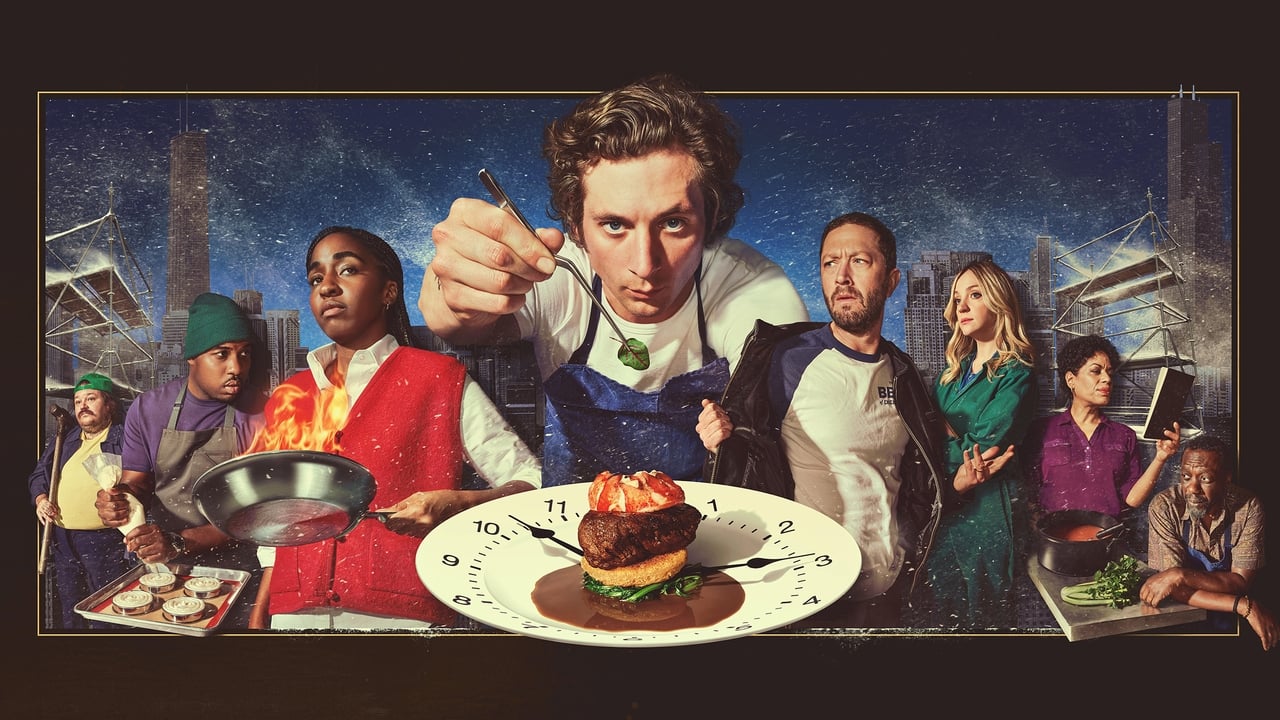

The Bear
Explore the MBTI types of The Bear characters — Carmy, Sydney, Richie, and more
Analistler
The Bear as INTJ
AnalystThe Bear speaks to the INTJ through its reverence for systems, mastery, and the relentless pursuit of perfection as a form of meaning-making. The dominant Ni manifests in the show's central thesis that a kitchen can be transformed through vision—Carmy's ability to see what The Beef could become drives the entire narrative. The auxiliary Te appears in the show's loving attention to kitchen systems: mise en place, the brigade hierarchy, the ticket rail, the fire-and-response cadence of professional cooking are presented as beautiful organizational structures that enable creative excellence. The tertiary Fi provides the emotional depth beneath the systematic surface—the show insists that perfection without purpose is empty, that the systems serve something deeply personal: family legacy, creative expression, the need to transform grief into beauty. The inferior Se paradoxically dominates the viewing experience; the show's cinematography, sound design, and editing create sensory immersion so intense that viewers feel the heat, hear the chaos, and taste the food through the screen. For the INTJ viewer, The Bear validates the conviction that mastery of complex systems is not cold or mechanical but deeply human, and that the drive to perfect one's craft is inseparable from the drive to understand oneself.
“Yes, chef.”Learn about INTJ →

Chef David Fields
AnalystChef David Fields is the ENTJ mentor whose brilliance and cruelty are inseparable facets of the same cognitive machinery. His dominant Te runs his kitchen as a high-performance system where every second is measured, every plate is inspected, and every cook is either meeting standards or being destroyed by the gap between their output and his expectations. He pushes Carmy to technical excellence through relentless pressure, his Te identifying weaknesses and hammering them with the precision of someone who views human development as an engineering problem. His auxiliary Ni provides the culinary vision that justifies his methods—Fields genuinely perceives food at a level few can match, and his Ni certainty about what excellence looks like makes any deviation feel personally offensive. His tertiary Se manifests in the physical intensity of his kitchen management; he is present on the line, tasting, watching, correcting in real time with sensory acuity that misses nothing. His inferior Fi is the function he has completely sacrificed—Fields shows no concern for the emotional damage his methods inflict, treating cooks' psychological wellbeing as irrelevant to the goal of culinary perfection. His legacy in Carmy reveals the ENTJ mentor's central paradox: he produced a technically brilliant chef who is also emotionally traumatized, raising the question of whether excellence achieved through abuse can ever be separated from the damage that produced it.
“Excellence is not optional.”Learn about ENTJ →
Diplomatlar
The Bear as INFJ
DiplomatThe Bear resonates with the INFJ through its profound exploration of how generational trauma is transmitted, how craft becomes a vehicle for healing, and how meaning emerges from suffering when purpose is found. The dominant Ni dimension drives the show's layered narrative structure—past and present interweave constantly, revealing how childhood experiences shape adult behavior with patterns that only become visible across time. The auxiliary Fe manifests in the show's insistence that healing happens through connection rather than isolation: Carmy's worst moments come when he retreats, his best when he lets people in. The tertiary Ti provides the show's psychological sophistication; it doesn't sentimentalize trauma but analyzes its mechanisms—the Christmas flashback episode traces cause and effect across decades with clinical precision. The inferior Se surfaces in the show's grounding of psychological depth in physical reality: cooking is not just metaphor but actual labor, and the characters' bodies carry their emotional states in posture, tension, and exhaustion. For the INFJ viewer, The Bear validates the belief that understanding patterns of pain across generations is the first step toward breaking them, and that finding meaningful work—craft that connects you to others while expressing your deepest self—is the most reliable path from suffering to purpose.
“Every day it gets a little easier.”Learn about INFJ →
The Bear as ENFJ
DiplomatThe Bear speaks to the ENFJ through its argument that a kitchen team is a family, and that transformative leadership means developing each person's individual potential while building collective purpose. The dominant Fe manifests in the show's central question: how do you create a culture where people give their best? Carmy's struggle is that he possesses the vision but lacks the emotional intelligence to implement it, while Sydney has the Fe gifts he needs. The auxiliary Ni provides the show's conviction that a great restaurant is more than great food—it is a shared vision that gives meaning to the daily grind of prep, service, and cleanup. The tertiary Se appears in the physical intensity of kitchen work as a metaphor for leadership under pressure: the adrenaline of service, the tactile reality of cooking, and the embodied exhaustion afterward are presented as the ENFJ leader's lived experience. The inferior Ti surfaces in the show's honest depiction of how emotional leadership can burn out without analytical boundaries—both Sydney and Sugar demonstrate that caring deeply about everyone's wellbeing, without Ti frameworks for self-protection, leads to collapse. For the ENFJ viewer, The Bear validates the belief that developing people is the highest form of leadership while warning that the mentor must also invest in their own growth.
“We're a team.”Learn about ENFJ →

Fak
DiplomatFak is the ENFP whose boundless enthusiasm and scattered energy provide both comic relief and genuine emotional support in The Bear's high-pressure environment. His dominant Ne generates solutions at a rapid pace—'I got a guy' is his Ne manifesto, always knowing someone who might help, always seeing a connection between disparate resources that others miss. Whether the solution actually works is secondary to the creative impulse behind it. His auxiliary Fi gives his chaos genuine heart; Fak cares deeply about the restaurant and the people in it, his emotional investment expressed through persistent helpfulness rather than eloquent declarations. He shows up, he tries, he absorbs criticism without resentment because his Fi knows his intentions are pure. His tertiary Te is his weakest link operationally—he struggles to organize his contributions effectively, often creating more chaos than resolution because his Te cannot structure his Ne ideas into executable plans. Renovation coordination under his management tends toward creative disaster. Fak's inferior Si manifests as an inability to learn from past failures; he repeats patterns with cheerful amnesia, each day a fresh Ne canvas unburdened by yesterday's mistakes. Yet his character serves an essential function: in a show about perfectionism, trauma, and relentless standards, Fak's good-natured ENFP presence reminds everyone that showing up with love and effort, even imperfectly, has its own irreplaceable value.
“I got a guy.”Learn about ENFP →
Nöbetçiler

Tina Marrero
SentinelTina Marrero is the ISTJ whose two decades of consistent kitchen labor have forged an iron-clad Si-Te foundation that initially resists and ultimately embraces transformation. Her dominant Si has stored twenty years of muscle memory, recipe knowledge, and kitchen rhythm—she can produce The Beef's standards in her sleep, and her resentment of Carmy's changes reflects genuine Si grief at seeing hard-won expertise rendered obsolete. Her auxiliary Te manifests as no-nonsense efficiency: she doesn't philosophize about food but executes with mechanical reliability, managing her station with the organizational precision of someone for whom the kitchen is a system to be maintained, not a canvas for expression. Her tertiary Fi surfaces slowly through the show—the tough exterior conceals real emotional investment in the restaurant and its people, visible in her fierce protectiveness of the original staff and her grudging but genuine respect for Sydney's talent. Tina's inferior Ne is activated by her culinary school arc: forced to learn new techniques, she discovers that her Si foundation actually makes her an exceptional student, her accumulated experience providing context that makes Ne-style innovation feel less threatening and more like natural extension. The moment she successfully executes a new technique and allows herself to smile is the ISTJ's growth breakthrough—proving that tradition and innovation are not enemies but that one can build upon the other.
“I've been doing this for 20 years.”Learn about ISTJ →
Sweeps
SentinelSweeps is the ISFJ whose quiet reliability embodies the unsung backbone of every professional kitchen. His dominant Si makes him the most consistent presence at The Beef—he arrives, he works, he executes his station with the steadfast repetition that fine dining demands but rarely celebrates. While Carmy innovates and Sydney envisions, Sweeps ensures that the fundamentals are executed with unwavering precision, his accumulated muscle memory making him the person everyone trusts to hold the line during chaotic service. His auxiliary Fe manifests as quiet team support: a nod of encouragement, a 'yes, chef' delivered with genuine respect rather than mere compliance, a willingness to absorb extra work when teammates struggle without complaint or recognition-seeking. His tertiary Ti surfaces in his growing technical competence—as the restaurant evolves from The Beef to The Bear, Sweeps adapts by systematically learning new techniques, his Ti processing new information through the Si framework of practice and repetition. His inferior Ne keeps him firmly in the background—he doesn't seek creative spotlight or innovative challenges, finding purpose in the reliable execution that allows others' visions to manifest. Sweeps represents the ISFJ truth that every ambitious enterprise depends on people who find meaning in dependable, consistent service rather than individual brilliance.
“Yes, chef.”Learn about ISFJ →

Donna Berzatto
SentinelDonna Berzatto is the ESFJ mother whose cognitive functions have been distorted by unprocessed trauma into instruments of emotional devastation. Her dominant Fe craves love and family connection with an intensity that becomes coercive—the Christmas episode reveals a woman who creates elaborate gatherings not from joy but from desperate Fe need, interpreting any deviation from her planned emotional script as personal rejection. Her auxiliary Si has preserved every wound, every perceived slight, every moment of abandonment with excruciating fidelity, and she replays these memories as justification for her current behavior, unable to distinguish past trauma from present reality. Her tertiary Ne generates the catastrophic emotional escalations the family dreads—a small kitchen setback cascades into screaming, thrown objects, and ultimatums as Ne spirals connect current frustrations to every accumulated fear. The scene where she crashes the car with Sugar inside is the ultimate Ne-Fe-Si collision: imagination of losing her children merges with memories of loss, producing a physical action that endangers the very people she is desperate to keep. Donna's inferior Ti is almost completely absent—she cannot step outside her emotional reactions to analyze their impact, cannot see the causal chain between her behavior and her children's flight. She is the show's most painful portrait: an ESFJ whose love is genuine but whose unhealed wounds have transformed nurturing into a weapon.
“I did all this for you!”Learn about ESFJ →
Kaşifler
The Bear as ISFP
ExplorerThe Bear resonates with the ISFP through its portrayal of cooking as the most intimate form of artistic expression—where the artist's soul is literally consumed by the audience. The dominant Fi dimension permeates the show's approach to food: every dish carries emotional autobiography, from Marcus's doughnuts honoring his mother to Carmy's recreations of Mikey's recipes. Cooking is not technique but confession. The auxiliary Se manifests in the show's extraordinary sensory filmmaking—close-ups of caramelizing sugar, the sound of a knife on a cutting board, the visual poetry of plating are presented with an aesthetic reverence that makes food preparation look like sculpture and painting combined. The tertiary Ni provides the undercurrent of meaning beneath the sensory beauty: each dish symbolizes something about the cook's inner journey, and the show trusts the viewer to perceive these connections without spelling them out. The inferior Te appears in the characters' collective struggle to balance artistic integrity with business demands—costs, critics, schedules, and health inspectors represent Te reality intruding on Fi-Se creative flow. For the ISFP viewer, The Bear validates the conviction that creating beauty with one's hands is the truest form of self-expression, and that the relationship between maker and medium is sacred.
“I didn't cook. I made art.”Learn about ISFP →
The Bear as ESTP
ExplorerThe Bear channels ESTP energy through its adrenaline-soaked depiction of professional kitchen service as the ultimate high-stakes performance arena. The dominant Se dimension dominates the show's most intense sequences—the long-take service episodes immerse the viewer in sensory overload: shouted orders, sizzling pans, bodies moving through tight spaces, the relentless clock of ticket after ticket demanding immediate physical response. The auxiliary Ti appears in the split-second analytical decisions cooks make under pressure: reading a ticket, prioritizing orders, adjusting technique in real time based on how ingredients are behaving—all Ti analysis executed at Se speed. The tertiary Fe manifests in the kitchen's call-and-response culture; 'behind,' 'corner,' 'hot,' and 'yes, chef' are Fe communication protocols that maintain team safety and coordination during chaos. The inferior Ni surfaces in the show's acknowledgment that pure adrenaline performance without deeper purpose leads to burnout—the question of why they do this, what it all means beyond the rush of service, haunts every character. For the ESTP viewer, The Bear validates the thrill of operating at peak physical and mental capacity under extreme pressure, while gently suggesting that the ESTP's love of intensity must eventually serve something larger than the next adrenaline hit.
“Behind! Corner! Hot!”Learn about ESTP →

Richie Jerimovich
ExplorerRichie Jerimovich is the ESFP whose transformation arc is the show's most emotionally devastating journey. His dominant Se initially manifests as chaos—he lives in the immediate moment with no filter, reacting to every provocation with explosive physicality, filling The Beef with his enormous sensory presence. He eats, fights, yells, and loves with equal intensity, a man whose entire relationship to the world is tactile and visceral. His auxiliary Fi harbors grief so deep it has calcified into identity: he keeps Mikey alive through maintaining The Beef exactly as it was, wearing the same clothes, telling the same stories, because changing anything feels like betraying his best friend. His tertiary Te is dormant until the transformative Ever episode, where weeks of fine-dining discipline activate organizational capabilities he never knew he possessed—he memorizes guest preferences, orchestrates service flow, and discovers that his Se awareness of people's physical comfort, combined with emerging Te structure, makes him an extraordinary front-of-house leader. The moment he forks a guest's steak is his revelation: Se-Fi authenticity—genuinely wanting this person to enjoy their meal—expressed through Te-level professional execution. Richie's inferior Ni blossoms as he begins envisioning a future for himself beyond grief, finally allowing Mikey's memory to inspire growth rather than preservation. His journey proves the ESFP's profound potential: when Se presence is channeled through developing Te discipline, the result is mastery.
“I'm a f***ing dinosaur.”Learn about ESFP →
Karakterinizi Bulun
MBTI tipinizi biliyor musunuz? Aşağıda karakter eşleşmenizi bulun.
Sık Sorulan Sorular
Carmy is commonly typed as INTJ — his perfectionism, strategic approach to restaurant management, and struggle with emotional expression reflect Ni-Te at their most intense.
Sydney is widely typed as INFJ — her culinary vision, emotional intelligence, and ability to balance creative ambition with team harmony reflect Ni-Fe depth.
Daha Fazla Şov Keşfet
Kendi Tipinizi Bulun
MBTI kişilik tipinizi keşfedin ve hangi kurgusal karakterlerin özelliklerinizi paylaştığını görün.
Testi Al