
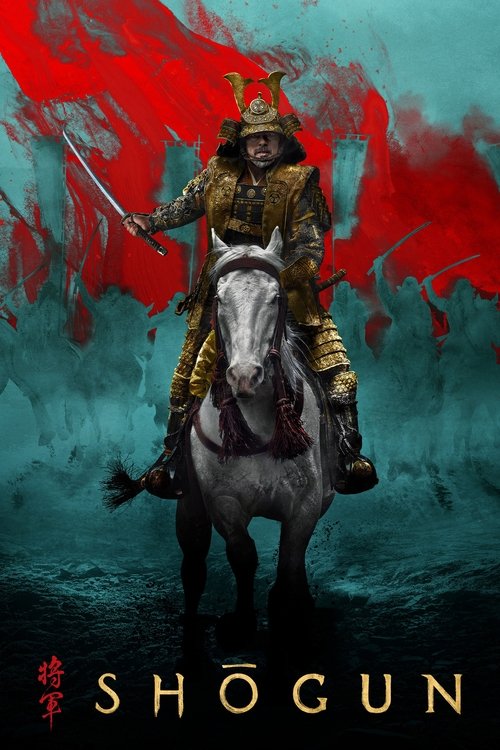
Shōgun
The FX 2024 adaptation of Shōgun is a masterclass in MBTI power dynamics, presenting Yoshii Toranaga as one of television's great INTJ masterminds while surrounding him with a cast of types whose function stacks determine their survival. The show's central tension — between Toranaga's century-long patience and the immediate power plays of Ishido, the philosophical opportunism of Yabushige, and the identity dissolution of Blackthorne — is a meditation on how different cognitive orientations collide in a world where every display is a deception.
Analistler
Crimson Sky Conspirator
AnalystThe conspirators behind the Crimson Sky plan represent the INTJ in the final phase of a long patience — their dominant Ni has spent years in preparation, mapping the network of alliances, vulnerabilities, and strategic dependencies that make the plan viable, processing variables across a timeline that only Ni-dominant planning can sustain. Their auxiliary Te is now in execution mode, converting the years of Ni analysis into concrete operational steps with the systematic precision that distinguishes an INTJ conspiracy from mere opportunism. Tertiary Fi provides the motivational fuel beneath the strategic architecture: the conspirators are not acting from abstract principle alone but from genuine personal grievances and convictions about what Japan should become, giving their plan an emotional commitment that pure strategic calculation would not sustain through years of patient waiting. Their inferior Se is the plan's potential vulnerability — the gap between Ni-imagined outcomes and the chaotic physical reality of implementation, where unexpected variables and real-world friction can derail even the most thoroughly processed strategic vision. Their threat to Toranaga is genuinely credible precisely because it mirrors his own function stack: an INTJ conspiracy can only be defeated by an INTJ whose Ni-Te operates at greater depth and with more complete information, and the series builds real tension from the possibility that these conspirators may have anticipated variables that even Toranaga's legendary foresight has missed.
“We have waited long enough. The time for patience has passed.”Learn about INTJ →
Father Dell'Aqua
AnalystDell'Aqua is the ENTJ operating at the level of institutional power — his dominant Te manages the Jesuit presence in Japan as a strategic enterprise with clear objectives of conversion, cultural control, and territorial expansion, treating the mission as a project with measurable milestones and acceptable losses calculated with the same rigor a general brings to a campaign. His auxiliary Ni provides the long-range vision of what a Christian Japan could become within the broader project of Catholic global expansion, a vision ambitious enough to justify the compromises his Te-organized strategy demands. Tertiary Se gives him a practical comfort with the material instruments of power — trade relationships, military alliances, and the physical infrastructure of churches and institutions that make the Jesuit presence tangible and self-sustaining in Japanese society. His inferior Fi is the function that would create moral discomfort about individual human costs, and its relative absence is precisely what distinguishes Dell'Aqua from Alvito: he is less troubled by the suffering his strategies produce because the ENTJ function stack evaluates success in terms of institutional outcomes rather than personal experiences. Dell'Aqua is not villainous in the conventional sense; he is an ENTJ whose mission happens to require decisions that look villainous from outside his cognitive framework, and his genuine belief in the righteousness of the mission makes him more formidable than a simple cynic because the conviction is authentic even when its consequences are devastating.
“God's work requires more than prayer. It requires strategy.”Learn about ENTJ →

Yabushige
AnalystYabushige is the ENTP as survival philosopher — his dominant Ne treats every alliance, loyalty, and moral position as a hypothesis to be tested and revised, allowing him to betray Toranaga, ally with Ishido, reverse course, and betray again on the internally consistent principle that survival supersedes all other values. Each betrayal follows a Ne-generated reassessment of which configuration of alliances maximizes his continued existence. His auxiliary Ti provides the logical architecture that makes his opportunism feel like wisdom rather than cowardice, at least to himself; he can articulate a coherent philosophical justification for every act of disloyalty because his Ti framework is genuinely sophisticated. Tertiary Fe manifests as his theatrical social performances — his conversations with Blackthorne are masterclasses in Fe-deployed charm, oscillating between menace and warmth as the social situation demands, reading and manipulating emotional dynamics with considerable skill. His inferior Si manifests as a deliberate rejection of tradition and precedent; while other lords are bound by the bushido code's Si-demands, Yabushige treats the code as one more hypothesis to be evaluated rather than an absolute to be honored. His final scene is the most ENTP death in television: facing seppuku, he approaches his own annihilation with genuine philosophical curiosity about what the experience will feel like, treating mortality itself as one final Ne-generated question to be explored rather than feared.
“Loyalty is a beautiful thing. I simply find it more useful to observe in others than to practice myself.”Learn about ENTP →
Diplomatlar

Toda Mariko
DiplomatMariko is the INFJ as a woman divided between duty and a death-wish she cannot honor — her dominant Ni perceives the deeper currents beneath every political surface with the clarity of someone who has spent her entire life reading the unspoken truths of Japanese court dynamics, understanding what people actually mean beneath the layers of ritual and deception. Her auxiliary Fe gives her a capacity for genuine human connection that makes her the emotional center of the narrative, visible in her growing bond with Blackthorne where her Fe attunement to his isolation produces the first authentic intimacy either character has experienced. Tertiary Ti provides the analytical precision that makes her translations between English and Japanese simultaneously linguistic and political acts — she does not merely convert words but interprets meaning with a sophistication that shapes the outcomes of conversations. Her inferior Se manifests as the death-wish itself: her father's murder of their family left her trapped in a physical existence she experiences as unbearable, unable to commit seppuku without Toranaga's permission and unable to find Se-grounded reasons to continue living. Mariko's final act at Osaka is the ultimate INFJ resolution — a sacrifice that serves Toranaga's strategic plan through her Fe-capacity for inspiring collective action while simultaneously fulfilling her Ni-perceived destiny, achieving the perfect alignment of duty and authentic value that her function stack spent the entire series searching for.
“To live in the shadow of another's sin is its own kind of dying.”Learn about INFJ →
Kashigi Asa
DiplomatCaught in the web of Yabushige's political maneuvering and the larger conflict she never sought, Kashigi Asa operates through dominant Fi — a deep internal value system that anchors her identity even when every external circumstance is determined by others, holding onto her sense of right and wrong in a world where moral clarity is treated as naive. Her auxiliary Ne allows her to perceive the larger patterns of what is happening around her with an abstract awareness that exceeds her social station, understanding the political currents and recognizing the human costs that the strategists above her treat as acceptable variables. Tertiary Si grounds her in the accumulated experiences of her life within the Kashigi household, providing the practical resilience and memory of better times that sustains her through the present crisis. Her inferior Te manifests as the characteristic INFP limitation: she perceives meaning she cannot act upon, understands the full scope of her situation with remarkable clarity but possesses no mechanism to organize that understanding into strategic action that would change her circumstances. Kashigi Asa's arc embodies the INFP experience of being caught in systems too powerful to resist but too unjust to accept internally, enduring the Japanese civil war's devastation with the type's characteristic combination of profound sensitivity and quiet, unbreakable resilience — a woman who may not be able to control her fate but refuses to surrender the internal values that define who she is.
“I did not choose any of this. But I must choose how I endure it.”Learn about INFP →
Nöbetçiler

Buntaro
SentinelBuntaro is the ISTJ as a man whose honor is his only possession — his dominant Si is organized around the samurai code of conduct with absolute rigidity, every aspect of his behavior governed by the accumulated traditions and expectations of warrior culture that he has internalized as identity rather than mere convention. His auxiliary Te expresses itself through his extraordinary mastery of the bow, demonstrated in the bridge defense scene where his archery operates with mechanical, almost superhuman precision, and through the blunt, undiplomatic delivery of his expectations to everyone around him. Tertiary Fi provides a genuine if deeply suppressed emotional life beneath the rigid exterior — his jealousy regarding Mariko and Blackthorne reveals authentic feelings that his Si-Te framework cannot accommodate or express in any healthy form. His inferior Ne manifests as a total inability to understand perspectives outside his own Si framework; he cannot perceive the gap between his code and Mariko's experience of living inside it because his function stack provides no mechanism for imagining alternative interpretations of their relationship. Buntaro's treatment of Mariko is not malicious by his own framework but rather an ISTJ enforcing the terms of a contract with complete literalism, and his arc demonstrates the dark side of ISTJ rigidity: a man whose devotion to an inflexible code produces genuine suffering in the people closest to him while remaining invisible to the man himself.
“A wife who dishonors her husband dishonors herself. This is not a matter for debate.”Learn about ISTJ →

Kiri
SentinelKiri is the ISFJ as devoted service personified — her dominant Si holds the accumulated knowledge of Toranaga's household with meticulous precision, remembering every person's needs, preferences, dietary requirements, and emotional vulnerabilities in the detailed internal archive that makes her indispensable to the household's daily function. Her auxiliary Fe expresses genuine care rather than performed courtesy, making her attentiveness to Blackthorne's bewildered adjustment to Japanese culture something warmer and more personal than professional duty requires — she translates not just words but emotional contexts, helping him understand not merely what is said but what is felt. Tertiary Ti gives her a quiet analytical awareness of the political dynamics swirling around the household; she may not participate in strategic discussions but she understands far more of what is happening than her servile position suggests. Her inferior Ne manifests as a preference for established routines and proven approaches over creative improvisation; she navigates change by adapting established Si patterns rather than generating novel solutions, which makes her a stabilizing presence in a household experiencing constant disruption. Kiri's arc demonstrates the ISFJ's characteristic gift: she is the character most likely to be overlooked by those focused on the dramatic power struggles above her station, and most likely to have quietly noticed, remembered, and cared about everything that actually matters in the human dimension of the story.
“I watch. I remember. It is my way of caring.”Learn about ISFJ →
Omi Yabushige
SentinelOmi stands in direct contrast to his uncle Yabushige — where the elder's ENTP energy treats the bushido code as flexible and provisional, Omi's ESTJ dominant Te enforces the letter of that code with absolute ruthlessness and no tolerance for creative interpretation. His boiling of the villagers and his treatment of Blackthorne are not sadistic pleasures but Te-enforced consequences for violations of established rules, executed with the impersonal efficiency of a system administrator. His auxiliary Si grounds him in the specific precedents and hierarchies of samurai tradition, making him a reliable executor of whatever institutional framework he has pledged to serve, and his devotion to proper form in all things reflects an Si that has internalized every detail of the code's requirements. Tertiary Ne gives him just enough adaptability to navigate changing political allegiances, shifting from Yabushige's service to Toranaga's when the institutional landscape demands it. His inferior Fi is virtually invisible, which is what makes him so effective and so unsettling — there is almost no personal emotional life visible beneath the institutional role, just pure Te-Si execution of established rules applied to living human beings with mechanical precision. Omi's arc demonstrates the ESTJ as both the most reliable institutional servant and the most dangerous: his function stack provides no internal mechanism for questioning whether the rules he enforces so efficiently are just.
“The law is the law. There is no negotiation with the code.”Learn about ESTJ →

Gin
SentinelGin is the ESFJ as social architect — her dominant Fe reads every person who enters her establishment with immediate accuracy, assessing emotional states, hidden motivations, and relational dynamics with the fluency of someone whose survival and prosperity have always depended on understanding what people need before they articulate it. She manages the alliances and information flows through a brothel network that knows more about the actual state of power in Osaka than most Regency Council members, because her Fe-organized social intelligence operates in the space where public personas dissolve and private truths emerge. Her auxiliary Si grounds her in the established social structures she navigates, providing the accumulated experiential knowledge of how power has historically flowed through Osaka's informal channels and which patterns of behavior signal shifting allegiances. Tertiary Ne gives her enough creative flexibility to adapt her network to changing political circumstances, recognizing new opportunities and threats as they emerge from the shifting landscape of the civil conflict. Her inferior Ti manifests as a prioritization of relational management over abstract analysis; she processes the world through human connections rather than logical frameworks, which makes her intelligence network organic and resilient rather than systematic and brittle. Gin's role in the series demonstrates the ESFJ's often-underestimated capacity for institutional power: she has built and maintained an intelligence apparatus that rivals any lord's spy network, organized entirely through Fe-relational bonds rather than Te-institutional authority.
“Men believe they come here for pleasure. They come here to be understood.”Learn about ESFJ →
Kaşifler

Muraji
ExplorerMuraji is the ISFP as the ordinary man caught in extraordinary circumstances — his dominant Fi is organized around genuine, uncomplicated values of family, honesty, and the dignity of his work as a fisherman and translator, providing a moral simplicity that stands in sharp relief against the elaborate political deceptions surrounding him. His auxiliary Se keeps him grounded in the immediate physical reality of his village, the sea, and the tangible world of daily survival, making him a reliable interpreter not just of language but of the actual situation on the ground beneath the theatrical political performances of his social superiors. Tertiary Ni gives him occasional flashes of intuitive understanding about the larger forces at play — he grasps the danger of his position and the potential consequences of mistranslation with an instinctive accuracy that does not require political sophistication. His inferior Te manifests as a limited capacity for strategic self-protection; he cannot organize his way out of dangerous situations through systematic planning and instead relies on his Fi-Se authenticity and basic human decency to navigate a world where those qualities are liabilities rather than assets. Muraji is one of the few characters in the series whose internal values and external behavior are completely aligned, and this ISFP integrity makes him simultaneously the most trustworthy and most vulnerable person in Blackthorne's orbit.
“I translate words. What men mean by them — that is harder work.”Learn about ISFP →

Nagakado
ExplorerNagakado is the ESFP whose Se impetuosity kills him — his dominant Se drives him toward immediate action, honor-defense, and physical confrontation without the strategic pause that his father Toranaga's dominant Ni would demand. When he perceives an insult to his father's honor, he responds with instant physical aggression because Se processes threats in real time and demands real-time response, a fundamentally incompatible cognitive approach to Toranaga's patient, multi-year strategic calculations. His auxiliary Fi makes his loyalty and pride entirely genuine — he is not performing courage or displaying filial devotion for political advantage; he authentically loves his father and authentically cannot tolerate dishonor, which makes his impulsive acts feel noble even when they are catastrophically mistimed. Tertiary Te gives him enough tactical awareness to be a competent warrior in structured combat situations, but it cannot override his Se-Fi impulse to act when the emotional stakes feel immediate and personal. His inferior Ni is his fatal absence: the complete inability to perceive long-range consequences or to imagine that waiting might serve his father's interests better than acting. Nagakado's death is one of the show's most precisely typed moments and one of its most devastating — an ESFP destroyed by the very Se dominance that makes him vital, slipping on wet rocks during an impulsive charge that his father never wanted and would have forbidden, the young man who could not stop himself from acting in the one moment that demanded patience above all else.
“I will not stand by while my father's honor is questioned. I am his son.”Learn about ESFP →
Karakterinizi Bulun
MBTI tipinizi biliyor musunuz? Aşağıda karakter eşleşmenizi bulun.
Sık Sorulan Sorular
Yoshii Toranaga is typed as INTJ and represents one of the clearest and most complete expressions of the type in prestige television. His dominant Introverted Intuition operates on a multi-year time horizon that makes every other character's strategic thinking appear reactive by comparison — he appears weak, compliant, and cornered throughout the series because he has calculated that this appearance is the optimal position for executing a plan set in motion years earlier. His auxiliary Extraverted Thinking manages the visible execution with precision, deploying alliances, concessions, and retreats as instruments rather than genuine positions, and the final revelation of his complete plan is the purest dramatization of Ni-Te functioning available in the medium.
Blackthorne begins as a clear ISTJ — his dominant Introverted Sensing is organized around the certainties of Protestant England, naval hierarchy, and empirical navigation, and his auxiliary Extraverted Thinking executes within those frameworks with complete confidence. Japan systematically dismantles every reference point his Si depends on: language, religion, social status, food, law, and ultimately love, leaving him without the framework that defined his identity. By the end of the series he has lost enough of the original ISTJ architecture that his Introverted Feeling values — authentic connection, meaning, love — have emerged as the primary organizing force, representing a genuine type-axis shift driven by the most complete identity dissolution the show delivers to any character.
Toda Mariko is typed as INFJ because her dominant Introverted Intuition perceives the deeper structural currents beneath every political and personal surface, giving her a clarity about what is actually happening that most characters around her lack. Her auxiliary Extraverted Feeling creates a capacity for genuine human connection and sacrifice that makes her the emotional center of the narrative, and it is the Fe function that makes her final act at Osaka a sacrifice rather than a suicide — she is not dying to end her suffering but to serve Toranaga's plan and to give meaning to every person who follows her. The INFJ pattern of holding a hidden purpose that only becomes visible in a final, complete act of aligned value and duty defines her entire arc.
The power dynamics in Shōgun map almost precisely onto the interaction between INTJ Ni depth and ENTJ Te force. Toranaga wins because his dominant Ni can hold a plan across a timeframe that Ishido's auxiliary Ni cannot perceive or counter — Ishido's ENTJ strengths, structural consolidation and institutional force, are real but they operate at the wrong time horizon. Yabushige's ENTP opportunism makes him simultaneously useful to Toranaga and impossible to fully trust, because his Ne-Ti framework treats every loyalty as provisional. Blackthorne's ISTJ certainty is both what makes him valuable to Toranaga — a man whose word is absolute — and what makes Japan able to unravel him, because ISTJ identity depends on stable Si frameworks that Japan refuses to provide.
Daha Fazla Şov Keşfet
Kendi Tipinizi Bulun
MBTI kişilik tipinizi keşfedin ve hangi kurgusal karakterlerin özelliklerinizi paylaştığını görün.
Testi Al