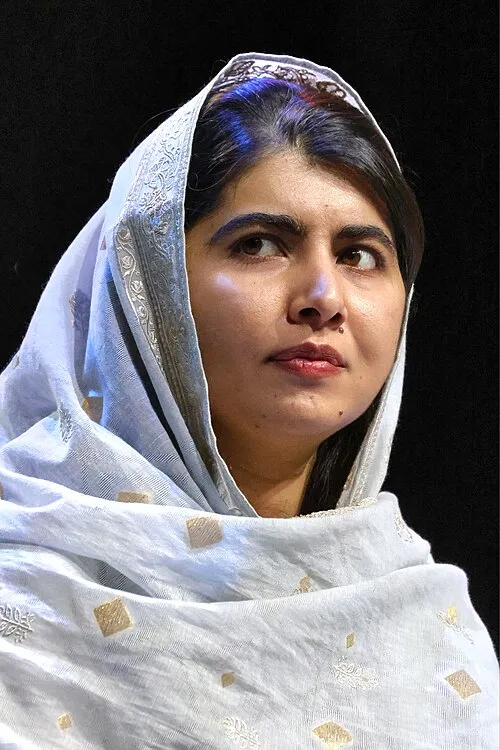
Malala Yousafzai was born on July 12, 1997, in Mingora, in the Swat Valley of northwestern Pakistan, to Ziauddin Yousafzai and Toor Pekai Yousafzai. Her father, a passionate advocate for education who ran a school in their community, gave Malala a name derived from a Pashtun heroine and raised her with the unusual conviction — in a society where girls' education was frequently devalued — that she deserved an education exactly equal to any boy's. The Swat Valley of Malala's early childhood was beautiful and culturally rich; by the time she was ten, the Taliban had begun to take control of the region, and their first acts included banning girls from attending school. The world Malala had been raised to inhabit — one of books, learning, possibility — was being systematically closed off.
Beginning in 2008, the eleven-year-old Malala began writing an anonymous blog for the BBC Urdu service under the pseudonym Gul Makai, describing her daily life under Taliban occupation and the fear of going to school. A New York Times documentary filmed her in 2009; her anonymity began to slip. As the Taliban's control of Swat intensified and retreated (due to Pakistani military operations), Malala and her father became increasingly public in their advocacy — speaking to journalists, giving interviews, arguing that education was not a political act but a fundamental human right. On October 9, 2012, a Taliban gunman boarded her school bus and shot her in the head at close range. She was fifteen years old.
Malala survived — evacuated to the UK, where she received specialized neurosurgical care in Birmingham. Her recovery was both physical and symbolic: she emerged from it not diminished but clarified, her commitment to girls' education transformed from local advocacy into a global movement. In 2013, she gave a landmark speech to the United Nations on her sixteenth birthday. In 2014, she was awarded the Nobel Peace Prize — at seventeen, the youngest Nobel laureate in history — jointly with Indian children's rights activist Kailash Satyarthi. She established the Malala Fund, which works in more than a dozen countries to advocate for twelve years of free, quality education for girls, and has raised hundreds of millions of dollars for this cause.
Malala's ENFJ nature is evident in both her extraordinary courage and in the specific form her advocacy takes. ENFJs are the personality type most concerned with the development and potential of others, particularly those who have been denied the tools to realize their own capacity. For Malala, the denial of education is not merely a policy failure — it is an act of violence against the deepest nature of every child who wants to learn, to grow, to become. Her advocacy never sounds bureaucratic or policy-driven; it sounds personal, because it is personal. The ENFJ's gift is the ability to speak about collective injustice in ways that make each listener feel individually addressed, and Malala's speeches do exactly this: they make the abstract — 'girls' education statistics' — into something urgent and felt. At Oxford, she studied Philosophy, Politics, and Economics — arming herself with institutional knowledge to serve her movement.