Blue Lock
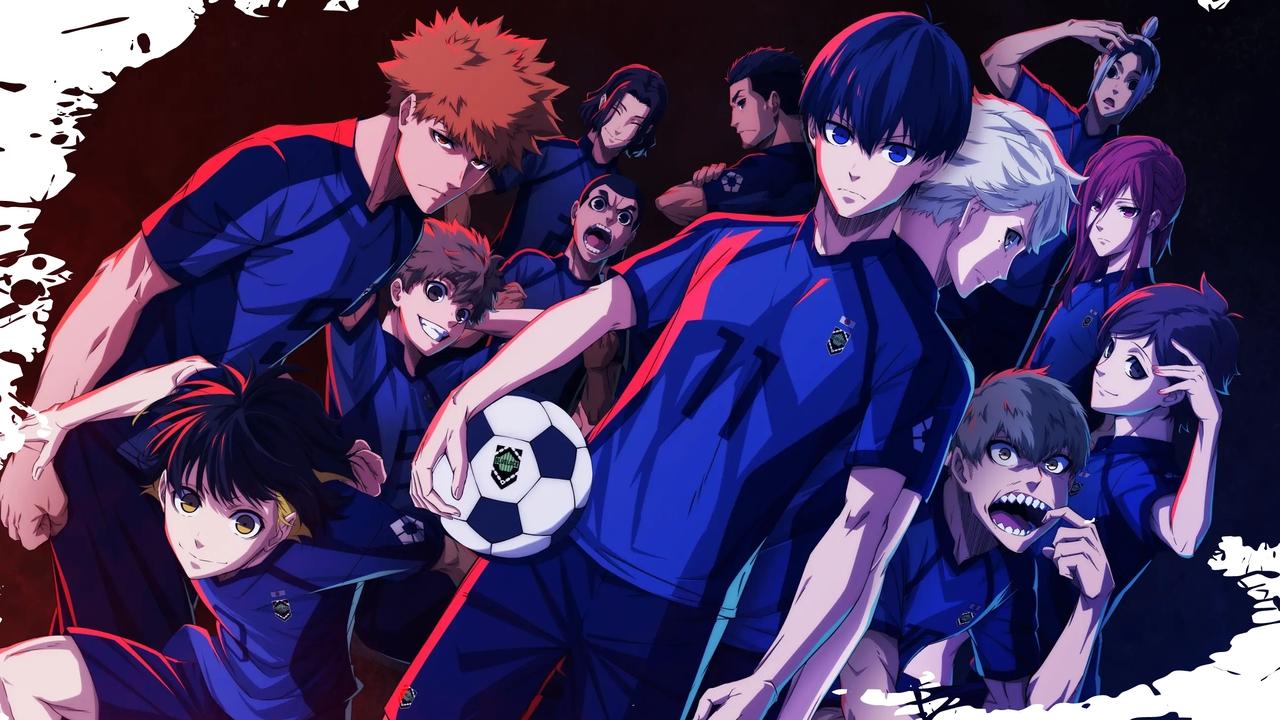
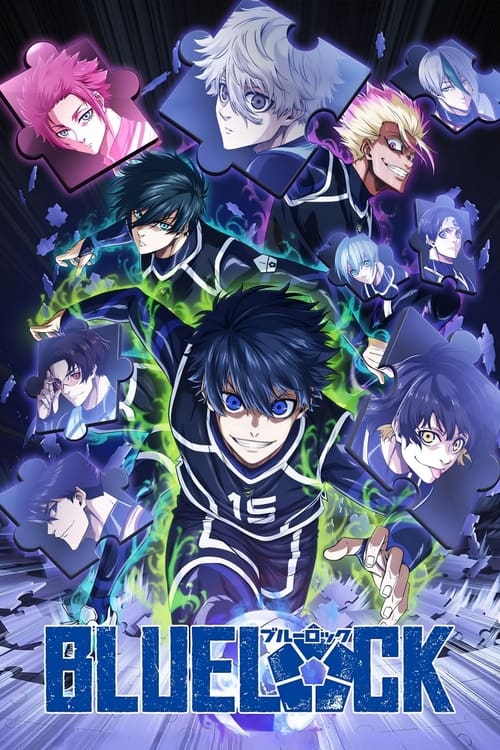
Dive into the MBTI personality types of Blue Lock characters from Muneyuki Kaneshiro's hit football manga and anime. Blue Lock's entire premise — forging a single selfish striker through psychological pressure — creates one of sports anime's richest environments for personality typing. Each player's cognitive function stack shapes how they open up their 'weapon,' from Isagi's Ni-driven spatial genius to Bachira's Ne-fueled imagination.
Analistas
Sae Itoshi
AnalystSae leads with dominant introverted intuition (Ni) oriented around football as a pure aesthetic of perfection — he perceives the game’s ideal form with crystalline clarity and has no interest in anything that deviates from it, including emotional bonds with family. His Ni operates at a level of abstraction that makes him appear cold when he is actually simply perceiving a different dimension of football than everyone around him. His auxiliary extraverted thinking (Te) executes this vision with systematic excellence: every pass, every tactical decision, every interaction is optimized for footballing perfection with no wasted motion or sentiment. His abandonment of Rin was a calculated Te decision — he assessed that Japanese football could not satisfy his Ni vision and relocated to Spain without visible emotional conflict. His tertiary introverted feeling (Fi) exists but is deeply buried beneath his Ni-Te surface; the rare moments where he acknowledges Rin’s growth suggest private values he refuses to express because Fi vulnerability would compromise his Te-projected image of perfection. His inferior extraverted sensing (Se) surfaces in his playing style’s remarkable physical fluidity — his Se serves his Ni vision rather than existing for its own sake, producing movement that appears effortless because every physical action is guided by intuitive understanding. Sae’s character represents the completed INTJ — someone whose Ni-Te integration is so thorough that others perceive it as superhuman detachment. He is the endpoint that Rin is desperately trying to reach, which makes their dynamic the series’ most psychologically rich sibling rivalry.
“Talent without results is worthless.”Learn about INTJ →
Seishiro Nagi
AnalystNagi is one of anime’s clearest dominant introverted thinking (Ti) cases, approaching football as an intellectual puzzle to be deconstructed to its mechanical essence. His trap technique — absorbing any ball perfectly regardless of speed or angle — is Ti in physical form: he has analyzed the physics of ball control so thoroughly that his body executes the solution automatically. His auxiliary extraverted intuition (Ne) is visible in his boredom with solved problems and genuine engagement only with novel technical challenges. When Nagi encounters a skill he has not mastered, his Ne lights up with curiosity; once he understands the underlying principle, he loses interest. His famous laziness is not character weakness but Ne-Ti’s natural state when no interesting problem is available. His tertiary introverted sensing (Si) is notably weak, which is why he has no attachment to training regimens, past achievements, or competitive history — last week’s victory is already a solved equation. His inferior extraverted feeling (Fe) manifests as genuine social obliviousness; he cannot read group dynamics, fails to understand why teammates find his apathy frustrating, and processes Reo’s emotional investment as a curious phenomenon rather than a relational obligation. Nagi’s character development tracks the INTP growth arc: the challenge is not acquiring skill but finding sufficient motivation to deploy it. His gradual recognition that football’s puzzles are infinite — that opponents evolve, creating perpetually novel problems — is what finally engages his Ti-Ne stack at full power.
“Football is surprisingly interesting.”Learn about INTP →
Noel Noa
AnalystNoel Noa leads with dominant extraverted thinking (Te) in its most formidable institutional form — he approaches football as a system to be optimized through relentless measurement, competition, and the elimination of everything that does not produce results. His coaching philosophy strips away sentiment entirely: players are evaluated purely by output, and those who cannot adapt to increasing pressure are discarded as inefficiencies. This is Te operating at organizational scale, treating human potential as raw material for systematic refinement. His auxiliary introverted intuition (Ni) provides the long-range conceptual framework that makes Blue Lock more than cruelty — he genuinely perceives a future of Japanese football that justifies every sacrifice, and his conviction is so absolute that it functions as an organizing principle for the entire program. His tertiary extraverted sensing (Se) manifests through his personal football legacy; as a former world-class striker, his physical mastery of the sport gives his Te-Ni philosophy undeniable credibility. Players cannot dismiss his demands because his Se achievements prove his system works. His inferior introverted feeling (Fi) is his cognitive blind spot: he cannot fully appreciate the personal, emotional cost of his program on individual players because his Te evaluates humans through performance metrics rather than subjective experience. Noel Noa’s character represents the ENTJ mentor archetype at its most demanding — someone whose vision genuinely produces excellence but whose methods raise the question of whether systematic human optimization can ever be separated from systematic human cost.
“Steal every weapon you can to become the world's best striker.”Learn about ENTJ →
Julian Loki
AnalystJulian Loki leads with dominant extraverted intuition (Ne) expressed as football philosophy — he is a charismatic theorist who reframes the sport’s meaning through provocative conceptual frameworks that challenge every assumption his opponents hold. His Ne generates alternative interpretations of football at a dizzying pace: what if the sport is art rather than competition? What if ego is the medium rather than the obstacle? Each match becomes a philosophical experiment where he tests new ideas against reality. His auxiliary introverted thinking (Ti) gives his provocations genuine analytical substance; he is not merely performing intellectualism but genuinely deconstructing football’s conventional logic with internally consistent reasoning that his opponents struggle to refute. His tertiary extraverted feeling (Fe) makes him extraordinarily charismatic — he can inspire, provoke, and destabilize opponents through social and emotional manipulation, using Fe as a tactical weapon that amplifies his Ne’s disruptive frameworks. His inferior introverted sensing (Si) means he has little patience for tradition, established methodology, or incremental improvement; he seeks revolution rather than refinement. Julian’s character represents the ENTP archetype in competitive sports: someone whose greatest weapon is not physical ability but the capacity to redefine the rules of engagement so fundamentally that opponents are defeated conceptually before the physical contest begins. His rivalry with Isagi is particularly compelling because it pits Ne’s divergent possibility generation against Ni’s convergent pattern synthesis.
“Football is art, and only geniuses can create it.”Learn about ENTP →
Diplomatas
Yoichi Isagi
DiplomatIsagi leads with dominant introverted intuition (Ni), and the series makes this almost literal through his ‘meta-vision’ — a spatial awareness that synthesizes patterns and future trajectories before they fully emerge on the pitch. When Isagi visualizes goal-scoring opportunities, he is experiencing Ni’s convergent pattern recognition in real time: multiple data points collapsing into a single actionable insight. His auxiliary extraverted feeling (Fe) drives his initial instinct to build collective plays that elevate teammates, which is why early Blue Lock frustrates him — the program demands ego, but his Fe naturally defers to group harmony. The pivotal moment against Barou, where Isagi chooses to take the shot himself rather than pass, represents Fe consciously subordinating itself to Ni’s vision. His tertiary introverted thinking (Ti) develops throughout the series as he learns to analyze opponents’ patterns with increasing precision, breaking down their weapons into logical components he can exploit. His inferior extraverted sensing (Se) is his greatest weakness: he lacks the physical dominance and raw athletic talent of players like Rin or Barou, which forces him to rely entirely on his cognitive advantages. Isagi’s growth arc is the story of an INFJ learning to be selfish — weaponizing Ni insight without Fe’s permission, which makes him one of sports anime’s most psychologically nuanced protagonists.
“The only one who can stop me is me.”Learn about INFJ →
Asahi Naruhaya
DiplomatNaruhaya leads with dominant extraverted feeling (Fe), making him the most socially connective player in early Blue Lock — someone whose football instincts are defined by seeing and supporting others’ potential rather than asserting his own. In team settings, he naturally gravitates toward the facilitator role, reading group dynamics and adjusting his play to maximize collective harmony. His passes are generous, his positioning is supportive, and his encouragement of struggling teammates is genuine Fe investment in communal success. His auxiliary introverted intuition (Ni) gives him real insight into his teammates’ growth trajectories; he can perceive where each player is heading developmentally, which makes his observations about others’ potential surprisingly accurate. His tertiary extraverted sensing (Se) provides enough physical capability to compete at Blue Lock’s entry level but lacks the explosive individual brilliance the program demands. His inferior introverted thinking (Ti) means he struggles to detach from relational considerations and analyze situations with cold, impersonal logic — the exact cognitive mode Blue Lock rewards most. Naruhaya’s early elimination is one of the series’ most thematically pointed moments: Blue Lock is explicitly hostile to Fe-dominant approaches because the program’s philosophy equates selflessness with weakness. His exit demonstrates that in Blue Lock’s cognitive ecosystem, the ENFJ’s natural orientation toward group elevation is systematically selected against, making his departure a quiet tragedy that underscores the series’ central tension between individual ego and collective harmony.
“I believe in everyone's potential.”Learn about ENFJ →
Meguru Bachira
DiplomatBachira is the most explicit extraverted intuition (Ne) dominant in the series — his football is literally described as playing with a monster inside him, a perfect metaphor for Ne’s generative, pattern-exploring energy that constantly seeks novel possibilities. On the pitch, Bachira dribbles through defenders not through planned routes but by perceiving and exploiting emerging gaps in real time, each touch generating new possibilities that he follows with childlike excitement. His auxiliary introverted feeling (Fi) gives his friendship with Isagi genuine emotional depth that transcends competitive convenience. He does not play for status, rankings, or external validation but for the pure joy of creative expression — his search for someone who can ‘play with his monster’ is Fi seeking authentic connection through shared Ne experience. His tertiary extraverted thinking (Te) develops during the later stages as he learns to channel his chaotic creativity toward measurable results rather than pure self-expression, making his dribbling more purposeful without losing its improvisational spirit. His inferior introverted sensing (Si) is his vulnerability: he has little patience for repetitive drilling, established formations, or learning from past failures in a systematic way. Bachira’s character arc mirrors the ENFP growth pattern — moving from scattered creative brilliance toward focused, values-driven excellence. His evolution from a lonely boy talking to an imaginary monster to a player who channels Ne through genuine human connection is the series’ most emotionally satisfying transformation.
“The monster in me wants to play with yours.”Learn about ENFP →
Sentinelas
Gin Gagamaru
SentinelGin Gagamaru leads with dominant introverted sensing (Si), and his legendary goalkeeper ability is the most literal expression of Si in the entire series — a meticulously catalogued internal database of every shot he has ever faced, organized by angle, speed, spin, and shooter tendency. When a striker approaches, Gin does not react to the present moment but matches the current situation against his vast Si archive to predict the shot before it happens. His auxiliary extraverted thinking (Te) deploys this internal system with cold efficiency, translating pattern recognition into precise physical positioning without hesitation or second-guessing. His saves appear instinctive to observers but are actually Te executing Si-derived predictions with mechanical accuracy. His tertiary introverted feeling (Fi) is minimal in competitive contexts but surfaces in his quiet personal pride — he approaches his craft with a private dedication that needs no external affirmation. His inferior extraverted intuition (Ne) is his tactical weakness: he struggles against strikers who create genuinely novel shot patterns that do not exist in his database. Unprecedented approaches disrupt his Si-Te system because he has no archived reference point. Gin’s character demonstrates both the extraordinary power and the inherent limitation of the ISTJ approach in competitive environments: his Si-Te methodical excellence is devastating against known quantities but vulnerable to the kind of creative, pattern-breaking play that Ne-dominant players like Bachira specialize in generating.
“I've memorized every shot in Japan.”Learn about ISTJ →
Rensuke Kunigami
SentinelKunigami leads with dominant introverted sensing (Si) oriented around a concrete, community-rooted dream of becoming a hero for the people in his hometown. His motivation is not abstract ambition but a specific, tangible image from his past: the faces of people who believed in him, the streets where he grew up, the promise he made to return as someone who matters. This Si-grounded purpose makes him the most morally centered player in Blue Lock’s ego-driven environment. His auxiliary extraverted feeling (Fe) drives his team-first instincts; he is protective of others’ dreams, encourages struggling teammates, and finds genuine satisfaction in being useful to the group — traits that Blue Lock’s philosophy considers weaknesses. His tertiary introverted thinking (Ti) gives him solid analytical ability in match situations, but it serves his Si-Fe values rather than operating independently. His inferior extraverted intuition (Ne) is his cognitive blind spot: he cannot easily adapt to Blue Lock’s constantly shifting alliances and rule changes, preferring stable, predictable environments where loyalty has clear meaning. Kunigami’s elimination from the program and subsequent transformation through the Wildcard process is one of Blue Lock’s darkest plot points — the series literally destroys his Si-Fe value system and replaces it with something unrecognizable, suggesting that Blue Lock’s thesis requires the death of the ISFJ’s communal, duty-bound approach to excellence.
“I want to be a hero who saves people.”Learn about ISFJ →
Exploradores
Hyoma Chigiri
ExplorerChigiri leads with dominant introverted feeling (Fi), his football intensely personal and defined by the private grief of nearly losing his gift to a knee injury. His reluctance to run at full speed is not cowardice but Fi protecting its most valued possession — his speed is not merely athletic ability but the core of his identity, and risking it feels like risking himself. The moment he decides to sprint during the First Selection is one of Blue Lock’s most powerful scenes because it represents Fi making a conscious choice to be vulnerable. His auxiliary extraverted sensing (Se) means his weapon is pure physical expression in the present moment: when Chigiri runs, his speed is not calculated but felt, a sensory experience so immediate and beautiful it transcends tactical purpose. His Se gives his movement an aesthetic quality that other characters explicitly acknowledge. His tertiary introverted intuition (Ni) surfaces as quiet self-awareness; he understands his own psychological barriers with a clarity that more extraverted characters lack, which is why his breakthrough is internal before it becomes physical. His inferior extraverted thinking (Te) is his weakest function, visible in his difficulty organizing team strategy or asserting leadership in group settings. Chigiri’s character arc is the quintessential ISFP growth story: learning that protecting his values through avoidance ultimately betrays them, and that authentic self-expression — running at full speed despite the risk — is the only way to honor what he truly values.
“I'll run faster than anyone in the world.”Learn about ISFP →
Oliver Aiku
ExplorerOliver Aiku leads with dominant extraverted sensing (Se) deployed through seductive, improvisational tactical play that makes him one of Blue Lock’s most entertaining characters. He reads and manipulates the physical reality of the pitch in real time with a sensory intelligence that is simultaneously athletic and social — his awareness of opponent body language, spatial positioning, and momentum shifts operates at a level most players cannot consciously access. His auxiliary introverted thinking (Ti) gives his Se impulsiveness a razor-sharp analytical edge; beneath the charismatic surface, he is calculating the most effective immediate action at every moment, deconstructing opponents’ techniques while appearing to play casually. His flirtatious trash-talking is Ti wrapped in Se delivery — he identifies psychological weaknesses with analytical precision and exploits them through physical presence and social charm. His tertiary extraverted feeling (Fe) is unusually developed for an ESTP, giving him genuine team leadership ability; he can inspire and direct teammates through charisma rather than authority, making cooperation feel like fun rather than obligation. His inferior introverted intuition (Ni) is his limitation in matches against long-range strategic thinkers like Isagi, whose Ni can perceive where the game is heading several moves ahead while Oliver’s Se is locked into present-moment brilliance. Oliver’s character represents the mature ESTP — someone whose Se dominance is refined by genuine Ti intelligence and social awareness into a playing style that is both physically dominant and tactically sophisticated.
“I can make any team play the way I want.”Learn about ESTP →
Zantetsu Tsurugi
ExplorerZantetsu plays with pure dominant extraverted sensing (Se) — his defining trait is speed experienced as raw physical sensation, and he engages the pitch through feel and immediate physical reality rather than analysis or strategy. When Zantetsu accelerates, his awareness narrows to the pure sensory experience of movement: wind, ground contact, the ball at his feet. This Se immersion gives his sprints an almost transcendent quality that distinguishes him from more analytical speedsters. His auxiliary introverted feeling (Fi) provides genuine, uncomplicated pride in his gift that reads as authentic rather than performative. He values his speed not because it earns external validation but because it represents who he is at his core — an Fi attachment to ability as identity. His tertiary extraverted intuition (Te) is minimal, which limits his ability to organize his speed into complex tactical frameworks or develop systematic approaches to matches. His inferior introverted intuition (Ni) is his critical limitation: he cannot envision future developments on the pitch, anticipate opponents’ positioning, or plan multi-step plays. His speed exists only in the immediate present. Zantetsu’s character arc contrasts directly with Chigiri’s — both are speed-based players, but Chigiri’s ISFP stack leads with internal values while Zantetsu’s ESFP stack leads with physical experience. This distinction determines their development paths: Chigiri grows by resolving an internal conflict, while Zantetsu must grow by developing the cognitive functions that transform raw physical talent into strategic weapon.
“Speed is everything. Nothing else matters.”Learn about ESFP →
Encontre Seu Personagem
Conhece seu tipo MBTI? Encontre sua combinação de personagem abaixo.
Perguntas Frequentes
Isagi is an INFJ. His 'meta-vision' ability is a direct expression of dominant introverted intuition — the capacity to synthesize spatial and temporal patterns into a clear picture of what is about to happen. His auxiliary extraverted feeling explains his initial instinct to create plays that serve the collective before he learns to weaponize his Ni selfishly. His growth arc is essentially an INFJ learning to act on Ni-dominant insight rather than deferring to others.
Both brothers are INTJs, but their Ni-Te stacks are oriented differently. Sae's Ni is aimed at football as an abstract aesthetic of perfection — cold, impersonal, and self-sufficient. Rin's Ni is entirely relational, locked onto a single consuming vision of surpassing Sae, meaning his INTJ structure is driven by a wound rather than pure vision. This makes Sae feel like a completed INTJ and Rin like an INTJ in reactive, shadow-driven mode.
The distinction comes down to Ne versus Se. Bachira's football is defined by imaginative generation — the 'monster' metaphor is explicitly about creating and playing with possibilities that don't yet exist on the pitch, which is Ne's pattern-generation function. ESFP Zantetsu, by contrast, plays through pure physical sensation and present-moment reactivity. Bachira's auxiliary Fi is also expressed through his deep, values-driven bond with Isagi rather than the spontaneous emotional warmth typical of ESFP's Fe.
Blue Lock's central thesis — that Japanese football failed because it was too team-oriented and needed a striker with absolute ego — is essentially a narrative argument for Te-Ni and Se-Ti cognitive stacks over Fe-Si and Fi-Se. Characters who lead with extraverted feeling or introverted sensing (Kunigami, Naruhaya) are systematically eliminated, while those who develop their dominant individualistic functions (Ni, Ne, Ti, Te) advance. The show treats ego not as a character flaw but as a cognitive strength to be discovered.
Explorar Mais Programas
Encontre Seu Próprio Tipo
Descubra seu tipo de personalidade MBTI e veja quais personagens fictícios compartilham seus traços.
Fazer o Teste