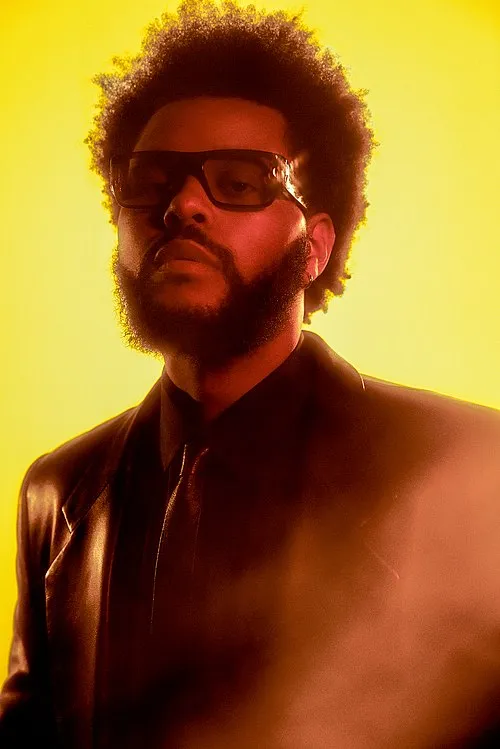
Abel Makkonen Tesfaye was born on February 16, 1990, in Toronto to Ethiopian immigrant parents. His father left the family when Abel was young; his mother Samrawit Hailu worked long hours to support them, and Abel was largely raised by his maternal grandmother. He dropped out of high school at seventeen to pursue music, pooling resources with a group of friends and living in various Toronto apartments while developing his sound. In 2010, under the name The Weeknd (spelled without the 'e' to distinguish himself from a Canadian band called The Weekend), he began uploading tracks to YouTube, with no image, no bio, no promotion — just the music itself.
The three free mixtapes released in 2011 — Trilogy — established The Weeknd as one of the most significant new voices in contemporary R&B. The sound was unlike anything being commercially released: late-night, cinematic, explicitly sexual in its subject matter, mixing Michael Jackson's falsetto influence with darkwave atmospheres and subject matter (drug use, casual sex, emotional detachment) that R&B radio would never have touched. The anonymity was strategic: without a face or a backstory, the music could speak purely for itself. By the time photographs of Abel Tesfaye emerged, the music had already created a loyal following on the basis of its own qualities.
The transition from cult artist to mainstream phenomenon came through collaboration and commercial breakthrough simultaneously. His appearance on Drake's Take Care (2011) introduced him to a massive audience; his songs began appearing on film soundtracks. Kiss Land (2013) and Beauty Behind the Madness (2015) — which produced 'Can't Feel My Face' and 'The Hills,' both chart-topping singles — established his commercial presence without diluting the specific quality of his artistic vision. Starboy (2016) continued the ascent; After Hours (2020) and its singles 'Blinding Lights' (the longest-charting single in Billboard Hot 100 history) cemented his status as one of the defining artists of the 2010s and 2020s.
The Weeknd's 2021 Super Bowl halftime performance was watched by approximately 100 million viewers and generated near-universal critical praise for its cinematic ambition and technical execution. His subsequent decision to boycott the Grammy Awards — after After Hours received no nominations despite being critically acclaimed and commercially dominant — drew attention to structural problems in how music awards institutions respond to artists who don't fit conventional genre categories. He has used his platform for Ethiopian crisis relief during the 2021 Tigray conflict, donating $1 million. Dawn FM (2022) continued his artistic evolution, incorporating experimental influences while maintaining commercial accessibility.