Elvis Presley - ESFP Personality Type

Elvis PresleyESFP - Performer

Singer, Actor

Pochodzenie

USA

Pewność typowania

powszechnie akceptowane

Quick Facts

Born
January 8, 1935
Birthplace
Tupelo, Mississippi, USA
Nationality
American
Height
6'0" (183 cm)
Zodiac Sign
Education
L.C. Humes High School, Memphis
Known For
King of Rock and RollJailhouse RockElvis hip gyration phenomenonGraceland

Who is Elvis Presley?

Elvis Aaron Presley was born on January 8, 1935, in Tupelo, Mississippi, the surviving twin (his brother Jesse Garon was stillborn), to Vernon Elvis Presley, a sharecropper and factory worker who was jailed for check forgery when Elvis was three, and Gladys Love Smith Presley, to whom Elvis remained deeply, almost obsessively devoted throughout his life. The family was poor, deeply religious (Assembly of God), and devoted to music — Elvis grew up hearing the gospel music of his church, the rhythm and blues from Black churches and radio stations, and the country music of the Mississippi Delta. This convergence of traditions — which American segregation had previously kept carefully separated — was what Elvis would synthesize.

The Presley family relocated to Memphis in 1948 when Elvis was thirteen, and his high school years in Memphis exposed him to the city's extraordinary musical culture: Beale Street, the radio stations that played everything, Sun Records on Union Avenue. He graduated from L.C. Humes High School in 1953, worked briefly as a truck driver, and recorded his first commercial sides at Sun Records in 1954 under producer Sam Phillips, who had famously said he could make a million dollars if he could find a white man who sang with the Black sound. Elvis was that white man — though the formulation is crude and the actual achievement more complex.

The 1954-1956 period was one of the most explosive creative bursts in popular music history. 'That's All Right,' 'Mystery Train,' 'Good Rockin' Tonight,' and then after his move to RCA, 'Heartbreak Hotel,' 'Hound Dog,' 'Jailhouse Rock' — each record redefined what was possible in American popular music, and the television performances (particularly on The Ed Sullivan Show) created a cultural eruption that older generations experienced as threatening and younger generations experienced as liberation. His hip movements, borrowed from Black gospel performers he had observed, were both physically exciting and racially transgressive in ways that 1950s America found electrifying.

Elvis Presley's later career — the Hollywood films, the Army service (1958-1960), the Las Vegas residencies, the increasingly isolated last years — has been read as the story of a talent imprisoned by management and commercial machinery. His 1968 television special, known as the '68 Comeback Special, demonstrated that the original talent was entirely intact. His death on August 16, 1977, at age forty-two, from cardiac arrhythmia related to polypharmacy and years of physical deterioration, was experienced by a generation as the end of an era. Graceland, his Memphis estate, receives over half a million visitors annually and remains one of the most visited private homes in the United States.
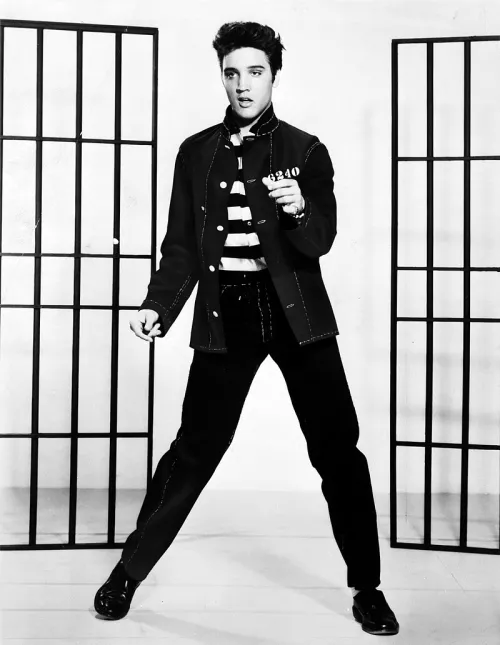
Typ osobowości ESFP — Elvis Presley

Elvis Presley, znany(a) ze swojej pracy jako Singer, Actor, wykazuje klasyczne cechy typu osobowości ESFP — Performer. Ten profil osobowości charakteryzuje się unikalną kombinacją funkcji poznawczych, które kształtują sposób, w jaki postrzega świat i podejmuje decyzje.

Kluczowe cechy ESFP w Elvis Presley

Jako ESFP, Elvis Presley demonstruje podstawowe cechy charakterystyczne dla tego typu osobowości. Te cechy odegrały znaczącą rolę w ich sukcesie i publicznym wizerunku jako Singer, Actor. Zrozumienie ich typu osobowości daje wgląd w ich motywacje, mocne strony i unikalną perspektywę, którą wnoszą do swojej dziedziny.

Dlaczego Elvis Presley jest typowany(a) jako ESFP

Typ osobowości ESFP to jeden z 16 typów osobowości Myers-Briggs, a publiczne zachowanie Elvis Presley, wzorce podejmowania decyzji i styl komunikacji ściśle odpowiadają tej klasyfikacji. Osoby ESFP, takie jak Elvis Presley, są znane ze swojego charakterystycznego podejścia do rozwiązywania problemów i relacji interpersonalnych.

Elvis Presley's Discography

1956
Elvis Presleyalbum
1957
Elvis' Christmas Albumalbum
1960
Elvis Is Back!album
1969
From Elvis in Memphisalbum
1973
Aloha from Hawaii (Live)album

Awards & Recognition

\u26053 Grammy Awards (all for gospel music) (1967)\u2605Grammy Lifetime Achievement Award (1971)\u2605Rock and Roll Hall of Fame (inaugural class) (1986)\u2605Presidential Medal of Freedom (posthumous) (2018)

Elvis Presley's Mystic Profile

Discover Elvis Presley's cosmic connections through zodiac, tarot, crystals, and spirit animals.

capricorn

Zodiac Prediction

Elvis Presley's Capricorn sun is the astrological source of his driven ambition — the boy from Tupelo who became the King of Rock and Roll through a combination of extraordinary talent and genuine hunger for success. Capricorn rules achievement, the long climb from base to summit, the determination that sustains through the years when nothing has yet been recognized. Elvis's Capricorn quality was his work ethic and his seriousness about his own performance: despite the teen idol image, he was a serious student of music, a devoted craftsman who practiced constantly and who took his artistic responsibilities to his audience with genuine conscientiousness. The Capricorn goat climbs what cannot be easily climbed — and the distance from Tupelo sharecropper's son to global cultural phenomenon required precisely this quality.

🃏

the star

Tarot Card Match

The Star — the tarot card of the radiant light that cannot help but shine, of the vulnerable beauty that is given freely without calculation, of the hope that persists even through difficulty — is Elvis's card. The Star shows a figure pouring water onto land and sea without reserve, giving what she has without counting the cost. Elvis's gift — the voice, the physical magnetism, the presence — was given freely to his audiences in a way that seemed beyond calculation; his performances, particularly in his peak years, had the quality of genuine outpouring rather than skilled technique. The Star is also the card of the one whose light is seen more clearly at night, in contrast to darkness — and Elvis's early recordings, heard against the musical landscape of segregated America, were star-bright in exactly this way.

💎

blue topaz

Crystal Match

Blue topaz — the stone of clear communication, of the voice that reaches across distance and difference, and of the self-expression that comes from genuine inner clarity rather than from calculated performance — is Elvis's crystal. His voice was the central fact of his art: the extraordinary range, the emotional directness, the way it communicated experience that transcended the limits of his own biography. Blue topaz is associated with the throat chakra, with the authentic expression that cannot be suppressed, and with the creative gift that arrives as calling rather than as skill. Elvis did not choose to sing; he was called to it, and the topaz clarity of that calling is what made the performances feel like necessity rather than entertainment.

🦁

golden-eagle

Spirit Animal

The golden eagle — the American bird of power and freedom, the raptor of extraordinary range and vision, and the symbol that appears on the TCB (Taking Care of Business) lightning bolt that Elvis adopted as his personal emblem — is his spirit animal. Elvis wore the TCB lightning bolt (the symbol of the golden eagle's speed and force) as jewelry and gave it to his inner circle; the eagle's speed and power matched his own quality of creative energy at its peak: the performance that moved faster than the audience could consciously track, that arrived before the audience had prepared a response. The golden eagle also represents the American myth — the freedom, the power, the sky — that Elvis reflected more completely than any artist of the 20th century.

Więcej znanych osobowości ESFP

O tej analizie

Ta analiza typu osobowości Elvis Presley opiera się na publicznie dostępnych informacjach, wywiadach, relacjach biograficznych i obserwacjach behawioralnych. Typowanie ESFP reprezentuje wykształconą ocenę entuzjastów i ekspertów typologii osobowości, ale nie powinno być uważane za oficjalnie potwierdzone, chyba że stwierdzono inaczej. Osobowość jest złożona i wielowymiarowa, a publiczny wizerunek może różnić się od prywatnej osobowości.