Domestic TerroristsAmerican
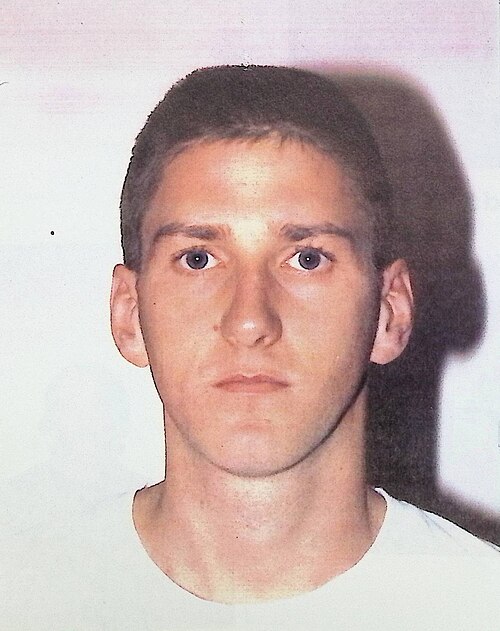
Timothy McVeigh
“The Oklahoma City Bomber”
 INFP - The Dark Idealist
활동:1995
인생:1968 - 2001
피해자:168 killed (including 19 children), 680+ injured
“I am sorry these people had to lose their lives. But that's the nature of the beast.”
교육용 콘텐츠: 이 심리 분석은 교육 목적으로만 제공되며 범죄 행동 패턴과 경고 신호를 이해하기 위한 것입니다. 우리는 범죄 행위를 찬양하거나 용인하지 않습니다.
전기
Timothy James McVeigh carried out the Oklahoma City bombing on April 19, 1995 - at the time the deadliest terrorist attack on American soil. He detonated a massive truck bomb outside the Alfred P. Murrah Federal Building, destroying the building and killing 168 people, including 19 children in a daycare center.
McVeigh grew up in rural New York and enlisted in the U.S. Army in 1988, serving in the Gulf War where he earned a Bronze Star. He attempted to join the Army Special Forces but dropped out early in the selection process. His failure to make Special Forces, combined with his disillusionment after the Gulf War, began his radicalization.
After leaving the military, McVeigh became deeply immersed in the militia movement and anti-government ideology. The federal government's violent confrontations at Ruby Ridge (1992) and the Branch Davidian compound in Waco, Texas (1993) became catalysts for his rage. He saw the government as a tyrannical force and himself as a patriot duty-bound to resist.
McVeigh deliberately chose April 19 for his attack - the second anniversary of the Waco siege's fiery end. He built a 4,800-pound ammonium nitrate fuel oil bomb, loaded it into a rental truck, and parked it directly beneath the building's daycare center.
He was captured just 90 minutes after the bombing during a traffic stop for driving without a license plate. He was convicted on 11 federal counts and executed by lethal injection on June 11, 2001, showing no remorse and calling the children killed "collateral damage."
심리 프로필: INFP
McVeigh demonstrates INFP cognitive functions warped by radicalization into domestic terrorism:
**Dominant Fi (Introverted Feeling):** His deeply held personal convictions about government tyranny, individual liberty, and patriotic duty drove everything. His values were not adopted from a group but felt internally as absolute moral truths. He genuinely believed he was making a righteous sacrifice for freedom.
**Auxiliary Ne (Extraverted Intuition):** His ability to connect disparate events - Ruby Ridge, Waco, gun control legislation - into a coherent narrative of government conspiracy shows Ne pattern-recognition. He saw a grand story where others saw unrelated events, and positioned himself as the hero of that narrative.
**Tertiary Si (Introverted Sensing):** His idealization of an American past - the revolutionary spirit, the militia tradition, constitutional originalism - shows Si romanticizing history. He saw himself as a modern Minuteman defending the values of 1776, using a selective reading of history to justify mass murder.
**Inferior Te (Extraverted Thinking):** His methodical bomb construction and tactical planning show Te emerging under stress. Unlike his typically introspective nature, the attack itself was carried out with military precision - a Te-driven execution of Fi-driven ideology.
인지 기능 분석
우위
Fi - Absolute personal conviction of government tyranny
보조
Ne - Pattern-connecting disparate events into conspiracy narrative
삼차
Si - Romanticized vision of revolutionary American past
열등
Te - Military-precision execution of ideologically driven attack
표시된 경고 신호
- ⚠Military training combined with growing anti-government ideology
- ⚠Deep identification with militia movement and sovereign citizen beliefs
- ⚠Specific fixation on Waco and Ruby Ridge as personal grievances
- ⚠Increasing social isolation and immersion in extremist literature
- ⚠Romanticization of revolutionary violence as patriotic duty
- ⚠Emotional detachment - referring to child victims as 'collateral damage'