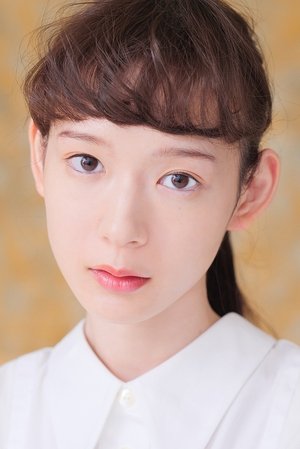
Fuji
“I serve because it is what is required of me. What is required is enough.”
Why is Fuji ISTJ?
Fuji shares the ISTJ personality type with other visionary, complex characters across fiction and real life.
Explore the full ISTJ profile →Frequently Asked Questions
What is Fuji's MBTI personality type?
Fuji from Shōgun is ISTJ — The Logistician. Fuji is the ISTJ as a woman who has lost everything except her principles — her dominant Si holds the samurai code of service as absolute, and after her husband and father-in-law's deaths, this code becomes the only remaining Si framework she can organize her shattered life around. Her auxiliary Te executes that service with precision and without complaint; assigned to Blackthorne as his household manager and consort-companion, she performs every duty with complete fidelity to what the role requires, managing his household, interpreting customs, and maintaining standards with the practical competence of someone who finds meaning exclusively in doing what must be done. Tertiary Fi operates as a deeply buried emotional life that surfaces in rare, devastating moments — her grief over her family is genuine and profound, but her Si-Te framework channels it into service rather than allowing it to disrupt her function. Her inferior Ne manifests as an inability to imagine any life outside the institutional roles available to her; where Blackthorne's Ne might generate alternative possibilities, Fuji can only see the established paths her Si recognizes. Her quietude throughout the series is not numbness but the ISTJ's characteristic response to catastrophe: finding the most reliable framework of meaning available and performing within it with absolute commitment, because for an ISTJ, the structure itself provides the consolation that no amount of emotional processing can deliver.
Is Fuji ISTJ?
Yes, Fuji is widely typed as ISTJ (The Logistician). Fuji is the ISTJ as a woman who has lost everything except her principles — her dominant Si holds the samurai code of service as absolute, and after her husband and father-in-law's deaths, this code b
What personality type is Fuji?
Fuji's personality type is ISTJ, also known as The Logistician. This type belongs to the Sentinels family in MBTI. Fuji is the ISTJ as a woman who has lost everything except her principles — her dominant Si holds the samurai code of service as absolute, and after h
ISTJ認知機能スタック
Fujiが情報を処理し決定する方法を定義する4つの認知機能。
The ISTJ's dominant Introverted Sensing is the function of the meticulous historian — the extraordinary capacity to retain and accurately recall specific details, procedures, and precedents from past experience. In fiction, ISTJ characters are the ones who remember exactly how this was handled last time, who notice when current conditions differ from the established norm, and whose reliability comes from the fact that what they have learned stays learned and available. Their dominant function makes them the most genuinely dependable character in any ensemble.
Extroverted Thinking provides the ISTJ character with the organizational machinery to apply what Si has retained to current situations with practical efficiency. Te takes the accumulated experience of Si and creates systems, procedures, and standards that encode that experience for future use. In fiction, this combination is the hallmark of the master craftsperson, the administrator who actually keeps the institution functioning, and the soldier who follows orders precisely because experience has taught them that procedure exists for reasons that improvisation gets people killed.
Introverted Feeling gives ISTJ characters their private moral dimension — the personal values that exist beneath the procedural exterior and that cannot be violated even when the procedure technically permits it. In fiction, this function is the source of the ISTJ character's moments of unexpected personal loyalty or ethical inflexibility: the point at which following the rule would violate something they care about more than the rule. This is often where ISTJ characters are most dramatically interesting.
Extroverted Intuition is the ISTJ's inferior function — the domain of open-ended possibility, of comfortable uncertainty, and of hypothetical thinking that isn't anchored to established precedent. Under stress, ISTJ characters may become uncharacteristically catastrophizing (worst-case Ne) or surprisingly adventurous (inferior function compensation). Their character development often involves learning that not every new situation is a deviation from the correct standard — sometimes it is a genuine innovation.
FujiのISTJ特性
Fujiのようなキャラクターが一貫して示す性格特性。
- ✦Reliability that functions as a foundation others can build on
- ✦Meticulous attention to detail and procedure
- ✦Strong sense of duty that operates independently of recognition
- ✦Trust built slowly through consistent demonstration rather than declaration
- ✦Genuine discomfort with change that lacks clear justification
- ✦Private about personal feelings and inner life
- ✦Memory for specific precedents, facts, and established procedures
Fujiのミスティックプロフィール
星座、タロット、クリスタル、スピリットアニマルを通じてFujiの宇宙的つながりを発見。
capricorn
星座予測
The ISTJ character maps onto Capricorn in its most reliable expression: the sign of the builder who constructs carefully because what they build must last, who earns authority through demonstrated competence rather than claiming it, and whose patience with the process is not resignation but genuine understanding that good work takes the time it takes. Capricorn and ISTJ share the quality of the long game: the willingness to invest now in a future that will not be immediately evident, and the lack of need for immediate recognition when the work is being done correctly.
justice
タロットカード
Justice — the tarot archetype of the impartial standard, of the scales that apply the same measure to every situation regardless of who is being measured, and of the clear-eyed assessment that neither increases nor diminishes what is actually there — is the ISTJ character's card. Justice does not improvise and does not show favor: it applies the established standard with consistency. ISTJ characters capture this quality — the commitment to procedure, to precedent, and to fair application of agreed-upon standards as the foundation of trustworthy conduct. Their difficulty, like Justice's, is when the standard itself is unjust.
black tourmaline
クリスタル
Black tourmaline — the protective stone of established boundaries, of the energy that repels disorder and maintains the integrity of defined space — is the ISTJ character's crystal. Black tourmaline is one of the most grounding of all crystals: it anchors energy to physical reality, to the present circumstances and established conditions, and to the stability that makes growth possible without chaos. ISTJ characters have this black tourmaline quality — the groundedness that everyone around them benefits from without always noticing, and the protective function of the person who maintains what would otherwise deteriorate.
bear
Spirit Animal
The bear — the animal of the long winter preparation, of the patient gathering of resources that makes possible the sustained rest and renewal, and of the formidable protective capacity that emerges only when what is protected is genuinely threatened — is the ISTJ character's spirit animal. Bears appear slow until they are not. Their hibernation is not laziness but the disciplined conservation of energy for the seasons when it will be needed. ISTJ characters have this bear quality: the apparent solidity and predictability that conceals genuine reserves of capacity, and the patience that is actually the highest form of strategic wisdom.
Other ISTJ Characters
Characters from other shows who share Fuji's ISTJ personality type: