
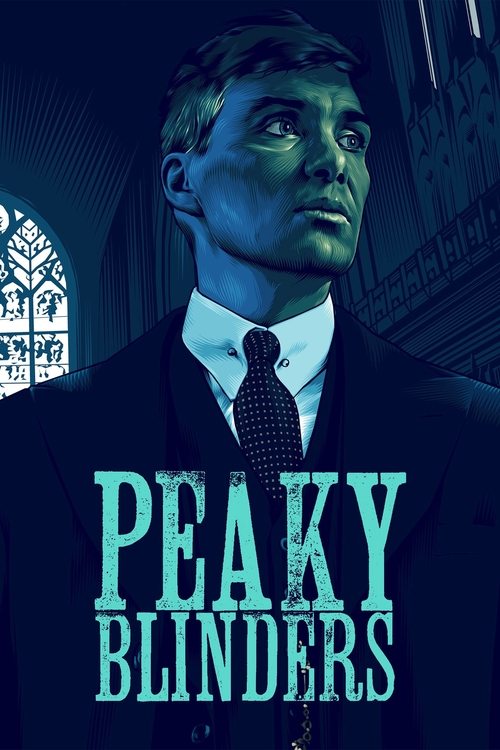
Peaky Blinders
Peaky Blinders is a goldmine for MBTI analysis, featuring one of the most-searched fictional typings on the internet in Thomas Shelby's INTJ mastermind. The Shelby family spans nearly every corner of the type table, from Arthur's explosive ESFP emotionality to Polly's commanding ENTJ matriarchy, making the show a textbook study in how different cognitive function stacks clash under pressure, loyalty, and survival.
分析家

Gina Gray
AnalystGina is the INTJ as strategic infiltrator — her dominant Ni identified Michael Gray as a calculated vector to the Shelby empire long before she married him, and every subsequent interaction reveals a woman who has been playing a multi-year positional game with remarkable patience. Her auxiliary Te executes her ascent through precise manipulation of Michael's own INTJ ambitions, feeding his power-hunger while subtly redirecting it toward outcomes that serve her American family's interests, visible in how she coaches Michael's challenge to Tommy's authority in Season 5. Tertiary Fi is almost entirely concealed behind her strategic exterior — the question of whether Gina genuinely loves Michael or merely finds him useful is deliberately unanswerable because she never permits an unguarded emotional moment, making every apparent vulnerability a potential performance. Her inferior Se manifests as a calculated deployment of physical presence and appearance: her American glamour in the Birmingham setting is not accidental but a deliberate Se-display designed to signal that she belongs to a world larger than the Shelby operation. Gina's arc across Seasons 5 and 6 demonstrates the INTJ capacity for sustained strategic deception, and her most dangerous quality is that even the audience cannot determine with certainty where her genuine motivations end and her performance begins.
“Michael is going to run this company. You should be thinking about that.”Learn about INTJ →

Oswald Mosley
AnalystMosley is the ENTJ as demagogue — his dominant Te constructs fascism as a rational, efficient system, stripping it of its moral horror through the language of productivity, national purpose, and institutional reform during his rally speeches that frame authoritarianism as mere organizational improvement. His auxiliary Ni provides a grand, sweeping vision of a reordered Britain that he genuinely believes in at some ideological level, which makes his narcissism more dangerous than mere cynicism because the conviction is partially authentic. Tertiary Se manifests as his theatrical mastery of public performance and physical space — his rally at the end of Season 5 demonstrates a man who has learned to command sensory environments with precision, using voice, gesture, and staging to create an almost hypnotic effect on crowds. His inferior Fi is virtually invisible, which is itself diagnostic: Mosley shows almost no evidence of personal emotional vulnerability or authentic human connection, treating relationships as strategic instruments and intimacy as a power dynamic. His seduction of Lizzie is not desire but dominance, a Te assertion of hierarchy. Mosley's arc across Season 5 presents the terrifying spectacle of an ENTJ whose function stack is entirely aligned with a monstrous ideology — he is not conflicted or secretly tormented, and that absence of internal friction is precisely what makes him the most chilling antagonist in the series.
“I don't hate the poor. I simply believe the nation works better without them.”Learn about ENTJ →

Alfie Solomons
AnalystAlfie is one of television's purest ENTPs — his dominant Ne produces a genuinely chaotic, non-linear intelligence that philosophizes mid-negotiation and pivots logic mid-sentence, as demonstrated in his legendary bakery meetings with Tommy where he simultaneously discusses rum shipments, biblical theology, and betrayal without ever losing his internal thread. His auxiliary Ti means every unpredictable move is internally consistent to a framework only he can fully see; his decision to betray Tommy to Luca Changretta follows a Ti logic of self-preservation that is perfectly rational within his own value system. Tertiary Fe gives Alfie a theatrical social presence — he reads rooms instinctively and performs dominance through monologue and atmosphere rather than through physical violence, making every conversation feel like a one-man show where the audience might be killed. His inferior Si manifests as a complete disregard for precedent and established agreements; loyalty to him is a hypothesis, not a commitment, which is why he can ally with Tommy in one scene and sell him to his enemies in the next without experiencing cognitive dissonance. Alfie's arc culminates in his confrontation with mortality from skin cancer, where his Ne-Ti framework finally meets something it cannot reframe or outmaneuver, and his request that Tommy shoot him on the beach is the most philosophically honest ENTP death scene ever written.
“Yeah, I'm a complicated man, Thomas, as you well know.”Learn about ENTP →
外交官
Aunt Pol's Spirit
DiplomatEven as a presence beyond death in Season 6, Polly's spirit functions as the purest expression of the INFJ archetype — her dominant Ni operates as the wisdom voice that perceives what others cannot, appearing to Tommy in visions that cut through his rationalization and self-deception with truths he has been avoiding. Her auxiliary Fe, which was always the family's emotional compass in life, continues to register the human cost of every Shelby decision from beyond the grave, serving as the conscience that Tommy's own suppressed Fi cannot provide. Tertiary Ti manifests in the logical precision of her spectral observations — she does not speak in vague mysticism but in pointed, analytically sharp assessments of Tommy's psychological state and strategic blind spots. Her inferior Se is transcended entirely in death; freed from the physical world's constraints, she becomes pure Ni-Fe perception without bodily limitation. The decision to keep Polly present as a spiritual force after Helen McCrory's passing is narratively perfect for her INFJ type: the INFJ's deepest gift was always insight rather than action, and as spirit she is distilled to that essence. Her arc completes the INFJ journey from embodied counselor to archetypal guide, the function stack operating at its most refined when freed from the material world entirely.
“I see the dead more than the living these days, Tommy. Sometimes they're the same thing.”Learn about INFJ →

Ada Shelby Thorne
DiplomatAda is the idealist escape from the Shelby world — her dominant Fi gives her an internal value system that stands completely apart from the family's pragmatic violence, visible from her earliest scenes when she refuses to participate in Shelby business and pursues her relationship with Freddie Thorne despite Tommy's opposition. Her auxiliary Ne connects her to broader movements and abstract possibilities, drawing her toward communism and socialist politics as frameworks that give meaning beyond blood loyalty and territorial power. Tertiary Si grounds her in the memory of what the Shelby family was before the war, giving her a nostalgic reference point that fuels her criticism of what they have become. Her inferior Te emerges gradually across the series as she develops organizational competence, eventually becoming the family's diplomat and political liaison in later seasons — an INFP who has learned to wield Te effectively without abandoning her core Fi values. Ada's character arc is the healthiest INFP development trajectory in the show: she begins by fleeing the family entirely, but over time she finds a way to engage with the Shelby world on her own terms, using her Ne-generated political connections and her Fi moral compass to serve the family without becoming it.
“I don't want to be part of this family business. I never did.”Learn about INFP →
番人

Inspector Chester Campbell
SentinelCampbell is the ISTJ corrupted by personal wound — his dominant Si is bound absolutely to institutional rule, established order, and the precedents of Crown authority in Ireland, where his formative experiences shaped an unshakable belief that civilization requires enforcement at any cost. His auxiliary Te drives his investigation into the stolen guns with relentless, methodical pressure, constructing intelligence networks and deploying informants with bureaucratic precision that makes him genuinely effective as an antagonist. What makes Campbell a compelling villain rather than a simple authority figure is his tertiary Fi, which transforms his institutional mission into something deeply personal: his obsession with Grace Burgess reveals a suppressed emotional life that his Te-Si framework cannot contain, and his sexual violence toward her exposes the darkest expression of Fi when it operates without ethical development. His inferior Ne manifests as an inability to anticipate Tommy's creative, unconventional moves — Campbell thinks in established channels and institutional power, so Tommy's Ne-like lateral strategies consistently blindside him. Campbell's arc demonstrates what happens when an ISTJ's genuine loyalty to order becomes indistinguishable from personal vengeance: the same function stack that makes him a reliable servant of the Crown also makes him a man whose rigid Si framework has no mechanism for self-examination.
“In Birmingham, the law is what I say it is.”Learn about ISTJ →

Lizzie Stark
SentinelLizzie is the ISFJ in a world that exploits ISFJs — her dominant Si grounds her in the harsh realities of her past as a sex worker and her present as Tommy's wife, building a practical resilience rooted in accumulated experience rather than hope or illusion. She remembers every slight, every promise broken, and every moment of genuine tenderness, storing them in the detailed Si archive that informs her quiet, unsentimental assessment of the Shelby world. Her auxiliary Fe makes her deeply attuned to others' needs, serving as the emotional caretaker who manages the household, raises the children, and absorbs Tommy's coldness without losing her capacity to care. Tertiary Ti gives Lizzie a sharp analytical edge that surfaces in her increasingly pointed observations about Tommy's behavior — by the later seasons, she can dissect his manipulations with clinical accuracy because she has catalogued every pattern. Her inferior Ne manifests as a refusal to engage with abstract possibilities or false optimism; she does not dream of a different life because her Si has taught her that dreams are the luxury of people who have not lived hers. Lizzie's arc is the ISFJ endurance story: she outlasts nearly every other character in Tommy's orbit precisely because her function stack is built for survival rather than ambition.
“I know what I am, Tommy. But I also know what I'm worth.”Learn about ISFJ →
探検家

Duke Shelby
ExplorerDuke is the emerging ISFP — his dominant Fi gives him a raw, unprocessed emotional core that drives his need to belong and to matter, particularly to a father he is only just meeting in Season 6. Unlike the other Shelbys who have been shaped by decades of family dynamics, Duke arrives with Fi values that are entirely his own, uncontaminated by Shelby pragmatism, and his immediate moral reactions to the family's violence reveal an authentic internal compass that has not yet been compromised. His auxiliary Se means his identity is expressed through physical action and present-moment engagement rather than long-range planning — he proves himself through direct, tangible acts of loyalty and courage rather than through strategic maneuvering. Tertiary Ni gives Duke flashes of intuitive understanding about Tommy's deeper motives, an instinctive grasp of his father's hidden plans that surprises both of them. His inferior Te manifests as an underdeveloped capacity for systematic organization; he can follow Tommy's instructions but cannot yet construct his own strategic frameworks. Duke's arc in Season 6 is fundamentally an ISFP coming-of-age story: a young man discovering whether his authentic Fi values can survive integration into a family system that has historically consumed or corrupted every idealist who entered it.
“I want to know who I am. I want to know if I'm a Shelby.”Learn about ISFP →

John Shelby
ExplorerJohn is the classic ESTP action-first hothead — dominant Se pulls him into immediate conflict and physical engagement, demonstrated when he burns the Lee family's caravans without waiting for Tommy's strategic calculation, igniting a war over what felt like the right move in that specific moment. His auxiliary Ti gives him tactical instinct in real-time combat and negotiation, an ability to read a fight as it unfolds and adapt on the fly, which makes him effective in street-level operations where Tommy's Ni planning is too slow. Tertiary Fe gives John a genuine social warmth the other Shelby brothers lack; he is the one who integrates most naturally into community life, marrying Esme to forge an alliance but also genuinely connecting with people in a way Arthur's Fi intensity cannot. His inferior Ni is his blind spot — he cannot see long-range consequences, which is precisely why the Changretta vendetta catches him fatally off guard. John's death in Season 4 is the most ESTP exit imaginable: ambushed in a moment of domestic normalcy, killed by consequences he never saw coming because his dominant Se was oriented entirely toward the present. His arc demonstrates that Se-Ti tactical brilliance without Ni foresight is ultimately unsustainable in a world where enemies plan years ahead.
“I'm a Peaky Blinder. Same as you.”Learn about ESTP →

Johnny Dogs
ExplorerJohnny Dogs is the ESFP in his purest, most uncomplicated form — dominant Se keeps him present, physical, and instinctive, always the first to arrive at a campfire, the most comfortable in outdoor settings, and the most naturally alive in the sensory world of horses, caravans, and open roads that define Romani life. His auxiliary Fi gives him a genuine warmth and personal loyalty that is entirely non-strategic; he is with the Shelbys because he loves Tommy as a brother, not because the alliance profits him, and this Fi authenticity is why Tommy trusts him with tasks that require genuine loyalty rather than calculated obedience. Tertiary Te gives Johnny enough organizational competence to manage logistics for Shelby operations — moving goods, coordinating travel, handling practical arrangements — but he never aspires to strategic authority because his Se-Fi orientation finds fulfillment in the doing rather than the planning. His inferior Ni manifests as a cheerful absence of long-range anxiety; unlike Tommy, who is tormented by visions of the future, Johnny lives entirely in the present moment and is genuinely happier for it. His arc across all six seasons is remarkably consistent, making him one of the few characters who is essentially the same person at the end as at the beginning — the ESFP as a stable anchor in a world of constantly shifting loyalties.
“We ride together, Tommy. Always.”Learn about ESFP →
あなたのキャラクターを見つける
MBTIタイプを知っている?下からあなたのキャラクターマッチを見つけましょう。
よくある質問
Thomas Shelby is almost universally typed as INTJ, and he is one of the most searched fictional MBTI typings on the internet. His dominant Introverted Intuition gives him a prophetic, long-horizon strategic vision that consistently outpaces everyone around him, while his auxiliary Extraverted Thinking executes plans with cold, almost mechanical efficiency. The tragedy that makes him compelling rather than purely admirable is his suppressed tertiary Introverted Feeling, which surfaces as addiction, emotional suffering, and an inability to reconcile love with ambition.
Polly Gray is typed as ENTJ, functioning as the commanding matriarch whose dominant Extraverted Thinking organizes the Shelby operation and cuts through sentiment to reach the most effective outcome. Her auxiliary Introverted Intuition gives her an almost supernatural ability to read through people's stated motivations and detect betrayal before it manifests. Unlike Thomas, whose authority comes from solitary calculation, Polly leads through direct confrontation and earned institutional respect.
Alfie Solomons is typed as ENTP because his dominant Extraverted Intuition generates a genuinely non-linear intelligence — he pattern-matches, pivots, and philosophizes in real time, making mid-negotiation detours that feel chaotic but are internally consistent. His auxiliary Introverted Thinking means every unpredictable statement connects back to a logical framework that only Alfie can fully map, and his decisions, however bizarre they appear, have a rigorous internal logic. The combination of Ne-Ti produces someone who treats rules and alliances as hypotheticals to be tested rather than commitments to be honored.
The Shelby family spans a remarkable range of the MBTI table, which is part of what makes their dynamic so compelling. Thomas is INTJ, Arthur is ESFP, John is ESTP, and Ada is INFP — nearly every function stack is different, creating constant friction between Tommy's long-range Ni strategy, Arthur's Se-Fi impulsivity, John's Se-Ti tactical instinct, and Ada's Fi-Ne idealism. Polly Gray, the family matriarch, is ENTJ, and her Te-Ni authority is the force that keeps the divergent types from destroying themselves before any enemy can.