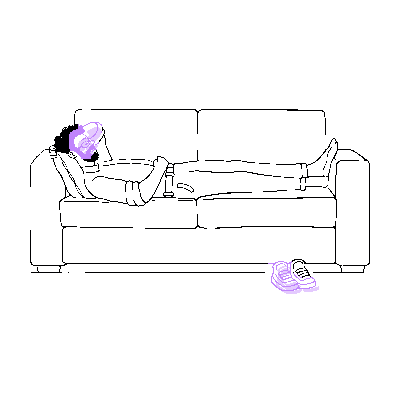
🦉 Gufo Notturno~25% of the population

INTP ChronotypeThe LogicianGufo Notturno

Schemi del Sonno & Cronotipo di INTP

Gli INTP sono forse i gufi notturni più estremi del sistema MBTI. Il loro rapporto con il sonno è spesso caotico: perdono il conto del tempo durante le immersioni intellettuali profonde, vedendo regolarmente le 3 o le 4 di mattina prima di rendersi conto che sono passate ore. Il cervello INTP opera su un ritmo fondamentalmente diverso da quello richiesto dal mondo dalle 9 alle 17, preferendo lunghi periodi di esplorazione non strutturata che derivano naturalmente verso la notte.

Perché i INTP Sono Gufo Notturno: Funzioni Cognitive & Sonno

La Ti dominante (Pensiero Introverso) è un motore analitico che costruisce e decostruisce strutture logiche internamente. Richiede una concentrazione sostenuta e ininterrotta che è quasi impossibile durante le più affollate ore diurne. La Ne ausiliaria (Intuizione Estroversa) alimenta Ti con infinite idee e connessioni tangenziali, creando un ciclo di feedback di esplorazione che si intensifica quando il mondo si fa silenzioso. Le tane di coniglio notturne su Wikipedia, i maratone di programmazione e i dibattiti teorici sono Ti-Ne nel loro habitat naturale.

Funzione Dominante

Ti operates best when it can follow a logical thread without external interruption. Nighttime eliminates the phone calls, social obligations, and environmental noise that fragment Ti’s focus, allowing INTPs to think with razor clarity for hours at a stretch.

Funzione Ausiliare

Ne generates its richest associations during low-pressure periods. In the evening, freed from the day’s demands, Ne begins offering Ti a buffet of possibilities — this is why INTPs often have their most creative ideas at 1 AM but struggle to explain them the next morning.

Schema di Energia di INTP nel Corso della Giornata

INTPs often experience a ‘zombie morning’ phase until around 10 AM, functioning on autopilot. Mental fog lifts gradually, with analytical capacity reaching usable levels by 11 AM. Early afternoon brings the best window for structured tasks that require Ti precision. Energy dips around 4-5 PM, but then begins a steady climb from 8 PM onward. By 11 PM, the INTP is fully ‘online’ and can maintain intense focus until exhaustion forces sleep around 3-4 AM.

Finestre di Massima Produttività per INTP

🎨

Picco Creativo

12 AM - 4 AM

📊

Picco Analitico

11 AM - 2 PM

🤝

Picco Sociale

3 PM - 5 PM

Sfide del Sonno Comuni per INTP

  • !Losing track of time completely during late-night intellectual deep-dives, often not realizing it’s 4 AM until physical exhaustion hits
  • !The ‘one more thing’ loop — each answer generates three new questions, making it psychologically difficult to stop exploring
  • !Irregular sleep patterns that shift by 1-2 hours daily, creating a ‘free-running’ circadian rhythm disconnected from social clocks

Routine Quotidiana Ideale per INTP

🌅

Mattina

Wake around 9-10 AM without an alarm if possible. Allow 90 minutes of gentle startup — coffee, casual browsing, low-stakes reading. Do NOT schedule important meetings before 11 AM. Morning is for autopilot tasks: email, household chores, routine maintenance.

☀️

Pomeriggio

Late morning through early afternoon (11 AM - 2 PM) is the analytical sweet spot. Use this for debugging, technical writing, problem-solving, or any task requiring Ti precision. After 2 PM, energy wanes — switch to collaborative work or casual exploration. A brief nap around 4 PM can extend evening productivity significantly.

🌆

Sera

From 8 PM onward, let curiosity lead. This is the time for research, side projects, learning new skills, or diving into complex problems. Don’t fight the Ne tangents — they often lead somewhere valuable. Keep snacks and water nearby to avoid breaking flow state.

🌙

Ora di Andare a Letto

Set a 1 AM ‘awareness alarm’ that simply reminds you of the time (not to stop immediately, but to begin wrapping up within 30-60 minutes). Use a wind-down activity that satisfies Ne without escalating — podcasts, light fiction, or puzzle games work well. Avoid starting new research threads after midnight.

Consigli per Ottimizzare il Sonno per INTP

  • Use the ‘two-alarm system’ — a soft alarm at 1 AM to start wrapping up and a hard alarm at 2 AM to actually stop and begin bedtime routine
  • Create a ‘parking lot’ document where you dump unfinished threads before bed — this tells Ti-Ne that nothing is lost and it’s safe to disengage
  • Embrace afternoon power naps (20-30 minutes) — they extend your effective evening window by 2-3 hours without total sleep loss
  • If you must adapt to a 9-to-5 schedule, gradually shift bedtime earlier by 15 minutes per week rather than forcing a sudden change

Spunti sulla Salute per i INTP Gufo Notturno

INTPs are at high risk for ‘social jet lag’ — the discrepancy between their natural rhythm and society’s expectations. Chronic sleep deprivation from forcing early schedules can impair Ti’s precision, leading to logical errors and reduced learning capacity. Prioritizing consistent sleep duration (even at unconventional hours) over conventional timing is far more beneficial for INTP cognitive health.

Compatibilità del Cronotipo di INTP

INTPs paired with early bird types (especially ISFJ or ESFJ) often experience the most extreme schedule mismatch. The INTP is hitting peak form at midnight while their partner has been asleep for two hours. Successful navigation requires dedicated overlap time (dinner and early evening) and mutual respect for different biological rhythms rather than attempts to ‘convert’ each other.

Altri Tipi Gufo Notturno

Esplora di Più

Su Questa Analisi

Questa analisi del cronotipo per INTP si basa sulle correlazioni tra le funzioni cognitive MBTI e la ricerca sui ritmi circadiani. I modelli del sonno individuali variano e sono influenzati dalla genetica, dall'età, dallo stile di vita e dall'ambiente.