AssassinsAmerican
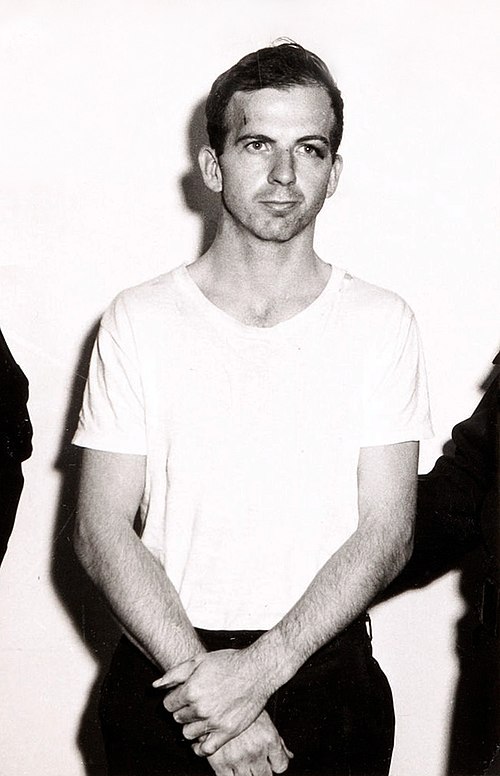
Lee Harvey Oswald
“The Lone Gunman”
 INFP - The Dark Idealist
פעיל:1963
חיים:1939 - 1963
קרבנות:President John F. Kennedy; Officer J.D. Tippit
“I'm just a patsy!”
תוכן חינוכי: ניתוח פסיכולוגי זה לצורכי חינוך בלבד - להבנת דפוסי התנהגות פשועה וסימני אזהרה. אנחנו לא מהללים או מתנו בפעולות פשע.
ביוגרפיה
Lee Harvey Oswald was a former U.S. Marine who assassinated President John F. Kennedy on November 22, 1963, in Dallas, Texas, in one of the most consequential acts of political violence in American history. Born in New Orleans to a troubled family, Oswald grew up fatherless and was moved between relatives, foster homes, and his unstable mother.
Oswald joined the Marine Corps at 17 but was dissatisfied with military life and became interested in Marxism. In a dramatic and unusual move, he defected to the Soviet Union in 1959, renouncing his American citizenship. Disillusioned with Soviet life as well, he returned to the United States in 1962 with his Russian wife Marina and their daughter.
Back in America, Oswald drifted between low-wage jobs, became involved with pro-Castro activism, and attempted to assassinate right-wing General Edwin Walker in April 1963. He moved to Dallas in October 1963 and secured a job at the Texas School Book Depository along the route of President Kennedy's motorcade.
On November 22, 1963, Oswald fired three shots from a sixth-floor window of the Depository, striking Kennedy twice and fatally wounding him. Oswald fled the scene, killed Dallas police officer J.D. Tippit during his flight, and was arrested in a movie theater. Two days later, while being transferred between jails, Oswald was shot and killed on live television by nightclub owner Jack Ruby, preventing a trial and fueling decades of conspiracy theories.
פרופיל פסיכולוגי: INFP
Oswald exhibits INFP cognitive functions distorted by alienation, ideological romanticism, and a desperate need for historical significance:
**Dominant Fi (Introverted Feeling):** Oswald's inner world was dominated by intensely personal values and a deep sense of injustice. He felt profoundly misunderstood and unappreciated, carrying a conviction that the world had wronged him. His political commitments - to Marxism, to Cuba, to revolution - were less intellectual positions than deeply felt personal identities. He did not merely believe in communism; he felt himself to be a revolutionary.
**Auxiliary Ne (Extraverted Intuition):** His restless movement between identities, countries, and causes demonstrates Ne searching for a framework that would validate his inner sense of special destiny. He saw himself as a potential hero in multiple narratives - Soviet defector, Castro supporter, political activist - constantly reimagining his role in history.
**Tertiary Si (Introverted Sensing):** Oswald harbored deep grievances rooted in his difficult childhood - abandonment, instability, rejection. These formative experiences created a reservoir of resentment that colored all subsequent interactions. His Si stored every slight and failure, building a cumulative case that the world owed him recognition.
**Inferior Te (Extraverted Thinking):** His inability to organize his life effectively - failing at jobs, relationships, and political activism - shows underdeveloped Te. The assassination itself can be understood as a catastrophic eruption of Te: a single, decisive, externally impactful action by a man who could not achieve significance through normal channels.
ניתוח פונקציה קוגניטיבית
דומיננטי
Fi - Deep personal sense of injustice and special destiny
עזר
Ne - Restless search for identity through ideological frameworks
שלישוני
Si - Accumulated grievances from childhood rejection
נחות
Te - Catastrophic eruption into decisive violent action
סימני אזהרה בולטים
- ⚠Pattern of grandiose self-image contrasting sharply with actual achievements
- ⚠Defection to an adversary nation driven by romantic ideological identification
- ⚠Prior assassination attempt against General Edwin Walker
- ⚠Chronic inability to maintain employment or stable relationships
- ⚠Intense identification with revolutionary political causes
- ⚠Social isolation and withdrawal combined with fantasies of historical importance