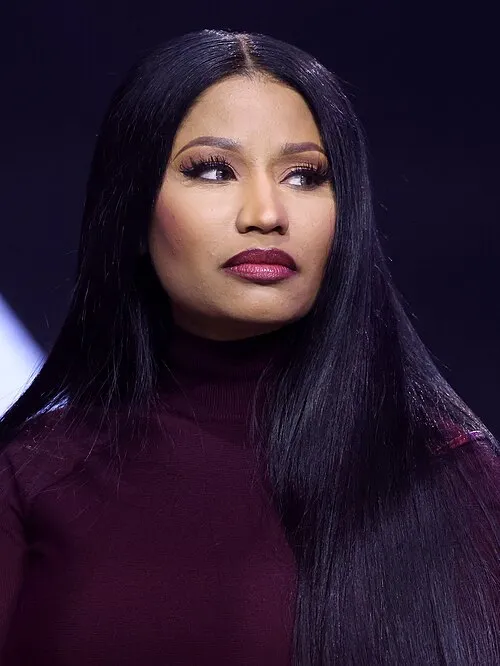
Onika Tanya Maraj was born on December 8, 1982, in Saint James, Port of Spain, Trinidad, the daughter of Robert Maraj, an accountant and aspiring gospel singer who struggled with substance abuse, and Carol Maraj, who worked multiple jobs to support the family. The family relocated to Queens, New York, when Onika was five. Her childhood was marked by her father's addiction and the domestic violence that accompanied it — Robert once set fire to the family home in an act that nearly killed her mother. She has discussed her childhood difficulties with notable candor and credited her ability to create alter egos (the characters of Harajuku Barbie, Roman Zolanski, and others) partly as a childhood coping mechanism for difficult circumstances.
Nicki Minaj attended LaGuardia High School — the performing arts school known for its famous alumni — studying theater. She worked various jobs in New York while pursuing her music career, performing as a waitress at Red Lobster (from which she was fired) and as an office receptionist. She began releasing mixtapes in 2007, building a following through her extraordinary technical rapping ability — the quick-switch flow, the multiple characters voiced within single tracks, the verbal agility that placed her in conversation with the greatest technical rappers of any era. She was signed to Young Money Entertainment by Lil Wayne in 2009.
Her debut album Pink Friday (2010) debuted at number one, making her the first female solo artist to debut at the top position with a rap album. The subsequent years produced Pink Friday: Roman Reloaded (2012), The Pinkprint (2014), and Queen (2018), establishing her as the dominant female rapper of the decade and one of the most successful in any category: multiple Billboard Hot 100 appearances, writing credits on songs for Beyoncé and Christina Aguilera, and a string of collaborations that demonstrated her commercial versatility. 'Super Bass' (2011) crossed over to pop radio audiences who might not have followed hip-hop; her verse on Kanye West's 'Monster' (2010) was widely regarded as the best on the track.
Nicki Minaj's legacy in hip-hop is simultaneously her extraordinary technical achievement and the culture that she helped create. She was the first female rapper to appear on many Billboard charts and leaderboards; the generation of female rappers who have followed her — Cardi B, Megan Thee Stallion, Doja Cat — are in explicit conversation with the standard she established. Her public personality — the larger-than-life performance of confidence, the alter egos, the ongoing feuds conducted publicly on social media — is both genuine self-expression and deliberate performance, and the line between the two has been a subject of considerable public interest.