
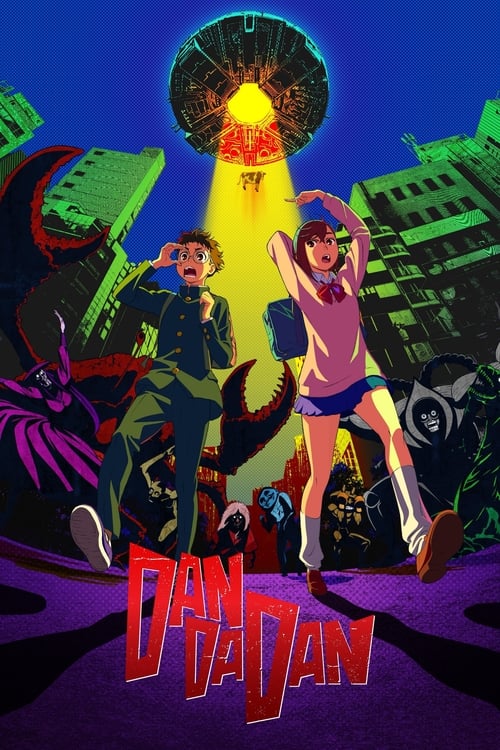
Dandadan
Discover the MBTI personality types of Dandadan characters. This wildly original anime blends paranormal horror, alien encounters, and teenage romance into a kinetic psychological study. Dandadan's central duo — the punch-first pragmatist Momo and the vulnerable idealist Okarun — represent a fascinating ESTP/INFP pairing whose opposite cognitive stacks generate both comedy and genuine emotional depth.
Analystes
Acrobatic Silber
AnalystAcrobatic Silber\u2019s dominant Ni is evident in how he approaches Earth\u2019s paranormal landscape\u2014not as a series of individual encounters but as a unified strategic puzzle to be solved through a singular, overarching vision. Every interaction with humans and spirits is a data point feeding his long-term plan for dominance. His auxiliary Te provides the execution framework: he delegates, commands, and organizes his alien forces with the efficiency of a military strategist who has already calculated the optimal path to victory. His tertiary Fi occasionally surfaces as a cold aesthetic appreciation for worthy opponents\u2014he does not merely defeat; he evaluates, and those who meet his internal standard receive a grudging respect that his Te would never openly express. His inferior Se is his vulnerability: when forced into chaotic, unpredictable physical confrontations\u2014particularly against Momo\u2019s pure Se improvisation\u2014his carefully constructed plans begin to fracture. The contrast between Silber\u2019s methodical Ni-Te approach and Momo\u2019s reactive Se-Ti combat style is one of Dandadan\u2019s most compelling conflicts, demonstrating how strategic foresight can be undone by opponents who refuse to behave predictably. Silber represents the INTJ antagonist archetype at its most alien: intelligence without empathy, vision without compassion, and execution without moral constraint.
“Every move has already been accounted for.”Learn about INTJ →
Vamola
AnalystVamola\u2019s dominant Te is expressed through relentless organizational efficiency\u2014every resource, every subordinate, every operation is structured within a command hierarchy designed to maximize output and minimize resistance. It does not persuade; it directs. Its orders carry the weight of a being that has never needed to justify its authority because its results speak for themselves. Its auxiliary Ni provides the strategic depth beneath this efficiency: Vamola does not merely react to the paranormal landscape but has constructed a long-term vision for dominating it, with each tactical operation serving a larger purpose that only it fully comprehends. Its tertiary Se manifests as a commanding physical presence and an ability to assess tactical situations in real time\u2014when plans require adjustment, Vamola adapts with a decisiveness that combines strategic foresight with immediate environmental awareness. Its inferior Fi is its blind spot: it cannot comprehend motivations rooted in personal values, emotional loyalty, or individual meaning, which is precisely why the human protagonists\u2019 behavior continually confounds its predictions. Vamola\u2019s encounters with Momo\u2019s group consistently fail not because of insufficient planning but because the ENTJ\u2019s framework cannot account for opponents whose decisions are driven by love rather than logic. It represents the ENTJ shadow at its most alien: masterful execution in service of a vision entirely devoid of human warmth.
“I have already calculated your defeat.”Learn about ENTJ →
The Serpo
AnalystThe Serpo\u2019s dominant Ne drives its entire relationship with Earth\u2014every human, every spirit, every paranormal phenomenon is a new variable to be explored, tested, and recombined in novel configurations. Its approach to experimentation is not methodical in the INTJ sense but endlessly branching, following whichever thread of inquiry seems most promising in the moment. Its auxiliary Ti provides the analytical framework that organizes this curiosity into something resembling scientific method, though the Serpo\u2019s version of science has no ethical review board. Its tertiary Fe manifests in an unsettling ability to mimic social connection\u2014it can appear friendly, even charming, when doing so serves its experimental agenda, but this warmth is instrumental rather than genuine. Its inferior Si is evident in its complete disregard for precedent, tradition, or the accumulated wisdom of prior encounters; each experiment is approached as if no previous failure has occurred. The Serpo\u2019s interactions with Okarun\u2019s group reveal the dark side of ENTP curiosity\u2014the point where intellectual excitement becomes indistinguishable from cruelty because consequences are treated as data rather than suffering. It represents the ENTP archetype pushed to its most alien extreme: pure ideation without empathy, innovation without responsibility, and discovery pursued regardless of cost.
“Every subject is simply an experiment waiting to begin.”Learn about ENTP →
Diplomates
The Haruka Entity
DiplomatThe Haruka entity\u2019s dominant Ni manifests as a singular, all-consuming vision: the resolution of unfinished emotional grief that has persisted beyond death. Unlike spirits driven by rage or hunger, Haruka\u2019s haunting is organized around meaning\u2014it seeks not destruction but understanding, not revenge but closure. Every apparition, every ghostly manifestation, is a communication attempt driven by this unified internal purpose. Its auxiliary Fe gives these attempts their emotional resonance; the entity does not simply appear but creates atmospheres of shared sorrow that affect everyone in proximity, drawing others into its emotional experience rather than merely frightening them. Its tertiary Ti surfaces in the precision of its haunting patterns\u2014there is a logic to where and when it appears that reveals an underlying analytical structure organizing the grief into coherent expression. Its inferior Se is evident in its difficulty with direct physical interaction; the entity exists primarily in the realm of feeling and intuition, struggling to translate its needs into tangible, present-moment action. The Haruka arc is one of Dandadan\u2019s most emotionally sophisticated storylines because it treats the spirit not as a monster to defeat but as a person to understand\u2014the INFJ\u2019s core need for genuine connection surviving even death itself.
“I just wanted someone to remember me.”Learn about INFJ →
Ken Okarun
DiplomatOkarun\u2019s dominant Fi is the engine of his entire character: a deeply private emotional world that produces convictions so strong they reshape his behavior without him ever articulating why. His love confession to Momo is pure Fi\u2014not calculated, not timed for maximum effect, just the raw truth spoken aloud because holding it inside became unbearable. His auxiliary Ne makes him the group\u2019s most open-minded member regarding the paranormal; where others react with fear or aggression, Okarun approaches each new spirit or alien with genuine curiosity, seeing possibilities rather than threats. His tertiary Si manifests in his attachment to specific memories\u2014the moments Momo believed in him become emotional anchors he returns to when his confidence falters. His inferior Te is his weakest point: he struggles to organize his feelings into actionable plans and often freezes when a situation demands strategic thinking rather than emotional authenticity. The Turbo Granny possession arc is his defining INFP moment\u2014forced to share his body with an entity that violates his deepest sense of self, he endures through sheer emotional resilience rather than tactical skill. His growth across the series is learning that vulnerability is not weakness but his greatest source of power.
“I love you. I know that's embarrassing. But it's the truth.”Learn about INFP →
Coni
DiplomatConi\u2019s dominant Ne drives her engagement with Earth as an endless field of fascinating possibilities\u2014every human behavior, every cultural artifact, every paranormal phenomenon sparks a cascade of questions and connections that she pursues with infectious enthusiasm. Unlike the Serpo\u2019s clinical curiosity, Coni\u2019s exploration is warm and participatory; she wants to understand by experiencing, not by dissecting. Her auxiliary Fi gives this curiosity genuine emotional weight; she forms sincere attachments to the humans she encounters, caring about their well-being not as experimental subjects but as beings whose inner lives she finds genuinely moving. Her tertiary Te surfaces when practical problems demand organized solutions\u2014she can shift from wonder to efficiency when the situation requires it, though she clearly prefers the former mode. Her inferior Si is visible in her difficulty with routine and established procedure; the structured protocols of her alien civilization feel constraining to her Ne-driven exploration. Coni\u2019s interactions with the group demonstrate the ENFP\u2019s characteristic gift for making others feel valued and understood\u2014her genuine interest in each person\u2019s experience creates connections that transcend the enormous cultural gap between species. She represents the ENFP at its most essential: a being for whom curiosity and compassion are inseparable, and for whom understanding another person\u2019s world is itself an act of love.
“Everything here is so fascinating! How do you all exist like this?!”Learn about ENFP →
Sentinelles
Grandma Seiko
SentinelGrandma Seiko\u2019s dominant Si is the foundation of her psychic practice\u2014she draws on generations of accumulated spiritual knowledge, treating each paranormal encounter as a variation on patterns she has cataloged through decades of experience. When Momo brings home increasingly dangerous supernatural problems, Seiko\u2019s first response is always to consult her established framework of rituals, protections, and exorcism techniques. Her auxiliary Te manifests in her no-nonsense authority: she delivers instructions with military precision and expects them to be followed without debate. Her tertiary Fi occasionally surfaces as fierce protectiveness toward Momo that transcends professional duty\u2014in moments of genuine danger, her composure cracks to reveal a grandmother whose love is deeper than her methodology. Her inferior Ne is visible in her discomfort with the unprecedented\u2014when the group encounters spirits and aliens that fall outside her traditional categories, she struggles to adapt her framework rather than abandon it. The scene where she first confronts Turbo Granny demonstrates her ISTJ approach perfectly: she applies a proven exorcism technique with absolute confidence, and when it fails, her response is not to improvise but to search her memory for a more powerful established method. Seiko\u2019s arc is the ISTJ\u2019s wisdom narrative\u2014learning that tradition is a starting point, not a ceiling.
“The old ways exist for a reason. Do not stray from them.”Learn about ISTJ →
Invisible Woman
SentinelThe Invisible Woman\u2019s dominant Si is literalized through her supernatural condition\u2014she exists in the margins, her presence defined by accumulated memories and past patterns that no one else can see or acknowledge. Her invisibility is not merely physical but psychological: she has internalized a role as observer and protector that requires her to remain unseen. Her auxiliary Fe drives her protective instincts; despite her condition, she is oriented toward the well-being of others, watching over those she cares about with a devotion that asks nothing in return. Her tertiary Ti surfaces in her careful, methodical approach to guardianship\u2014she does not act impulsively but observes patterns, assesses threats, and intervenes only when her analysis confirms genuine danger. Her inferior Ne manifests as a deep fear of the unknown and unpredictable; she clings to established patterns of behavior because novelty threatens the fragile stability she has constructed around her invisible existence. The Invisible Woman functions as Dandadan\u2019s most poignant metaphor for the ISFJ experience: a person whose greatest contributions are invisible to the people who benefit from them, whose loyalty is expressed through quiet consistency rather than dramatic gesture, and whose value is often recognized only in retrospect. Her arc asks the question every ISFJ eventually confronts: is it enough to be needed if you are never truly seen?
“I may be invisible. That doesn't mean I'm not watching.”Learn about ISFJ →
Momo's Mother
SentinelMomo\u2019s mother\u2019s dominant Fe is expressed through the steady, reliable warmth of domestic ritual\u2014she anchors her daughter in the ordinary human world through meals, conversations, and the small consistent acts of care that form the bedrock of family life. Her concern for Momo is always expressed outwardly: asking questions, noticing changes in behavior, offering comfort through established family patterns. Her auxiliary Si grounds this care in routine and tradition; she has a clear sense of how family life should function, drawn from years of accumulated experience, and she maintains that structure even as the paranormal increasingly intrudes. Her tertiary Ne occasionally surfaces as anxious awareness that something in Momo\u2019s life has changed beyond normal teenage experience\u2014she cannot name what is wrong, but she senses the disruption. Her inferior Ti means she rarely analyzes these intuitions logically; she processes them emotionally and relationally. Momo\u2019s mother serves a crucial narrative function in Dandadan: she represents the normal world that the supernatural threatens to consume. Her ESFJ warmth is not dramatic or heroic, but it provides Momo with something no amount of spiritual power can replace\u2014a home that remains constant while everything else transforms. Her character reminds us that ordinary love, expressed through ordinary consistency, is its own form of protection.
“Come home for dinner. That's all I ask.”Learn about ESFJ →
Explorateurs
Godspeed Yokai
ExplorerGodspeed Yokai\u2019s dominant Ti operates in almost total silence\u2014it processes the physical and spiritual environment through an internal logical framework so efficient that verbal communication becomes unnecessary. Every movement it makes is the product of analysis already completed; there is no gap between assessment and action. Its auxiliary Se gives it extraordinary physical awareness and responsiveness, allowing it to navigate combat and spatial challenges with a precision that appears supernatural even by the series\u2019 standards. Its tertiary Ni manifests as an uncanny ability to anticipate opponents\u2019 movements\u2014not through emotional intuition but through pattern recognition so refined it resembles precognition. Its inferior Fe is the most intriguing aspect of its psychology: the almost complete absence of emotional expression does not necessarily indicate absence of feeling, and occasional moments of protective behavior toward unlikely allies suggest a buried capacity for connection that its Ti-dominant structure cannot articulate. Godspeed Yokai\u2019s combat sequences are masterclasses in ISTP aesthetics\u2014maximum efficiency, zero wasted motion, and an elegance that emerges from function rather than form. Within Dandadan\u2019s chaotic ensemble, this entity serves as the purest expression of the ISTP ideal: a being whose actions speak with such clarity that words would only diminish them.
“...”Learn about ISTP →
Jiji
ExplorerJiji\u2019s dominant Fi operates almost entirely below the surface\u2014he rarely verbalizes his feelings, but his actions reveal a deeply held personal code of loyalty and care. When Momo is in danger, Jiji does not deliver speeches about friendship; he simply appears where he is needed, his commitment expressed through physical presence rather than emotional declaration. His auxiliary Se keeps him grounded in the immediate moment, making him an unusually calm presence during paranormal chaos\u2014while others panic or strategize, Jiji reads the physical environment and responds with measured precision. His tertiary Ni surfaces in quiet moments of insight where he perceives the emotional undercurrents others miss, particularly regarding Okarun\u2019s unspoken feelings for Momo. His inferior Te is visible in his reluctance to take charge or organize group action; he would rather support from the periphery than command from the center. Jiji\u2019s unrequited feelings for Momo represent the ISFP\u2019s characteristic emotional depth\u2014he processes this pain privately, never weaponizing it or demanding recognition. His arc demonstrates the ISFP\u2019s quiet strength: the ability to love without possession, to be present without demanding attention, and to let go without bitterness when his feelings are not returned.
“You don't have to say anything. I'm just here.”Learn about ISFP →
Turbo Granny
ExplorerTurbo Granny\u2019s dominant Se is literally her defining characteristic\u2014she is a yokai of pure speed, a being whose entire existence is organized around physical sensation and kinetic momentum. When she possesses Okarun\u2019s body, the transformation is immediately visible: his cautious, deliberate movements become explosive, instinctive, and dangerously fluid. Her auxiliary Ti provides the tactical cunning that separates her from a mindless force\u2014she reads opponents in real time, identifies structural weaknesses, and exploits them with the precision of a fighter who has survived centuries through intelligence, not just power. Her tertiary Fe manifests unexpectedly as a grudging attachment to the group, particularly Okarun; despite her protests, she begins offering tactical advice and even protective interference that reveals genuine emotional investment. Her inferior Ni surfaces in rare moments of ancient wisdom\u2014flashes of insight about the deeper nature of the spiritual world that surprise both the group and herself. The highway chase sequence where she first reveals her full speed is peak ESTP spectacle: no hesitation, no strategy session, just immediate physical mastery of the environment. Turbo Granny\u2019s arc from antagonist to reluctant ally mirrors the ESTP\u2019s growth pattern\u2014learning that connection to others enhances rather than constrains the experience of being fully alive.
“Speed is the only truth I know.”Learn about ESTP →
Baby Yokai
ExplorerBaby Yokai\u2019s dominant Se manifests as pure, unfiltered engagement with the physical world\u2014it touches, explores, reacts, and plays with an immediacy that has no cognitive buffer between stimulus and response. Every interaction is a sensory discovery, approached with the delight of a being experiencing existence for the first time. Its auxiliary Fi provides the emotional authenticity that makes it endearing rather than chaotic; its joy is genuine, its distress is genuine, and its attachment to the group members who show it kindness is expressed with an emotional directness that more cognitively complex beings cannot achieve. Its tertiary Te is virtually nonexistent in any organized form\u2014Baby Yokai has no capacity for planning, goal-setting, or strategic behavior, existing entirely in the experiential present. Its inferior Ni means it has no relationship with the future; consequences, patterns, and long-term meaning are concepts beyond its developmental stage. Baby Yokai serves a crucial tonal function within Dandadan\u2019s often dark narrative: it is proof that the supernatural world contains innocence as well as horror, joy as well as threat. Its presence in scenes of combat or danger creates an emotional contrast that heightens both the sweetness and the stakes. As the purest ESFP expression in the series, it reminds every character\u2014and every viewer\u2014that the capacity for uncomplicated happiness is itself a form of spiritual power.
“Hehe!”Learn about ESFP →
Trouvez Votre Personnage
Connaissez-vous votre type MBTI ? Trouvez votre correspondance de personnage ci-dessous.
Questions Fréquentes
Momo Ayase is an ESTP. Her dominant extraverted sensing defines her entire approach to the paranormal — she doesn't theorize or analyze, she acts. When confronted with ghosts, aliens, or ancient yokai, her first instinct is physical engagement. Her auxiliary introverted thinking gives her fast tactical intelligence, allowing her to adapt mid-battle. Momo is not reckless; she's just extraordinarily confident in her body's ability to handle whatever her brain hasn't yet categorized.
Okarun's INFP typing emerges from his dominant introverted feeling — a deep, private emotional world that drives everything he does. He's an outcast not because he lacks social skills but because he refuses to perform emotions he doesn't genuinely feel. His auxiliary Ne makes him open to the paranormal and imaginative in how he processes it. Most tellingly, his love for Momo is expressed through vulnerability and consistency rather than grand gestures, which is the INFP's signature mode of affection.
Dandadan's paranormal world functions as an externalization of cognitive functions. Momo's Se-dominant approach treats spirits as physical problems to be solved by force; Okarun's Fi-Ne orientation treats them as emotionally resonant beings deserving of understanding. The show consistently uses their contrasting responses to the same paranormal situation as a form of personality comedy and drama — two people with completely opposite cognitive stacks encountering the same impossible world and making completely different sense of it.
ESTP and INFP is not a textbook compatibility pairing, but Dandadan makes a compelling case for their chemistry. The ESTP's Se-Ti stack and the INFP's Fi-Ne stack share no functions, which creates friction but also fascination. Momo's physical boldness grounds Okarun's emotional vulnerability; Okarun's depth and sincerity provides Momo with something more nourishing than adrenaline. Their compatibility works precisely because they don't understand each other immediately — they have to work for the connection, which makes it more meaningful.
Explorer Plus de Séries
Trouvez Votre Propre Type
Découvrez votre type de personnalité MBTI et voyez quels personnages fictifs partagent vos traits.
Passer le Test