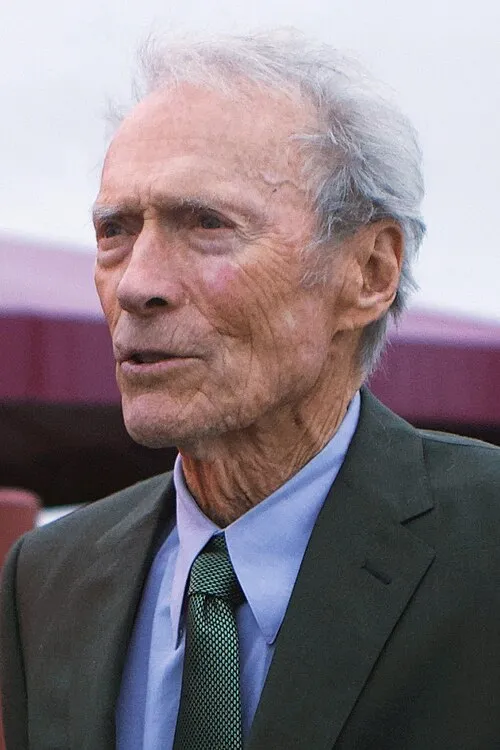
Clint Eastwood - ISTP Personality Type

Clint EastwoodISTP - Artisan

Actor, Director

Origine

USA

Confiance du Typage

largement accepté

Faits rapides

Né(e)
May 31, 1930
Lieu de naissance
San Francisco, California, USA
Nationalité
American
Taille
6'4" (193 cm)
Signe du zodiaque
Éducation
Los Angeles City College (business administration; did not complete degree)
Connu(e) pour
Dirty HarrySpaghetti Western trilogy (Leone)Million Dollar Baby (Oscar)Unforgiven (Oscar)Gran TorinoMystic River (director)Republican political advocacy

Qui est Clint Eastwood ?

Clinton Eastwood Jr. was born on May 31, 1930, in San Francisco, California, the first of two children of Clinton Eastwood Sr., a bond salesman and steelworker, and Ruth Wood Eastwood, a homemaker and later factory worker. The family moved frequently during the Depression years as his father sought employment, eventually settling in Piedmont, California. Eastwood was a mediocre student but a good athlete, and after high school worked as a logger, steel furnace stoker, and gas station attendant before being drafted into the US Army in 1950, serving until 1953. While stationed at Fort Ord in Monterey County, he was discovered by a Universal Pictures casting director who recognized his physical appearance as potentially cinematic, and he was given a contract and a series of small film roles that didn't immediately lead anywhere significant.

Eastwood's breakthrough came through television: he was cast as Rowdy Yates, the amiable young cowboy, in the CBS Western series Rawhide (1959-1965), which made him recognizable to American audiences. Italian director Sergio Leone saw him in reruns and cast him as the unnamed 'Man with No Name' in A Fistful of Dollars (1964), For a Few Dollars More (1965), and The Good, the Bad and the Ugly (1966) — the Dollar trilogy that created the Spaghetti Western genre and established Eastwood as an international star of the first order. The character — laconic, competent, morally ambiguous, physically formidable, economical in speech and devastating in action — became the template for Eastwood's screen persona across the following five decades: the man who does what needs doing with minimal ceremony.

Clint Eastwood's directorial career has been one of the most distinguished in American cinema history. After directing his first film, Play Misty for Me (1971), he developed a body of directorial work across fifty years that includes Unforgiven (1992, which won him Academy Awards for Best Director and Best Picture), Mystic River (2003), Million Dollar Baby (2004, which won him Academy Awards for Best Director and Best Picture again, and Best Actress for Hilary Swank), Letters from Iwo Jima (2006), Gran Torino (2008), American Sniper (2014), and Richard Jewell (2019). His directorial style is known for shooting on schedule, under budget, using few takes, and trusting his actors — he has said he prefers the first or second take, believing that subsequent takes often lose the instinctive quality of the initial performance.

Eastwood's personal life has been complex: he has eight children by six women, multiple long-term relationships, and two marriages — to Maggie Johnson (1953-1984) and Dina Ruiz (1996-2014). His political views — conservative Republican, he gave a memorable speech at the 2012 Republican National Convention directed at an empty chair representing Barack Obama — have coexisted with a filmmaking career that has often engaged sympathetically with characters outside the mainstream of conservative cultural values. He served as the mayor of Carmel-by-the-Sea, California from 1986 to 1988. He was still directing at age 93, with Juror No. 2 (2024), making him one of the most active directors in Hollywood history.
Type de Personnalité ISTP de Clint Eastwood

Clint Eastwood, connu(e) pour son travail en tant que Actor, Director, présente les traits classiques d'un type de personnalité ISTP - Artisan. Ce profil de personnalité est caractérisé par une combinaison unique de fonctions cognitives qui façonnent la façon dont ils perçoivent le monde et prennent des décisions.

Traits ISTP Clés chez Clint Eastwood

En tant que ISTP, Clint Eastwood démontre les caractéristiques fondamentales associées à ce type de personnalité.

Pourquoi Clint Eastwood est Typé comme ISTP

Le type de personnalité ISTP est l'un des 16 types Myers-Briggs, et le comportement public de Clint Eastwood, les schémas de prise de décision et le style de communication s'alignent étroitement avec cette classification.

Clint Eastwood's Filmographie

1964-66
Dollar Trilogy (Leone)en tant que The Man with No Namefilm
1971
Dirty Harryen tant que Harry Callahanfilm
1992
Unforgiven (also director)en tant que William Munnyfilm
2003
Mystic River (director)en tant que (director)film
2004
Million Dollar Baby (also director)en tant que Frankie Dunnfilm
2008
Gran Torino (also director)en tant que Walt Kowalskifilm
2014
American Sniper (director)en tant que (director)film

Prix et distinctions

Academy Award — Best Director and Best Picture (Unforgiven) (1993)Academy Award — Best Director and Best Picture (Million Dollar Baby) (2005)AFI Life Achievement Award (1996)Irving G. Thalberg Memorial Award (Oscar) (1995)

Profil mystique de Clint Eastwood

Découvrez les connexions cosmiques de Clint Eastwood à travers le zodiaque, le tarot, les cristaux et les animaux spirituels.

gemini

Prédiction zodiacale

Clint Eastwood's Gemini sun explains the productive tension that has defined his career: the actor and the director; the taciturn screen persona and the prolific, expressive filmmaker; the conservative political figure and the artist who has made films sympathetic to characters far outside conservative orthodoxy. Gemini holds contradictions without needing to resolve them — and Eastwood has held his contradictions across nine decades with remarkable equanimity. Gemini is also the sign of adaptability, of the capacity to thrive across different contexts and modes, and Eastwood's movement from television cowboy to Spaghetti Western icon to Hollywood action star to Oscar-winning director to still-active filmmaker at 93 is Gemini adaptability at the longest possible timescale.

🃏

the hermit

Carte de tarot

The Hermit — the tarot archetype of the solitary master, the one who has withdrawn from conventional society to pursue deeper knowledge, whose lantern illuminates the path for those who follow — is Eastwood's card. The Hermit is not lonely; he is alone because he has reached a level of understanding that requires solitude to maintain. Eastwood's directorial style — the minimal takes, the distrust of over-preparation, the preference for instinct over analysis — is Hermit style: the master who trusts his accumulated wisdom rather than the elaborate systems that others require. His characters are frequently Hermit figures: the Man with No Name, Walt Kowalski in Gran Torino — the solitary figure whose code of justice operates independently of society's approval.

💎

flint

Cristal compatible

Flint — the stone that strikes fire, that creates light from friction, that was the fundamental technology of human survival for millennia — is Eastwood's stone. Flint is associated with the practical genius that finds elegant solutions to difficult problems without ceremony or explanation: the spark, the fire, the warmth. Eastwood's filmmaking has this flint quality: the efficiency that produces results without waste, the directness that achieves the goal without the elaborate apparatus that others consider necessary. He shoots quickly, trusts instinct, achieves results — and the results have included some of the most significant films in American cinema. Flint is also the stone of resilience: the material that will not be shaped easily, that maintains its edge through contact with difficulty.

🦁

lone-wolf

Spirit Animal

The lone wolf — not the pack animal but the experienced elder who moves through the territory with complete knowledge and complete self-sufficiency, who has outlasted the pack dynamics of younger wolves and now operates according to its own accumulated wisdom — is Eastwood's spirit animal. The lone wolf is not antisocial; it is self-sufficient in a way that transcends the need for the pack's approval. Eastwood's career has this quality: the refusal to be defined by Hollywood's conventional timelines or expectations, the continued production of films according to his own vision and schedule at an age when directors half his age have retired. The lone wolf does not explain itself; it simply moves through its territory with the authority of long experience.

Plus de Personnalités ISTP Célèbres

À Propos de Cette Analyse

Cette analyse du type de personnalité de Clint Eastwood est basée sur des informations publiquement disponibles, des interviews et des observations comportementales.